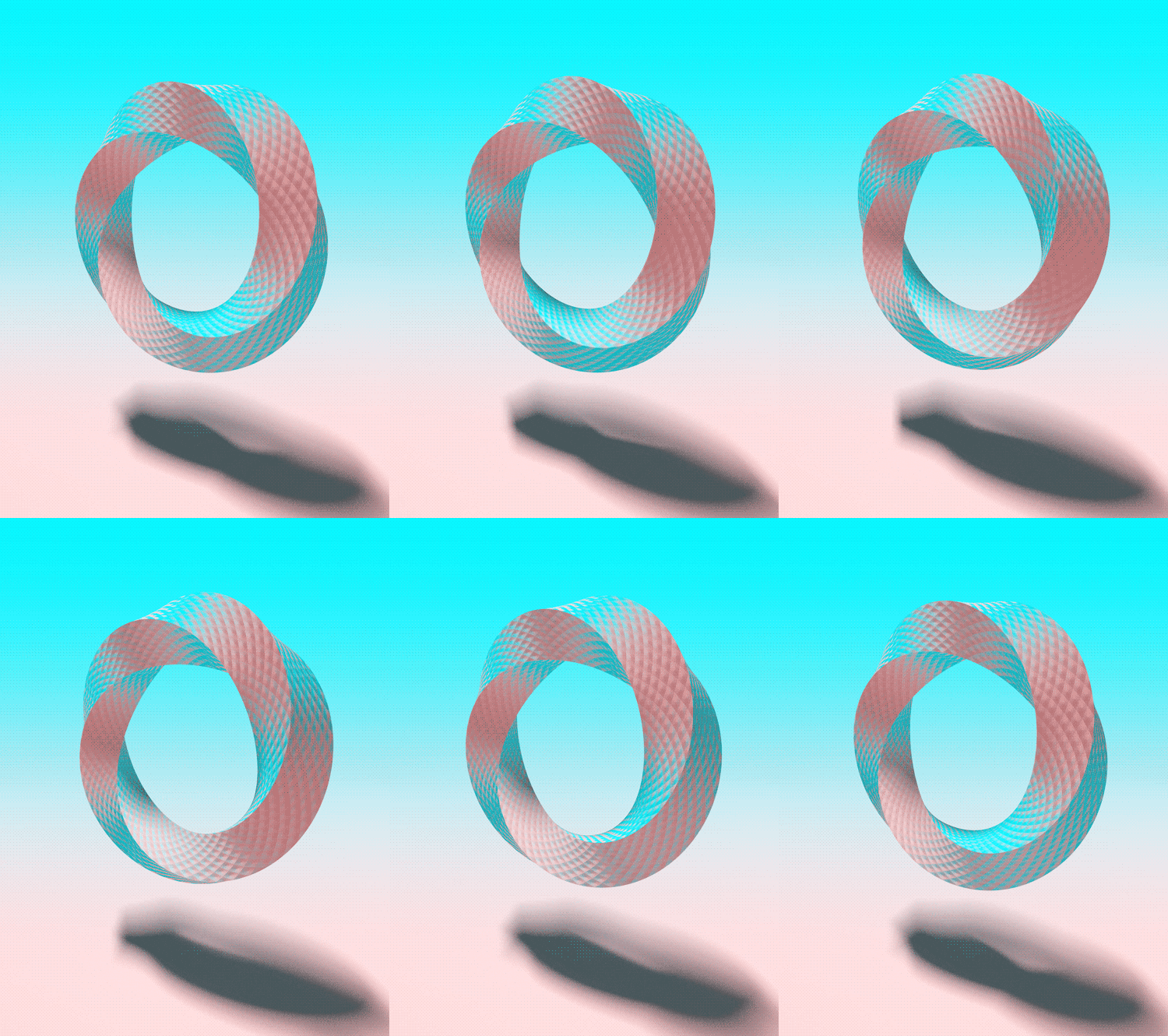
2. Projection Mapping
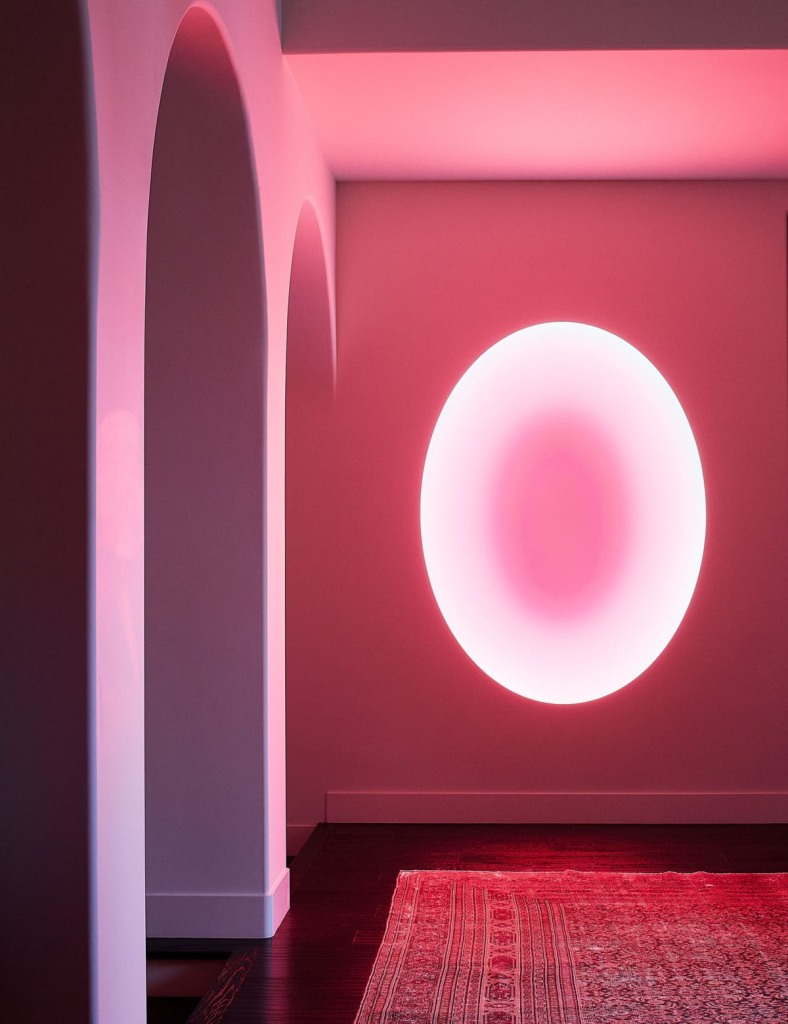
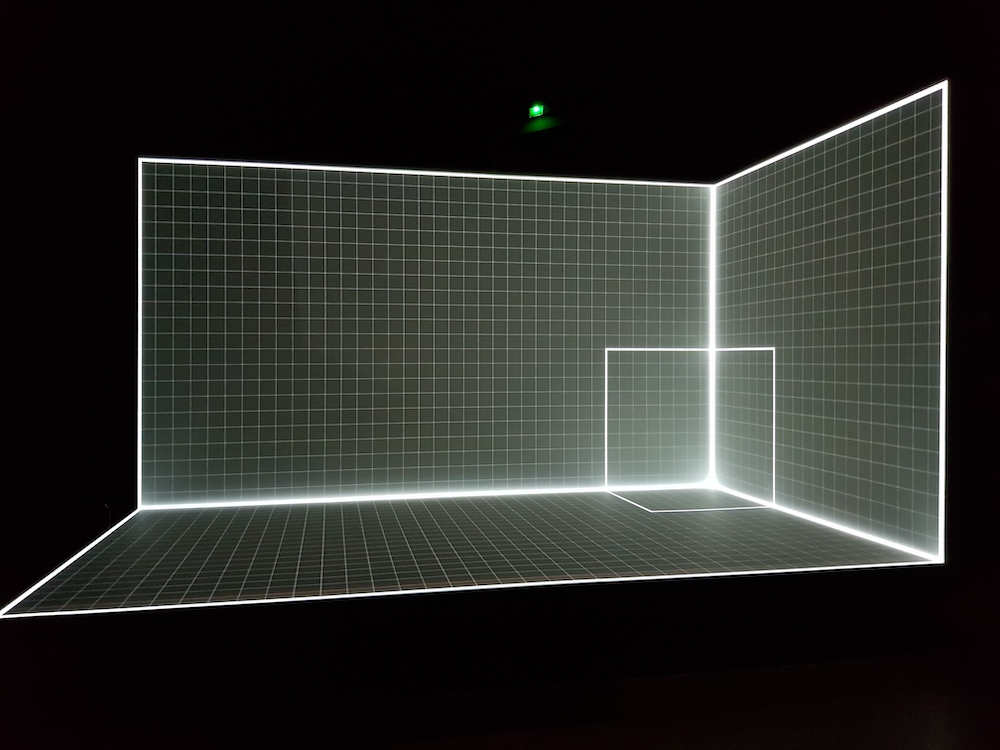
James Turrell: Works
He is an American artist known for using light and space to create immersive art experiences. His work includes art installations that utilize digital projection mapping to create geometric shapes and light and shadow effects.
In the development of contemporary art, digital technology has continuously expanded the expressive methods of geometric abstract art. Among these, projection mapping has become an important medium. By combining digital images with real space, it allows geometric structures to no longer be confined to a flat canvas, but to unfold on the surface of architecture, sculpture, or spatial structures, thus forming a dynamic visual environment. Through this technology, geometric abstract art has transformed from static images into a visual system with temporal and spatial dimensions.
The basic principle of projection mapping is to use projection equipment to precisely project digital images onto a specific object or spatial surface. Unlike ordinary projection, mapping technology requires image correction based on the object's structure to ensure the image perfectly matches the real spatial surface. For example, when an image is projected onto a building facade, the geometry in the image is adjusted according to windows, walls, and edges to create a visually complete structural relationship. This technology allows the geometry to interact with the actual space.
In geometric abstract art, projection mapping is often based on geometric shapes and structural systems. For example, grid structures, repeating modules, or gradient colors can constantly change on architectural surfaces. Through changes in light and shadow and the movement of forms, two-dimensional geometric shapes can create the illusion of movement in space. Viewers may perceive the architectural surface as deforming, moving, or unfolding, an effect that gives abstract structures a new spatial dimension.
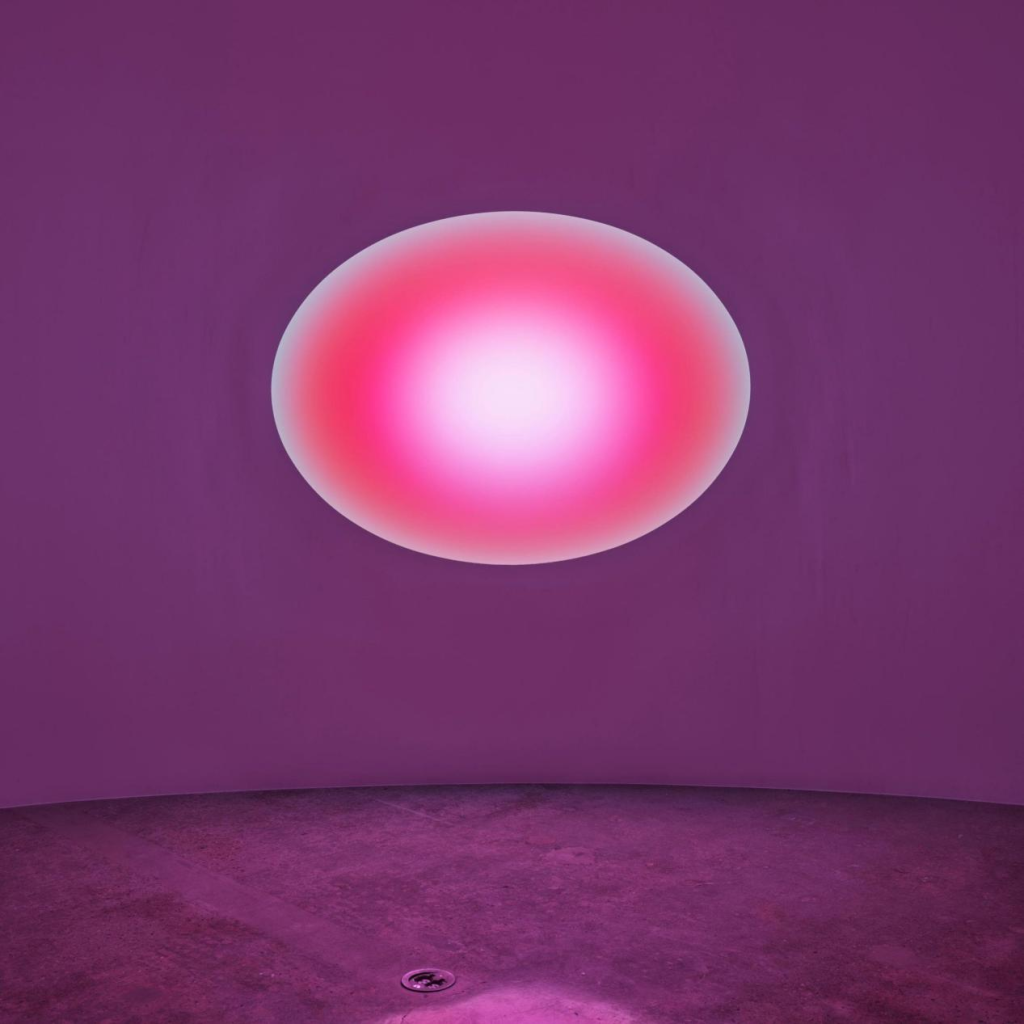
James Turrell: Works
Projection mapping also makes time part of the visual structure. In traditional painting, geometric abstractions usually exist in a static form, while in projection systems, graphics can continuously change according to set rules. For example, geometric shapes can gradually expand, rotate, or repeat, and colors can also change in a certain rhythm. This dynamic change gives the picture a continuous visual rhythm, allowing the viewer to experience a flowing structural order.
Color also plays a crucial role in projection mapping. Due to the high brightness of the projection light source, color contrast can be significantly enhanced. For example, strong color contrast can highlight the boundaries of geometric shapes; by combining color variations, a continuous spatial hierarchy can be established. When color changes are synchronized with form changes, the entire space creates a visual movement, giving the geometric structure a stronger expressiveness.
Furthermore, projection mapping has transformed how geometric abstract art is viewed. Traditional paintings are typically viewed from a single perspective, while projection mapping often unfolds in public spaces. Viewers can observe the work from different angles, even moving around the space, thus experiencing different visual effects. This multi-angle viewing method transforms the artwork from merely an image into a spatial experience.
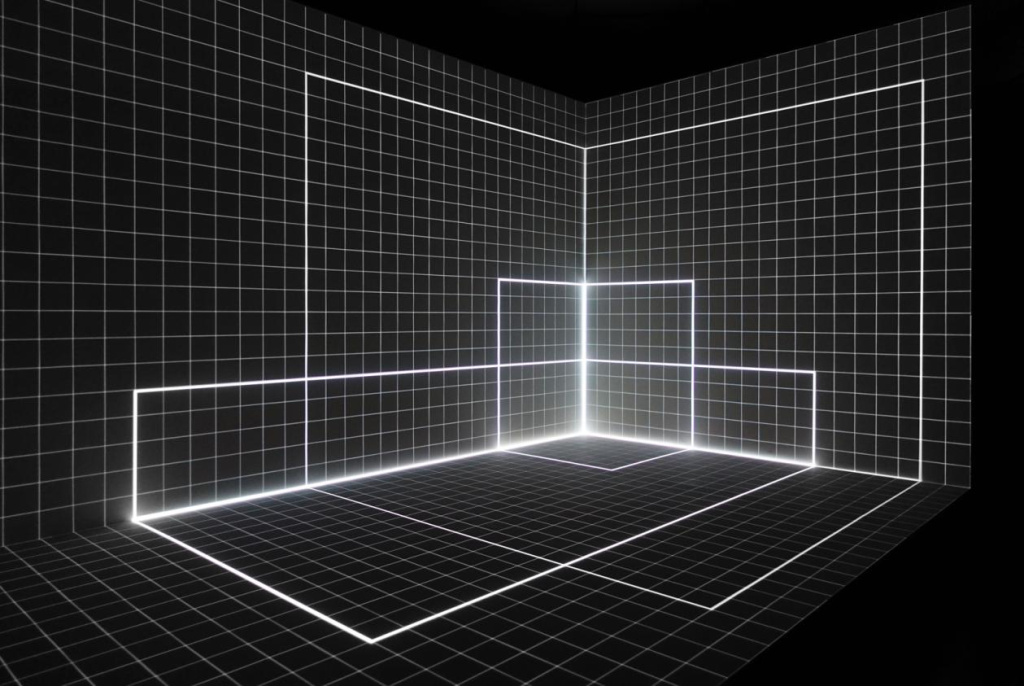
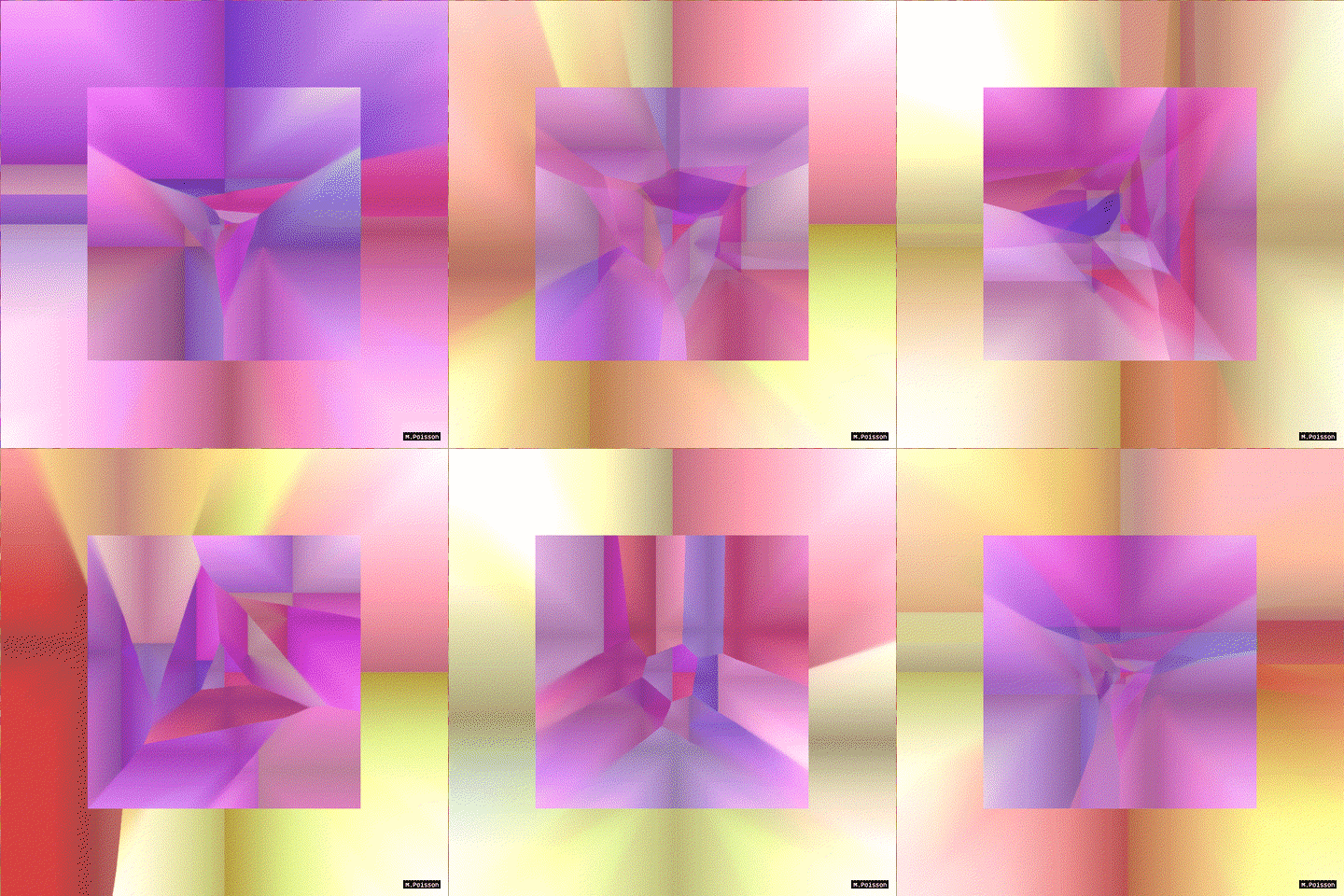
Joanie Lemercier is a French digital artist whose work involves digital projection mapping and light and shadow effects. Her work utilizes geometric abstract forms and precise projection techniques to create unique artistic experiences and visual effects.
On a technical level, projection mapping typically relies on methods such as digital modeling, image correction, and animation design. Artists first need to create a spatial model, and then design the geometric shapes and color structures based on the model. Through software calculations, the image can be matched with the real spatial structure, thus ensuring accurate projection. Through this technical process, geometric abstract art can maintain structural clarity in complex spaces.
From a broader perspective, projection mapping expands geometric abstract art from traditional media into a comprehensive visual system. Form, color, light, and time collectively constitute the structure of the work. Artists not only design images but also spatial experiences, enabling geometric structures to generate new visual meanings within the real environment.
Works by Joanie Lemercier
Therefore, in the context of contemporary digital technology, projection mapping provides an important medium for geometric abstract art. Through the projection of light and shadow, spatial mapping, and dynamic changes, geometric structures can unfold in real space, forming a visual system with temporal and spatial dimensions. This technology not only expands the expressive methods of abstract art but also gives geometric language new vitality in contemporary visual culture.
Lesson D3-2: Projection Mapping (Click to view and listen to the reading)
In the development of contemporary art, digital technology has continuously expanded the expressive methods of geometric abstract art. Among these, projection mapping has become an important medium. By combining digital images with real space, it allows geometric structures to transcend the limitations of a flat canvas and unfold on the surfaces of architecture, sculpture, or spatial structures, thus creating a dynamic visual environment. Through this technology, geometric abstract art transforms from static images into a visual system with temporal and spatial dimensions. The basic principle of projection mapping is to precisely project digital images onto a specific object or spatial surface using projection equipment. Unlike ordinary projection, mapping technology requires image correction based on the object's structure to ensure a perfect match between the image and the real spatial surface. For example, when an image is projected onto a building facade, the geometric forms in the image adjust according to windows, walls, and edges, thus forming a visually complete structural relationship. This technology allows geometric forms to interact with the actual space. In geometric abstract art, projection mapping is often based on geometric shapes and structural systems. For example, grid structures, repeating modules, or gradient colors can continuously change on architectural surfaces. Through changes in light and shadow and the movement of forms, planar geometric shapes can create the illusion of movement in space. Viewers perceive the building's surface as deforming, moving, or unfolding, an effect that imbues abstract structures with new spatial dimensions. Projection mapping also makes time an integral part of the visual structure. In traditional painting, geometric abstraction typically exists in a static form, while in projection systems, graphics can continuously change according to set rules. For example, geometric shapes can gradually expand, rotate, or repeat, and colors can shift rhythmically. This dynamic change creates a continuous visual rhythm, allowing viewers to experience a flowing structural order. Color also plays a crucial role in projection mapping. Due to the high brightness of the projection light source, color contrast can be significantly enhanced. For instance, strong color contrasts can highlight the boundaries of geometric forms; comprehensive color variations can establish continuous spatial layers. When color and form changes are synchronized, the entire space creates a visual movement, giving the geometric structure a stronger expressive power. Furthermore, projection mapping changes the way geometric abstract art is viewed. Traditional paintings are typically viewed from a single perspective, while projection mapping often unfolds in public spaces. Viewers can observe the work from different angles, even moving within the space, thus experiencing different visual effects. This multi-angle viewing method transforms the artwork from merely an image into a spatial experience. Technically, projection mapping typically relies on methods such as digital modeling, image correction, and animation design. Artists first need to create a spatial model, then design geometric shapes and color structures based on that model. Through software calculations, the image can be matched with the real spatial structure, ensuring accurate projection. This technical process allows geometric abstract art to maintain structural clarity in complex spaces. From a broader perspective, projection mapping expands geometric abstract art from traditional media into a comprehensive visual system. Form, color, light, and time collectively constitute the structure of the work. Artists not only design images but also spatial experiences, giving geometric structures new visual meaning in the real environment. Therefore, in the context of contemporary digital technology, projection mapping provides an important medium for geometric abstract art. Through the projection of light and shadow, spatial mapping, and dynamic changes, geometric structures can unfold in real space, forming a visual system with temporal and spatial dimensions. This technology not only expands the expressive methods of abstract art but also gives geometric language new vitality in contemporary visual culture.
 简体中文
简体中文  English
  日本語
日本語  Español
  Français
  हिन्दी
  العربية
  বাংলা
বাংলা  Português do Brasil
  Русский
  اردو
اردو  Bahasa Indonesia
  Deutsch
  Kiswahili
  मराठी
मराठी  తెలుగు
  Tiếng Việt
  Türkçe
  Italiano
  தமிழ்
தமிழ்  한국어
한국어