
8. Color is a visual language that can be programmed.
Victor Vasarely
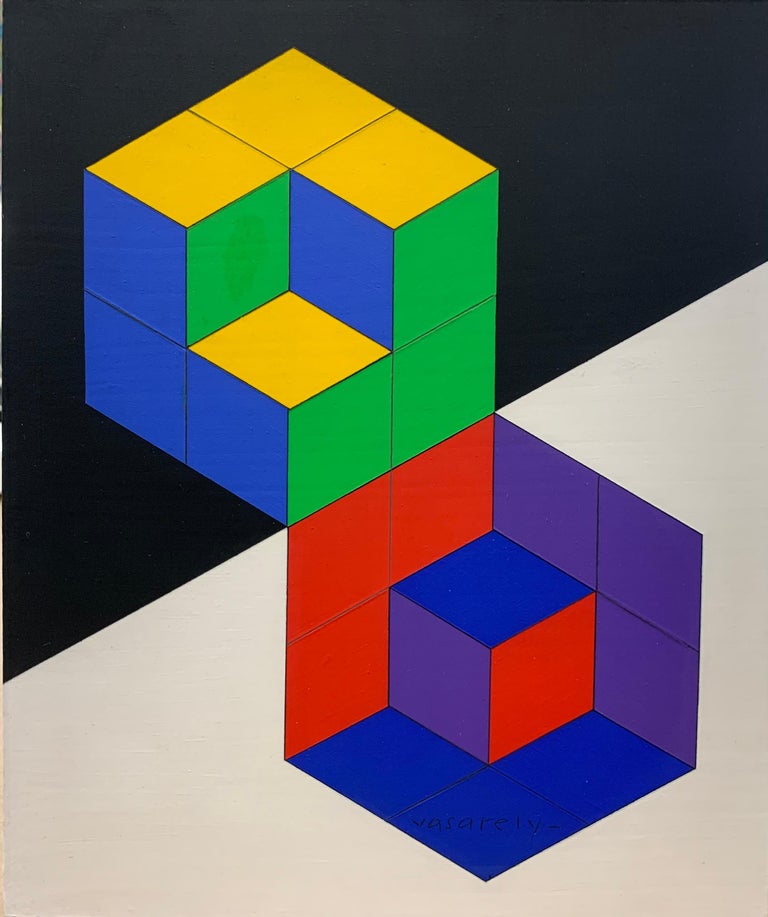
In the development of 20th-century geometric abstract art, Victor Vasarely proposed a forward-thinking idea: color is not only a visual element, but also a visual language that can be systematized, regularized, and even proceduralized. In his theory, color no longer depends on the artist's personal emotions or accidental choices, but can operate according to certain rules in the visual system and generate stable and repeatable visual structures.
Traditional painting often emphasizes the artist's subjective judgment. Color choices are typically related to emotional expression, atmosphere creation, or personal style. However, Vasarely sought to break free from this highly subjective creative approach. He believed that modern visual art should be built upon a clear structural system, where color can be organized into a set of rules, much like mathematics or language. Through this system, artists can create a vast array of visual variations while maintaining visual order.
In Vasarely's work, geometric grids often form the basic structure of the image. For example, repeating units composed of squares, rhombuses, or rectangles. Within these structural units, colors are arranged according to certain rules. Color variations often follow systematic principles such as gradation, symmetry, or repetition. For instance, brightness or saturation gradually changes from the center outwards, or different colors are arranged in a fixed order within the grid. Because this variation has clear rules, the entire color system can be understood as a procedure.
Victor Vasarely
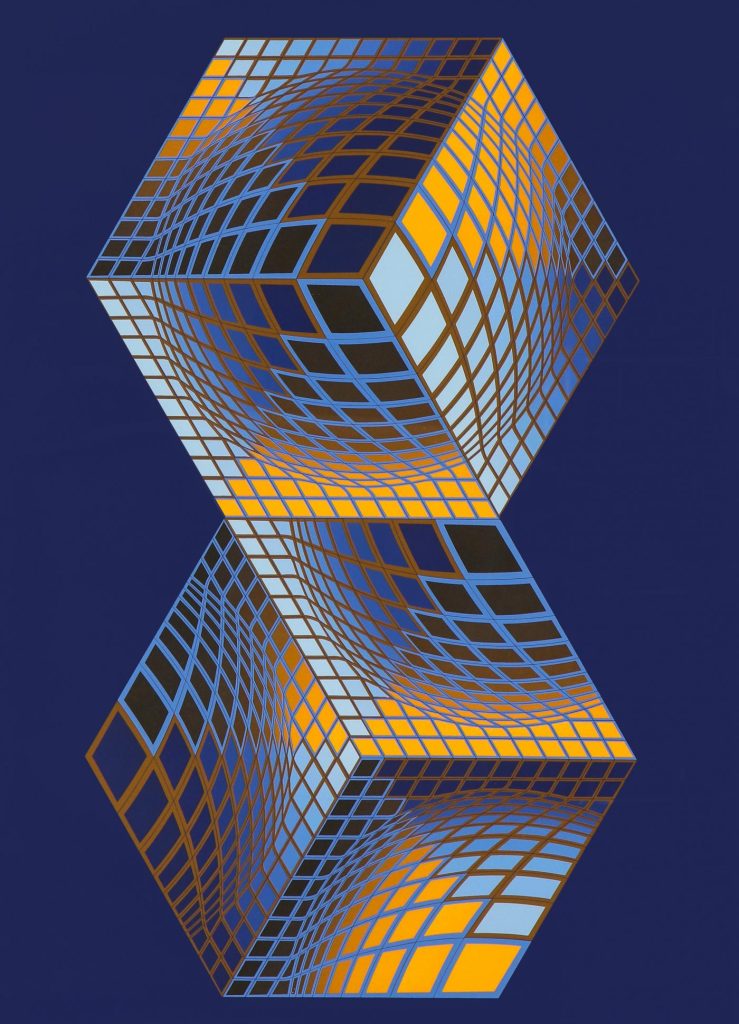
This procedural approach imbues color with a structural characteristic similar to language. In language, individual words do not generate meaning independently, but rather form expressions through grammatical relationships. Similarly, in Vasarely's visual system, individual colors are not important; what matters is their position and relationships within the structure. When these relationships operate according to rules, complex yet orderly visual effects can be generated.
For example, in some of her works, Vasarely uses a fixed number of color modules and assigns them to different positions on a geometric grid. When the colors change in a predictable pattern, the image produces visual effects of spatial expansion, contraction, or vibration. This effect is not random but determined by the operating mechanism of the color system. Changing the order of the colors alters the visual effect. Therefore, color here is more like a manipulable visual code.
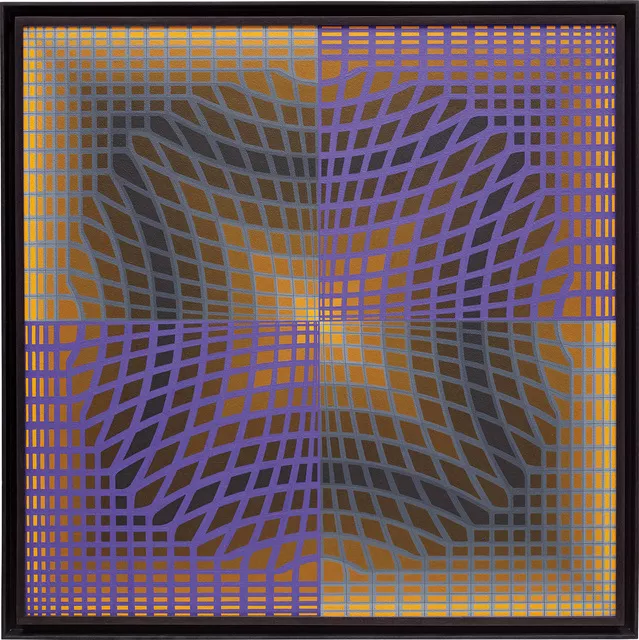
Vasarely proposed the concept of a "visual alphabet." He argued that art, like language, can be composed of basic elements, including geometric shapes and color blocks. When these basic elements are combined according to rules, different visual "vocabularies" and "syntaxes" can be formed. By changing the way they are combined, a large number of new image structures can be generated. This method shifts art from the creation of individual works to the design of systemic structures.
Victor Vasarely
In this system, color is highly controllable. Artists can determine how colors change through pre-defined rules. For example, the colors in one area might gradually change according to brightness, while another area might be arranged according to warm and cool contrasts. All these changes can be understood as a kind of visual algorithm. When these algorithms run within a geometric structure, the image presents a complex yet stable visual order.
This idea has had a profound influence on later visual arts and design. With the development of computer technology, many digital art pieces generate images in a similar way. Programs can automatically generate color variations according to set rules, thus creating complex visual structures. Vasarely's theory, in a sense, foreshadowed this direction of development for digital art.
From a broader perspective, this procedural concept has changed people's understanding of artistic creation. Art is no longer just an expression of personal emotions, but can also be a systematic design process. Artists establish a system of rules, allowing color and form to operate within a structure, thereby generating diverse yet orderly visual results.
Therefore, in Victor Vasarely's color theory, color is not only a visual element, but also a visual language that can be programmed. Through regular arrangement and structured operation, color can generate complex visual changes within a geometric system. It is within this systematic thinking that color has transformed from an emotional medium in traditional painting into an important component of modern visual structure.
Lesson C-8: Color is a Programmable Visual Language (Click to view and listen to the reading)
In the development of 20th-century geometric abstract art, Victor Vasarely proposed a forward-thinking idea: color is not only a visual element, but also a visual language that can be systematized, regularized, and even proceduralized. In his theory, color no longer depends on the artist's personal emotions or accidental choices, but can operate within the visual system according to certain rules, generating stable and repeatable visual structures. Traditional painting often emphasizes the artist's subjective judgment. Color choices are usually related to emotional expression, atmosphere creation, or personal style. However, Vasarely attempted to break free from this highly subjective creative approach. He believed that modern visual art should be built upon a clear structural system, where color can be organized into a set of rules, like mathematics or language. Through this system, artists can create a large number of different visual variations while maintaining visual order. In Vasarely's works, geometric grids often constitute the basic structure of the picture. For example, repeating units composed of squares, rhombuses, or rectangles. Within these structural units, colors are arranged according to certain rules. Color variations often follow systematic principles such as gradation, symmetry, or repetition. For example, gradually changing brightness or saturation from the center outwards, or arranging different colors in a fixed order within the grid. Because this change follows clear rules, the entire color system can be understood as a program. This procedural approach gives color a structural characteristic similar to language. In language, individual words do not generate meaning independently, but rather form expressions through grammatical relationships. Similarly, in Vasarely's visual system, individual colors are not important; what matters is the position and relationship of colors within the structure. When these relationships operate according to rules, complex and orderly visual effects can be generated. For example, in some works, Vasarely uses a fixed number of color modules and assigns these modules to different positions on a geometric grid. When the colors change according to a pattern, the image produces visual effects of spatial expansion, contraction, or vibration. This effect does not occur randomly but is determined by the operating mechanism of the color system. If the order of the colors is changed, the visual effect will also change. For this reason, color here is more like an operational visual code. Vasarely proposed the concept of a "visual alphabet." He believed that art can be composed of basic elements, like language, including geometric shapes and color modules. When these basic elements are combined according to rules, different visual "vocabularies" and "syntaxes" can be formed. By altering the way colors are combined, a multitude of new image structures can be generated. This method shifts art from the creation of individual works to the design of systemic structures. In this system, color possesses a high degree of controllability. Artists can determine how colors change through pre-defined rules. For example, the colors in one area may gradually change according to brightness, while another area may be arranged according to warm and cool contrasts. All these changes can be understood as a visual algorithm. When these algorithms run within geometric structures, the image presents a complex yet stable visual order. This idea has profoundly influenced later visual art and design. With the development of computer technology, many digital art pieces generate images in a similar way. Programs can automatically generate color changes according to set rules, thus producing complex visual structures. Vasarely's theory, in a sense, foreshadowed this direction of development for digital art. From a broader perspective, this procedural concept has changed people's understanding of artistic creation. Art is no longer merely an expression of personal emotion but can also be a system design process. By establishing a system of rules, artists allow color and form to operate within structures, thereby generating diverse yet orderly visual results. Therefore, in Victor Vasarely's color theory, color is not only a visual element, but also a visual language that can be programmed. Through regular arrangement and structured operation, color can generate complex visual changes within a geometric system. It is within this systematic thinking that color has transformed from an emotional medium in traditional painting into an important component of modern visual structure.
 简体中文
 English
 日本語
 Español
 Français
 हिन्दी
 العربية
 বাংলা
 Português do Brasil
 Русский
 اردو
 Bahasa Indonesia
 Deutsch
 Kiswahili
 मराठी
 తెలుగు
 Tiếng Việt
 Türkçe
 Italiano
 தமிழ்
 한국어