9. Colors must be "purified": remove the natural and the subjective.
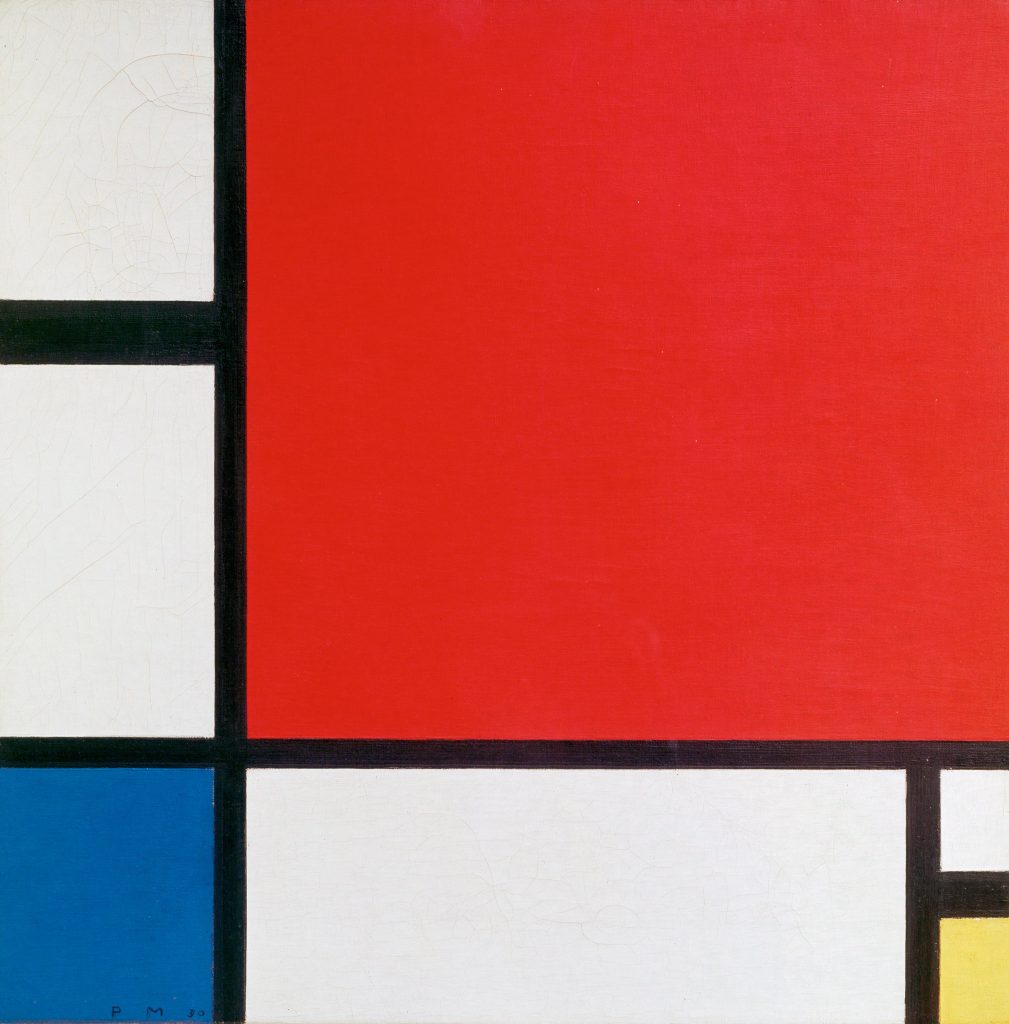
Piet Mondrian
In the development of 20th-century modern art, Piet Mondrian proposed a revolutionary concept of color. He believed that art should no longer remain merely a reproduction of the natural world, but should pursue a more universal and pure visual order. Within this framework, color must undergo a process of "purification," that is, detaching itself from natural colors and personal emotions to become an objective and universal visual element. Through this purification, color ceases to be an attribute of natural objects and becomes an important language for constructing abstract structures.
In traditional painting, color is usually closely related to natural objects. For example, the sky is blue, leaves are green, and people's skin has a specific tone. Artists often choose colors based on their observations of nature, maintaining a connection with nature even after artistic processing. However, Mondrian believed that this approach limited the development of art because it always relied on the image of the external world. To achieve true abstract art, color must break free from the constraints of natural objects.
Therefore, in his theory, color needs to be "purified," that is, stripped of its naturalness. Mondrian gradually abandoned the imitation of natural colors in his work, instead using only a few basic colors: the three primary colors of red, yellow, and blue, as well as neutral colors such as black, white, and gray. These colors no longer refer to specific objects, but are a pure visual existence. Through this choice, color transforms from a description of nature into a structural element.
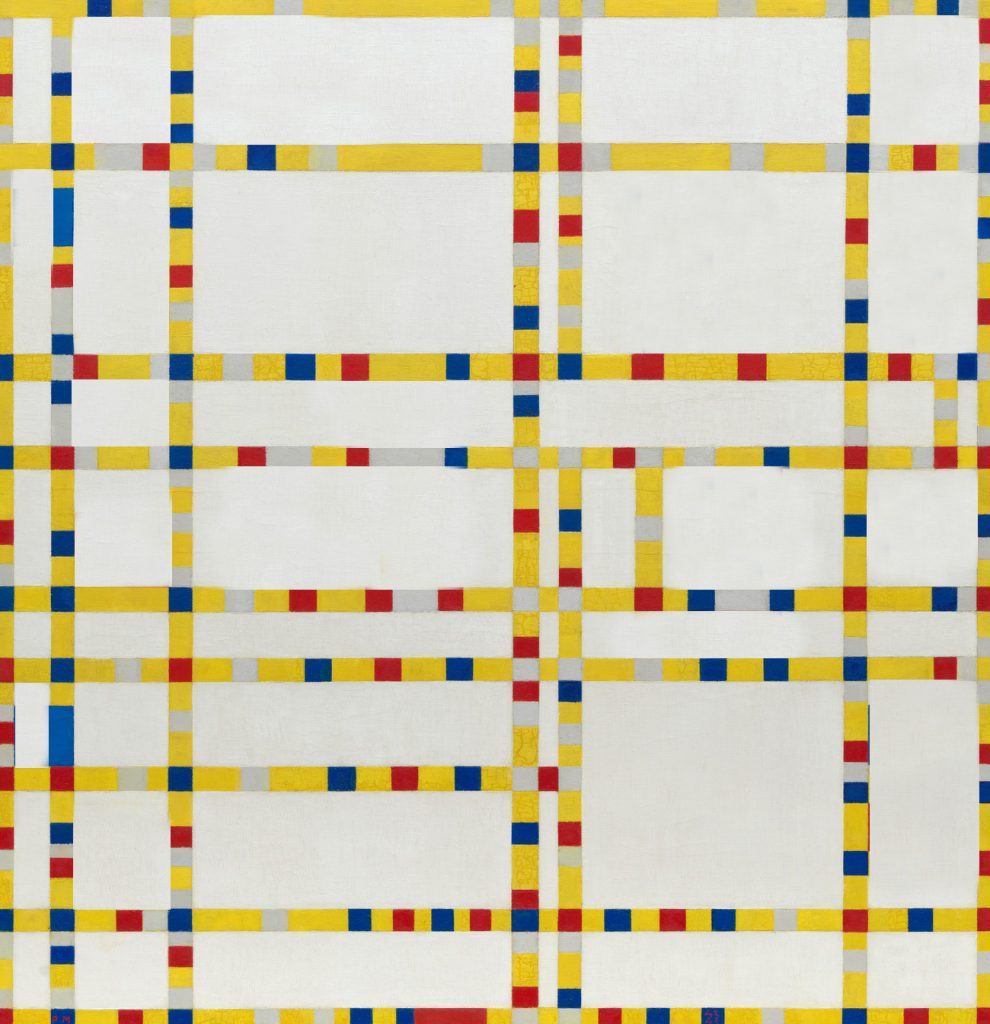
Piet Mondrian
This purification means not only abandoning nature but also abandoning subjectivity. In many artistic traditions, color is seen as an important medium for expressing emotions. For example, strong colors express passion, while soft colors express tranquility. However, Mondrian did not want art to be merely an expression of emotions. He believed that art should pursue a universal order that transcends personal feelings. Therefore, the use of color in a work should not be determined by personal emotions but by the balance of the overall structure.
This idea is very evident in Mondrian's work. The images are typically composed of a grid structure made up of vertical and horizontal black lines, with color confined within these structural units. Blocks of red, yellow, and blue are carefully arranged in different positions, creating contrast and balance with the white space. The position and area of each color are strictly controlled to maintain overall visual order.
In this structural system, color is no longer a freely applied element, but a crucial factor in achieving structural balance. Red blocks may possess strong visual impact, thus requiring balance through other colors or white space. Yellow, due to its high brightness, is often used to regulate the visual rhythm of the image. Blue, on the other hand, tends to bring stability and depth. Through the arrangement of these relationships, the image achieves a stable and harmonious visual order.
Mondrian's approach embodies a rational view of art. He believed that art should pursue universal laws like science, rather than relying on personal intuition. Color here becomes a structural language, functioning similarly to materials in architecture or musical notes in music. Only when these elements are combined according to certain principles can overall order be established.
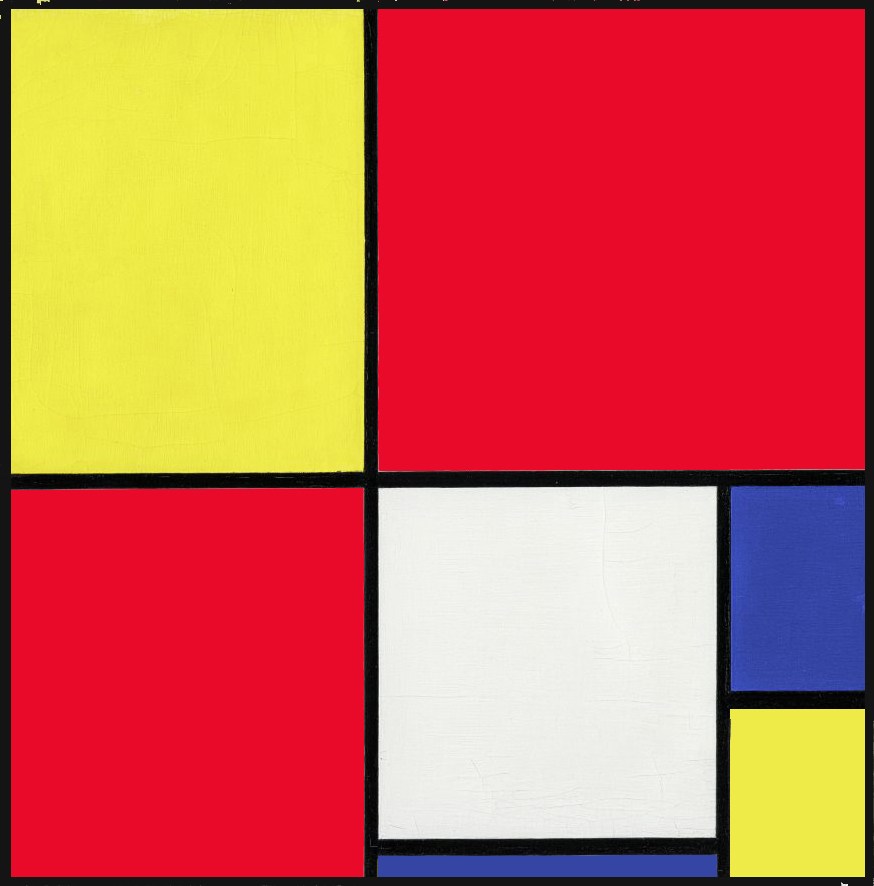
Piet Mondrian
This idea is closely related to the theory of Neoplasticism, which he was involved in. Neoplasticism emphasizes establishing a universal artistic language through the most basic visual elements. In this system, vertical and horizontal lines represent basic structures, while primary and neutral colors constitute the color system. Through the combination of these limited elements, a visual order with universal significance can be established.
On a deeper level, Mondrian's purification of color is actually a philosophical pursuit. He believed that behind the complex and ever-changing appearances of the natural world lies a universal order, and the task of art is to reveal this order. By removing natural images and personal emotions, art can approach this purer structure.
This concept has had a profound impact on modern design, architecture, and visual arts. Many modern design works employ simple geometric structures and limited color systems to establish a clear and stable visual order. Mondrian's principle of color purification liberates color from the realm of natural representation and emotional expression, making it an important component of modern visual structure.
Therefore, in Piet Mondrian's color theory, color must undergo a purification process: it must be freed from the constraints of natural objects and the interference of personal emotions. Only when color becomes a pure structural element can it participate in establishing a universal and stable visual order. This idea not only propelled the development of abstract art but also provided an important theoretical foundation for modern visual design.
Lesson C-9: Colors Must Be "Purified": Remove Nature, Remove Subjectivity. Click to view and listen to the reading.
In the development of 20th-century modern art, Piet Mondrian proposed a revolutionary concept of color. He believed that art should no longer remain merely a reproduction of the natural world, but should pursue a more universal and pure visual order. Within this framework, color must undergo a process of "purification," that is, detaching itself from natural colors and personal emotions to become an objective and universal visual element. Through this purification, color ceases to be an attribute of natural objects and becomes an important language for constructing abstract structures. In traditional painting, color is usually closely related to natural objects. For example, the sky is blue, leaves are green, and human skin has specific tones. Artists often choose colors based on natural observations, maintaining a connection with nature even after artistic processing. However, Mondrian believed that this approach limited the development of art because it always relied on the image of the external world. To achieve true abstract art, color must break free from the constraints of natural objects. Therefore, in his theory, color needs to be "purified," that is, its naturalness removed. In his work, Mondrian gradually abandoned the imitation of natural colors, turning instead to a few basic hues: the three primary colors of red, yellow, and blue, as well as neutral colors such as black, white, and gray. These colors no longer refer to specific objects, but are a pure visual presence. Through this choice, color transforms from a description of nature into a structural element. This purification means not only abandoning nature but also abandoning subjectivity. In many artistic traditions, color is seen as an important medium for expressing emotions. For example, strong colors express passion, while soft colors express tranquility. However, Mondrian did not want art to be merely an expression of emotion. He believed that art should pursue a universal order that transcends personal feelings. Therefore, the use of color in a work should not be determined by personal emotions, but by the balance of the overall structure. This idea is very evident in Mondrian's work. The canvas is usually composed of a grid structure of vertical and horizontal black lines, with colors confined within these structural units. Blocks of red, yellow, and blue are carefully arranged in different positions, contrasting and balancing with white space. The position and area of each color are strictly controlled to maintain overall visual order. In this structural system, color is no longer a freely applied element, but a crucial factor in structural balance. Red blocks may possess strong visual power, thus requiring balance through other colors or white space. Yellow, due to its high brightness, is often used to regulate the visual rhythm of the image. Blue often brings stability and depth. Through the arrangement of these relationships, the image achieves a stable and harmonious visual order. Mondrian's approach embodies a rational view of art. He believed that art should pursue universal laws like science, rather than relying on personal intuition. Color here becomes a structural language, its role similar to materials in architecture or musical notes in music. Only when these elements are combined according to certain principles can overall order be established. This idea is closely related to the theory of Neoplasticism, which he participated in. Neoplasticism emphasizes establishing a universal artistic language through the most basic visual elements. In this system, vertical and horizontal lines represent basic structures, while primary and neutral colors constitute the color system. Through the combination of these limited elements, a universally meaningful visual order can be established. From a deeper perspective, Mondrian's purification of color is actually a philosophical pursuit. He believed that a universal order existed behind the complex and ever-changing appearances of the natural world, and that the task of art was to reveal this order. By removing natural images and personal emotions, art could approach this purer structure. This idea has had a profound impact on modern design, architecture, and visual arts. Many modern design works employ simple geometric structures and limited color systems to establish a clear and stable visual order. Mondrian's principle of color purification liberates color from the reproduction of nature and the expression of emotions, making it an important component of modern visual structure. Therefore, in Piet Mondrian's color theory, color must undergo a purification process: it must be freed from the constraints of natural objects and the interference of personal emotions. Only when color becomes a pure structural element can it participate in establishing a universal and stable visual order. This idea not only promoted the development of abstract art but also provided an important theoretical foundation for modern visual design.
 简体中文
 English
 日本語
 Español
 Français
 हिन्दी
 العربية
 বাংলা
 Português do Brasil
 Русский
 اردو
 Bahasa Indonesia
 Deutsch
 Kiswahili
 मराठी
 తెలుగు
 Tiếng Việt
 Türkçe
 Italiano
 தமிழ்
 한국어