Core purpose
Geometric abstract art is one of the important directions in 20th-century modern art. Based on geometric forms, structural order, and visual relationships, it attempts to break away from the representation of nature and narrative expression, establishing a purer and more rational visual language. In this art system, techniques and methods are not used to depict real objects, but rather to construct visual structures. The core purpose of various methods is to establish a clear, stable, and logical visual order through the relationships between form, proportion, and color.
First, geometric forms are the most fundamental technical elements of geometric abstract art. Artists typically use simple and clear geometric shapes, such as squares, rectangles, circles, triangles, or linear structures. These forms have clear boundaries and stable proportional relationships, allowing the image to present a high degree of order. Compared to natural forms, geometric forms are more abstract and rational, thus reducing randomness and making the visual structure purer.
Secondly, structural organization is a crucial technical means in geometric abstract art. Artists typically organize pictorial space through grid structures, repetition, or proportional division. Grid structures establish a stable visual framework, allowing different elements to operate within the same order. Repetitive structures can generate rhythm and continuity, giving the image a systematic visual logic. Through these methods, artists can establish a clear spatial order on a two-dimensional surface.
Proportionality is also a crucial technical principle in geometric abstract art. The size relationship between different forms affects visual balance. For example, when larger and smaller forms appear simultaneously, visual tension is created. By adjusting proportions, artists can establish a relationship between stability and change within the composition. This control of proportion is similar to structural calculations in architectural design, ensuring visual harmony.
Color also plays a vital role in geometric abstract art. Unlike traditional painting, color is not used to depict nature, but rather to reinforce structural relationships. For example, high-contrast colors can highlight certain forms, while synthesized colors can establish overall harmony. When color is combined with geometric structures, it can create spatial hierarchy, visual rhythm, or dynamic effects, thus enriching simple forms with diverse variations.
Furthermore, repetition and variation are also common techniques. By repeating the same or similar geometric units, artists can establish a stable visual rhythm. At the same time, subtle changes, such as adjusting colors or proportions, can keep the image dynamic. This combination of "order and change" gives geometric abstract art both structural stability and visual richness.
While these techniques take many forms, their core purpose remains consistent: to establish a clear and universal visual order. Geometric abstract art attempts to reveal the structural relationship between form and color through the most basic visual elements. In this structure, art no longer relies on natural images, but rather forms meaning through the relationships between visual elements.
From a deeper perspective, the technical methods of geometric abstract art embody a modern visual concept that art, like science or architecture, can be organized through rules and structures. Form, proportion, and color become the basic units constituting visual language, and the artist's task is to establish stable and harmonious relationships through these units.
Therefore, the core purpose of all techniques and methods in geometric abstract art—whether geometric shapes, grid structures, proportion control, or color arrangement—is to establish a rational and clear visual order. Through this order, art breaks free from the limitations of natural representation, forming a pure and universal visual language.
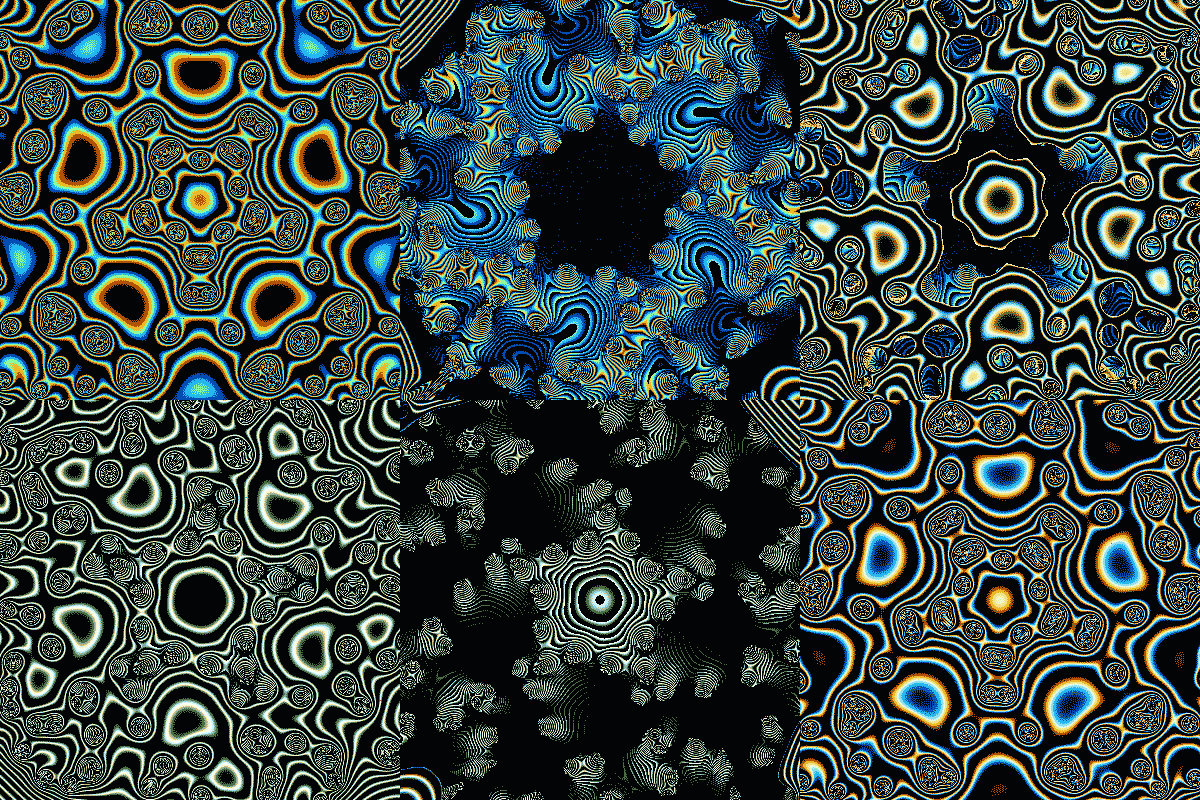
Lesson D-1: Core Objectives (Click to view and listen to the reading)
Geometric abstract art is one of the important directions in 20th-century modern art. Based on geometric forms, structural order, and visual relationships, it attempts to break free from the representation of nature and narrative expression, establishing a purer and more rational visual language. In this artistic system, techniques and methods are not used to depict real objects, but rather to construct visual structures. The core purpose of various methods is to establish a clear, stable, and logical visual order through the relationships between form, proportion, and color. First, geometric forms are the most basic technical elements of geometric abstract art. Artists typically use simple and clear geometric shapes, such as squares, rectangles, circles, triangles, or linear structures. These forms have clear boundaries and stable proportional relationships, enabling the image to present a high degree of order. Compared to natural forms, geometric forms are more abstract and rational, thus reducing randomness and making the visual structure purer. Second, structural organization is an important technical means in geometric abstract art. Artists often organize the pictorial space through grid structures, repetition, or proportional division. Grid structures can establish a stable visual framework, allowing different elements to operate within the same order. Repetitive structures can generate rhythm and continuity, giving the image a systematic visual logic. Through these methods, artists can establish a clear spatial order on a two-dimensional surface. Proportional relationships are also a crucial technical principle in geometric abstract art. The size relationships between different forms affect visual balance. For example, when larger and smaller forms appear simultaneously, visual tension is created. By adjusting proportions, artists can establish a relationship between stability and change within the composition. This control of proportion is similar to structural calculations in architectural design, ensuring visual harmony. Color also plays a vital role in geometric abstract art. Unlike traditional painting, color is not used to depict nature but rather to reinforce structural relationships. For example, high-contrast colors highlight certain forms, while synthesized colors establish overall harmony. When color is combined with geometric structures, it can create spatial hierarchy, visual rhythm, or dynamic effects, thus enriching simple forms with variety. Furthermore, repetition and variation are common techniques. By repeating identical or similar geometric units, artists can establish a stable visual rhythm. Simultaneously, subtle variations, such as adjusting color or proportion, maintain the vitality of the composition. This combination of "order and change" gives geometric abstract art both structural stability and visual richness. While these techniques are diverse in form, their core purpose remains consistent: to establish a clear and universal visual order. Geometric abstract art attempts to reveal the structural relationship between form and color through the most basic visual elements. In this structure, art no longer relies on natural imagery, but rather forms meaning through the relationships between visual elements. At a deeper level, the technical methods of geometric abstract art embody a modern visual concept: art can be organized through rules and structures, just like science or architecture. Form, proportion, and color become the basic units constituting visual language, and the artist's task is to establish stable and harmonious relationships among these units. Therefore, the core purpose of all techniques and methods in geometric abstract art—whether geometric forms, grid structures, proportional control, or color arrangements—is to establish a rational and clear visual order. Through this order, art breaks free from the limitations of natural representation, forming a pure and universal visual language.
 简体中文
简体中文  English
  日本語
日本語  Español
  Français
  हिन्दी
  العربية
  বাংলা
বাংলা  Português do Brasil
  Русский
  اردو
اردو  Bahasa Indonesia
  Deutsch
  Kiswahili
  मराठी
मराठी  తెలుగు
  Tiếng Việt
  Türkçe
  Italiano
  தமிழ்
தமிழ்  한국어
한국어