4. Modeling
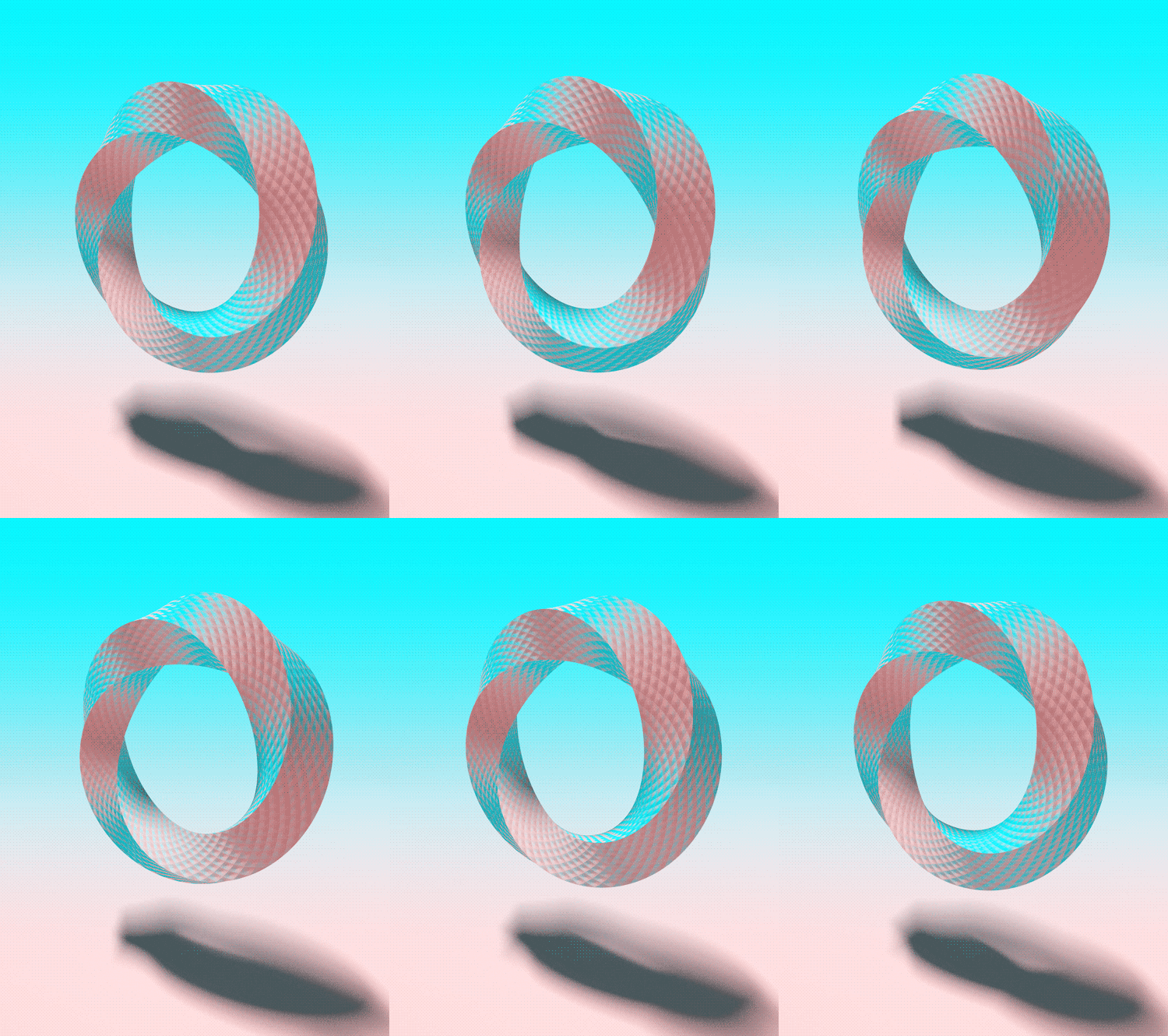
Quayola uses 3D modeling and digital techniques to create abstract geometric artworks. His work explores variations in geometric shapes and structures, as well as the interplay between form and space.
In the development of contemporary digital technology, 3D modeling has become one of the important mediums for geometric abstract art. Unlike traditional geometric abstraction, which mainly exists on a two-dimensional canvas, 3D modeling technology allows geometric structures to be constructed, combined, and evolved in virtual space. Geometric forms are thus transformed from two-dimensional images into structural systems with volume, spatial relationships, and perspective changes. This change in medium not only expands the expressive scope of geometric abstract art but also changes the way artists organize visual structures.
The fundamental characteristic of 3D modeling is the construction of shapes using a coordinate system in digital space. In modeling software, all forms are composed of points, lines, and faces, and are positioned using three-dimensional coordinates. For example, a cube can be constructed using eight vertices and six faces, while complex structures can be formed by combining multiple basic shapes. This construction method allows for highly precise proportional relationships in geometric forms and enables artists to freely adjust structures in space.
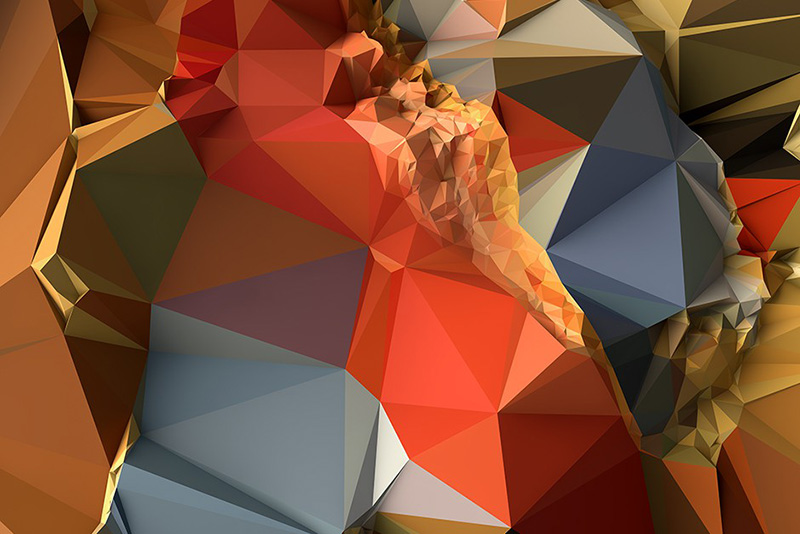
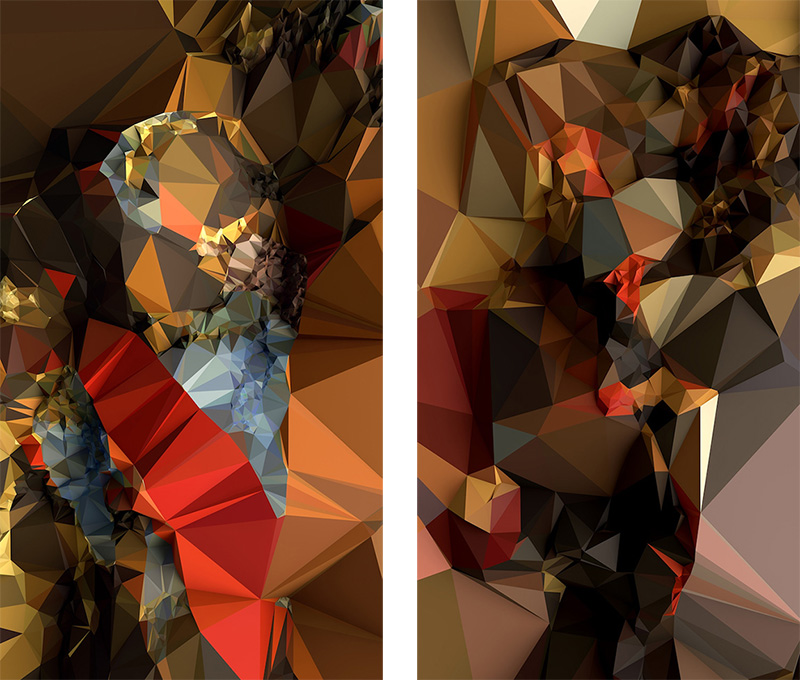
In geometric abstract art, 3D modeling typically begins with basic geometric shapes, such as cubes, spheres, cylinders, or polyhedra. These basic forms can be rotated, copied, scaled, or combined to create complex structures. For example, multiple cubes arranged in a grid can form architectural spatial structures, while repeated arrangements of polyhedra may create crystal-like geometric systems. Through these methods, simple forms can generate complex and orderly spatial compositions.
3D modeling also makes spatial relationships a crucial part of the visual structure. In two-dimensional painting, space is typically represented through perspective and chiaroscuro, while in 3D modeling, space itself is part of the artwork. The distances, angles, and hierarchical relationships between forms can be directly established in virtual space. For example, certain forms can float or intersect in space, creating complex structural relationships. This spatial composition gives geometric abstract art a new dimension.
Lighting and shadow systems are also crucial techniques in 3D modeling. Digital light sources can simulate real light, creating variations in brightness and shadow structures on geometric shapes. When light shines from different angles, different levels of brightness are formed on the surface of the shape, thus enhancing the sense of volume. This relationship between light and shadow not only enhances visual realism but also makes the geometric structure clearer.
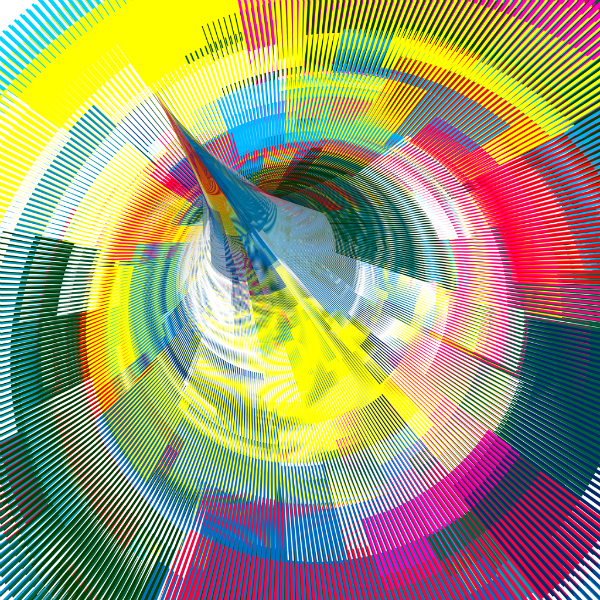
Works by Marius Watz
Norwegian artist Marius Watts uses 3D modeling and computer-generated techniques to create complex and precise geometric abstract works. His works present dynamic visual effects and perceptions through variations in geometric shapes and colors.
Color also plays a structural role in 3D modeling. Color can be applied to different materials, such as metal, glass, or matte surfaces, thereby altering the visual effect. For example, highly reflective materials cause light to reflect off the surface of a shape, while transparent materials can create internal spatial layers. In this way, color and material work together to construct the spatial structure.
Furthermore, 3D modeling allows for changes in perspective. In traditional painting, the image is typically fixed at a single viewpoint, while in three-dimensional space, viewers can observe structures from different angles. As the perspective changes, the relationships between geometric shapes also change. This multi-perspective experience gives geometric abstract art a more dynamic spatial character.
In contemporary art practice, 3D modeling is often combined with other digital media. For example, high-resolution images are generated through 3D rendering techniques, geometric structures are animated through animation systems, or virtual forms are transformed into physical sculptures through 3D printing. These technologies enable geometric structures in virtual space to enter real space, thereby forming new art forms.
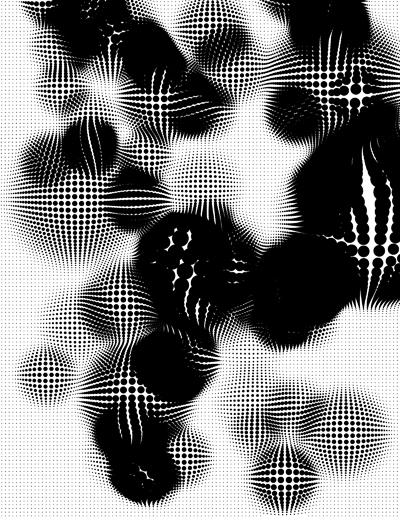
Works by Marius Watz
From a broader perspective, 3D modeling brings geometric abstract art closer to structural design and spatial research. Artists not only construct images but also spatial systems. Form, proportion, and light and shadow form complex relationships in a three-dimensional environment, giving the work a visual structure that is both rational and dynamic.
Therefore, in the context of contemporary digital technology, 3D modeling provides a new media system for geometric abstract art. Through the construction of three-dimensional space, the control of light and shadow, and the variation of materials, geometric forms can form complex yet orderly structures in virtual space. This technology not only expands the expressive forms of geometric abstract art but also enables it to gain new directions for development in contemporary visual culture.
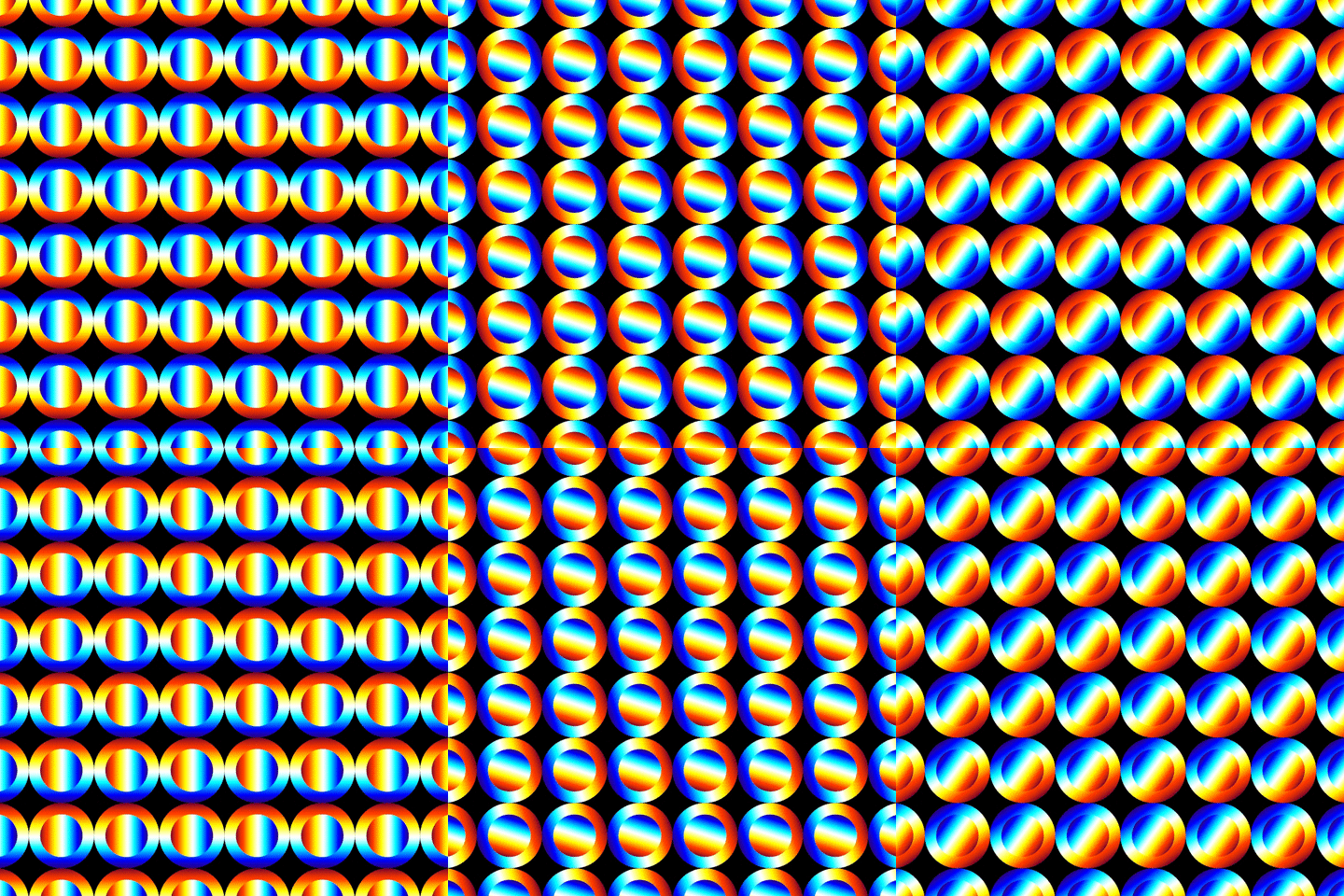
Lesson D-3: 3D Modeling (Click to view and listen to the audio recording)
In the development of contemporary digital technology, 3D modeling has become one of the important mediums for geometric abstract art. Unlike traditional geometric abstraction, which mainly exists on a two-dimensional canvas, 3D modeling technology allows geometric structures to be constructed, combined, and evolved in virtual space. Geometric forms thus transform from two-dimensional images into structural systems with volume, spatial relationships, and perspective variations. This change in medium not only expands the expressive scope of geometric abstract art but also changes the way artists organize visual structures. The fundamental characteristic of 3D modeling is the construction of forms through a coordinate system in digital space. In modeling software, all forms are composed of points, lines, and faces, and are positioned using three-dimensional coordinates. For example, a cube can be constructed using eight vertices and six faces, while complex structures can be formed by combining multiple basic shapes. This construction method gives geometric forms highly precise proportional relationships and allows artists to freely adjust structures in space. In geometric abstract art, 3D modeling typically starts with basic geometric shapes, such as cubes, spheres, cylinders, or polyhedra. These basic shapes can be rotated, copied, scaled, or combined to form complex structures. For example, multiple cubes arranged in a grid can form architectural spatial structures, while the repetitive arrangement of polyhedra can form crystal-like geometric systems. Through these methods, simple forms can generate complex and orderly spatial compositions. 3D modeling also makes spatial relationships an important part of visual structure. In two-dimensional painting, space is usually represented through perspective and chiaroscuro, while in three-dimensional modeling, space itself is part of the artwork. The distances, angles, and hierarchical relationships between forms can be directly established in virtual space. For example, certain forms can float or intersect in space, forming complex structural relationships. This spatial composition gives geometric abstract art a new dimension. Light and shadow systems are also important techniques in 3D modeling. Digital light sources can simulate real light, causing variations in light and shadow and shadow structures on geometric forms. When light shines from different angles, the surface of the form will form different levels of brightness, thus enhancing the sense of volume. This light and shadow relationship not only enhances visual realism but also makes the geometric structure clearer. Color also plays a structural role in 3D modeling. Color can be assigned to different materials, such as metal, glass, or matte surfaces, thereby changing the visual effect. For example, highly reflective materials cause light reflection on the surface of a form, while transparent materials can create internal spatial layers. In this way, color and material work together to construct the spatial structure. Furthermore, 3D modeling allows for changes in perspective. In traditional painting, the image is usually fixed at a single viewpoint, but in three-dimensional space, viewers can observe the structure from different angles. As the perspective changes, the relationships between geometric shapes also change. This multi-perspective experience gives geometric abstract art a more dynamic spatial character. In contemporary art practice, 3D modeling is often combined with other digital media. For example, high-resolution images are generated through 3D rendering technology, geometric structures are animated through animation systems, or virtual shapes are transformed into physical sculptures through 3D printing. These technologies allow geometric structures in virtual space to enter real space, thus forming new art forms. From a broader perspective, 3D modeling brings geometric abstract art closer to structural design and spatial research. Artists not only construct images but also spatial systems. Form, proportion, and light and shadow form complex relationships in a three-dimensional environment, giving the work a visual structure that is both rational and dynamic. Therefore, in the context of contemporary digital technology, 3D modeling provides a new media system for geometric abstract art. Through the construction of three-dimensional space, the control of light and shadow, and the transformation of materials, geometric shapes can form complex yet orderly structures in virtual space. This technology not only expands the expressive forms of geometric abstract art but also gives it a new direction for development in contemporary visual culture.
 简体中文
简体中文  English
  日本語
日本語  Español
  Français
  हिन्दी
  العربية
  বাংলা
বাংলা  Português do Brasil
  Русский
  اردو
اردو  Bahasa Indonesia
  Deutsch
  Kiswahili
  मराठी
मराठी  తెలుగు
  Tiếng Việt
  Türkçe
  Italiano
  தமிழ்
தமிழ்  한국어
한국어