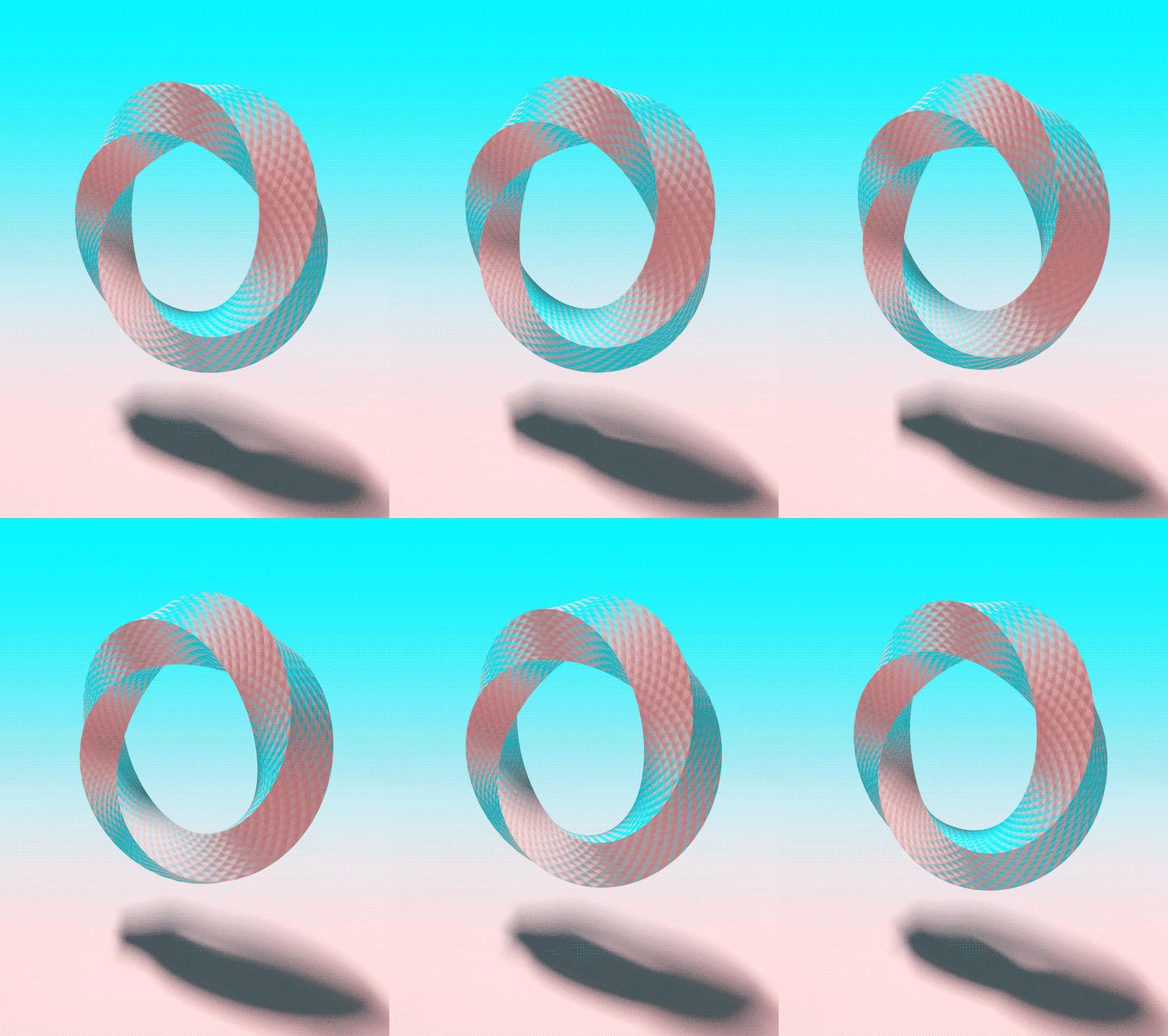
- collage art
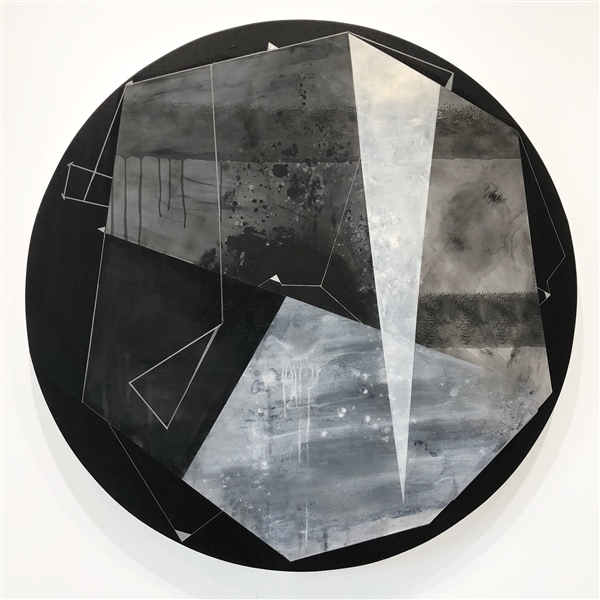
torkwase dyson
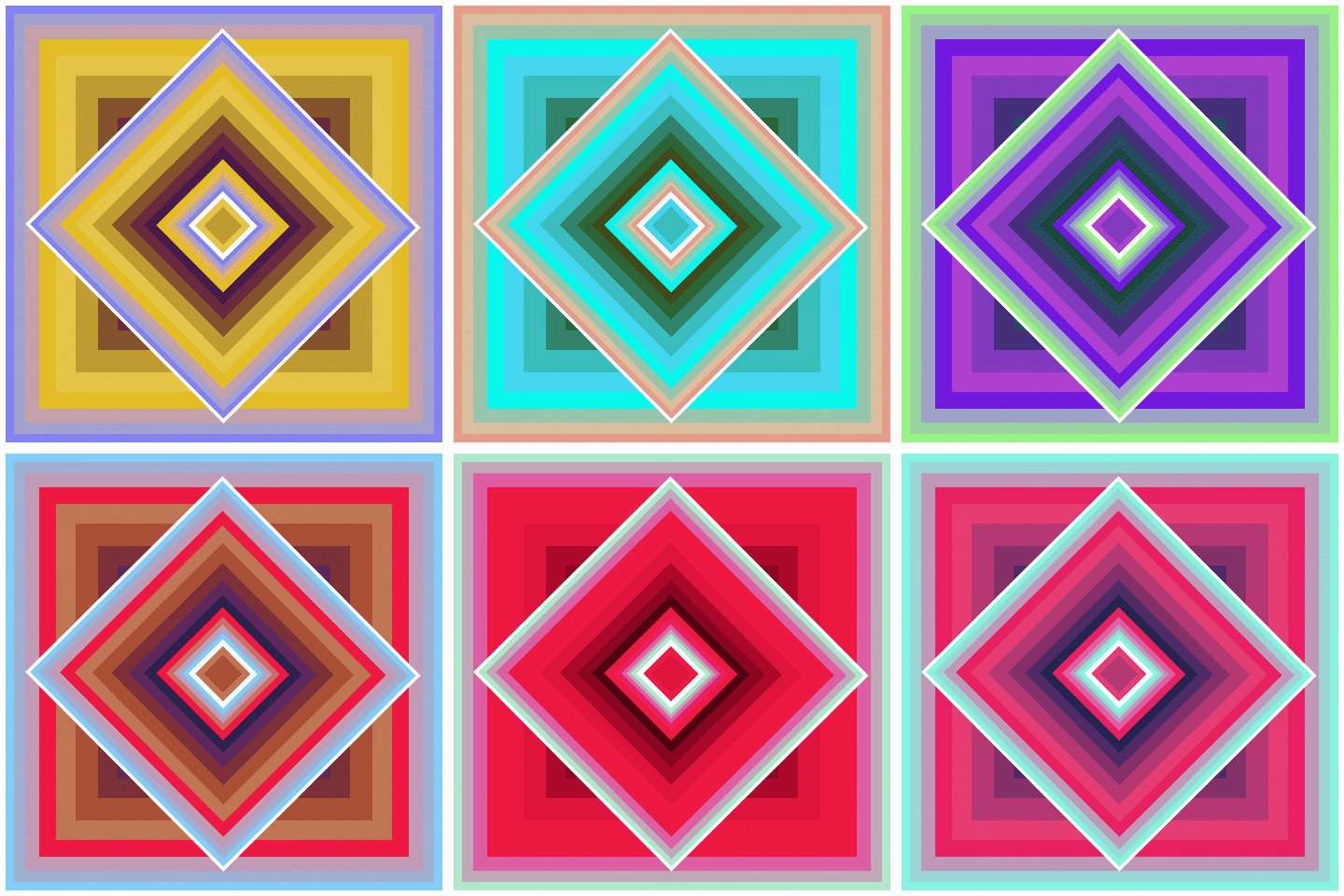
Collage art is an important and common form of geometric abstract art. It uses the cutting, splicing, and recombination of different materials or image elements to create a visually ordered structure of geometric forms within new structural relationships. Unlike traditional painting, which directly depicts forms on canvas, collage art often constructs its image through the "combination of materials," thus it is both a visual language and a structural method. In the development of geometric abstract art, collage art has provided a more open and diverse means of expression for geometric forms.
In collage art, geometric forms typically arise from the cutting and segmentation of materials. Artists can cut paper, fabric, printed images, or other materials into squares, circles, triangles, or irregular geometric shapes, and then rearrange these forms to create new structures. Ordinary materials become visual units after being cut, and these units combine to form the overall image. It is this transformation from "material" to "structure" that gives collage art its unique expressive power.
One of the key characteristics of collage art is the establishment of structural relationships. Each geometric shape in the picture not only has its own shape, but also forms a relationship of position, proportion, and direction with other shapes. For example, when rectangles of different sizes are juxtaposed, the picture produces a clear sense of layering; when circles and straight lines intersect, the picture forms a dynamic structure. Through the organization of these relationships, artists are able to establish an orderly visual system on a two-dimensional surface.
In many collage works, layering is an important structural method. When different materials or forms overlap in the image, the viewer naturally perceives a sense of depth, creating spatial layers. This space is not the real space produced by traditional perspective, but a structural space formed by the layering of forms. For example, a dark piece of paper layered on top of a light-colored form creates a noticeable visual depth. This method allows collage art to create spatial variation while maintaining its planar characteristics.
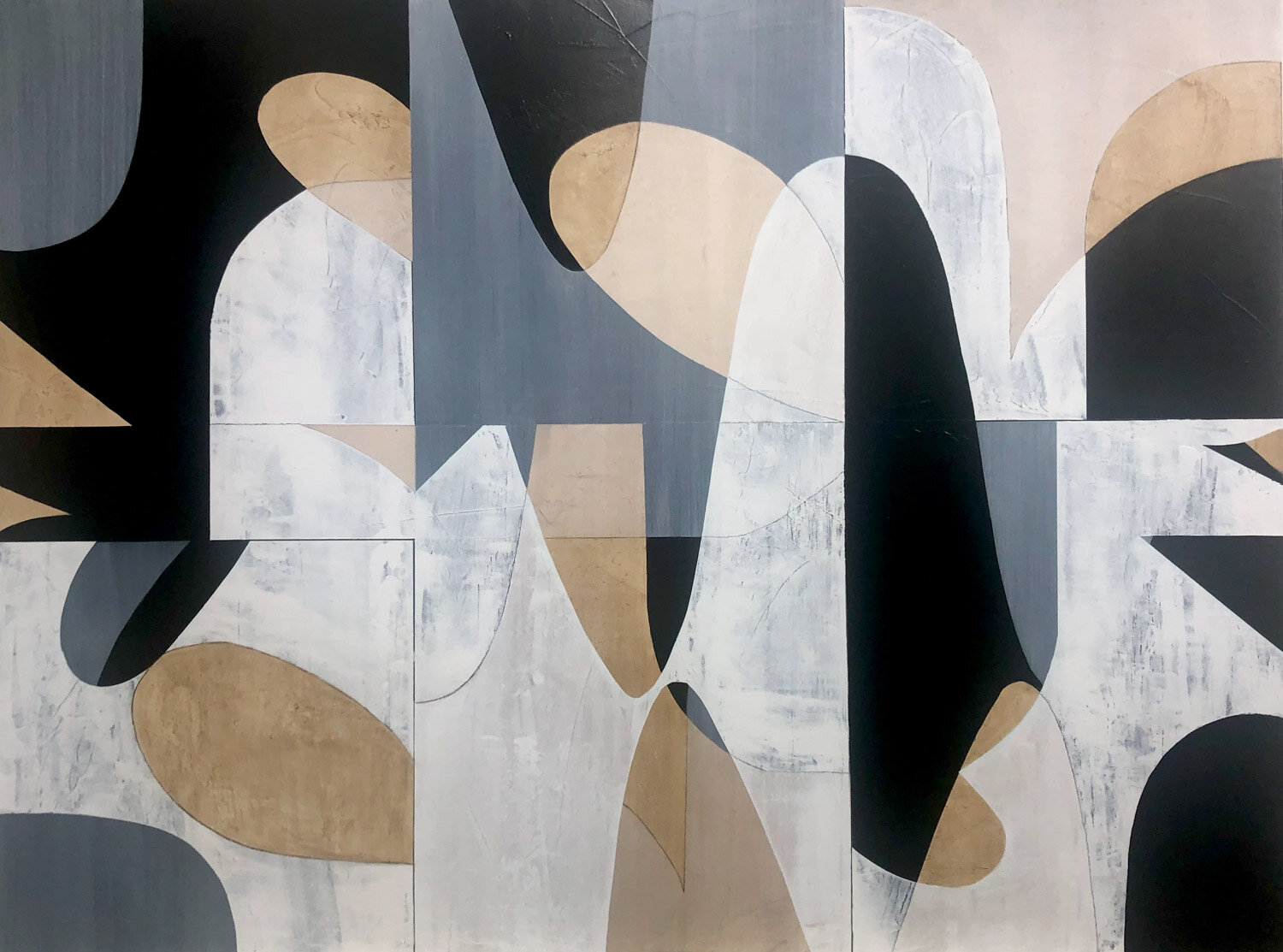
TRICIA STRICKFADEN
Collage art also possesses distinct material characteristics. Different materials have different textures, colors, and edge shapes, creating rich visual contrasts when combined in the same image. For example, juxtaposing rough paper with a smooth printed image can create a difference in texture; layering dark and light materials enhances the visual tension of the image. Through the selection and combination of materials, artists can introduce more layers of visual variation within geometric structures.
In the context of geometric abstract art, collage art often emphasizes the simplification and ordering of forms. Artists typically avoid using complex images, instead choosing to combine basic geometric shapes. Through repetition, changes in proportion, and variations in direction, these simple forms can create rhythmic structures. For example, a group of rectangles of varying sizes can create visual rhythm, while a series of triangles facing different directions can form a dynamic structure. In this way, collage art can create complex visual effects within simple forms.
Collage art also possesses an openness. Due to the wide availability of materials, artists can continuously introduce new visual elements, causing the work to constantly change structurally. For example, newspaper and magazine images, colored paper, and even metal sheets can all become collage materials. When these materials are transformed into geometric forms, they not only constitute a visual structure but also retain the characteristics of the materials themselves, thus giving the work multi-layered meaning.
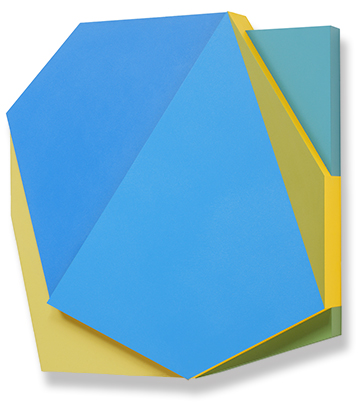
Connie Goldman
In contemporary art and design, collage techniques are also widely used in digital environments. Computer software can simulate the process of cutting and layering, allowing artists to quickly combine different geometric shapes on a screen. Through digital tools, the size, position, and proportion of the shapes can be continuously adjusted, thereby generating new visual structures. This digital collage not only inherits the structural logic of traditional collage but also provides a more flexible creative method for geometric abstract art.
Overall, collage art holds an important place in geometric abstract art. Through the cutting and recombination of materials, it transforms simple geometric forms into complex and orderly visual structures. By arranging, layering, and organizing proportional relationships, collage art can create rich layers and rhythms on a two-dimensional surface. It is precisely in this structural exploration that collage art not only expands the expressive methods of geometric abstraction but also provides contemporary art with an open creative approach.
Lesson D4-1: Collage Art (Click to view and listen to the reading)
Collage art is an important and common form of geometric abstract art. It uses the cutting, splicing, and recombination of different materials or image elements to create a visually ordered structure from geometric forms within new structural relationships. Unlike traditional painting, which directly depicts forms on canvas, collage art often constructs its image through the "combination of materials," making it both a visual language and a structural method. In the development of geometric abstract art, collage art has provided a more open and diverse way to express geometric forms. In collage art, geometric forms typically originate from the cutting and segmentation of materials. Artists can cut paper, fabric, printed images, or other materials into squares, circles, triangles, or irregular geometric shapes, and then rearrange these forms to create new structures. Ordinary materials become visual units after being cut, and these units combine to form the overall image. It is this transformation from "material" to "structure" that gives collage art its unique expressive style. One of the key characteristics of collage art is the establishment of structural relationships. Each geometric form in the image not only has its own shape but also forms relationships of position, proportion, and direction with other forms. For example, when rectangles of different sizes are juxtaposed, a distinct sense of depth is created; when circles and straight lines intersect, a dynamic structure emerges. Through the organization of these relationships, artists can establish an ordered visual system on a flat surface. Superimposition is a crucial structural method in many collage works. When different materials or forms overlap, the viewer naturally perceives a sense of depth, creating spatial layers. This space is not the real space produced by traditional perspective, but a structural space formed by the superposition of forms. For example, a dark piece of paper superimposed on a light-colored form creates a noticeable visual depth. This method allows collage art to maintain its planar characteristics while generating spatial variation. Collage art also possesses distinct material characteristics. Different materials have different textures, colors, and edge forms, creating rich visual contrasts when combined in the same image. For example, juxtaposing rough paper with a smooth printed image creates a difference in texture; superimposing dark and light materials enhances the visual tension of the image. Through the selection and combination of materials, artists can introduce more layers of visual variation into geometric structures. In the context of geometric abstract art, collage art often emphasizes the simplification and ordering of forms. Artists typically avoid complex images, instead choosing to combine basic geometric shapes. Through repetition, changes in proportion, and variations in direction, these simple forms can create rhythmic structures. For example, a group of rectangles of varying sizes can create visual rhythm, while a series of triangles facing different directions can form a dynamic structure. In this way, collage art can create complex visual effects within simple forms. Collage art also possesses an openness. Due to the wide availability of materials, artists can continuously introduce new visual elements, causing the work to constantly change structurally. For example, newspaper and magazine images, colored paper, and even metal sheets can all become collage materials. When these materials are transformed into geometric forms, they not only constitute visual structures but also retain the characteristics of the materials themselves, thus giving the work multi-layered meaning. In contemporary art and design, collage methods are also widely applied in digital environments. Computer software can simulate the process of cutting and superimposing, allowing artists to quickly combine different geometric shapes on a screen. Through digital tools, the size, position, and proportion of forms can be continuously adjusted, thereby generating new visual structures. This digital collage not only inherits the structural logic of traditional collage but also provides a more flexible creative approach to geometric abstract art. Overall, collage art holds an important position within geometric abstract art. Through the cutting and recombination of materials, it transforms simple geometric forms into complex and orderly visual structures. Through arrangement, superposition, and the organization of proportional relationships, collage art can create rich layers and rhythms on a flat surface. It is precisely in this structural exploration that collage art not only expands the expressive methods of geometric abstraction but also provides contemporary art with an open creative approach.
 简体中文
简体中文  English
  日本語
日本語  Español
  Français
  हिन्दी
  العربية
  বাংলা
বাংলা  Português do Brasil
  Русский
  اردو
اردو  Bahasa Indonesia
  Deutsch
  Kiswahili
  मराठी
मराठी  తెలుగు
  Tiếng Việt
  Türkçe
  Italiano
  தமிழ்
தமிழ்  한국어
한국어