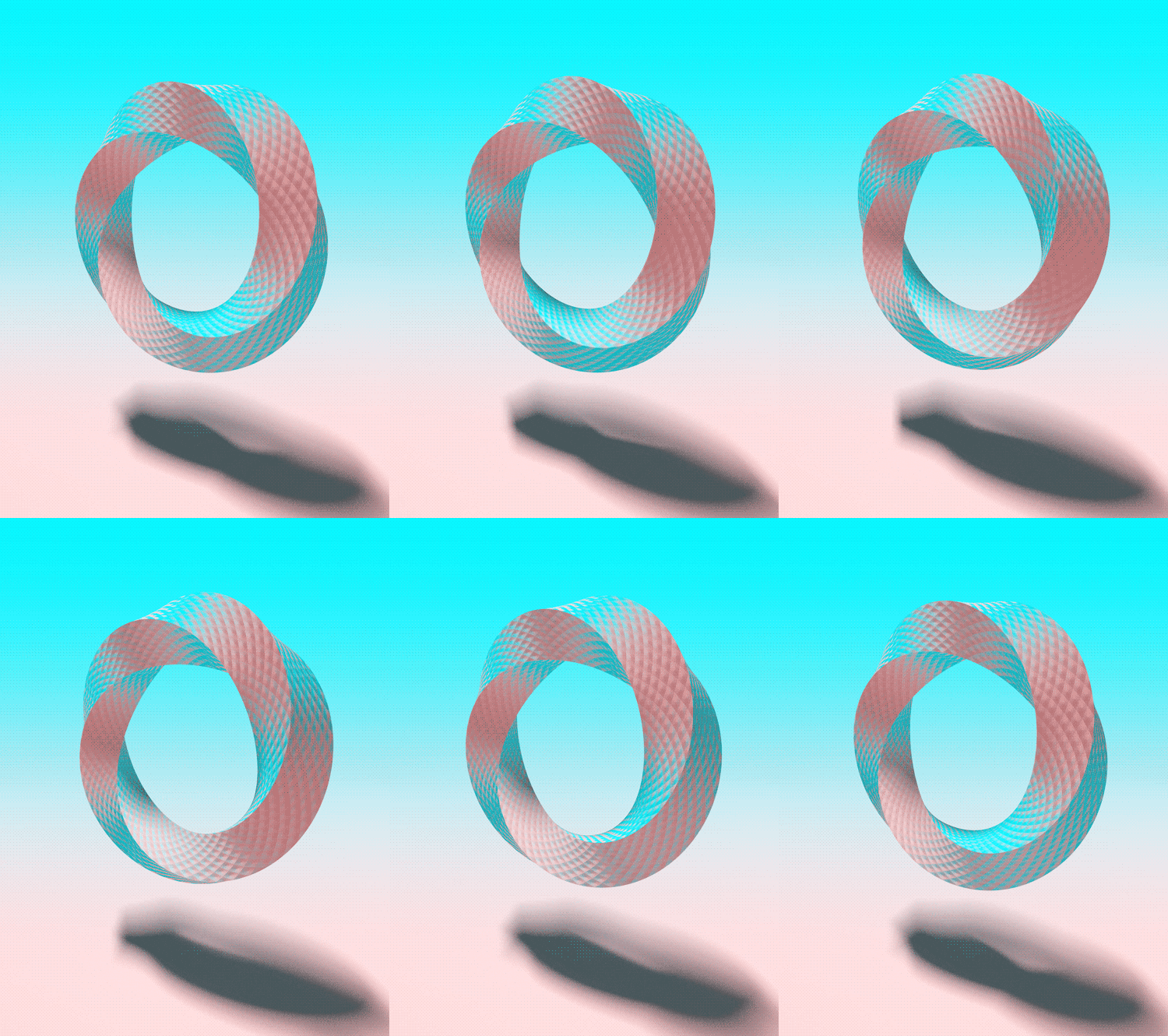
4. Digital Integration
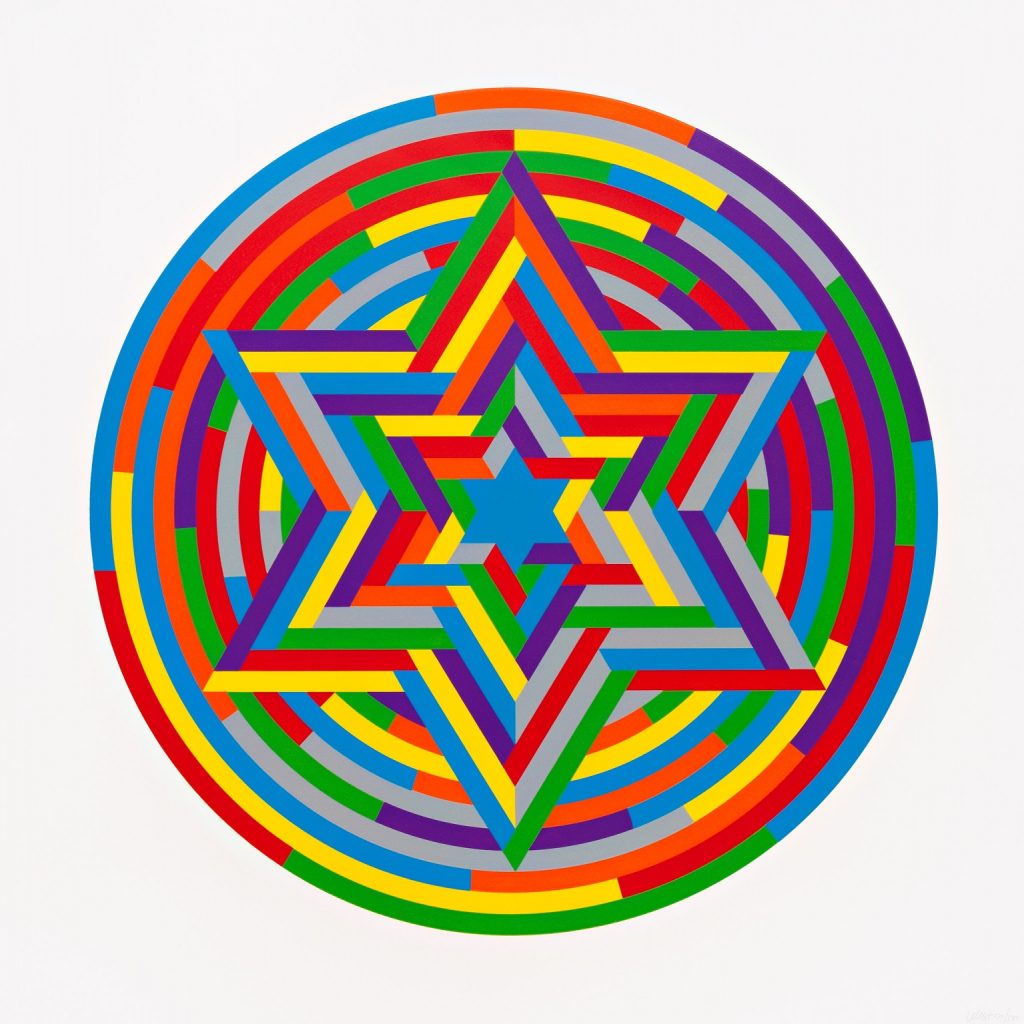
Sol LeWitt
Digital integration is an important form that has gradually developed in contemporary geometric abstract art. It uses computer technology, algorithm systems, and digital media to combine geometric structures, color relationships, and program logic to generate highly complex and systematic visual images. Unlike traditional painting or hand-drawn composition, digital integration art does not rely solely on artists drawing forms by hand. Instead, it uses digital tools to calculate, generate, and control geometric elements, giving geometric abstraction a new mode of expression in the contemporary technological environment.
In digital integrated art, geometric forms remain the most basic visual units, such as circles, squares, triangles, lines, or grid structures. However, these elements are no longer simply arranged statically in the image; instead, they are automatically generated or constantly changing according to programmed rules. Artists can set a series of mathematical or logical rules, such as repetition, recursion, random variation, proportional expansion, or rotational displacement, and the computer continuously generates new geometric combinations according to these rules. In this way, simple geometric forms can form complex and orderly visual systems.
Digital technology has enabled greater precision and controllability in geometric abstract art. In traditional painting, geometric structures often rely on manual measurement and drawing, while in a digital environment, artists can precisely control the position, size, and angle of each form through software. For example, in an image composed of a grid, a computer can quickly generate hundreds or even thousands of geometric units and arrange them according to predefined rules. This highly precise control allows complex structures to be completed in a short time while maintaining overall unity.
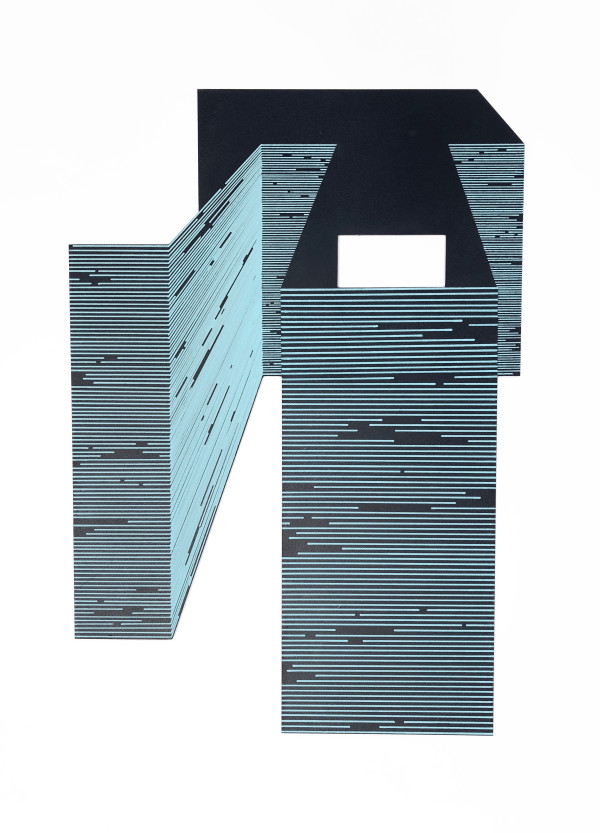
Katy Ann Gilmore
Digital integrated art also exhibits a distinct systematic characteristic. Many works are not single images, but rather visual systems comprised of a complete set of generative rules. Once the rules are set, the computer can continuously generate different versions of the image, each with similar structural features but differing in detail. This approach transforms artistic creation from a single work into a "generative process." The artwork is no longer just a fixed image, but a continuously evolving visual system.
In terms of visual expression, digital integrated art can present complex effects that are difficult to achieve with traditional media. For example, through algorithmic control, geometric shapes can gradually spread, gather, or rotate within the image, thus forming a continuously changing structure. When these changes are made into dynamic images, the geometric shapes appear to be constantly growing or flowing, transforming static abstract structures into visual processes with a temporal dimension. This dynamic structure allows viewers to experience the changes in geometric relationships over time.
Color systems also offer new possibilities in digital integrated art. Computers can rapidly generate a vast number of color combinations and apply gradients or contrasts according to predefined rules. For example, an artist can set up a color algorithm that causes colors to gradually change in a specific order within the image, creating smooth color transitions or strong visual contrasts. In this way, color is no longer merely a decorative element, but rather a component of the overall visual system, integrated with geometric structures.
Digital integration also connects geometric abstract art with other technological fields. For example, in interactive art, viewers can change the geometric structure in the image using a mouse, touchscreen, or sensor, allowing the work to present different visual states with the participation of different viewers. In projection mapping or digital installations, geometric shapes can also be projected onto architectural or spatial surfaces, allowing abstract structures to interact with the real environment. In these ways, geometric abstract art expands from the traditional canvas to a wider range of spaces and media.
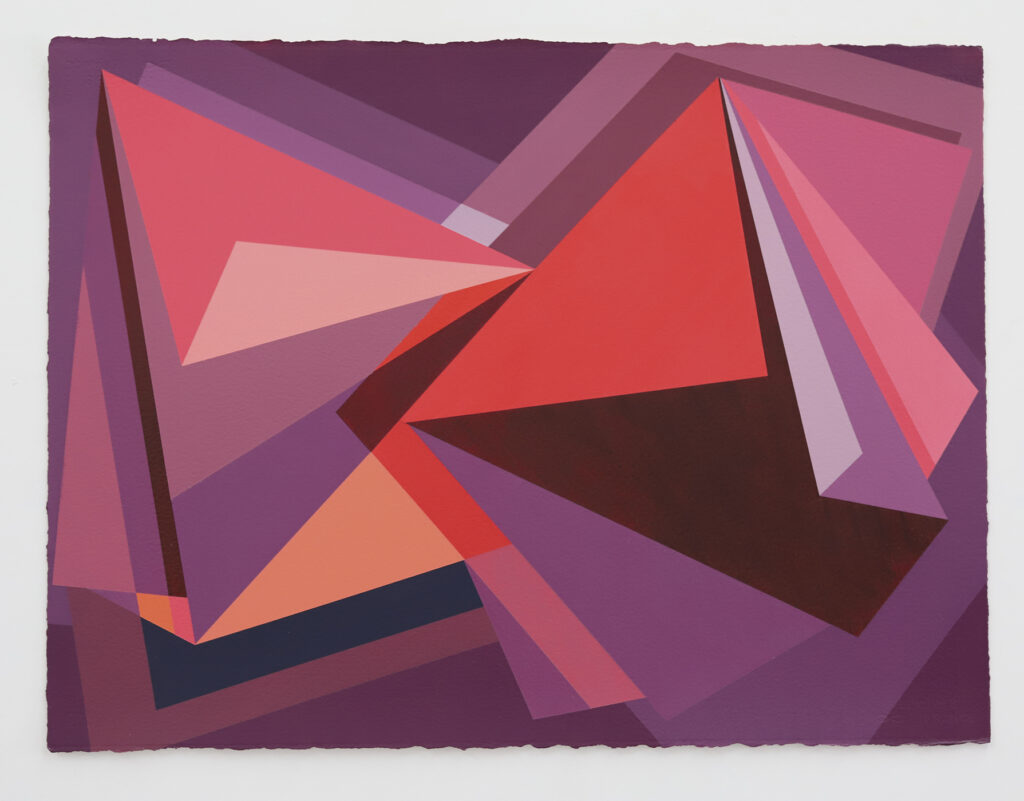
Rachel Hellmann
Furthermore, digital integrated art also connects with data visualization and artificial intelligence technologies. Some works transform data into geometric shapes, making abstract structures a means of information expression. For example, changes in data can be translated into variations in line density, shape size, or color, thus presenting complex information in geometric form. This approach not only possesses artistic value but also serves a function of information expression.
Overall, digital integration represents an important development direction for geometric abstract art under contemporary technological conditions. Through the combination of computer algorithms, digital tools, and visual structures, it enables geometric forms to operate within more complex and dynamic systems. Artists no longer merely draw single images, but generate images through design rules and systems. It is precisely in this fusion of technology and art that geometric abstract art gains new expressive spaces and new structural possibilities.
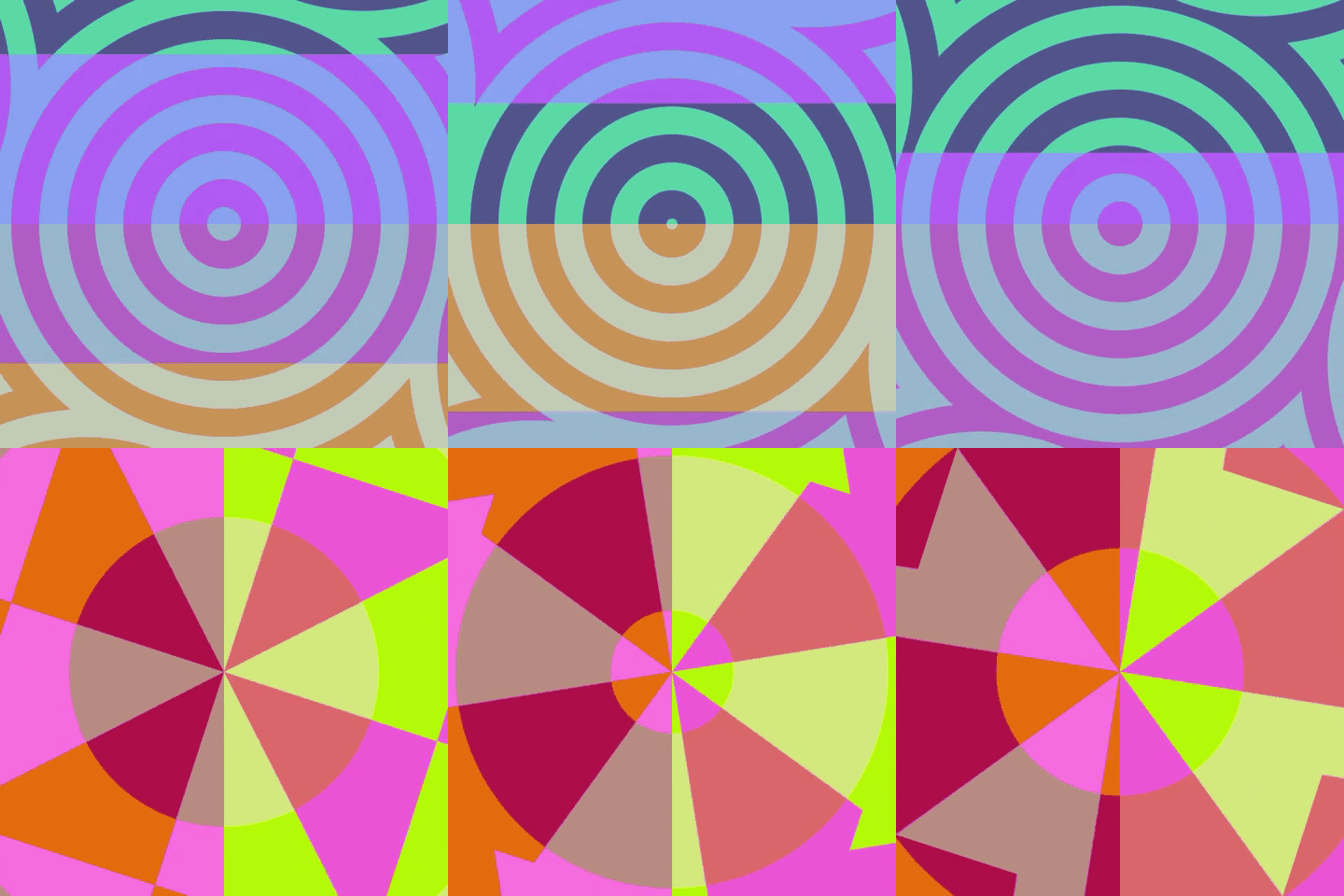
Lesson D4-4: Digital Integration (Click to view and listen to the reading)
Digital integration is an important form of contemporary geometric abstract art that has gradually developed. It utilizes computer technology, algorithms, and digital media to combine geometric structures, color relationships, and program logic, thereby generating highly complex and systematic visual images. Unlike traditional painting or hand-drawn composition, digital integration art does not rely solely on artists manually drawing forms. Instead, it uses digital tools to calculate, generate, and control geometric elements, giving geometric abstraction a new mode of expression in the contemporary technological environment. In digital integration art, geometric forms remain the most basic visual units, such as circles, squares, triangles, straight lines, or grid structures. However, these elements are no longer simply arranged statically on the canvas but are automatically generated or constantly changing according to program rules. Artists can set a series of mathematical or logical rules, such as repetition, recursion, random changes, proportional expansion, or rotational displacement, and the computer continuously generates new geometric combinations according to these rules. In this way, simple geometric forms can form complex and orderly visual systems. Digital technology gives geometric abstract art greater precision and controllability. In traditional painting, geometric structures often rely on manual measurement and drawing, while in the digital environment, artists can precisely control the position, size, and angle of each form through software. For example, in a grid-based image, a computer can rapidly generate hundreds or even thousands of geometric units and arrange them according to predefined rules. This highly precise control allows complex structures to be completed in a short time while maintaining overall unity. Digital integrated art also exhibits a distinct systematic characteristic. Many works are not single images but visual systems composed of a complete set of generative rules. Once the rules are set, the computer can continuously generate different image versions, each with similar structural features but differing in detail. This method transforms artistic creation from a single work into a "generative process." The work is no longer just a fixed image but a continuously evolving visual system. In terms of visual expression, digital integrated art can present complex effects that are difficult to achieve with traditional media. For example, through algorithmic control, geometric shapes can gradually spread, gather, or rotate within the image, forming continuously changing structures. When these changes are made into dynamic images, the geometric shapes appear to be constantly growing or flowing, transforming static abstract structures into visual processes with a temporal dimension. This dynamic structure allows viewers to experience the changes in geometric relationships over time. Color systems also offer new possibilities in digital integrated art. Computers can rapidly generate a vast number of color combinations and apply gradients or contrasts according to predefined rules. For example, an artist can set up a color algorithm to allow colors to gradually change in a specific order within the image, creating smooth color transitions or strong visual contrasts. In this way, color is no longer merely a decorative element but becomes part of a holistic visual system alongside geometric structures. Digital integration also connects geometric abstract art with other technological fields. For instance, in interactive art, viewers can alter the geometric structures within the image using a mouse, touchscreen, or sensors, allowing the work to present different visual states with varying viewer participation. In projection mapping or digital installations, geometric shapes can be projected onto architectural or spatial surfaces, enabling abstract structures to interact with the real environment. Through these methods, geometric abstract art expands from the traditional canvas to a wider range of spaces and media. Furthermore, digitally integrated art also connects with data visualization and artificial intelligence technologies. Some works transform data into geometric shapes, making abstract structures a means of information expression. For example, changes in data can be translated into variations in line density, shape size, or color, thus presenting complex information in geometric form. This approach not only possesses artistic value but also serves an informational function. Overall, digital integration represents an important development direction for geometric abstract art under contemporary technological conditions. Through the combination of computer algorithms, digital tools, and visual structures, it enables geometric forms to operate within more complex and dynamic systems. Artists no longer merely draw single images, but generate images through design rules and systems. It is precisely in this fusion of technology and art that geometric abstract art gains new expressive spaces and new structural possibilities.
 简体中文
简体中文  English
  日本語
日本語  Español
  Français
  हिन्दी
  العربية
  বাংলা
বাংলা  Português do Brasil
  Русский
  اردو
اردو  Bahasa Indonesia
  Deutsch
  Kiswahili
  मराठी
मराठी  తెలుగు
  Tiếng Việt
  Türkçe
  Italiano
  தமிழ்
தமிழ்  한국어
한국어