
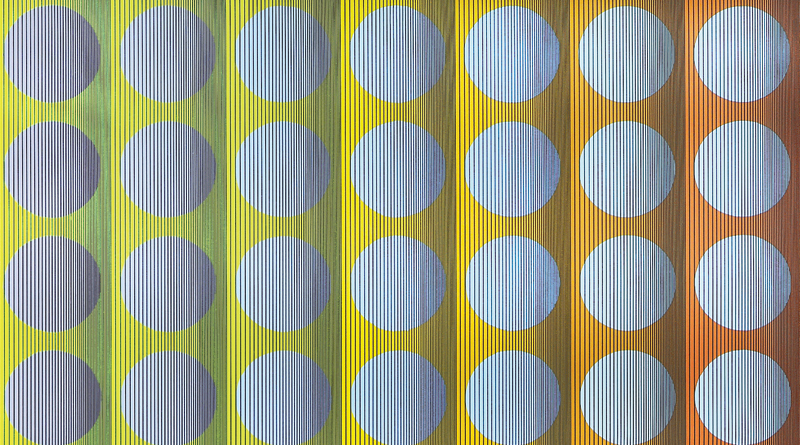
Julian Stanczak
In geometric abstract art, color not only participates in the organization of formal structure but also generates symbolic meaning in the viewer's understanding. However, this symbolism is not formed through the direct depiction of concrete objects but is "read out" by the viewer during the viewing and understanding process through the relationship between visual structure and color. Therefore, the symbolism of color in geometric abstract art is more a result of perception and interpretation than a result of image reproduction. This symbolic meaning generated by the viewer in visual experience constitutes an important aspect of the expression of geometric abstract art.
First, it's important to understand that geometric abstract art typically avoids representational narratives. It doesn't convey explicit content by depicting figures, objects, or stories, but rather constructs a visual structure through lines, forms, and colors. In this structure, color doesn't directly represent a specific object, but it can still evoke meaning in the viewer's mind. For example, red might be interpreted as strength, energy, or emphasis, while blue might be understood as stability, rationality, or tranquility. These meanings aren't directly depicted in the image, but rather are interpretations formed by the viewer through cultural experience and visual perception. Therefore, the symbolic meaning of color is often "interpreted" by the viewer during the viewing process.
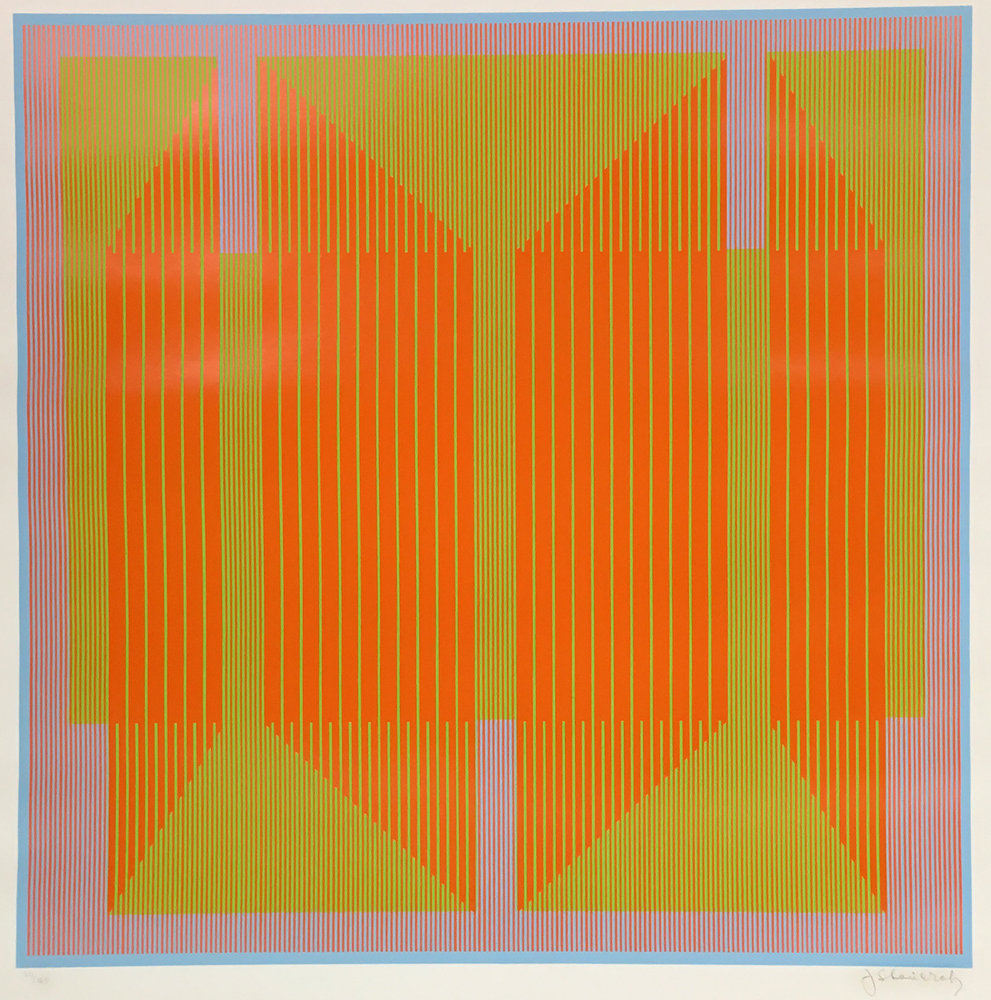
Julian Stanczak
Secondly, the symbolism of color is often closely related to its position within a structure. When a certain color appears in the core area of a structure, it may be perceived by the viewer as the visual center or an important element; when the same color appears in the peripheral areas, its symbolic meaning may be weakened. This illustrates that symbolic meaning is not determined solely by color, but rather by the relationship between color and structure. For example, in geometric abstract works, if a bright color is located in the center or at a key node of the image, it is easily perceived as a structural focal point, thus acquiring a certain symbolic meaning psychologically.
Furthermore, the repetition and distribution of colors also influence the formation of symbolism. When a particular color appears multiple times in a picture, viewers often establish visual connections between these locations, thus forming an overall meaning. For example, a color that repeats in multiple geometric units may be interpreted as an important element connecting the structure, or as symbolizing a unifying relationship. Through this repetition, color is no longer just a local effect, but becomes a visual symbol that runs through the entire structure.
The formation of color symbolism is also closely related to cultural experience. In different cultural backgrounds, colors often have different symbolic traditions. For example, in some cultures, red symbolizes joy or vitality, while in others it may symbolize danger or warning. In geometric abstract art, these cultural experiences influence the viewer's understanding of color. When a viewer sees a certain color, they often subconsciously associate it with related cultural meanings, thus forming a symbolic interpretation. This interpretation is not directly determined by the image itself, but rather gradually formed by the viewer during the viewing process.
In geometric abstract art, artists often do not explicitly define these symbolic meanings, but rather provide viewers with an open visual structure through color relationships. Viewers, in the process of viewing, interpret and understand the colors based on their own experiences and feelings. It is within this interactive relationship that symbolic meaning gradually forms. Therefore, symbolism is not a fixed element within the painting, but rather a meaning that gradually emerges during the viewing process.
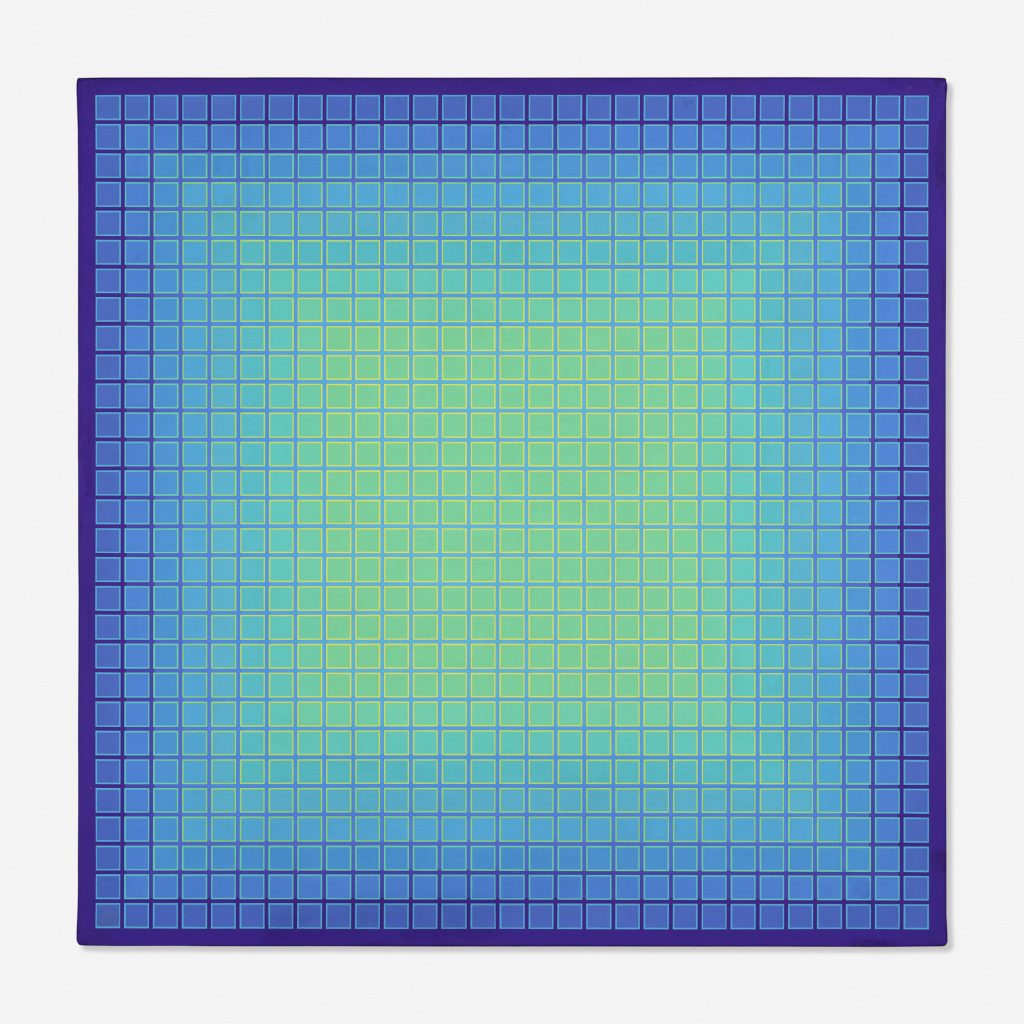
Julian Stanczak
This symbolism of being "read aloud" also gives geometric abstract art greater openness. Different viewers may derive different symbolic interpretations from the same work. For example, some viewers may interpret a certain color combination as vitality and energy, while others may perceive order and stability. This diversity of interpretation does not diminish the meaning of the work; on the contrary, it gives it a richer interpretive space.
In geometric abstract art, the symbolism of color does not arise from the depiction of concrete objects, but rather from the interaction between visual structure and the viewer's experience. Color gradually acquires symbolic meaning in the viewer's perception through its position, distribution, contrast, and cultural associations. This meaning is not directly expressed, but rather "read out" in the process of viewing and understanding. It is precisely within this open visual structure that geometric abstract art can maintain a rich and profound expressive space while preserving formal purity.
Module Four's symbols are not drawn, but "read aloud." Click to view and listen to the reading.
In geometric abstract art, color not only participates in the organization of formal structures but also generates symbolic meaning in the viewer's understanding. However, this symbolism is not formed through the direct depiction of concrete objects, but rather "read out" through the relationship between visual structure and color in the viewer's viewing and understanding process. Therefore, the symbolism of color in geometric abstract art is more a result of perception and interpretation than a result of image reproduction. This symbolic meaning generated by the viewer in visual experience constitutes an important aspect of the expression of geometric abstract art. First, it is important to understand that geometric abstract art typically avoids figurative narratives. It does not convey explicit content by depicting figures, scenes, or stories, but rather constructs a visual structure through lines, forms, and colors. In this structure, color does not directly represent a specific object, but it can still evoke a certain meaning in the viewer's mind. For example, red may be understood as strength, energy, or emphasis, while blue may be understood as stability, rationality, or tranquility. These meanings are not directly depicted in the picture but are understandings formed by the viewer in cultural experience and visual perception. Therefore, the symbolic meaning of color is often "interpreted" by the viewer during the viewing process. Second, the symbolism of color is often closely related to structural position. When a color appears in the core area of a structure, it may be perceived by the viewer as a visual center or important element; when the same color appears in the peripheral areas, its symbolic meaning may be weakened. This illustrates that symbolic meaning is not determined solely by color, but rather by the relationship between color and structure. For example, in geometric abstract art, if a bright color is located in the center or at a key node, it is easily perceived as a structural focal point, thus acquiring a certain symbolic meaning psychologically. Furthermore, the repetition and distribution of color also influence the formation of symbolism. When a color appears multiple times in an image, the viewer often establishes visual connections between these locations, forming an overall meaning. For example, a color that repeats in multiple geometric units may be interpreted as an important element connecting the structure, or symbolize a unifying relationship. Through this repetition, color is no longer merely a local effect, but becomes a visual symbol permeating the entire structure. The formation of color symbolism is also closely related to cultural experience. In different cultural backgrounds, color often has different symbolic traditions. For example, in some cultures, red symbolizes celebration or vitality, while in others it may symbolize danger or warning. In geometric abstract art, these cultural experiences influence the viewer's understanding of color. When viewers see a certain color, they often subconsciously associate it with related cultural meanings, thus forming a symbolic interpretation. This interpretation is not directly defined by the image itself, but rather gradually formed by the viewer during the viewing process. In geometric abstract art, artists often do not explicitly define these symbolic meanings, but rather provide viewers with an open visual structure through color relationships. Viewers, during the viewing process, understand and interpret the colors based on their own experiences and feelings. It is within this interactive relationship that symbolic meaning gradually forms. Therefore, symbolism is not a fixed element within the image, but a meaning that gradually emerges during the viewing process. This "read-out" symbolism also gives geometric abstract art greater openness. Different viewers may derive different symbolic understandings from the same work. For example, some viewers may interpret a certain color combination as vitality and energy, while others may perceive order and stability. This diverse understanding does not weaken the meaning of the work; on the contrary, it enriches its interpretive space. Overall, in geometric abstract art, the symbolism of color is not generated through the depiction of concrete objects, but rather formed through the interaction between the visual structure and the viewer's experience. Color, through its position, distribution, contrast, and cultural associations, gradually acquires symbolic meaning in the viewer's perception. This meaning is not directly expressed, but rather "read out" in the process of viewing and understanding. It is precisely within this open visual structure that geometric abstract art can maintain a rich and profound expressive space while preserving formal purity.
 简体中文
简体中文  English
  日本語
日本語  Español
  Français
  हिन्दी
  العربية
  বাংলা
বাংলা  Português do Brasil
  Русский
  اردو
اردو  Bahasa Indonesia
  Deutsch
  Kiswahili
  मराठी
मराठी  తెలుగు
  Tiếng Việt
  Türkçe
  Italiano
  தமிழ்
தமிழ்  한국어
한국어