
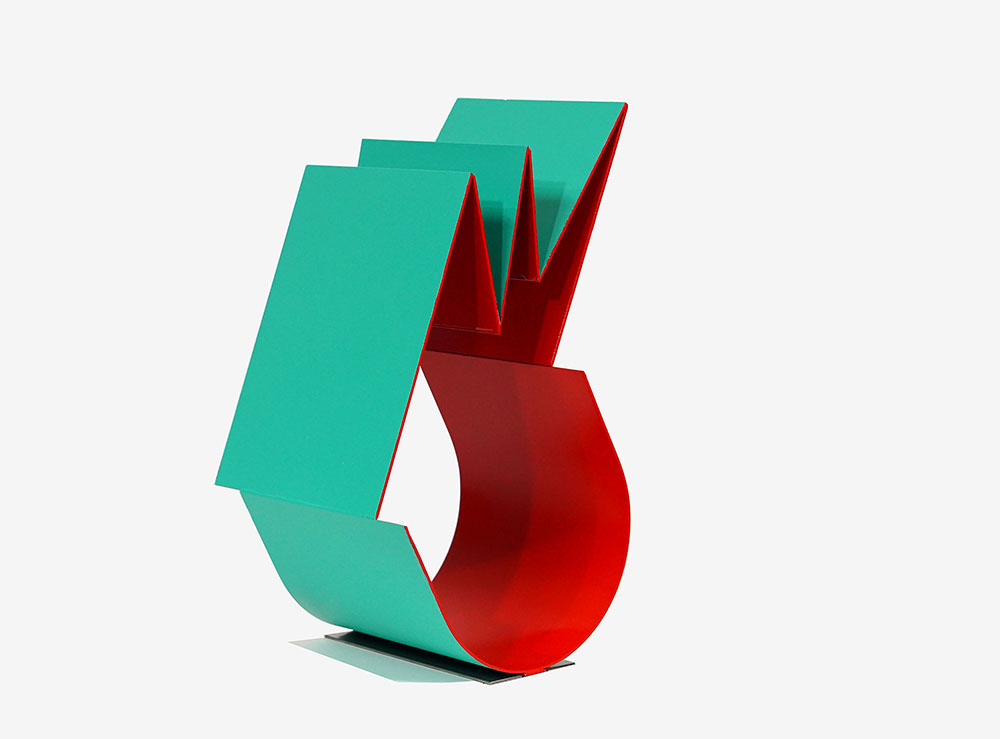
Nigerian artist Osi Audu's work deconstructs the boundaries between consciousness and body, inner space and external reality through minimalist abstraction of the skull's outline and contrast of materials. His methods resonate profoundly with Arthur Dorval's geometric compositions in terms of "container-like" and "deep exploration" on an ontological level.
Creative methods: mental mapping and the geometrization of Yoruba philosophy
Audu's creative methods are not merely visual games, but a spiritual mapping process based on the Yoruba cosmology. His creative logic is to transform complex metaphysical concepts into purely physical shapes.
- “Topological mapping of the "Inner Head" (Ori Inu): Audu's core technique involves extracting the outline of the human head and transforming it into a minimalist geometric container. In Yoruba philosophy, Ori represents the individual's destiny and inner essence, divided into the "Outer Head" (Ori Ode, the body) and the "Inner Head" (Ori Inu, the spirit). Audu used this method to break down the representational tradition of portraiture. He stripped away the facial features, leaving only the geometric skeleton of the outline, reshaping the "head" into a container for storing consciousness. Essentially, this technique establishes an abstract coordinate system for locating and observing invisible spiritual energy.
- The balanced construction of symmetry and centripetal force: His compositions often maintain a high degree of symmetry. This technique simulates the psychological state of contemplation and meditation. Through a centripetal geometric arrangement, he guides the viewer's eye to focus on the center of the image—the void representing the "inner space." This technique breaks the sense of turbulence in dynamic balance, instead pursuing a kind of eternal, quasi-religious stillness. Unlike Dorval's "incubation" logic, Audu seeks a kind of "return."
- Spatial sculpting from a reverse perspective: Audu often uses negative space to define shapes. He is not “drawing a head” but “shaping a space” that happens to have the outline of a head. This technique treats the background as a pressure-filled entity, and by “compressing” the center from the background, it enhances the sense of depth and mystery of the container’s interior space.
Stylistic characteristics: Monochromaticism, tranquility, and ontological depth
Audu's style presents a calm, solemn, and philosophically profound visual texture.
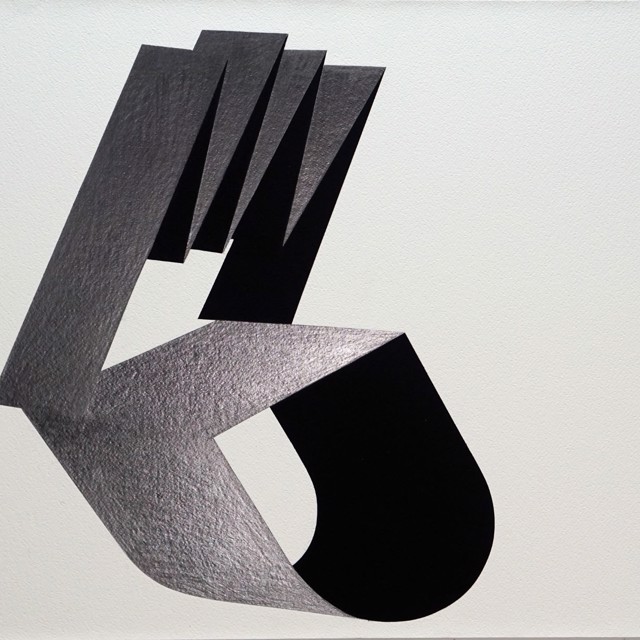
- Monochromaticism and the Absorption of Light: His most striking stylistic feature is his extreme use of black. This black is not a rigid color, but a deep, captivating one. Through large areas of monochrome application, he creates an environment of "sensory stripping." This stylistic characteristic breaks down the distractions of color, compelling the viewer to engage in a pure reflection on "existence" itself.
- “Container” Aesthetics: His style emphasizes the relationship between "boundaries" and "interior." Shapes often appear as a shell or shield, protecting the sacred void within. This stylistic feature establishes an ontological contrast: the exterior is a hard, defined geometric boundary, while the interior is a flowing, infinite spiritual field. This style is logically the opposite of Dorval's multi-layered approach—Dorval displays layers outward, while Dorval seals in depth inward.
- Subtle tremors within symmetry: Despite its overall symmetrical style, Audu often retains extremely subtle traces of handcrafting in the treatment of edges. This stylistic feature imbues the cold geometry with warmth, making it appear as an ancient symbol created by spiritual power rather than machine-made. This sense of balance establishes the work's unique position between modern abstraction and primitive totemism.
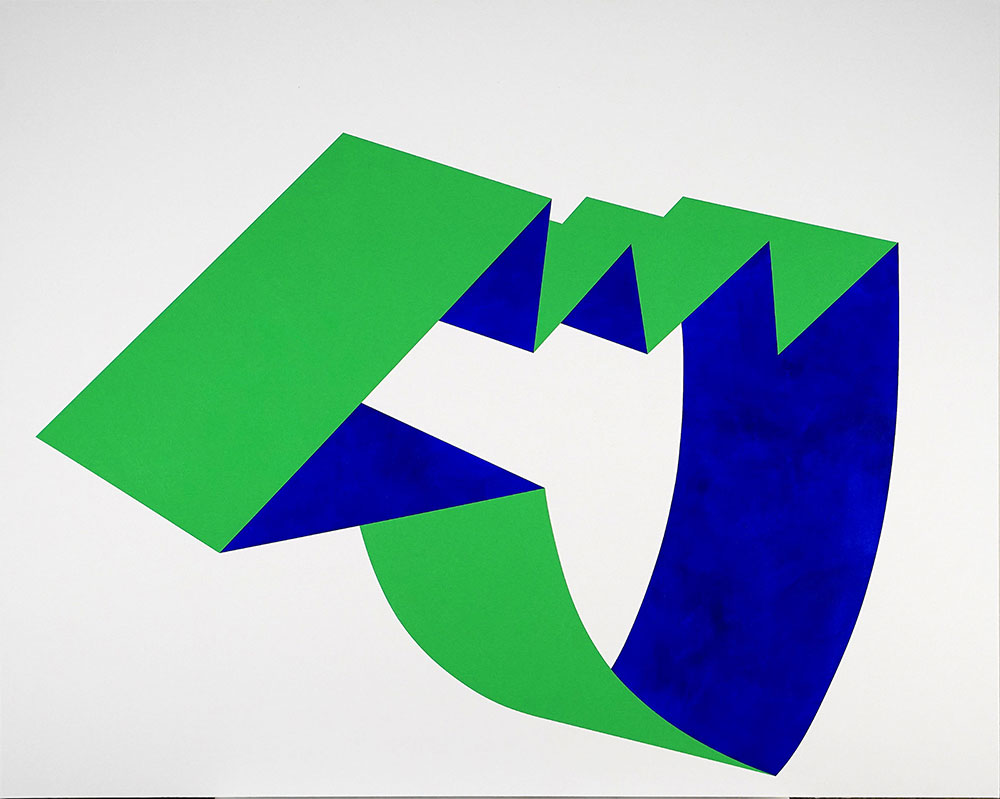
Material application: the materiality of felt and the metallic luster of graphite
Audu showcased excellent textural contrast in his choice of materials, using the physical properties of matter to simulate the abstract properties of the spirit.
- The light absorption and thickness of felt: Felt is one of Audu's most iconic materials. He used the physical properties of felt—its non-reflective nature, its thick texture, and its sound-absorbing properties—to symbolize the depth and intimacy of "Ori Inu." The edges of the felt often have a sharp, sheared feel, and this use of material cuts out clear spatial boundaries in the image, creating a sense of physical "isolation."
- A comparison of graphite and charcoal: His two-dimensional works make extensive use of graphite and charcoal. The cold, metallic sheen of graphite under light creates a striking visual contrast with the deep, dry, matte tone of charcoal. This use of materials simulates the interplay between yin and yang, body and spirit, reflection and absorption in Yoruba philosophy. Through the layering of multiple graphite layers, he gives the originally flat geometric blocks a material thickness resembling metal armor.
- Large format paper and original substrate: Audu prefers to create on large sheets of paper with natural textures. The fragility of the paper contrasts with the heaviness of felt and graphite, creating another kind of material dialogue. This approach to materials emphasizes the insignificance and lightness of the bearers of human consciousness (brain/body) in the face of a vast spiritual space.
 简体中文
简体中文  English
  日本語
日本語  Español
  Français
  हिन्दी
  العربية
  বাংলা
বাংলা  Português do Brasil
  Русский
  اردو
اردو  Bahasa Indonesia
  Deutsch
  Kiswahili
  मराठी
मराठी  తెలుగు
  Tiếng Việt
  Türkçe
  Italiano
  தமிழ்
தமிழ்  한국어
한국어