3. The Development Stages and Key Turning Points of Geometric Abstract Art
The development of geometric abstract art has not been a linear progression, but rather a series of phased leaps driven by changes in thought, technological conditions, and artistic concepts. From the beginning of the 20th century to the present, it has undergone several key turning points, each of which has reshaped the meaning and function of "geometry" in art.
The first stage emerged during the avant-garde period of the early 20th century. With the maturation of photography, painting gradually freed itself from its function of "reproducing reality," and artists began to contemplate the value of form itself. Kandinsky, in his theory of spiritual painting, proposed that dots, lines, and colors were not decorative elements, but independent languages capable of carrying inner emotions and spiritual power. Almost simultaneously, Malevich, through his *Black Cube*, declared a complete break with the figurative world, pushing geometric forms to a "zero-degree state," causing art to no longer point to external objects but to its own structure. The key turning point of this period lay in art's first explicit recognition of geometry as an autonomous ontological language, rather than a simplified symbol of natural forms.
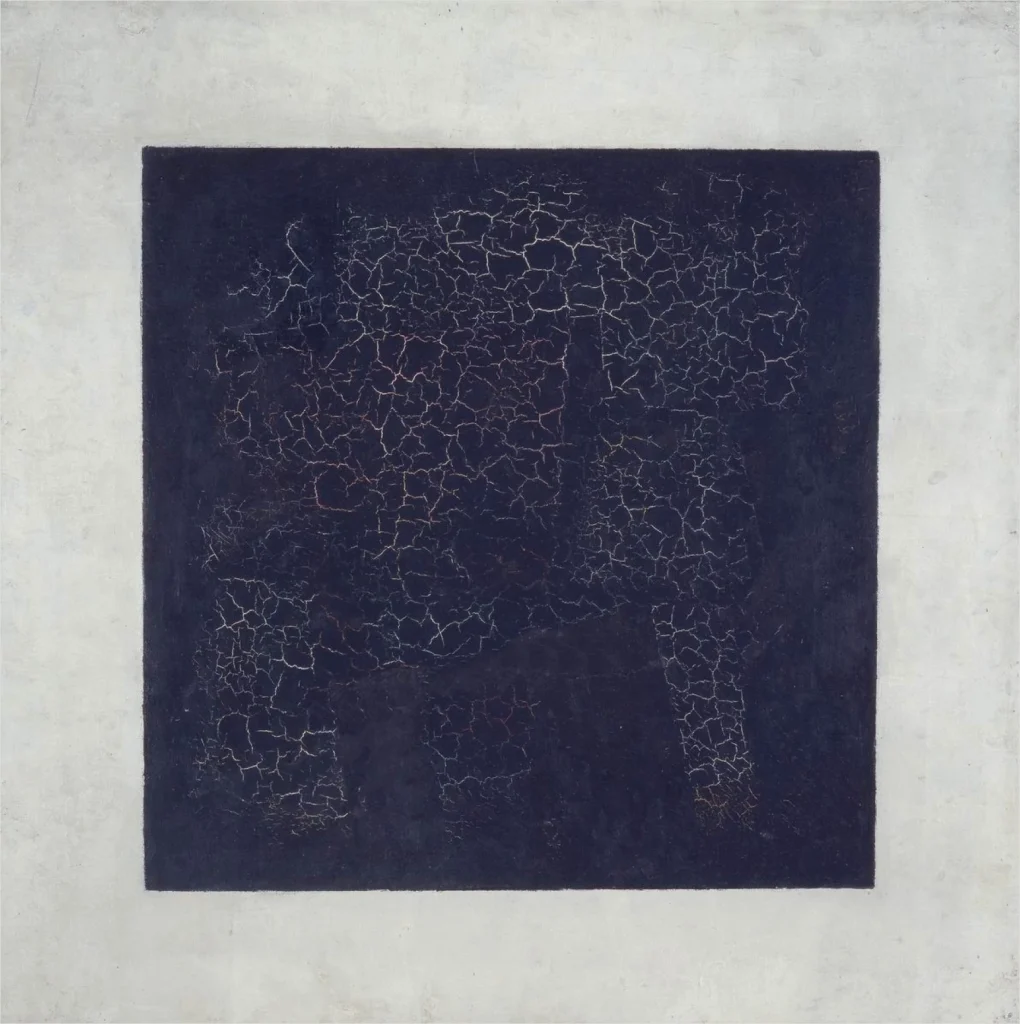
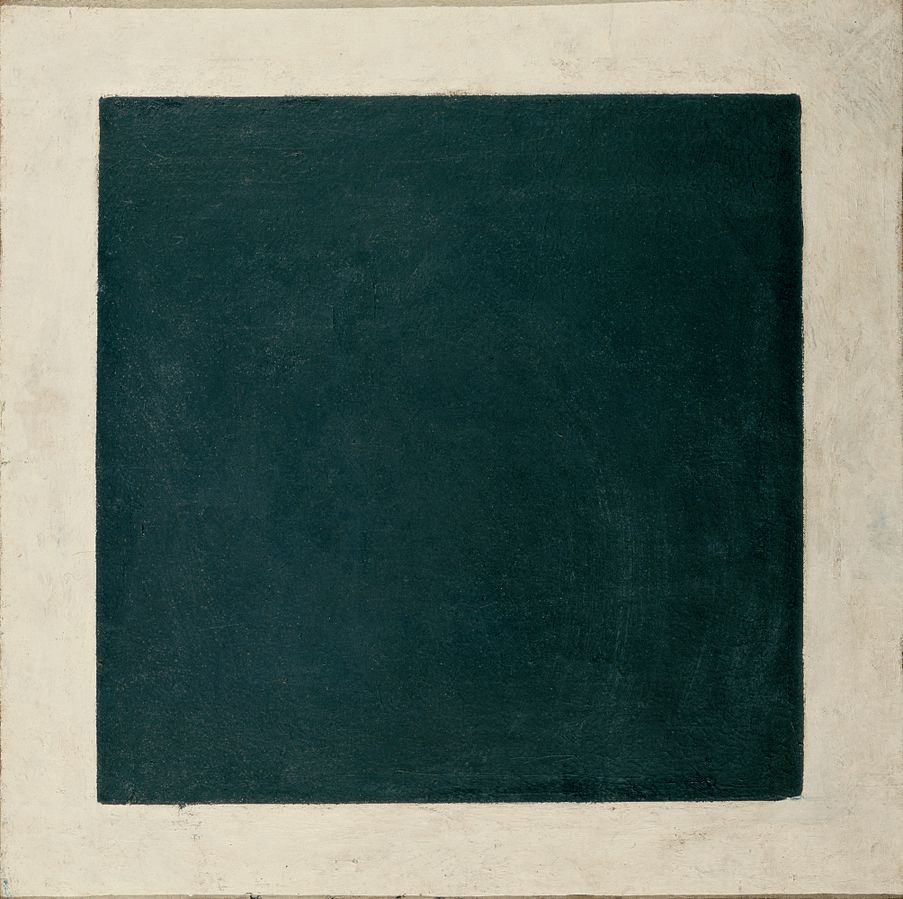
Image of Malevich’s most famous geometric abstract work, “Black Square,” is shown. This painting, an iconic work of Suprematism, was first created in 1915 and is considered a turning point in modern abstract art.
The second stage, from 1910 to 1930, was a period of systematic construction, represented by Constructivism and De Stijl. Mondrian proposed "Neo-Plasticism," attempting to establish a universal and rational visual order through orthogonal grids, primary colors, and strict proportional relationships. He believed that geometric structures could transcend personal emotions and present the harmonious laws of the universe. Simultaneously, Russian Constructivists introduced geometric forms into architecture, industrial design, and visual communication, emphasizing functionality, modularity, and social ideals. The key turning point of this stage was the shift from individual experimentation to a systematic approach to geometric abstraction, forming a reproducible and communicable formal grammar, giving abstract art its first attributes of a "design language."
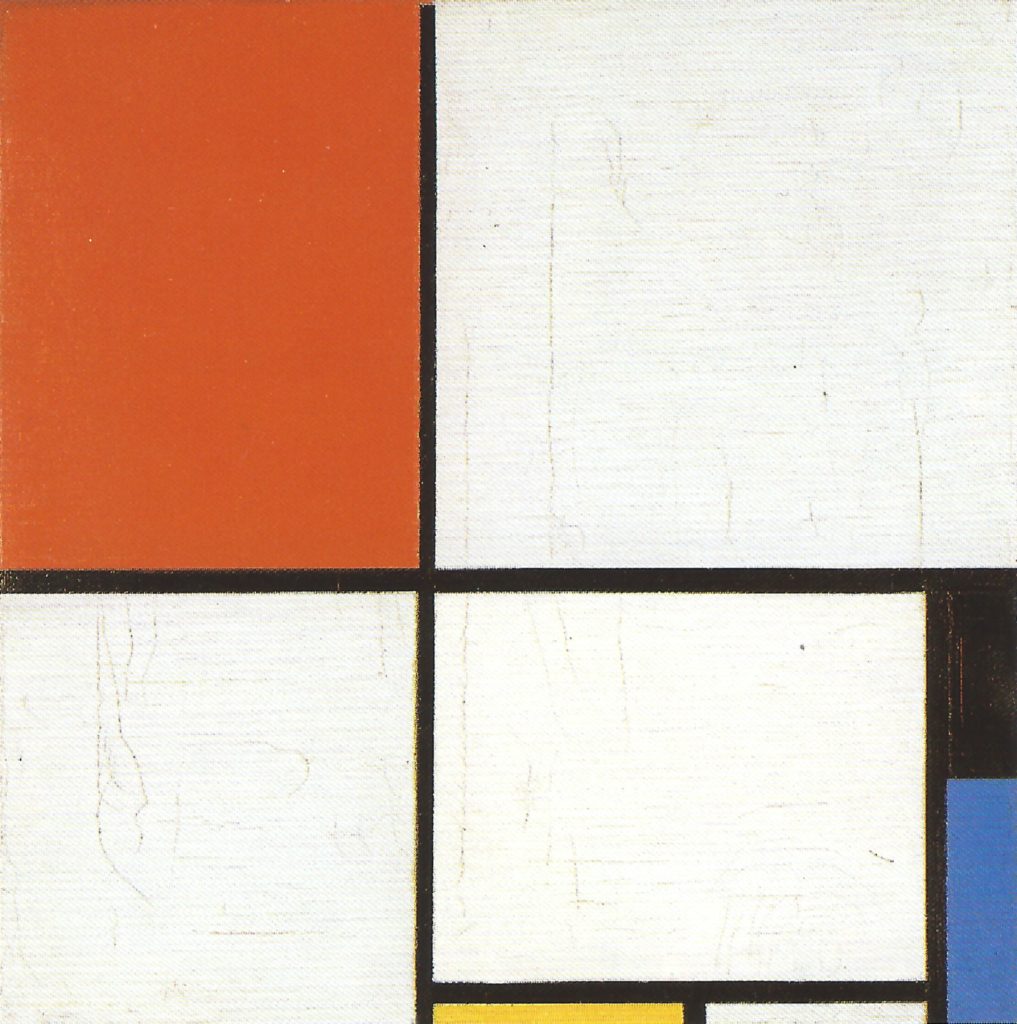
Mondrian
The third phase emerged after World War II, with geometric abstraction undergoing a perceptual expansion within the Western context. Op Art, through high-frequency repetition, visual illusions, and optical vibrations, explored the limits of the human visual system, demonstrating that geometry is not only a symbol of rational order but can also be a trigger for sensory stimulation and psychological effects. Simultaneously, minimalist artists, using industrial materials and basic geometric forms, pursued an objective presentation of "de-expressivity," detaching their works from emotional projection. The key turning point of this phase lies in the fact that geometric abstraction no longer merely served rational or spiritual symbolism but entered the realm of "perceptual science" and "spatial experience," emphasizing the viewer's physical presence.
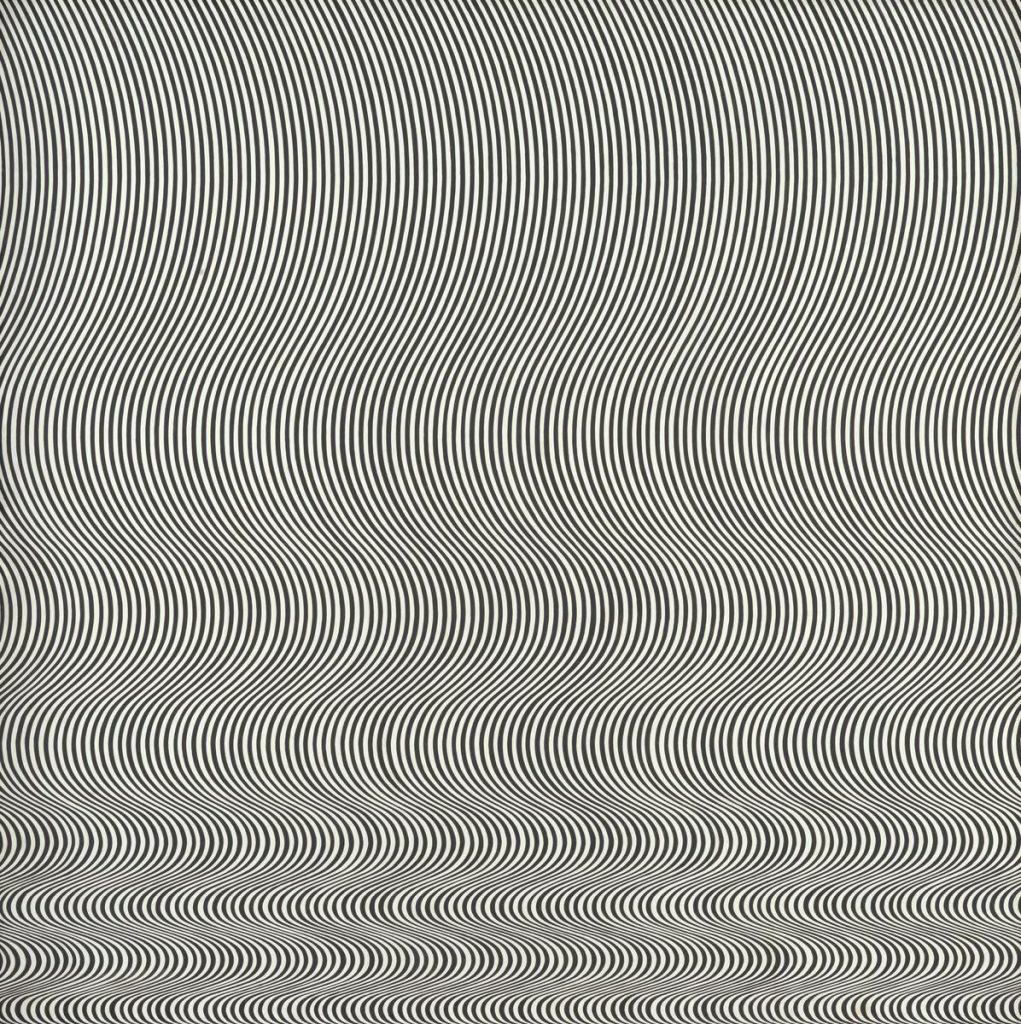
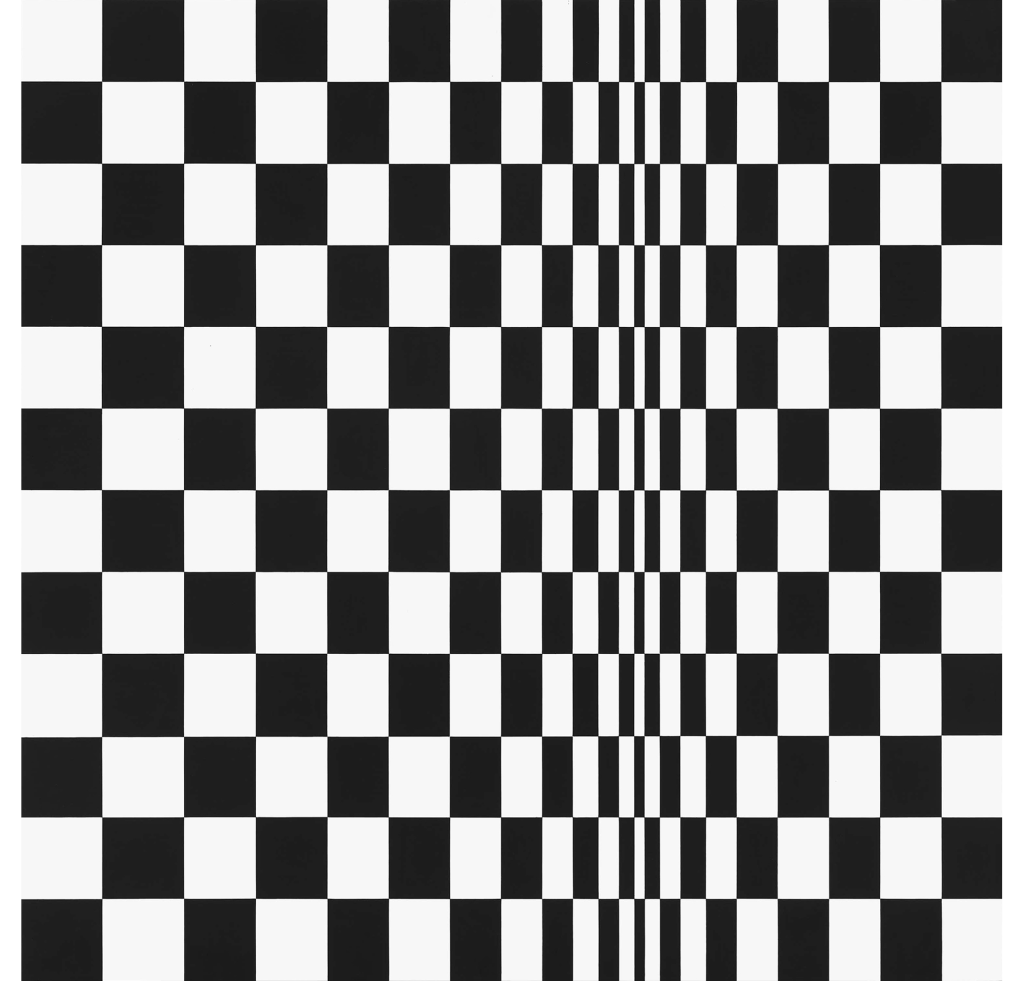
Bridget RileyShe creates powerful spatial illusions through visual vibrations and geometric rhythms, and is one of the most representative creators of Op Art.
The fourth stage occurred from the late 20th to the early 21st century, a period marked by the integration of digital media and computing technology into artistic creation. With the development of computer graphics, parametric design, and generative algorithms, geometry was no longer entirely constructed by hand, but rather automatically generated by rules and code. Artists transformed from "form shapers" to "system designers," setting initial conditions and evolutionary logic to allow their works to continuously change during creation. This shift was profound: geometry leaped from static composition to dynamic systems, from finished products to the process itself. For the first time, the temporal dimension of abstract art was systematically incorporated into the core of creation.
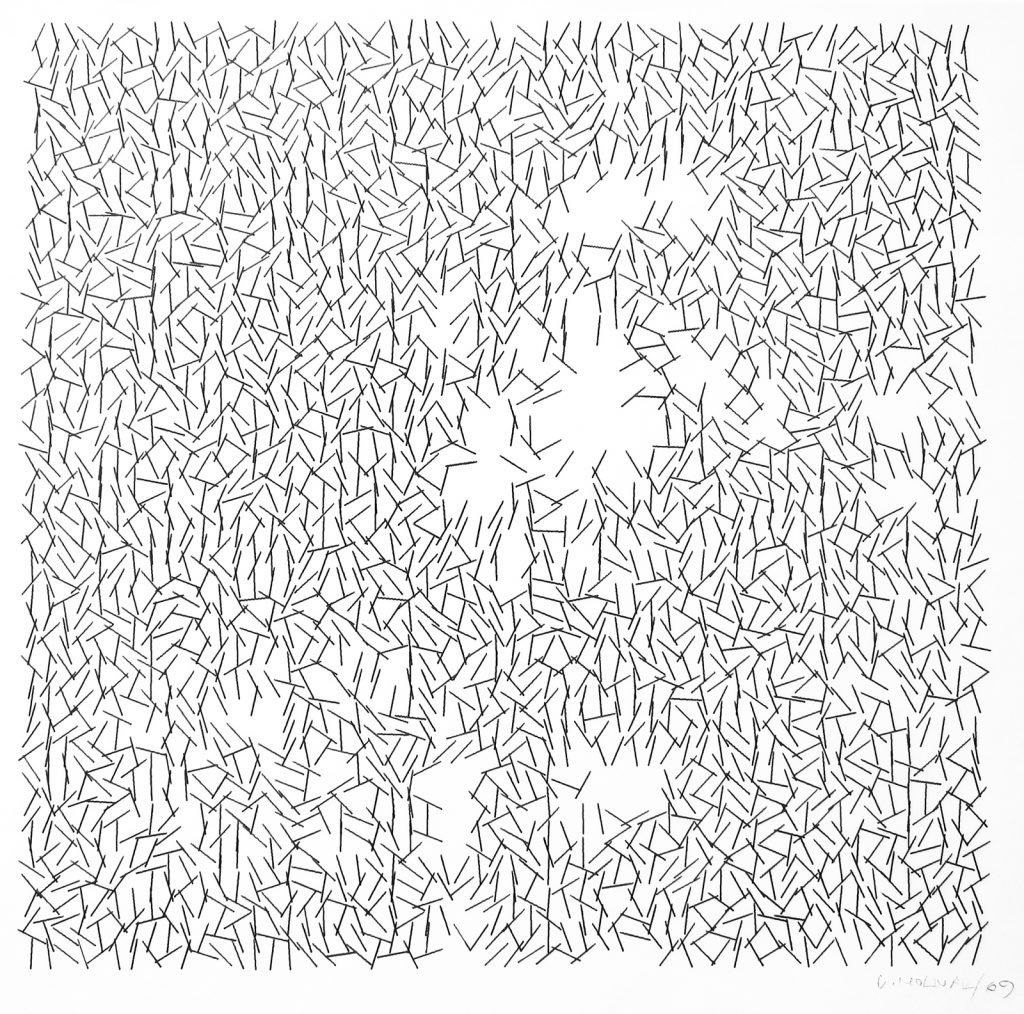
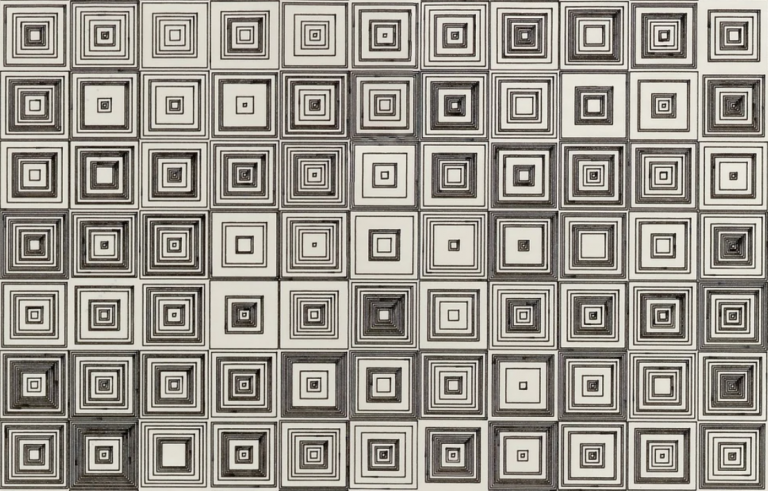
Vera Molnar's work demonstrates how computational rules drive the generation and transformation of geometric forms, from simple combinations of lines and cubes to the spatial distribution of complex parametric structures, representing an important expression of geometric abstract art in the digital age.
The fifth stage is the currently unfolding stage of artificial intelligence. Deep learning models can extract stylistic features from a large number of historical works and translate them into operable structural parameters, enabling geometric abstraction to enter the era of "computable style." AI no longer merely replicates a certain visual style, but can reorganize the formal logic of different historical paths, generating unprecedented hybrid structures. The key turning point of this stage is not only at the technological level, but also at the conceptual level: the author's identity is redefined, and art is no longer the expression of a single subject, but a cognitive product of human-machine collaboration.
[mandala_course_crawler course=”1″]
Looking at these stages, we can see that the evolution of geometric abstract art has always revolved around three tensions: first, the formal liberation from representation to autonomy; second, the structural shift from individual expression to a systematic approach; and third, the temporal expansion from static works to dynamic generation. Each key turning point is a re-answer to the question of "what does geometry mean?" It is precisely in these continuous redefinitions that geometric abstraction has gradually evolved from the rational ideal of modernism into the generative language of the digital age, becoming an important bridge connecting art, science, and technology.
Lesson 3: An Overview of the History of Geometric Abstract Art 🎧 Click to view/listen to the reading content
The development of geometric abstract art has not been a linear progression, but rather a series of phased leaps driven by ideological changes, technological advancements, and shifts in artistic concepts. From the early 20th century to the present, it has undergone several key turning points, each reshaping the meaning and function of "geometry" in art. The first stage occurred in the avant-garde period of the early 20th century. With the maturation of photography, painting gradually broke free from its function of "reproducing reality," and artists began to consider the value of form itself. Kandinsky, in his theory of spiritual painting, proposed that points, lines, and colors are not decorative elements, but independent languages capable of carrying inner emotions and spiritual power. Almost simultaneously, Malevich, through "The Black Cube," declared a complete break with the figurative world, pushing geometric forms to a "zero-degree state," causing art to no longer point to external objects, but to its own structure. The key turning point of this period was that art for the first time explicitly regarded geometry as an autonomous ontological language, rather than a simplified symbol of natural forms. The second stage was the period of systematization from the 1910s to the 1930s, represented by Constructivism and De Stijl. Mondrian proposed "Neo-Plasticism," attempting to establish a universal, rational visual order through orthogonal grids, primary colors, and strict proportional relationships. He believed that geometric structures could transcend personal emotions and present the harmonious laws of the universe. Simultaneously, Russian Constructivists introduced geometric forms into architecture, industrial design, and visual communication, emphasizing functionality, modularity, and social ideals. The key turning point of this stage was the shift from individual experimentation to a systematic approach in geometric abstraction, forming a reproducible and disseminable formal grammar, giving abstract art its first attributes of "design language." The third stage emerged after World War II, with geometric abstraction undergoing a perceptual expansion in the European and American context. Op Art, through high-frequency repetition, visual illusions, and optical vibrations, explored the limits of the human visual system, proving that geometry is not only a symbol of rational order but can also be a trigger for sensory stimulation and psychological effects. Meanwhile, Minimalist artists, using industrial materials and basic geometric forms, pursued an objective presentation of "de-expressivity," detaching their works from emotional projection. The key turning point of this stage was that geometric abstraction no longer served merely rational or spiritual symbolism but entered the realm of "perceptual science" and "spatial experience," emphasizing the viewer's physical presence. The fourth stage occurred from the late 20th to the early 21st century, a period marked by the integration of digital media and computing technology into artistic creation. With the development of computer graphics, parametric design, and generative algorithms, geometry was no longer entirely constructed by hand, but rather automatically generated by rules and code. Artists transformed from "form shapers" to "system designers," setting initial conditions and evolutionary logic to allow their works to continuously evolve during creation. This shift was profound: geometry leaped from static composition to a dynamic system, from a finished product to the process itself. For the first time, the temporal dimension of abstract art was systematically incorporated into the core of creation. The fifth stage is the currently unfolding stage of artificial intelligence. Deep learning models can extract stylistic features from a vast amount of historical works and translate them into operable structural parameters, ushering in an era where geometric abstraction is "computable in style." AI no longer merely replicates a certain visual appearance, but can reorganize the formal logic of different historical paths, generating unprecedented hybrid structures. The key turning point in this stage is not only at the technological level but also at the conceptual level: the identity of the author is redefined; art is no longer an expression of a single subject but a cognitive product of human-machine collaboration. Looking at these stages, we can see that the evolution of geometric abstract art has always revolved around three tensions: first, the formal liberation from representation to autonomy; second, the structural shift from individual expression to a systematic approach; and third, the temporal expansion from static works to dynamic generation. Each key turning point is a re-answer to the question of "what does geometry mean?" It is precisely in these continuous redefinitions that geometric abstraction has gradually evolved from the rational ideal of modernism into the generative language of the digital age, becoming an important bridge connecting art, science, and technology.
 简体中文
简体中文  English
  日本語
日本語  Español
  Français
  हिन्दी
  العربية
  বাংলা
বাংলা  Português do Brasil
  Русский
  اردو
اردو  Bahasa Indonesia
  Deutsch
  Kiswahili
  मराठी
मराठी  తెలుగు
  Tiếng Việt
  Türkçe
  Italiano
  தமிழ்
தமிழ்  한국어
한국어