A symbolic analysis of basic geometric symbols is not an added interpretation of form, but rather a revelation of why geometry can serve as a cross-cultural, trans-temporal visual language. It is precisely because these symbols are rooted in common human perceptual and cognitive structures that they can be continually re-activated across different historical and artistic contexts. The power of geometric abstract art stems from this deep commonality; it bypasses narrative and representation, connecting directly with the fundamental ways humans understand the world.
In the early stages of human civilization, geometry was not an abstract tool but a core symbolic system for understanding cosmic order, life rhythms, and inner experiences. In modern abstract geometric art, these symbols are no longer just rational building blocks but have become re-codable containers of psychological and emotional states. Through repetition, deformation, and recombination of basic geometric forms, artists translate invisible internal states into perceivable visual language. Therefore, a symbolic analysis of geometric symbols is essentially a form of “visual cognitive psychology”: it helps us understand why certain forms naturally evoke feelings of security, tension, sublimity, or order, and it reveals why abstract art, even without figurative narratives, can still resonate deeply with human experience.
The spiral symbolizes growth, transformation, and the rhythm of life, representing an inner evolutionary trajectory that continuously unfolds within change.
The cross symbolizes balance, connection, and a meeting point, representing the integration of opposing forces and the encounter between the spiritual and the material worlds.
B3. The symbolic nature of geometric symbols emphasizes the representative artist.
Please submit your design once. Think carefully before clicking submit. Repeated submissions will result in deduction of points affecting the award!
B4. AI Geometric Symbol Interactive System
AI Symbol Semantics Engine
You are not “talking about circles,” but rather manipulating the meaning of circles: semantic level / psychological level / structural level / generative level
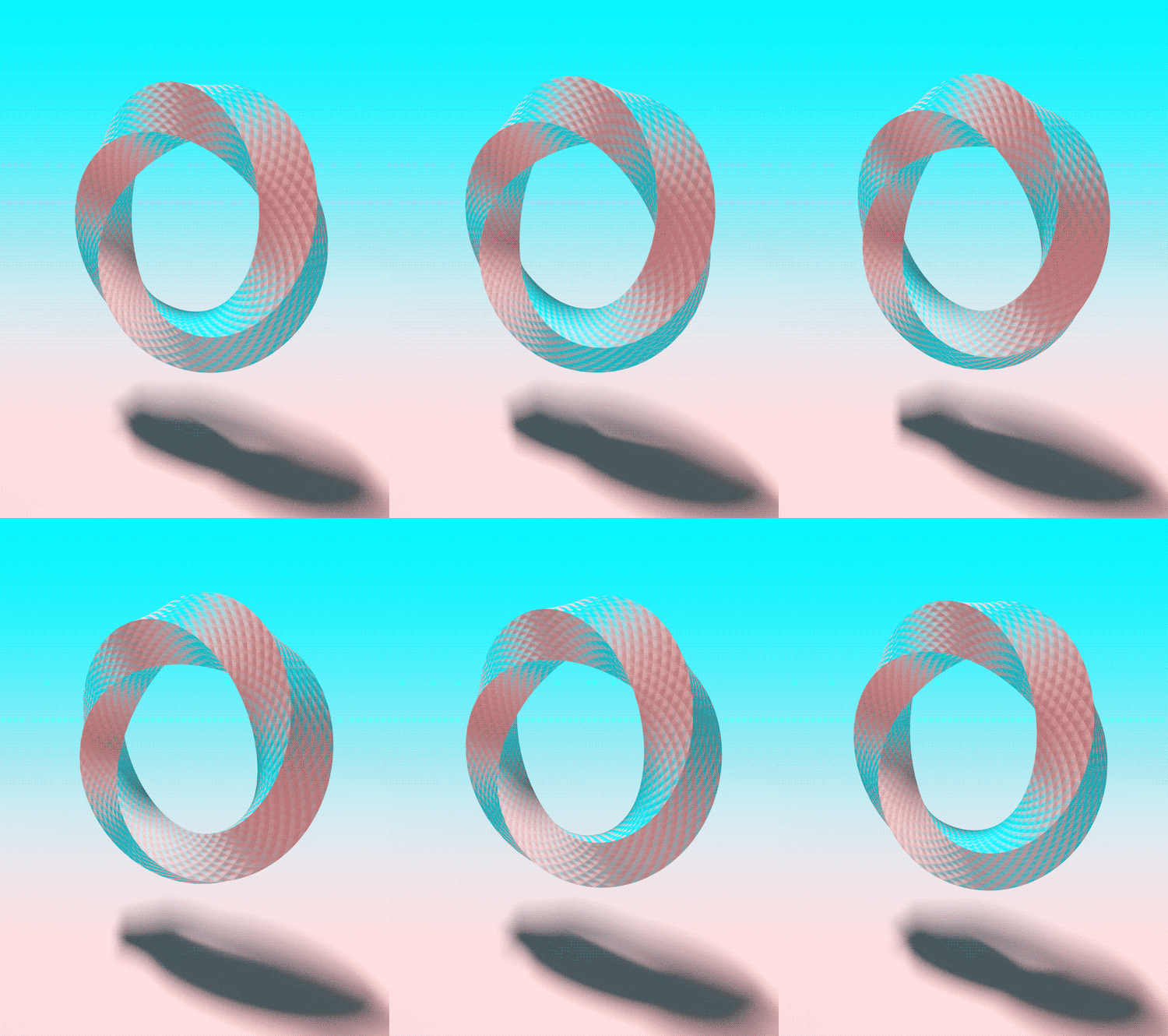
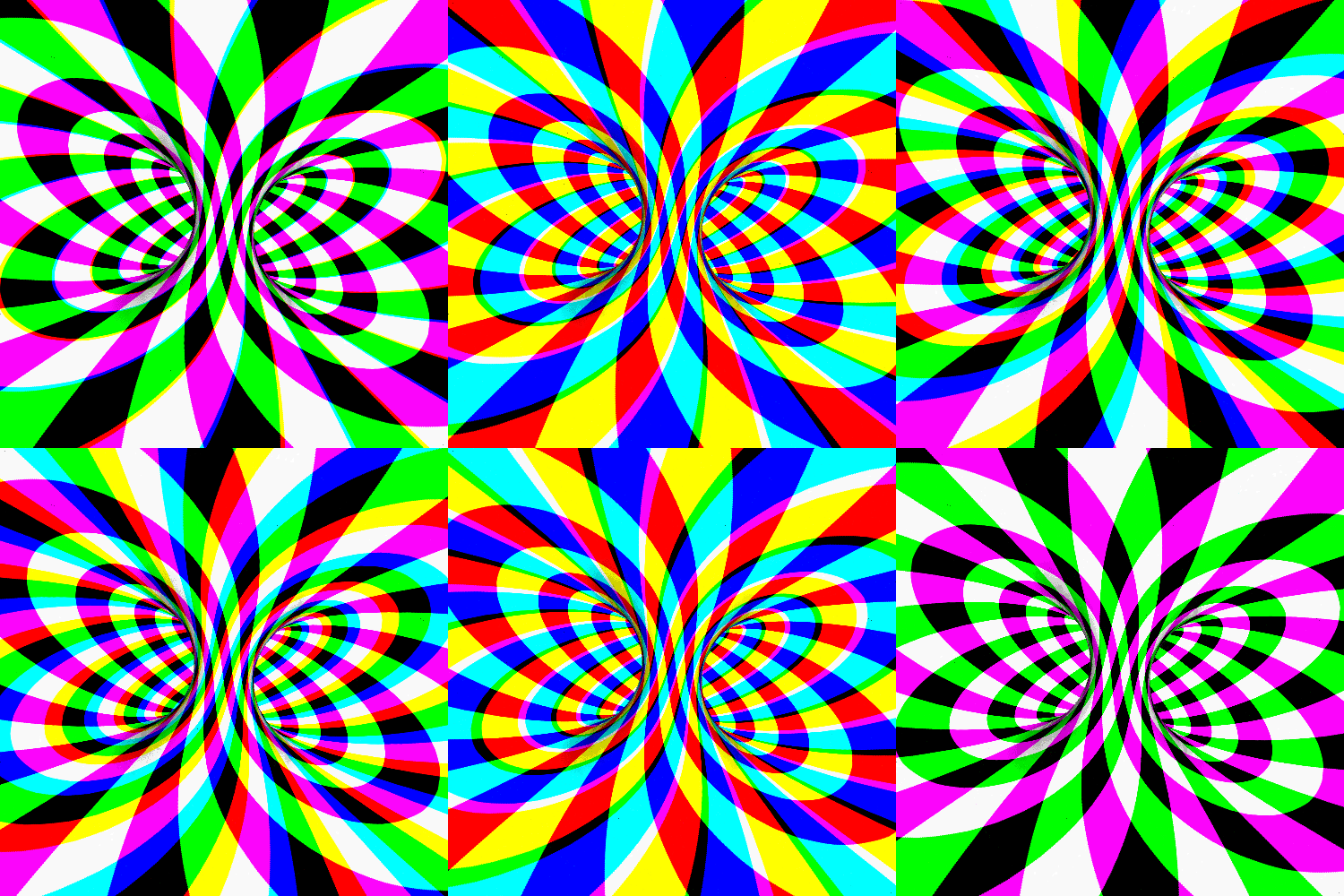
AI Real-time Generation: Circular Combinations
Sequential deduction: symbol → combination → structure. When dragging parameters, forms change continuously along semantics, without random jumps.
Using geometric forms as an entry point to connect semantic, psychological, structural, and generative layers, manipulate symbolic meaning within continuous parameters.
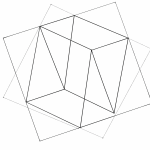
Comparison: Single symbol (clearer semantics) vs. symbol superposition (more complex semantics). Symbol changes are not random; parameters are continuous.
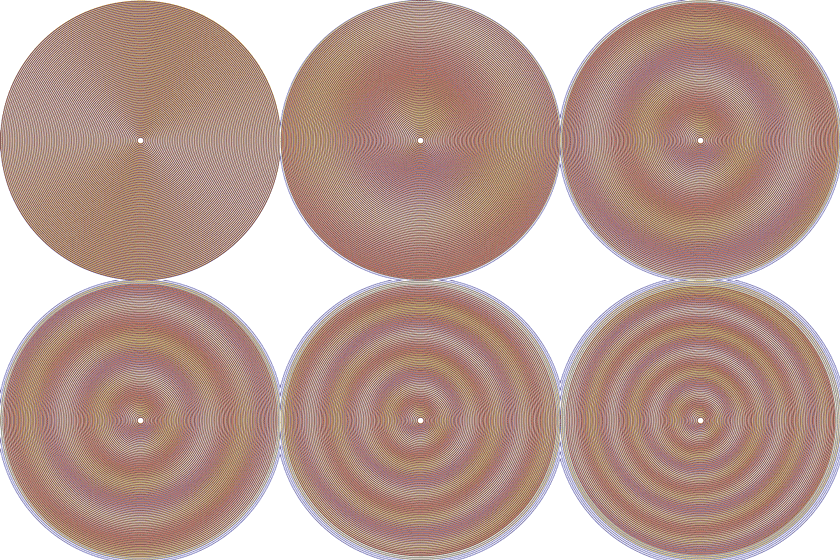
The left side is “single symbol,” and the right side is “symbol overlay.” The same parameter drives both sides simultaneously, with the difference originating from the overlay mechanism.
Compare the structural differences between single symbols and superimposed symbols, observing how meaning progresses from isolated to composite structures through continuous parameters.
Allow symbols to no longer be “interpretations,” but manipulable pointing systems: direction, force fields, spatial depth, and rhythmic density change continuously.
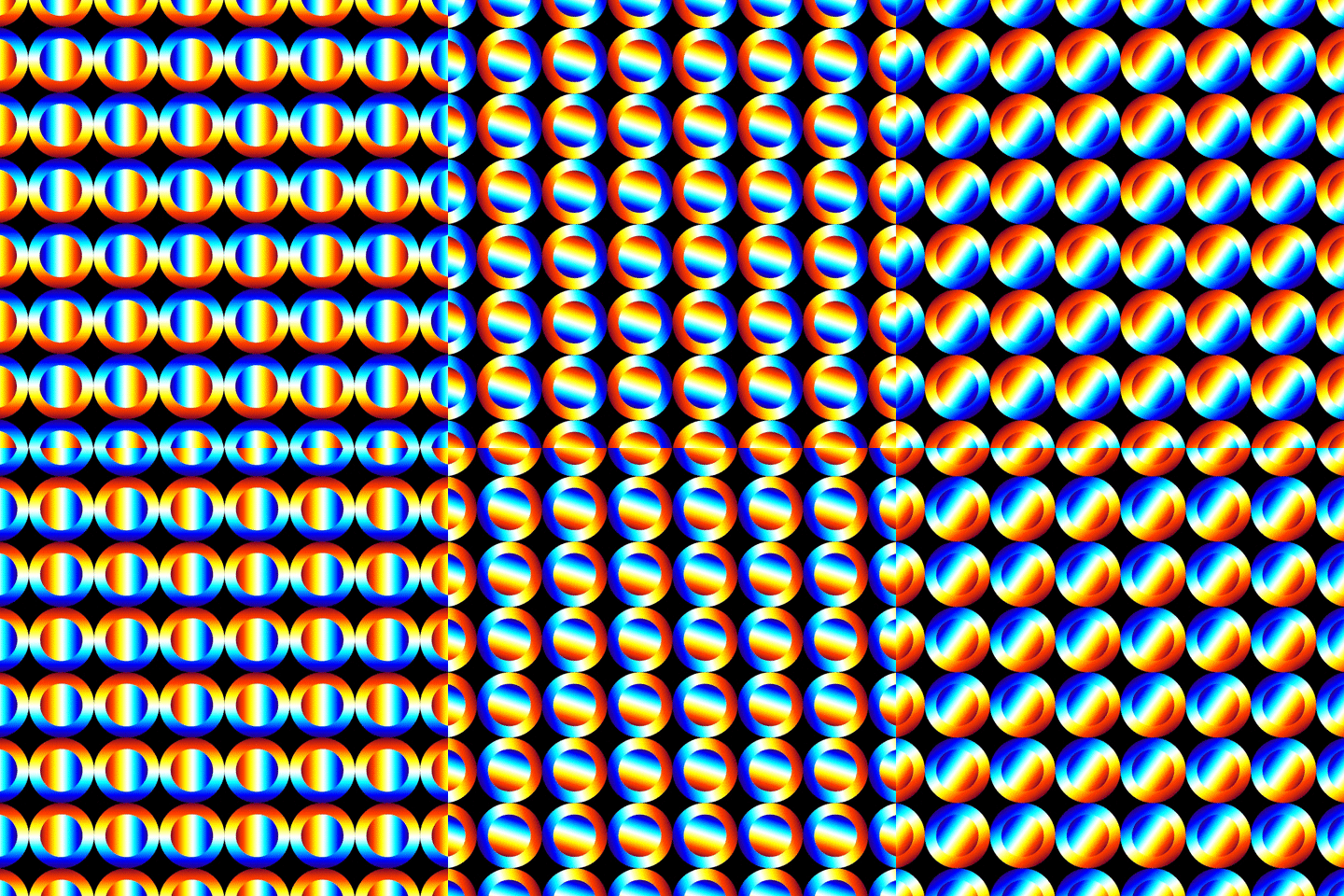
Real-time generation: Direction fields and spatial orientation
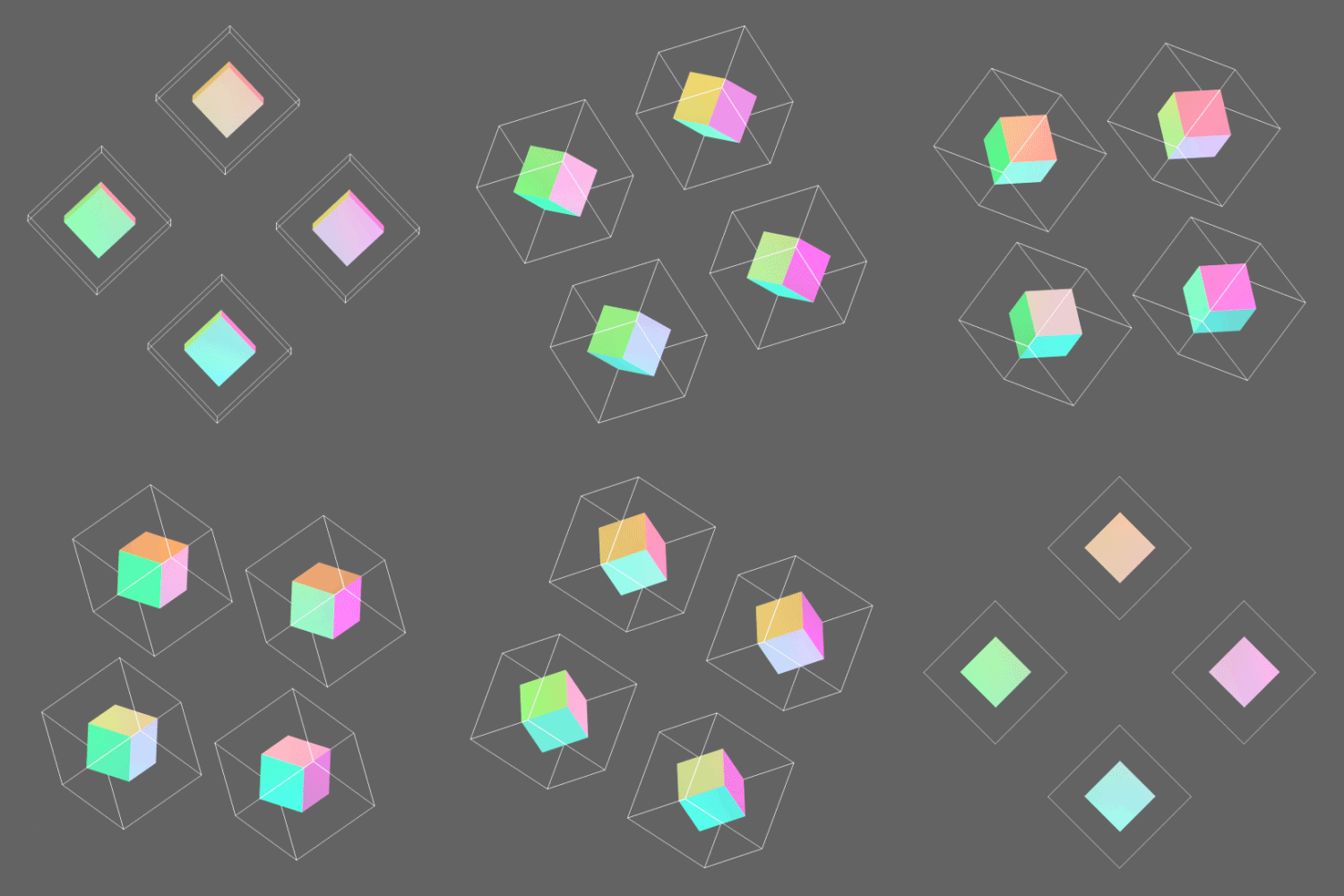
The left side is “direction field cues” and the right side is “symbol group space indexing”. All changes are continuously driven by the same parameter.
Using parameters of direction, angle, perspective depth, and force fields to drive the formation of symbol groups creates controllable spatial orientation, guiding the viewer's gaze rather than allowing it to wander randomly.
AI Symbol Simulation Training Engine
Start Symbol Practice
← Symbol simulation practice in progressReturn ✕
The AI symbol simulation training engine focuses on geometric structures, symbolic relationships, and visual order. Through training involving clicking, coloring, combining, and comparing, it helps learners understand the logical composition of symbols, rhythmic variations, and systematic connections. Through repeated simulations, it builds clear abilities in form judgment, structural awareness, and creative expression.
We've detected you might be speaking a different language. Do you want to change to:
 简体中文
简体中文  English
  日本語
日本語  Español
  Français
  हिन्दी
  العربية
  বাংলা
বাংলা  Português do Brasil
  Русский
  اردو
اردو  Bahasa Indonesia
  Deutsch
  Kiswahili
  मराठी
मराठी  తెలుగు
  Tiếng Việt
  Türkçe
  Italiano
  தமிழ்
தமிழ்  한국어
한국어