
I. Core Purpose | Symbolic Analysis of Basic Geometric Symbols

In the early stages of human civilization, geometry was not a neutral abstract tool, but a symbolic system that directly participated in the understanding of the world. Basic forms such as circles, lines, crosses, and spirals were not used for decoration or composition, but served the function of explaining cosmic order, life rhythms, and inner experiences. In this stage, geometry was not separated from perceptual, emotional, and spiritual experiences; on the contrary, it was one of the primary ways humans transformed invisible structures into understandable forms.
This early geometrical experience is not based on mathematical rationality, but on bodily perception and psychological projection. Circles correspond to cycles, enclosure, and a sense of wholeness, stemming from experiences of day and night, seasons, and life cycles. The intersection of vertical and horizontal arises from an understanding of direction, gravity, and the body's upright posture. Spiral forms derive from experiences of growth, unfolding, and continuous change. These geometrical forms gradually stabilized through long-term use, becoming visual structures that carry collective experience. Geometry is therefore not “invented,” but a cognitive result that is “confirmed.”
After entering the modern era, geometry was gradually rationalized and instrumentalized, becoming the foundational language of science, engineering, and abstract composition. However, this rationalization process did not eliminate geometry's symbolic potential but rather temporarily compressed it within formal logic. The significant importance of modern geometric abstract art lies precisely in reactivating these compressed symbolic dimensions, allowing geometry to transcend its role as mere building blocks and transform into a re-codable container for psychological and emotional experiences.
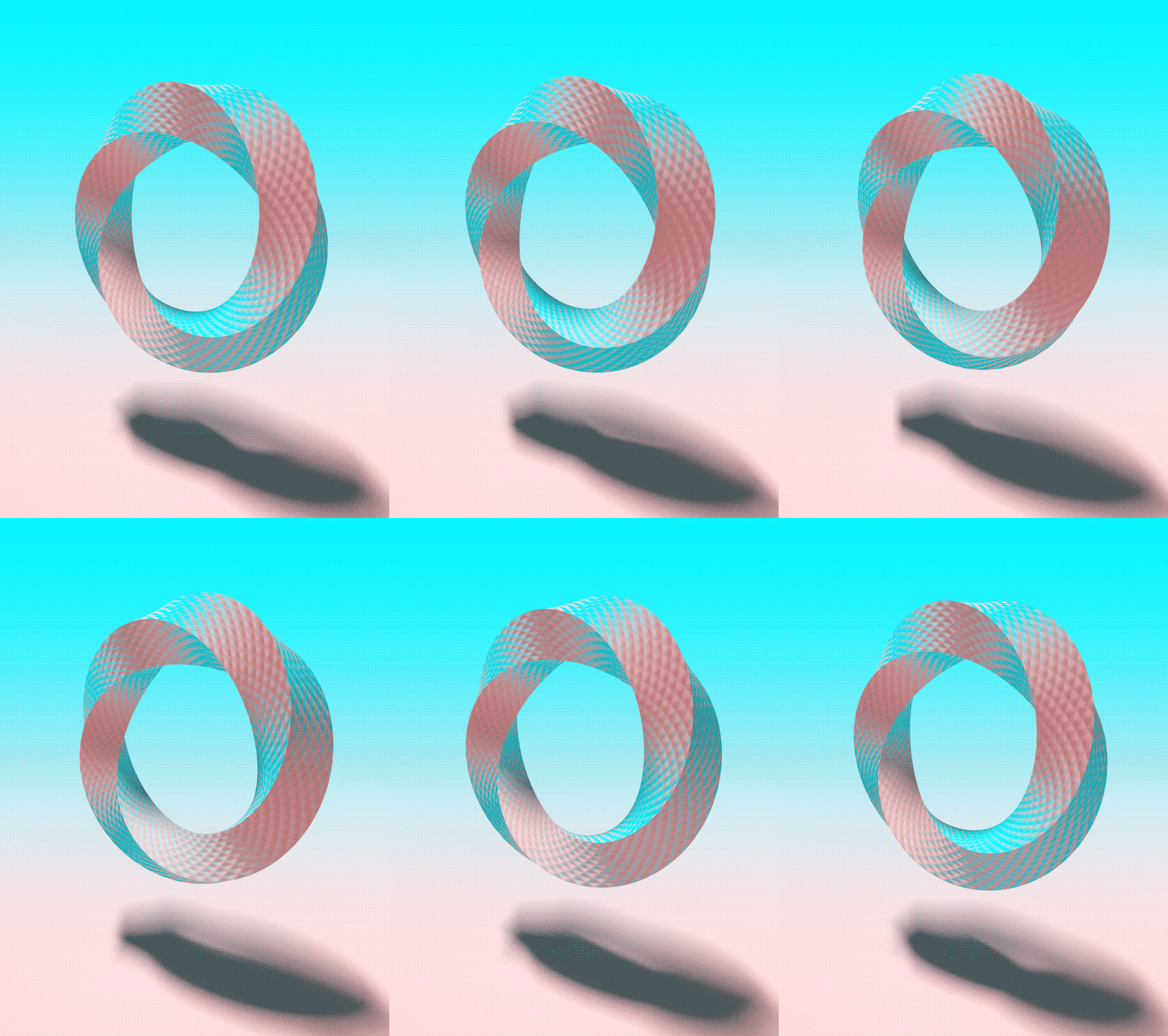
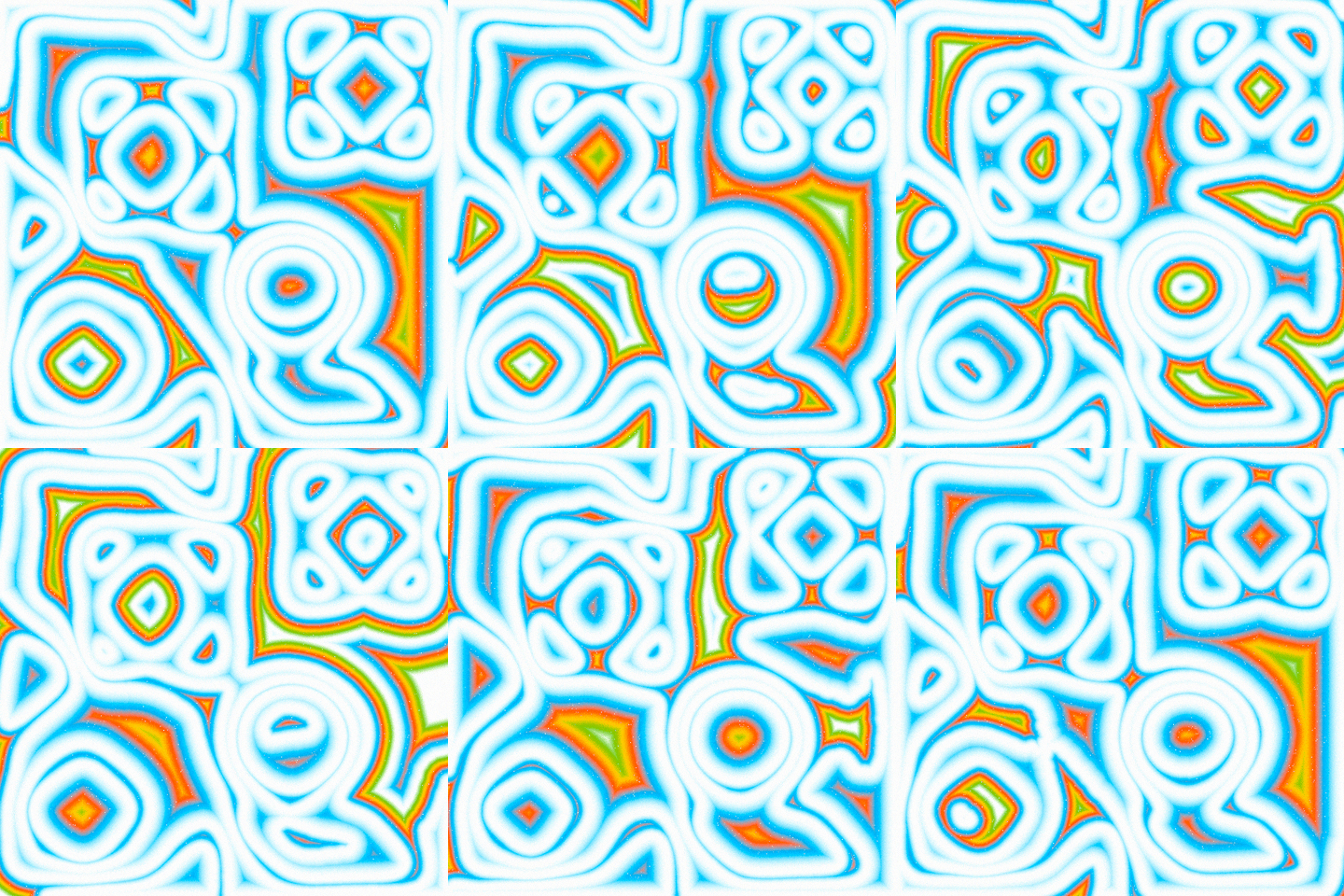
In geometric abstract art, artists do not rely on narrative or imagery to express inner experiences. Instead, through repetition, controlled proportion, distortion, and recombination of basic geometric symbols, the structure itself becomes a trigger for emotions. A stable array of squares evokes a sense of order and security; stretched or skewed rectangles create unease and tension; continuously rotating spirals guide the viewer into a perceptual state of temporality and generativity. These feelings do not stem from symbolic interpretation but from the direct impact of visual structures on the cognitive system.
Therefore, the symbolic analysis of geometric symbols is essentially not a sorting of cultural metaphors, but rather a visual cognitive psychology. It does not study “what geometry represents,” but rather “how geometry functions within human perceptual and cognitive mechanisms.” The human visual system is inherently predisposed to recognize symmetry, boundaries, centers, and orientations. These cognitive preferences endow certain geometric forms with natural psychological effects. Geometric symbols, in turn, activate specific emotional and psychological states by either aligning with or disrupting these cognitive mechanisms.
This explains why abstract art can resonate deeply with viewers, even without figurative narratives. Geometry doesn't tell a story, but it directly engages with the understanding of structure itself. When viewers encounter geometric works, they are not decoding meaning but experiencing an organized perceptual process. Order, tension, openness, oppression, or sublimity are not “seen” but “felt” within the structure.
From this perspective, the symbolic analysis of basic geometric symbols is not an added interpretation of form, but rather reveals why geometry can serve as a cross-cultural and trans-historical visual language. It is precisely because these symbols are rooted in our shared perceptual and cognitive structures that they can be continuously reactivated across different historical and artistic contexts. The power of geometric abstract art stems from this deep commonality—it bypasses narrative and representation to directly connect with humanity's fundamental ways of understanding the world.
Therefore, the symbolic nature of geometric signs is not a mystical legacy, but a continuously functioning cognitive mechanism. Analyzing it is not about tracing past symbolic systems, but about understanding how geometry continues to perform its core function of “translating inner experience into perceptible structures” today. This is precisely why geometric abstract art still possesses spiritual and psychological depth in our time.
Lesson B: Core Purpose Symbolic Analysis of Basic Geometric Symbols Click to view Listen to reading
In the early stages of human civilization, geometry was not a neutral tool of abstraction, but a system of symbols directly involved in the understanding of the world. Basic forms such as circles, lines, crosses, spirals, etc., were not used to decorate or compose a picture, but assumed the function of explaining the order of the universe, the rhythms of life and inner experience. Geometry was not separated from perceptual, emotional, and spiritual experience at this stage; on the contrary, it was one of the primary ways in which human beings transformed invisible structures into comprehensible forms. This early geometric experience is not based on mathematical rationality, but on physical perception and mental projection. Circles correspond to circulation, wrapping, and wholeness from the experience of day and night, seasons, and life cycles; vertical and horizontal intersections from the perception of direction, gravity, and the state of the body in which it stands; and spirals from the experience of growth, unfolding, and continual change. These geometric forms have been stabilized over time and have become visual structures that carry the collective experience. Geometry was thus not “invented” but rather “recognized” as a result of cognition. In modern times, geometry has been gradually rationalized and instrumentalized, becoming the basic language of science, engineering and abstract composition. However, this process of rationalization did not eliminate the symbolic potential of geometry, but rather compressed it temporarily into formal logic. The significance of modern geometric abstract art lies precisely in the reactivation of these compressed symbolic dimensions, so that geometry is no longer just a compositional unit, but a psychological and emotional container that can be recoded. In geometric abstract art, the artist does not rely on narrative or image to express inner experience, but rather, through the repetition, scale control, deformation and reorganization of basic geometric symbols, the structure itself becomes a trigger for feelings. A stable array of squares triggers a sense of order and security; a stretched or tilted rectangle creates unease and tension; and a continuously rotating spiral leads the viewer into a temporal and generative state of perception. These feelings do not come from symbolic interpretation, but from the direct action of the visual structure on the cognitive system. Therefore, the symbolic analysis of geometric symbols is not essentially a collation of cultural metaphors, but a kind of visual cognitive psychology. It is a kind of visual cognitive psychology, which studies not “what geometry represents”, but “how geometry acts on human perception and understanding mechanisms”. The human visual system is naturally inclined to recognize symmetry, boundaries, centers and directions, and these cognitive preferences give certain geometric forms a natural psychological effect. It is by responding to or perturbing these cognitive mechanisms that geometric symbols activate specific emotional and psychological states. This explains why abstract art is able to resonate deeply with the viewer despite the lack of a figurative narrative. Geometry does not tell a story, but it works directly to understand the structure itself. When confronted with a geometric work, the viewer is not decoding meaning, but experiencing an organized process of perception. Order, tension, openness, oppression or the sublime are not “seen” but “felt” in the structure. From this point of view, the symbolic analysis of the basic geometric symbols is not an additional explanation of the form, but rather a revelation of how geometry has become a visual language across cultures and generations. It is precisely because these symbols are rooted in the common structure of human perception and cognition that they can be constantly reactivated in different historical and artistic contexts. The power of geometric abstract art comes from this deep commonality - it bypasses narratives and representations and directly connects to the basic way humans understand the world. The symbolism of geometric signs is thus not a mystical legacy, but a continuously operating cognitive mechanism. To analyze it is not to go back to the symbolic systems of the past, but to understand how geometry continues to perform its central function of “translating inner experience into perceptible structures” in the contemporary era. This is the fundamental reason why geometric abstraction still has spiritual and psychological depth today!
 简体中文
简体中文  English
  日本語
日本語  Español
  Français
  हिन्दी
  العربية
  বাংলা
বাংলা  Português do Brasil
  Русский
  اردو
اردو  Bahasa Indonesia
  Deutsch
  Kiswahili
  मराठी
मराठी  తెలుగు
  Tiếng Việt
  Türkçe
  Italiano
  தமிழ்
தமிழ்  한국어
한국어