5. Three core logical paths of geometric abstraction
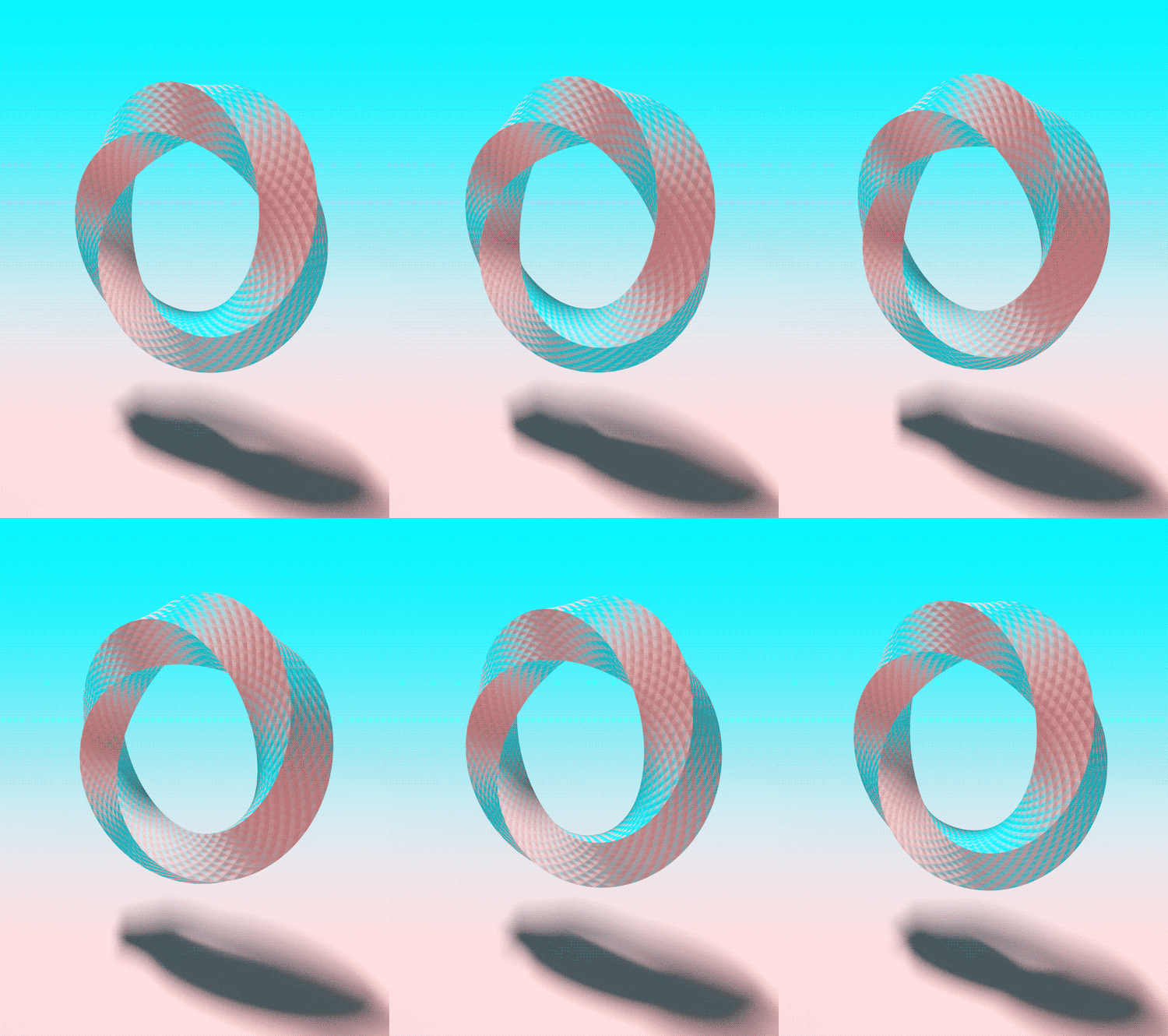
Geometric abstract art is not a continuation of a single style, but rather a multi-logical structure that has gradually differentiated throughout history. From a methodological perspective, its internal development can be summarized into three mutually penetrating and layered core paths: formal autonomy, system construction, and generative evolution.
The first path is the path of formal autonomy, namely the shift from "reproducing nature" to "visual ontology." This is the foundation for the legitimacy of geometric abstraction as an independent language. Geometric elements are no longer tools for simplifying nature, nor do they bear a narrative function; instead, they are transformed into formal units with independent meaning. The focus of viewing shifts from "what is drawn" to "how it is composed," with proportion, rhythm, and balance themselves becoming the goal. Kandinsky's theory of points, lines, and planes, and Malevich's zero-degree form, aim to construct a perceptible order through a minimal formal language, allowing the viewer to directly enter into the formal relationships themselves.
Mondrian
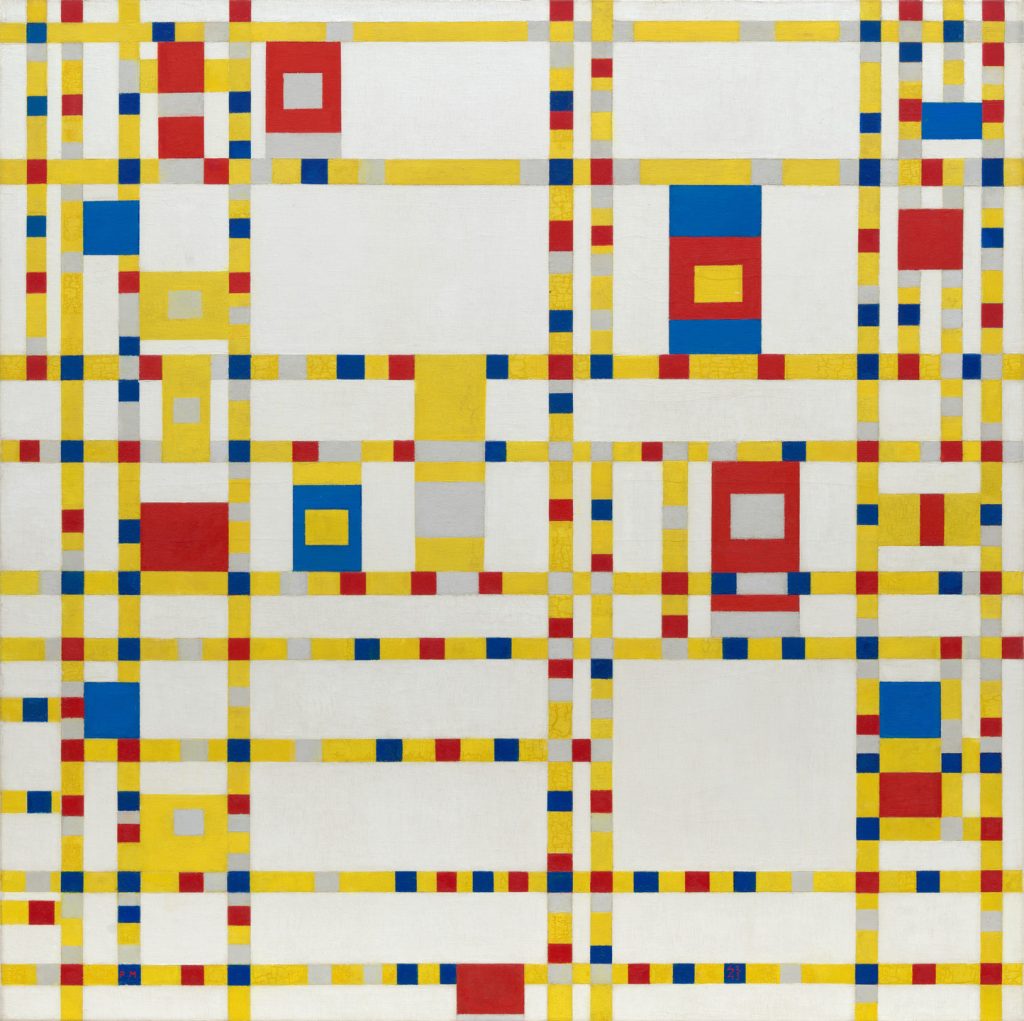
The second path is the system construction path, namely the shift from "individual experimentation" to "universal laws." This is key to the social extensibility and methodological depth of geometric abstraction. Geometry rises from the compositional intuition of a single image to a set of repeatable and generalizable rules. Artists transform from shapers of form to rule-makers. Mondrian's Neo-Plasticism and the modular design of Constructivists view the image as an executable program composed of grids, primary colors, and proportions. Geometry thus becomes a universal grammar connecting art, design, and engineering rationality, rising from personal aesthetics to a systemic language.
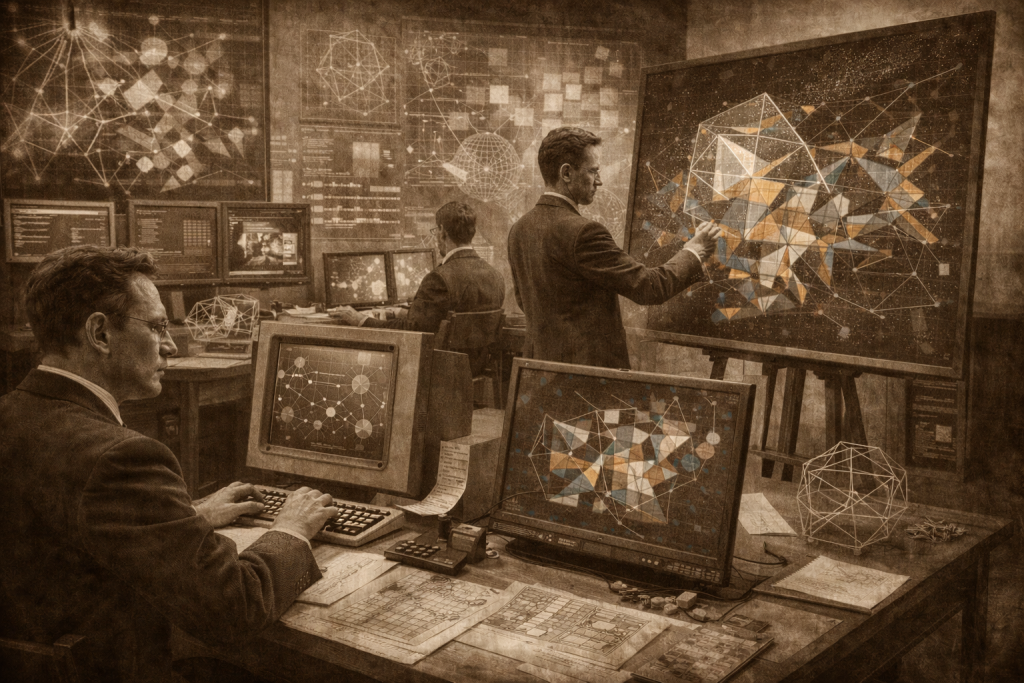
The third path is the generative evolutionary path, a shift from "static composition" to "dynamic mechanisms." This represents a leap in geometric abstraction in the digital age, incorporating "time" into the core structure. Through algorithms, parametric design, and computer graphics, geometry is no longer a fixed structure, but an evolving process that continuously changes over time. Artists become the designers of the system, setting initial conditions and evolutionary logic, allowing the work to grow and transform on its own. This breaks through the limitations of static images, transforming geometric abstraction into a dynamic language mechanism.
In conclusion, in the contemporary context, these three paths are not linear replacements, but rather form a highly intertwined complex structure. Formal autonomy provides a pure linguistic foundation, system construction endows the methodology with extensibility, and generative evolution opens up a space of future possibilities. With the intervention of artificial intelligence, historical styles are being translated into parameters, accelerating the fusion of different logics. Geometric abstraction has thus evolved from the rational ideal of modernism into a generative language of the digital age, becoming an important bridge connecting art, science, and technology.
Lesson 5: Three Core Logical Paths to Geometric Abstraction (Click to view and listen to the audio recording)
Geometric abstract art is not a continuation of a single style, but rather a multi-logical structure that has gradually differentiated throughout history. From a methodological perspective, its internal development can be summarized into three mutually penetrating and layered core paths: formal autonomy, system construction, and generative evolution.
The first path is the path of formal autonomy, namely the shift from "reproducing nature" to "visual ontology." This is the foundation for the legitimacy of geometric abstraction as an independent language. Geometric elements are no longer tools for simplifying nature, nor do they bear a narrative function; instead, they are transformed into formal units with independent meaning. The focus of viewing shifts from "what is drawn" to "how it is composed," with proportion, rhythm, and balance themselves becoming the goal. Kandinsky's theory of points, lines, and planes, and Malevich's zero-degree form, aim to construct a perceptible order through a minimal formal language, allowing the viewer to directly enter into the formal relationships themselves.
The second path is the system construction path, namely the shift from "individual experimentation" to "universal laws." This is key to the social extensibility and methodological depth of geometric abstraction. Geometry rises from the compositional intuition of a single image to a set of repeatable and generalizable rules. Artists transform from shapers of form to rule-makers. Mondrian's Neo-Plasticism and the modular design of Constructivists view the image as an executable program composed of grids, primary colors, and proportions. Geometry thus becomes a universal grammar connecting art, design, and engineering rationality, rising from personal aesthetics to a systemic language.
The third path is the generative evolutionary path, a shift from "static composition" to "dynamic mechanisms." This represents a leap in geometric abstraction in the digital age, incorporating "time" into the core structure. Through algorithms, parametric design, and computer graphics, geometry is no longer a fixed structure, but an evolving process that continuously changes over time. Artists become the designers of the system, setting initial conditions and evolutionary logic, allowing the work to grow and transform on its own. This breaks through the limitations of static images, transforming geometric abstraction into a dynamic language mechanism.
In conclusion, in the contemporary context, these three paths are not linear replacements, but rather form a highly intertwined complex structure. Formal autonomy provides a pure linguistic foundation, system construction endows the methodology with extensibility, and generative evolution opens up a space of future possibilities. With the intervention of artificial intelligence, historical styles are being translated into parameters, accelerating the fusion of different logics. Geometric abstraction has thus evolved from the rational ideal of modernism into a generative language of the digital age, becoming an important bridge connecting art, science, and technology.
 简体中文
简体中文  English
  日本語
日本語  Español
  Français
  हिन्दी
  العربية
  বাংলা
বাংলা  Português do Brasil
  Русский
  اردو
اردو  Bahasa Indonesia
  Deutsch
  Kiswahili
  मराठी
मराठी  తెలుగు
  Tiếng Việt
  Türkçe
  Italiano
  தமிழ்
தமிழ்  한국어
한국어