
3. Color is a functional structural language.
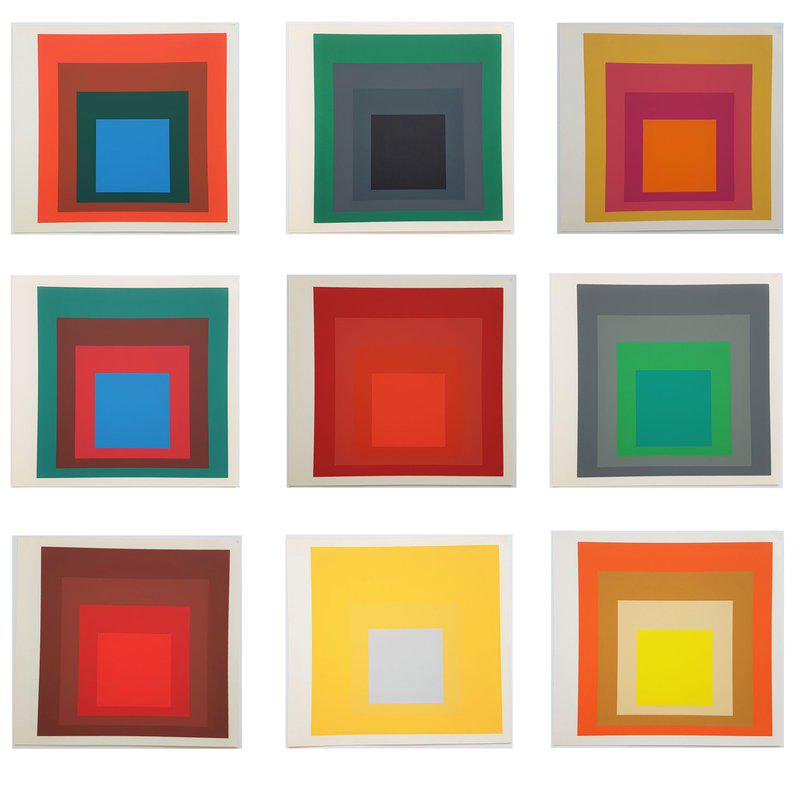
Josef Albers
Josef Albers' understanding of color holds significant turning point in the development of modern art and design theory. He did not view color merely as a decorative element or a tool for emotional expression, but rather as a structural language that operates within the visual system. Within this theoretical framework, color is no longer an isolated visual object, but a dynamic system formed through relationships, contrasts, and order.
Albers' research centers on "color interaction." He points out that human vision does not perceive color in an absolute way, but rather forms judgments by comparing colors in the surrounding environment. Therefore, the visual meaning of color always arises from relationships. When one color is adjacent to another, they influence each other, changing each other's brightness, saturation, and spatial perception. This interaction gives color a property similar to language structure: individual elements do not determine meaning on their own; meaning comes from the relationships between elements.
From this perspective, color can be understood as a structural system. The contrast, repetition, rhythm, and balance between different colors, like grammatical rules in a language, determine the way visual expression occurs. For example, when two colors form a strong contrast, the image creates tension; when similar colors form a continuous variation, a soft transition and rhythm are created. By arranging these relationships, artists can control the visual order of the image.
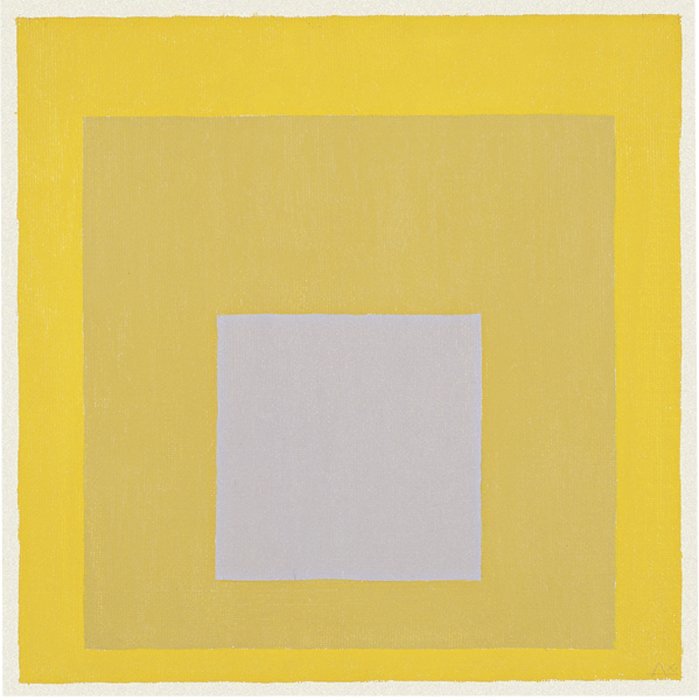
Josef Albers
Albers extensively used simple geometric forms in his teaching and creative work to explore this structural language. The most famous example is his "Homage to Squares" series. In these works, the composition typically consists of several nested squares, each in a different color. Although the forms are very simple, the precise arrangement of colors creates complex visual effects. Some colors appear to advance, while others seem to recede, thus creating a sense of space on the flat surface. This space is not drawn using perspective, but rather generated automatically by the color relationships.
This phenomenon illustrates that color itself possesses the ability to organize space. When specific relationships are formed between colors, the visual system automatically generates a sense of depth, layering, and movement. Therefore, color is not merely a surface attribute, but a crucial factor in constructing visual structure. In this sense, color is like a functional language system, generating diverse visual expressions through different combinations.
Albers also points out that color language is highly variable. The same color can have different effects in different structures. For example, a red may appear bright and prominent against a blue background, but may appear subdued or dull against an orange background. This change is not due to a change in the color itself, but rather a visual result of a change in structural relationships. Therefore, the meaning of color is not fixed, but is constantly generated as structural relationships change.
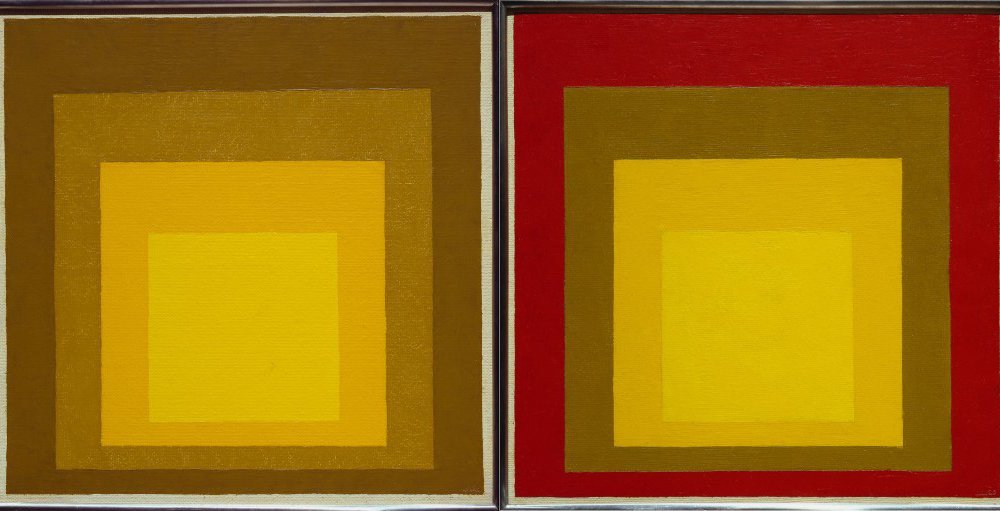
Josef Albers
This idea has had a profound impact on modern design. In architecture, graphic design, and industrial design, color has begun to be seen as an important tool for organizing visual order. Designers no longer simply choose aesthetically pleasing colors, but rather construct visual structures by systematically arranging color relationships. For example, rhythm is established through color repetition, emphasis is reinforced through contrast, and spatial hierarchy is created through gradation. These methods all demonstrate the characteristics of color as a structural language.
At the same time, Albers' theory also emphasizes the importance of observation and experimentation. Due to the high complexity of color relationships, artists need to continuously test the effects of different combinations through practice. In this process, the language of color is gradually understood and mastered. Just like learning a language, people need to experience its structural rules through practical use.
Therefore, in Josef Albers' color theory, color is not merely a visual element, but a functional structural system. By arranging the relationships between different colors, artists can organize space, establish rhythm, and create visual tension. It is in this structural operation that color acquires its true expressive power and becomes an important language of modern visual art.
Lesson C-3: Color is a functional structural language. Click to view and listen to the reading.
Josef Albers' understanding of color holds significant turning point in the development of modern art and design theory. He didn't view color merely as a decorative element or a tool for emotional expression, but rather as a structural language operating within the visual system. Within this theoretical framework, color is no longer an isolated visual object, but a dynamic system formed through relationships, contrasts, and order. The core of Albers' research lies in "color interaction." He points out that human vision doesn't perceive color in an absolute way, but rather forms judgments by comparing colors in the surrounding environment. Therefore, the visual meaning of color always arises from relationships. When one color is adjacent to another, they influence each other, altering each other's brightness, saturation, and spatial perception. This interaction gives color a linguistic structure-like quality: individual elements do not determine meaning; meaning arises from the relationships between elements. From this perspective, color can be understood as a structural system. The contrast, repetition, rhythm, and balance formed between different colors, like grammatical rules in language, determine the way visual expression occurs. For example, when two colors form a strong contrast, the image creates tension; when similar colors form a continuous variation, a soft transition and rhythm are created. Artists can control the visual order of a picture by arranging these relationships. Albers extensively uses simple geometric forms in his teaching and creation to study this structural language. His most famous example is his "Homage to Squares" series. In these works, the picture is typically composed of several nested squares, each using a different color. Although the structural form is very simple, the precise arrangement of color relationships creates complex visual effects. Some colors appear to protrude forward, while others seem to recede, thus creating a sense of space on the plane. This space is not drawn through perspective but is automatically generated by the color relationships. This phenomenon illustrates that color itself has the ability to organize space. When specific relationships are formed between colors, the visual system automatically generates a sense of depth, layering, and movement. Therefore, color is not merely a surface attribute but a crucial factor in constructing visual structure. In this sense, color is like a functioning language system, generating diverse visual expressions through different combinations. Albers also points out that the language of color is highly variable. The same color can have different effects in different structures. For example, a red may appear bright and prominent against a blue background, but may appear subdued or muted against an orange background. This change is not a change in color itself, but a visual result of a shift in structural relationships. Therefore, the meaning of color is not fixed, but constantly generated as structural relationships change. This idea has had a profound impact on modern design. In architecture, graphic design, and industrial design, color has begun to be seen as an important tool for organizing visual order. Designers no longer simply choose aesthetically pleasing colors, but construct visual structures by systematically arranging color relationships. For example, rhythm is established through color repetition, emphasis is strengthened through contrast, and spatial hierarchy is formed through gradation. These methods all demonstrate the characteristics of color as a structural language. At the same time, Albers' theory also emphasizes the importance of observation and experimentation. Due to the high complexity of color relationships, artists need to continuously test the effects of different combinations through practice. In this process, the language of color is gradually understood and mastered. Just like learning a language, people need to experience its structural rules through practical use. Therefore, in Josef Albers' color theory, color is not only a visual element, but also a functional structural system. Through the arrangement of relationships between different colors, artists can organize space, establish rhythm, and create visual tension. It is in this structural operation that color acquires its true expressive power and becomes an important language of modern visual art.
 简体中文
简体中文  English
  日本語
日本語  Español
  Français
  हिन्दी
  العربية
  বাংলা
বাংলা  Português do Brasil
  Русский
  اردو
اردو  Bahasa Indonesia
  Deutsch
  Kiswahili
  मराठी
मराठी  తెలుగు
  Tiếng Việt
  Türkçe
  Italiano
  தமிழ்
தமிழ்  한국어
한국어