
4. Color perception is variable and uncertain.
Josef Albers
In the development of modern color theory, Josef Albers proposed a crucial point: human perception of color is not stable or fixed, but rather exhibits significant variability and uncertainty. In other words, color does not possess absolute visual meaning; the same color will present different visual effects in different environments. This understanding challenged the traditional view of color as a fixed attribute.
In Albers' research, color is primarily a visual experience, rather than a physical object that can be precisely calculated. Although color can be measured using spectra or color values, the colors we actually see often differ from physical data. The visual system automatically compares and adjusts to the surrounding environment, thus altering our perception of color. Therefore, the true visual effect of color depends not entirely on the pigment itself, but rather on the relationships between colors.
This phenomenon is very common in everyday vision. For example, a neutral gray piece of paper will appear brighter when placed against a dark background and darker when placed against a light background. In fact, the two pieces of gray are exactly the same, but people will have different visual perceptions due to the different backgrounds. This phenomenon is called "color interaction" and is one of the core concepts of Albers' color theory.
Josef Albers
Besides changes in brightness, the warmth or coolness, saturation, and even hue of a color can also change. When a color is surrounded by different colors, it may appear to lean more towards one of the latter. For example, gray may appear slightly greenish against a red background and slightly orange against a blue background. These changes are not due to a change in the pigment itself, but rather perceptual biases produced by the visual system when making comparisons.
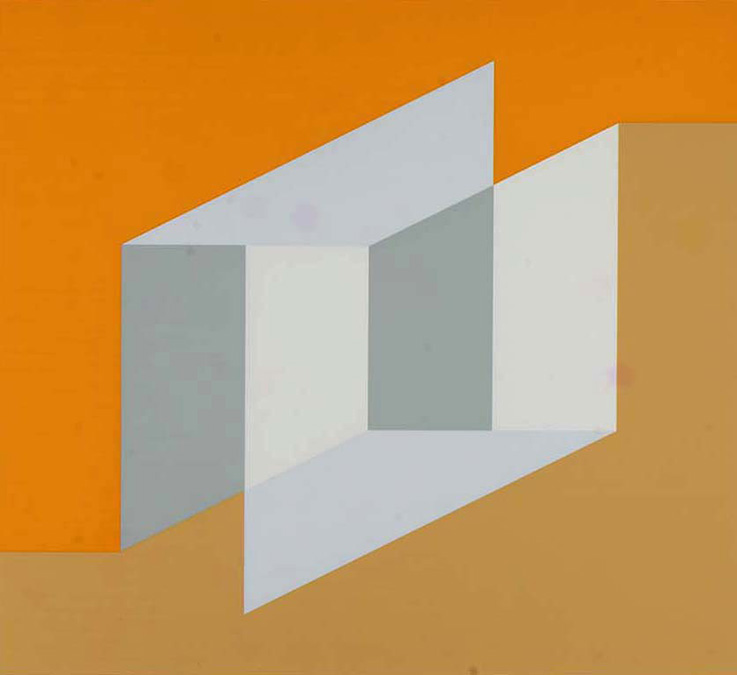
Albers points out that this uncertainty of perception is precisely the charm of color. Because the effect of color is not fixed, artists can create various visual phenomena by adjusting color relationships. For example, certain color combinations can produce the illusion of transparency, making it appear as if one color is layered on top of another; some combinations produce a vibrating effect, making the image seem to flicker. Other color relationships can create spatial depth, making a plane appear to have layers of depth.
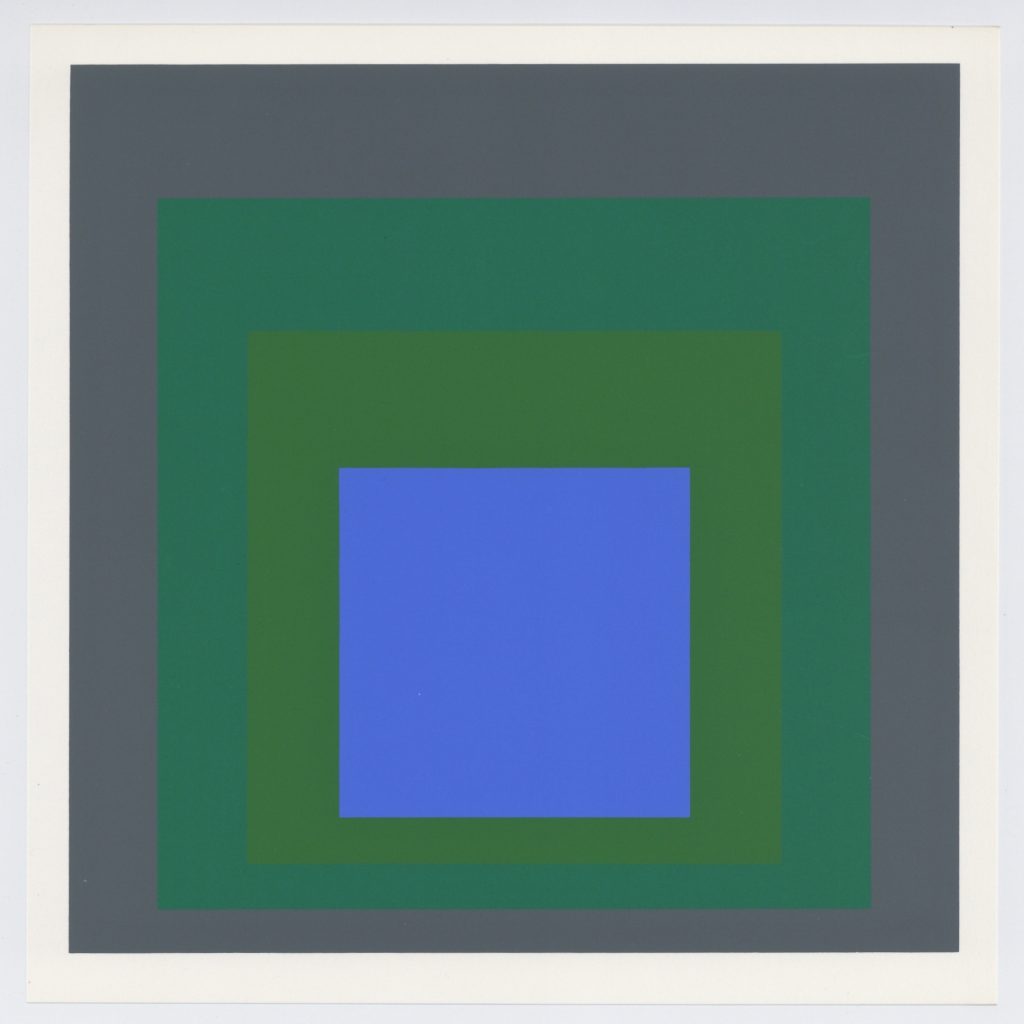
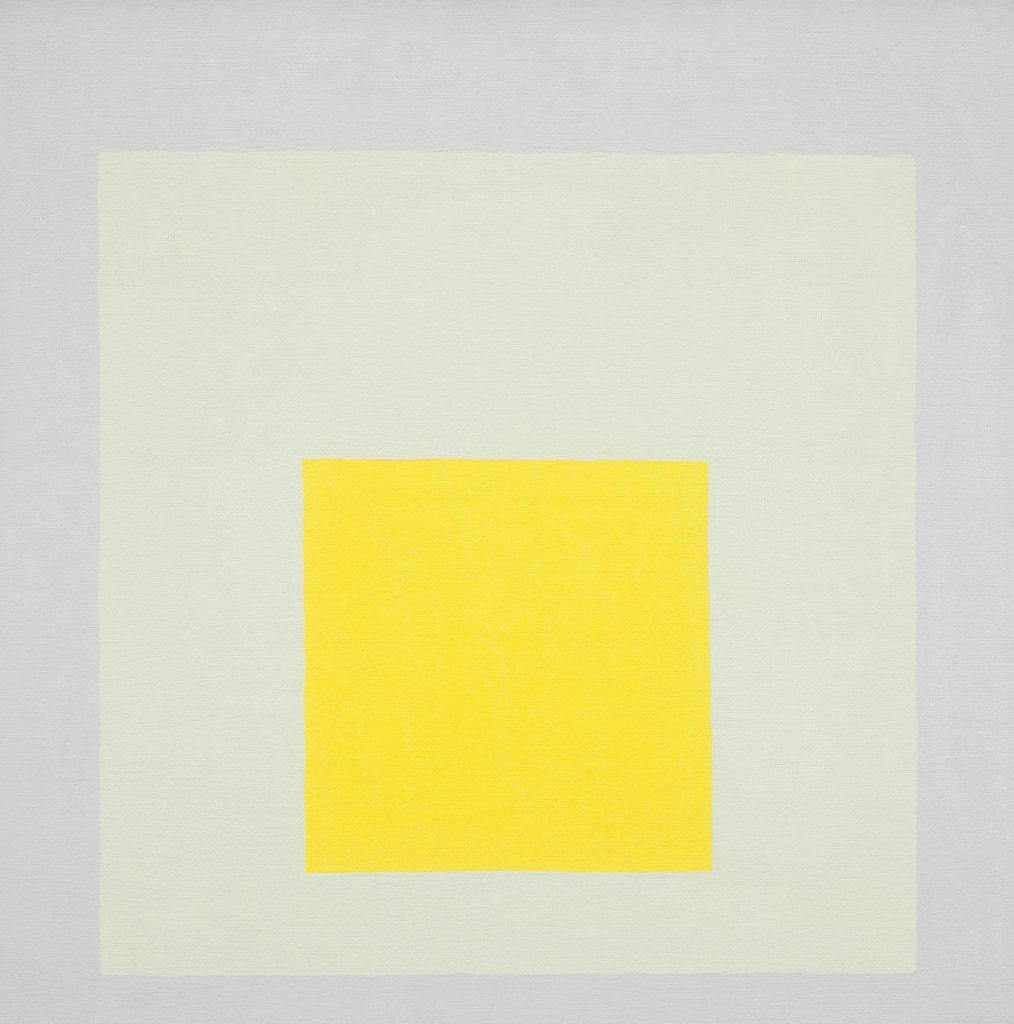
In Albers's work, this uncertainty is transformed into a visual experiment. His most famous "Homage to the Squares" series is a long-term study of color relationships. In these works, the composition is usually made up of several nested squares, creating complex spatial effects through combinations of different colors. Sometimes the central square seems to emerge forward, and sometimes it seems to recede. This variation is not determined by the form or structure, but by the visual perception changes caused by color relationships.
Josef Albers
This research shows that human vision does not passively receive color, but rather constantly interprets and adjusts visual information. The eyes automatically change their judgments based on the surrounding environment, so color always appears to be changing. This variability makes color a dynamic visual language, rather than a static attribute.
Because of this variability and uncertainty in color, Albers emphasized the importance of hands-on experimentation in his teaching. He believed that students should not rely on fixed rules, but rather understand the behavior of colors through continuous comparison and observation. Through simple colored paper collage experiments, students can personally experience how colors change each other's visual properties. This practical process can train visual sensitivity and gradually help people understand the complex interactive relationships between colors.
From a broader perspective, Albers' theory reveals a fundamental characteristic of visual perception: the world we see is not absolutely real, but rather the result of continuous interpretation and reconstruction by the perceptual system. Color is one of the most obvious manifestations of this perceptual mechanism.
Therefore, in Josef Albers' color theory, color is not a stable and unchanging visual object, but a highly variable visual phenomenon. The meaning of color is not fixed, but constantly generated in different relationships and environments. It is precisely this variability and uncertainty that makes color one of the most dynamic and creative expressive languages in modern art and design.
Lesson C-4: Color Perception is Variable and Uncertain (Click to view and listen to the reading)
In the development of modern color theory, Josef Albers proposed a crucial point: human perception of color is not stable and fixed, but rather exhibits significant variability and uncertainty. In other words, color does not possess absolute visual meaning; the same color will present different visual effects in different environments. This understanding overturned the traditional view of color as a fixed attribute. In Albers' research, color is primarily a visual experience, not a physical object that can be precisely calculated. Although color can be measured using spectra or color values, the colors we actually see often differ from physical data. The visual system automatically compares and adjusts to the surrounding environment, thus altering our judgment of color. Therefore, the true visual effect of color does not entirely depend on the pigment itself, but rather on the relationships between colors. This phenomenon is very common in everyday vision. For example, a neutral gray piece of paper appears brighter when placed against a dark background and darker when placed against a light background. In fact, these two grays are identical, but due to the different backgrounds, people will have different visual judgments. This phenomenon is called "color interaction," and it is one of the core contents of Albers' color theory. Beyond variations in brightness, the warmth, saturation, and even hue of a color can also change. When a color is surrounded by different colors, it may appear to lean more towards one of the latter. For example, gray against a red background may appear slightly greenish, while against a blue background it may appear slightly orange. These changes are not due to a change in the pigment itself, but rather perceptual biases produced by the visual system when making contrasts. Albers points out that this perceptual uncertainty is precisely the charm of color. Because the effects of color are not fixed, artists can create various visual phenomena by adjusting color relationships. For example, certain color combinations can produce the illusion of transparency, making it appear as if one color is layered on top of another; some combinations produce a vibrating effect, making the image seem to flicker. Other color relationships can create spatial depth, making a plane appear to have layers. In Albers's work, this uncertainty is transformed into a visual experiment. His most famous "Square Homage" series is a long-term study of color relationships. In these works, the image is usually composed of several nested squares, creating complex spatial effects through combinations of different colors. Sometimes the central square seems to emerge forward, and sometimes it seems to recede. This change is not determined by morphological structure, but by visual perception changes caused by color relationships. This research shows that human vision does not passively receive color, but constantly interprets and adjusts visual information. The eyes automatically change their judgments based on the surrounding environment, so color always appears to be changing. This variability makes color a dynamic visual language, rather than a static attribute. Because of this variability and uncertainty, Albers emphasized the importance of practical experiments in his teaching. He believed that students should not rely on fixed rules, but should understand the behavior of color through continuous comparison and observation. Through simple colored paper collage experiments, students can personally experience how colors change each other's visual attributes. This practical process can train visual sensitivity, enabling one to gradually understand the complex interactive relationships between colors. From a broader perspective, Albers' theory reveals the fundamental characteristics of visual perception: the world humans see is not absolutely real, but rather the result of continuous interpretation and reconstruction by the perceptual system. Color is one of the most obvious manifestations of this perceptual mechanism. Therefore, in Josef Albers' color theory, color is not a stable and unchanging visual object, but a highly variable visual phenomenon. The meaning of color is not fixed, but constantly generated in different relationships and environments. It is precisely this variability and uncertainty that makes color one of the most dynamic and creative expressive languages in modern art and design.
 简体中文
简体中文  English
  日本語
日本語  Español
  Français
  हिन्दी
  العربية
  বাংলা
বাংলা  Português do Brasil
  Русский
  اردو
اردو  Bahasa Indonesia
  Deutsch
  Kiswahili
  मराठी
मराठी  తెలుగు
  Tiếng Việt
  Türkçe
  Italiano
  தமிழ்
தமிழ்  한국어
한국어