12. Color is a "non-personal universal language".“
Piet Mondrian
In the development of 20th-century modern art, Piet Mondrian proposed a highly influential theory of abstract art. He argued that art should not merely express personal emotions or reproduce natural objects, but rather explore a universal order that transcends personal experience. Within this framework, color is no longer a direct expression of the artist's emotions, but a visual language that can be universally understood. In other words, the goal of color in art is to become an "impersonal universal language."
In traditional painting, color often possesses a pronounced subjectivity. Artists use color to express personal emotions, cultural symbols, or impressions of nature. For example, warm tones may express enthusiasm or joy, while cool tones may symbolize tranquility or melancholy. This understanding emphasizes the emotional and symbolic function of color. However, Mondrian argues that if art relies too heavily on personal emotions, it struggles to achieve universal meaning. Art should break free from the limitations of individual experience and establish a more objective and universal visual system.
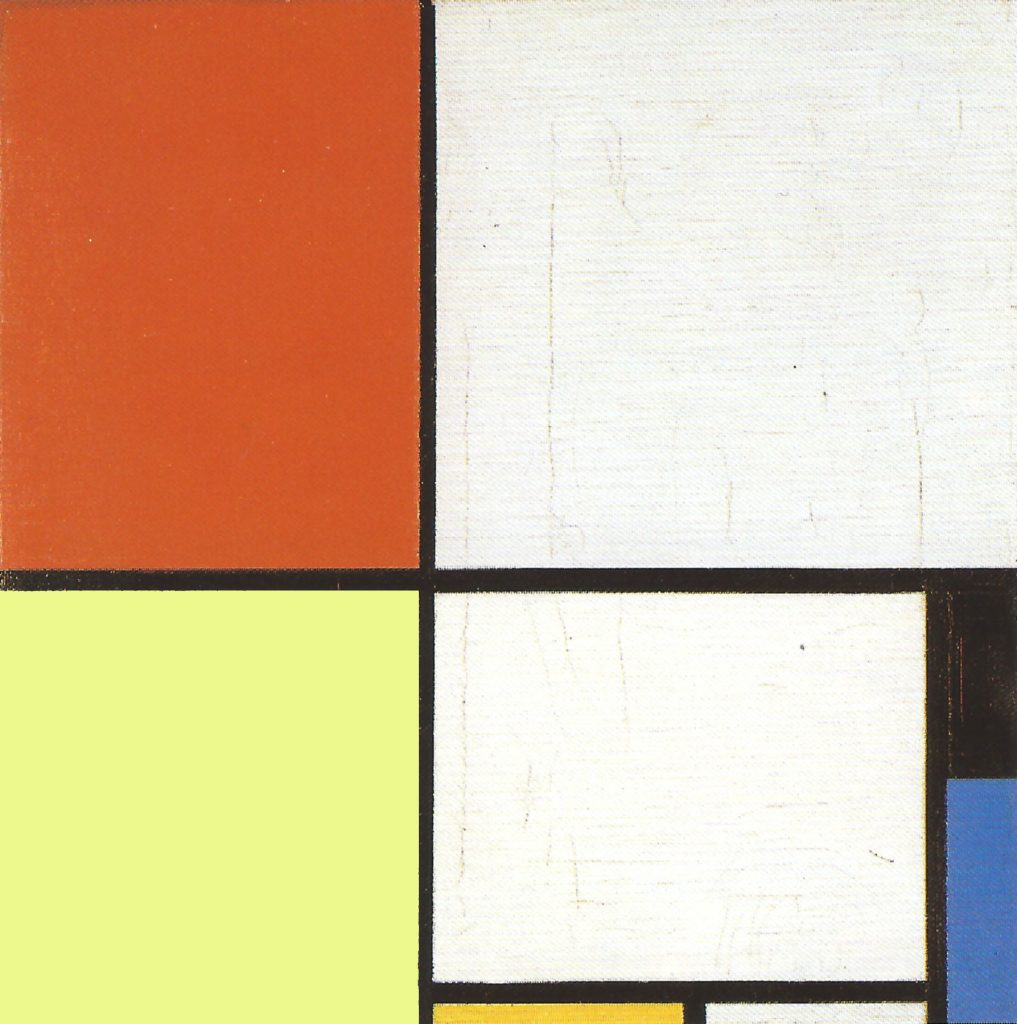
To achieve this goal, Mondrian gradually abandoned the complex and diverse colors of nature in his work, opting instead for the most basic color system. He primarily uses the three primary colors—red, yellow, and blue—along with neutral colors such as white, black, and gray. These colors are considered the purest visual elements, no longer referring to specific objects or relying on cultural symbolism. By reducing the number of colors, the images remain simple, making it easier for viewers to focus on the relationships between colors.
This approach is closely related to Mondrian's theory of "Neo-Plasticism." Neo-Plasticism attempts to establish a universal artistic language, constructing artistic structures through the most basic visual elements. In this system, vertical and horizontal lines represent fundamental order, while primary colors constitute the purest color system. Through the combination of these finite elements, clear and stable visual relationships can be formed, thereby giving art universal meaning.
Piet Mondrian
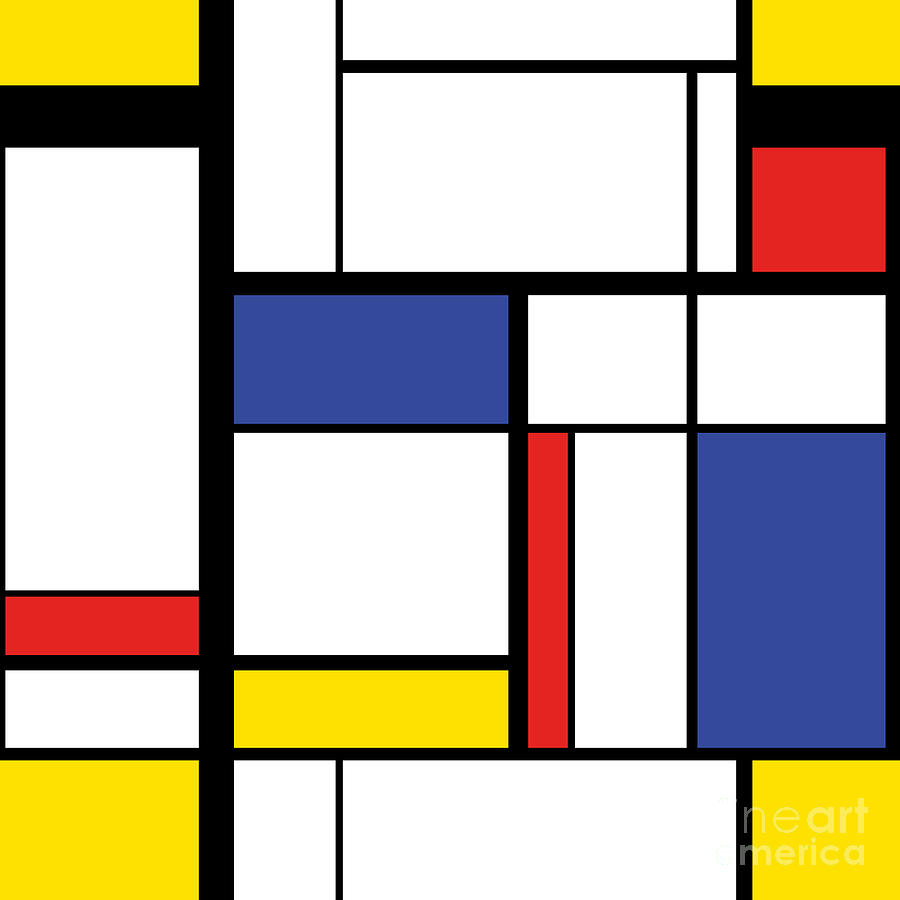
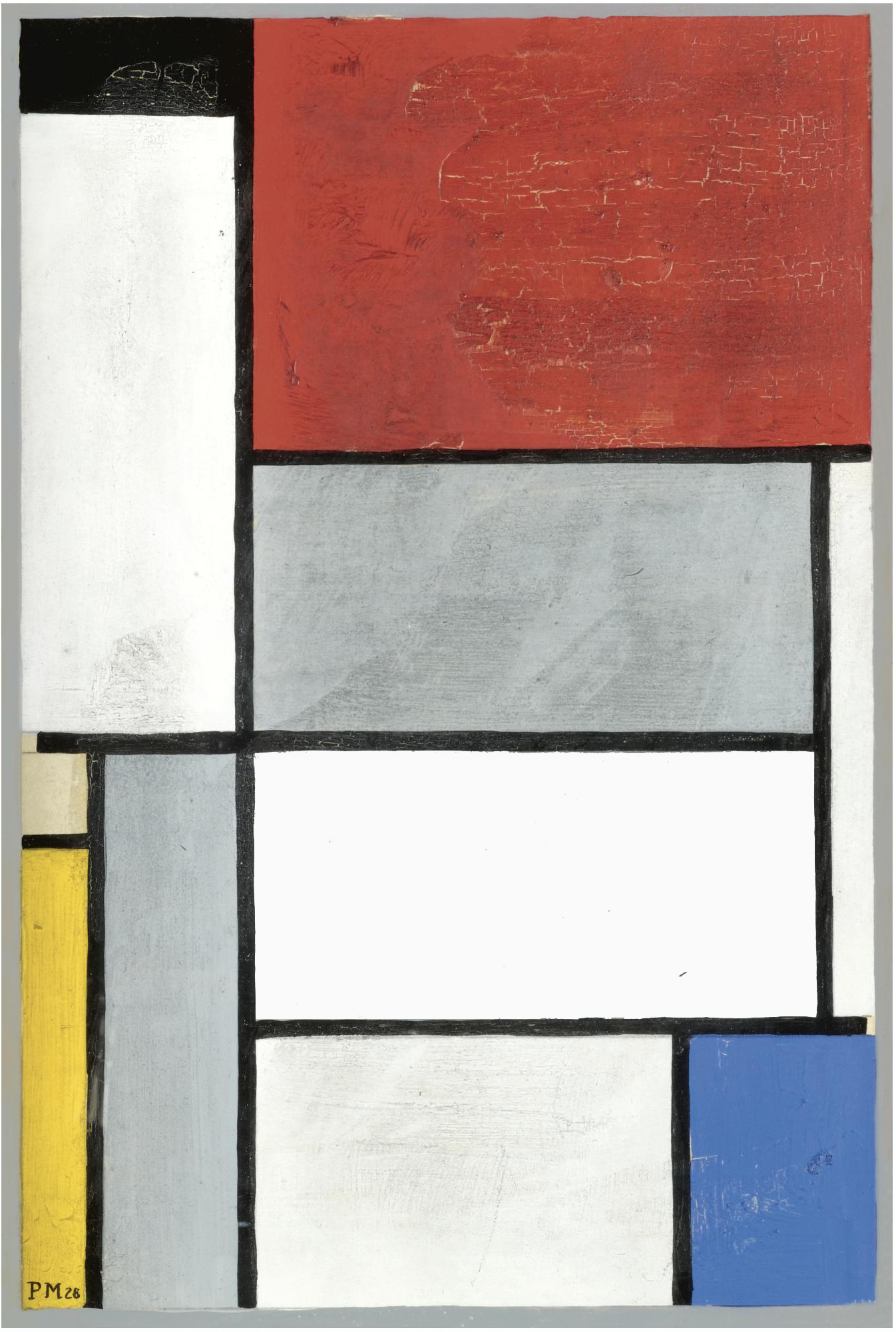
In Mondrian's work, color is typically placed within geometric structures formed by black lines. The composition is divided into multiple rectangular areas, each using a different color. The area, position, and proportion of the colors are precisely arranged to maintain overall balance. In this way, color is no longer a randomly used decoration, but becomes part of the structural order.
Because colors are confined to a basic system, their meaning in the image no longer depends on personal emotion. For example, red is not used to express passion, but rather as a visual force participating in structural balance. Yellow may provide brightness, and blue brings stability, but these effects come from color relationships, not emotional symbolism. Color here becomes a structural symbol.
This structured color language possesses universality. Because it is independent of specific cultures or personal experiences, viewers from diverse backgrounds can understand the image through visual relationships. The proportions, contrasts, and rhythms between colors create a clear visual order, making the work cross-culturally comprehensible. This is precisely Mondrian's artistic goal: to establish a universally understandable visual language.
Piet Mondrian
On a deeper level, Mondrian's ideas embody a modernist ideal. He believed that a universal order exists behind the complex and ever-changing real world, and that art's task is to reveal this order by simplifying elements. Color, line, and space form a harmonious system through structural relationships, enabling art to transcend individual expression and acquire universal meaning.
This theory has had a profound impact on modern design, architecture, and visual arts. Many modern design works employ limited colors and simple structures, establishing visual order through clear relationships. This approach is an extension of Mondrian theory into visual culture.
Therefore, in Piet Mondrian's color theory, color is no longer a tool for expressing personal emotions, but a universal, impersonal language. Through a limited color system and structural relationships, artists can establish a stable and clear visual order, enabling their works to transcend individual experience and become visual expressions with universal significance.

Lesson C-12: Color is an "Impersonal Universal Language" (Click to listen to the reading)
In the development of 20th-century modern art, Piet Mondrian proposed a highly influential theory of abstract art. He believed that art should not merely express personal emotions or reproduce natural objects, but should explore a universal order that transcends personal experience. Within this framework, color is no longer a direct expression of the artist's emotions, but a visual language that can be universally understood. In other words, the goal of color in art is to become an "impersonal universal language." In traditional painting, color often possesses a pronounced subjectivity. Artists use color to express personal emotions, cultural symbols, or impressions of nature. For example, warm tones may express enthusiasm or joy, while cool tones may symbolize tranquility or melancholy. This understanding emphasizes the emotional and symbolic functions of color. However, Mondrian argued that if art relies too heavily on personal emotions, it struggles to achieve universal meaning. Art should break free from the limitations of individual experience and establish a more objective and universal visual system. To achieve this goal, Mondrian gradually abandoned the complex and diverse colors of nature in his creations, opting instead for the most basic color system. He primarily used the three primary colors—red, yellow, and blue—along with neutral colors such as white, black, and gray. These colors are considered the purest visual elements, no longer pointing to specific objects or relying on cultural symbolism. By reducing the number of colors, the image remains simple, making it easier for the viewer to focus on the relationships between colors. This approach is closely related to Mondrian's "Neo-Plasticism" theory. Neo-Plasticism attempts to establish a universal artistic language, constructing artistic structures through the most basic visual elements. In this system, vertical and horizontal lines represent basic order, while primary colors constitute the purest color system. Through the combination of these limited elements, clear and stable visual relationships can be formed, thus giving art universal meaning. In Mondrian's works, colors are often placed within geometric structures composed of black lines. The image is divided into multiple rectangular areas, each using a different color. The area, position, and proportion of colors are precisely arranged to maintain overall balance. In this way, color is no longer a randomly used decoration but becomes part of the structural order. Because colors are confined to a basic system, their meaning in the image no longer depends on personal emotions. For example, red is not used to express passion but participates in structural balance as a visual force. Yellow may provide brightness, and blue brings stability, but these effects come from color relationships, not emotional symbolism. Color here becomes a structural symbol. This structured color language is universal. Because it is independent of specific cultures or personal experiences, viewers from different backgrounds can understand the image through visual relationships. The proportions, contrasts, and rhythms between colors form a clear visual order, making the work cross-culturally comprehensible. This is precisely the artistic goal pursued by Mondrian: to establish a visual language that can be universally understood. From a deeper perspective, Mondrian's thought embodies a modernist ideal. He believed that behind the complex and ever-changing real world lies a universal order, and the task of art is to reveal this order by simplifying elements. Color, line, and space form a harmonious system through structural relationships, enabling art to transcend individual expression and possess universal meaning. This theory has had a profound impact on modern design, architecture, and visual arts. Many modern design works employ limited colors and simple structures, establishing visual order through clear relationships. This approach is an extension of Mondrian's theory into visual culture. Therefore, in Piet Mondrian's color theory, color is no longer a tool for expressing personal emotions, but a non-personal, universal language. Through a limited color system and structural relationships, artists can establish a stable and clear visual order, enabling their works to transcend individual experience and become a visual expression with universal significance.
 简体中文
简体中文  English
  日本語
日本語  Español
  Français
  हिन्दी
  العربية
  বাংলা
বাংলা  Português do Brasil
  Русский
  اردو
اردو  Bahasa Indonesia
  Deutsch
  Kiswahili
  मराठी
मराठी  తెలుగు
  Tiếng Việt
  Türkçe
  Italiano
  தமிழ்
தமிழ்  한국어
한국어