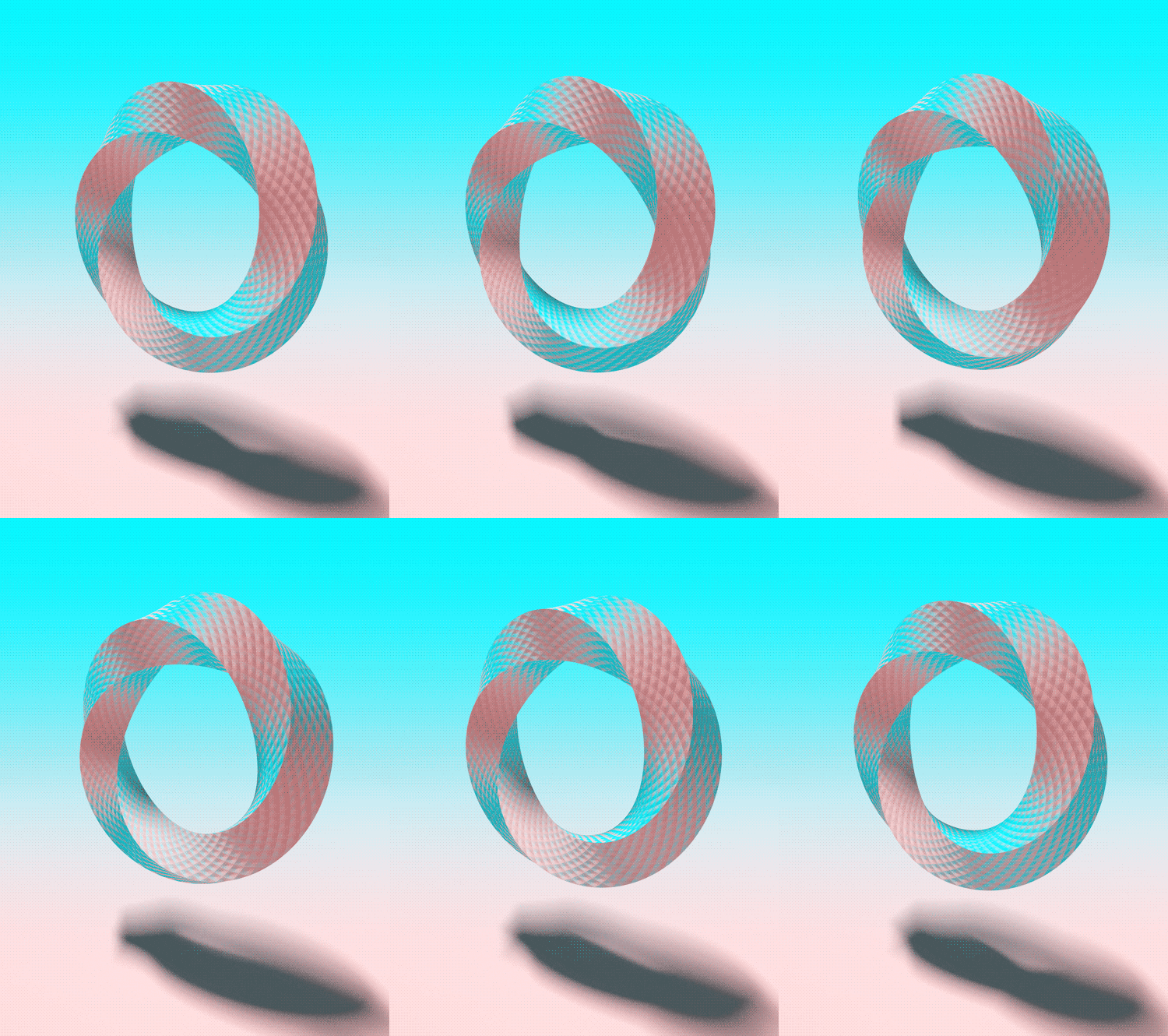
Furthermore, the concept of color in future geometric abstract art will undergo profound changes. In traditional geometric abstract art, color is often not used to reproduce natural objects or express narrative plots, but rather exists as a highly controlled visual element. Artists typically consciously limit the types of colors, compress the overall color gamut, and emphasize primary colors, contrasting colors, warm and cool relationships, or brightness order, allowing color to function in strengthening structure, creating balance, generating tension, organizing rhythm, and establishing spatial hierarchy. In other words, while color is important in traditional geometric abstraction, it is often placed within a "carefully restrained arrangement." Color does not flow arbitrarily but serves the structural order; it must work with lines, planes, proportions, and negative space to form a rigorous formal system.
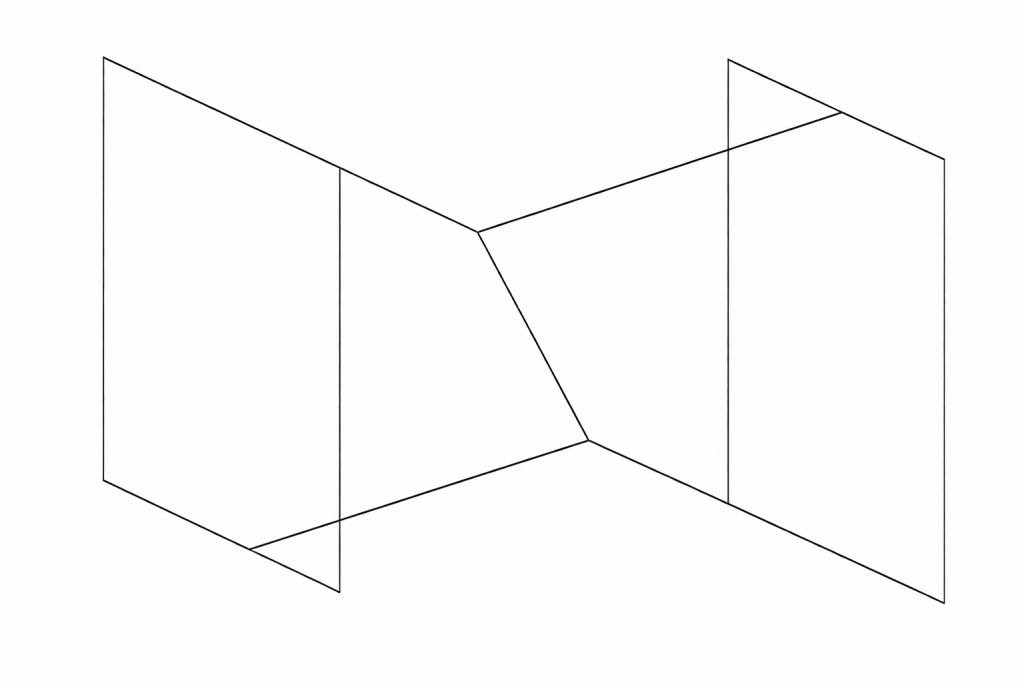
However, with the gradual integration of artificial intelligence into creative work, color in geometric abstract art will no longer be merely a matter of intuitive configuration based on experience. Instead, it will increasingly transform into a calculable, simulable, and predictable network of relationships. In the future, artists will no longer rely solely on visual experience developed through long-term training to judge which red and which blue are more suitable for adjacent colors, which warm-cool contrast is more dynamic, or which brightness rhythm is more conducive to stabilizing the visual center of gravity. They can also utilize algorithms, models, and system analysis to treat color as a set of deducible variable relationships. The distance between hues, the proportion of a composite color within the overall composition, the degree of conflict between adjacent color blocks, the spatial effect of warm colors advancing and cool colors receding, the rhythmic effect created by brightness differences, the impact of saturation changes on visual center of gravity, and even the psychological guidance of different color systems on the viewer can all be incorporated into an analyzable structural framework.
This shift primarily signifies a move from "single-point judgment" to "systematic relationships" regarding color. In traditional art, artists often adjust colors through local comparisons; for example, if a patch of yellow is too bright, its brightness is reduced; if a patch of blue is too prominent, a neutral color is added for balance. However, in future geometric abstract art, color will not merely be an object of localized fine-tuning, but rather a holistic distribution system. Artists can consider the overall picture: what proportion of the dominant color should occupy, how secondary colors should be distributed, which types of colors are suitable for the focal point, which areas should recede with low saturation, and which areas should establish rhythmic peaks with high contrast. Artificial intelligence can rapidly generate numerous different color schemes and analyze their differences in overall order, allowing artists to see complex color networks that were previously difficult to grasp intuitively. Thus, color is no longer simply a matter of "whether it looks appropriate," but rather "how it functions within the entire structural system."
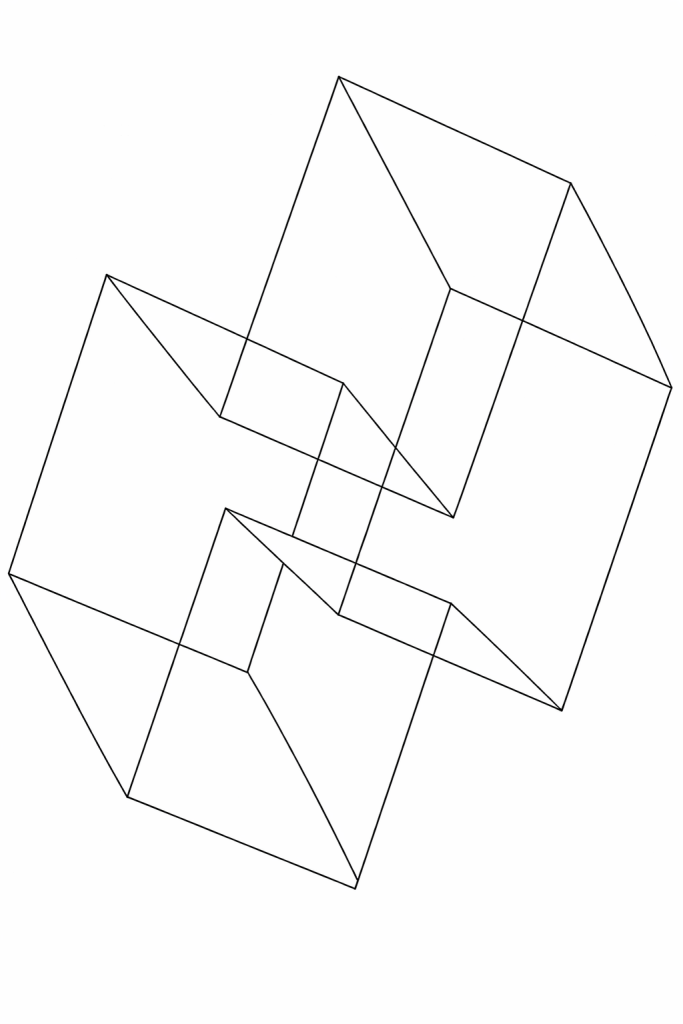
Secondly, color in future geometric abstract art will be more strongly linked to spatial simulation. While traditional geometric abstraction is essentially two-dimensional, artists have long used warm and cool color relationships, differences in brightness, area contrasts, and color block boundaries to create a sense of space such as advancing, receding, compressing, expanding, floating, and intersecting. However, in the past, these effects relied more on repeated experimentation and experiential judgment by artists. With the involvement of artificial intelligence and algorithms, the formation of this sense of space can be studied and simulated more precisely. Future artists will not only know whether a set of colors is "harmonious," but also understand more deeply how they change the spatial sense of the image: which warm color advance will make a certain area appear more forward, which set of low-brightness cool colors will make the plane appear deeper, which comprehensive color transition can soften spatial breaks, and which high-saturation clashes will enhance visual jumps. Artificial intelligence can help artists more accurately organize spatial layers in a two-dimensional plane by simulating the effects of different color combinations on visual perception, allowing color to truly become a tool for constructing structural depth and direction of movement.
Furthermore, this shift will lead to a reinterpretation of the relationship between color and "emotional structure." Traditional geometric abstraction typically emphasizes rationality, order, and formal autonomy, thus color is often seen as part of the structure rather than a direct expression of subjective emotion. However, in reality, any color system contains psychological effects: warmth and coolness influence the viewer's emotional temperature; brightness and saturation affect the sense of weight and oppression; and high and low saturation affect tension and stability. In the future, with the assistance of artificial intelligence, artists can study in greater detail how these psychological effects enter the geometric framework. That is, color not only reinforces structure but also participates in constructing emotional order. A geometric composition dominated by a low-brightness blue-gray system may generate a quiet, restrained, and contemplative atmosphere; a system centered on high-purity red, yellow, and blue contrasts may create strong, vibrant, and tense visual energy. In the future, artists will be able to simulate the impact of different color schemes on emotional rhythm through algorithms, thereby more proactively controlling the psychological structure of their works. This means that color is both a structural tool and an emotional tool, and this dual attribute will be analyzed and utilized more precisely in the age of artificial intelligence.
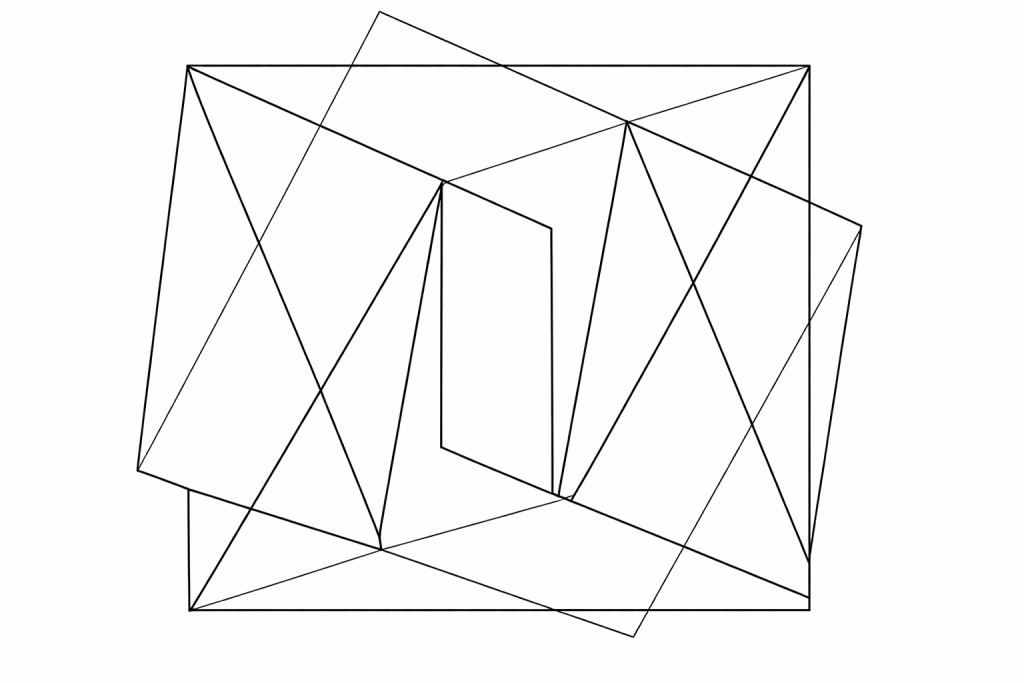
More importantly, artificial intelligence will allow color research to move beyond "empirical aesthetic choices" and become "analyzable, verifiable, and generative structural tools." In the past, the color perceptions of many outstanding artists were precious precisely because they were difficult to fully explain in language or easily replicated. However, this does not mean that color is completely unanalyzable. The future change lies not in eliminating experience, but in gradually extracting the underlying patterns within it. Artists can systematically train models to analyze their long-term preferred color proportions, overall color tendencies, rhythmic arrangements, and visual center distribution, gradually establishing personalized color parameter systems. In this way, color will no longer be simply a matter of "I think this is more beautiful," but can be further explored by asking: "Why is this more stable?" "Why does this create a sense of progression?" "Why does this color scheme more easily create tension?" When these questions are incorporated into the scope of observation, comparison, and verification, color will move from purely empirical judgment to a higher-level structural language that combines rational analysis and generative capabilities.
This doesn't mean that the colors in future geometric abstract art will lose their poetic quality and become cold, lifeless formulas. On the contrary, artificial intelligence's calculation and simulation of color relationships can open up broader possibilities for artists. It doesn't replace aesthetics, but rather expands them; it doesn't weaken intuition, but helps it reach deeper levels. Artists still need to judge which results truly possess vitality, which color schemes, while computationally balanced, lack spiritual tension, and which composite colors, though reasonable, lack individuality. In other words, the future view of color will not allow algorithms to replace feelings, but rather combine feelings with analysis, allowing experience and systems to support each other. Color will therefore gradually evolve from a field that relies heavily on personal intuition and experimentation into a complex structural system that can be studied and created, possessing both a logical foundation and retaining aesthetic freedom.
Therefore, color in future geometric abstract art will no longer be merely a surface decoration or an empirical means of harmonization, but will become a core mechanism permeating the overall composition. It can strengthen structure, create balance, and generate tension; it can also be calculated, simulated, predicted, and generated. Artists will delve deeper into color proportions, adjacency relationships, warm and cool color progressions, brightness rhythms, and visual center of gravity within a geometric framework, transforming color from an intuitive aesthetic choice into a structural tool capable of analysis, verification, and continuous generation. In the age of artificial intelligence, the color perspective in geometric abstract art will thus gain new depth: it will not only concern itself with "how colors look good," but also with "how colors organize structure, guide space, create movement, shape emotions, and continuously generate new visual order within the system."
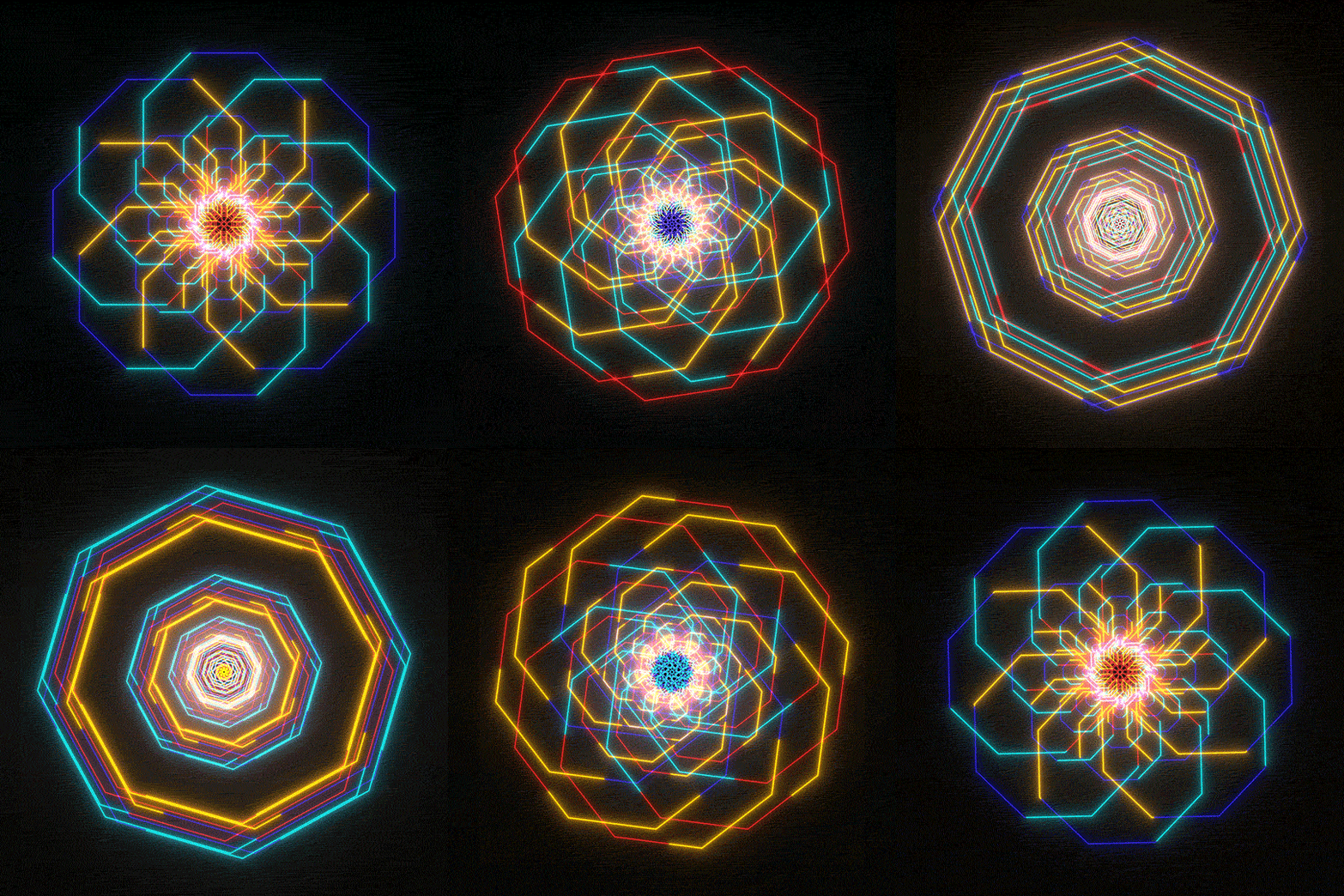
Lessons G2-3: Color in Future Geometric Abstract Art (Click to view and listen to the reading)
Furthermore, the concept of color in future geometric abstract art will undergo profound changes. In traditional geometric abstract art, color is often not used to reproduce natural objects or express narrative plots, but rather exists as a highly controlled visual element. Artists typically consciously limit the types of colors, compress the overall color gamut, and emphasize primary colors, contrasting colors, warm and cool relationships, or brightness order, allowing color to function in strengthening structure, creating balance, generating tension, organizing rhythm, and establishing spatial hierarchy. In other words, while color is important in traditional geometric abstraction, it is often placed within a "carefully restrained arrangement." Color does not flow arbitrarily but serves structural order; it must work with lines, planes, proportions, and negative space to form a rigorous formal system. However, with the gradual intervention of artificial intelligence in creation, color in geometric abstract art will no longer be merely intuitively configured based on experience, but will increasingly transform into a calculable, simulable, and predictable network of relationships. In the future, artists will no longer rely solely on visual experience honed through long-term training to judge which red and blue are more suitable for adjacent colors, which warm-cool contrasts create more tension, or which brightness rhythms stabilize the visual center of gravity. They can utilize algorithms, models, and system analysis to treat color as a set of deductive variables. The distance between hues, the proportion of a composite color within the whole, the degree of conflict between adjacent color blocks, the spatial effect of warm colors advancing and cool colors receding, the rhythm created by brightness differences, the impact of saturation changes on visual center of gravity, and even the psychological guidance different color systems provide to the viewer can all be incorporated into an analyzable structural framework. This shift primarily means that color will move from "single-point judgment" to "systematic relationships." In traditional creation, artists often adjust colors through local comparisons; for example, if a patch of yellow is too bright, they lower its brightness; if a patch of blue is too prominent, they add another neutral color to balance it. However, in future geometric abstract creations, color is not merely an object of local fine-tuning, but a holistic distribution system. Artists can consider the overall picture: what proportion of a primary color should occupy in the image, how secondary colors should be distributed, which types of colors are suitable for the focal point, which areas should recede with low saturation, and which areas should establish rhythmic peaks with high contrast. Artificial intelligence can quickly generate a large number of different color schemes and analyze the differences in their overall order, allowing artists to see complex color networks that were previously difficult to grasp intuitively. Thus, color is no longer just about "whether it looks appropriate," but about "how it functions within the entire structural system." Secondly, color in future geometric abstract art will be more strongly linked to spatial simulation. Although traditional geometric abstraction is essentially two-dimensional, artists have long created a sense of space—moving forward, receding, compressing, expanding, floating, and intersecting—through warm and cool relationships, differences in brightness, area contrast, and color block boundaries. However, in the past, these effects relied more on repeated experimentation and experiential judgment by artists. With the involvement of artificial intelligence and algorithms, the formation of this sense of space can be studied and simulated more precisely. In the future, artists will not only be able to determine whether a set of colors is "harmonious," but also gain a deeper understanding of how they alter the spatial perception of a painting: which warm color progression makes a certain area appear more prominent, which set of low-brightness cool colors makes a plane appear deeper, which color transitions can soften spatial breaks, and which high-saturation clashes will enhance visual dynamism. Artificial intelligence can help artists more accurately organize spatial layers within a plane by simulating the effects of different color combinations on visual perception, allowing color to truly become a tool for constructing structural depth and direction of movement. Furthermore, this change will lead to a reinterpretation of the relationship between color and "emotional structure." Traditional geometric abstraction typically emphasizes rationality, order, and formal autonomy; therefore, color is often seen as part of the structure, rather than a direct expression of subjective emotion. However, in reality, any color system contains psychological effects: warmth and coolness affect the viewer's emotional temperature, brightness and lightness affect the sense of weight and oppression, and high and low saturation affect tension and stability. In the future, with the assistance of artificial intelligence, artists can study in more detail how these psychological effects enter the geometric framework. In other words, color not only reinforces structure but also participates in constructing emotional order. A geometric composition dominated by a low-brightness blue-gray system may generate a quiet, restrained, and contemplative atmosphere; a system centered on high-purity red, yellow, and blue contrasts may create a strong, vibrant, and tense visual energy. In the future, artists will be able to use algorithms to simulate the impact of different color schemes on emotional rhythm, thus more proactively controlling the psychological structure of their works. This means that color is both a structural tool and an emotional tool, and this dual attribute will be analyzed and applied more precisely in the age of artificial intelligence. More importantly, artificial intelligence will allow color research to move from "empirical aesthetic choices" to "analyzable, verifiable, and generative structural tools." In the past, the color perceptions of many outstanding artists were precious precisely because they were difficult to fully explain in language and difficult to simply replicate. However, this does not mean that color is completely unanalyzable. The future change lies not in eliminating experience, but in gradually extracting the implicit patterns within experience. Artists can use systematic training models to analyze their long-term preferred color proportions, overall color tendencies, rhythmic arrangements, and visual center distribution, gradually establishing a personalized color parameter system. In this way, color is no longer just about "I think this is more beautiful," but can be further explored by asking: "Why is this more stable?" "Why does this create a sense of progression?" "Why does this color scheme more easily create tension?" When these questions are brought into the realm of observability, comparison, and verification, color moves from purely empirical judgment to a higher-level structural language that combines rational analysis and generative capabilities. This does not mean that the colors in future geometric abstract art will lose their poetic quality and become cold, lifeless formulas. On the contrary, artificial intelligence's calculation and simulation of color relationships can open up broader possibilities for artists. It does not replace aesthetics, but expands it; it does not weaken intuition, but helps intuition reach deeper levels. Artists still need to judge which results truly have vitality, which color schemes, while computationally balanced, lack spiritual tension, and which composite colors, while reasonable, lose individuality. In other words, the future view of color will not allow algorithms to replace feelings, but rather combine feelings with analysis, and allow experience and systems to support each other. Color will therefore gradually develop from a field that relies more on personal intuitive exploration in the past into a complex structural system that can be studied and created, with both logical foundations and the preservation of aesthetic freedom. Therefore, color in future geometric abstract art will no longer be merely a surface decoration or an empirical means of harmonization, but will become a core mechanism permeating the overall composition. It can strengthen structure, create balance, and generate tension; it can also be calculated, simulated, predicted, and generated. Artists will delve deeper into color proportions, adjacency relationships, warm and cool color progressions, brightness rhythms, and visual center of gravity within a geometric framework, transforming color from an intuitive aesthetic choice into a structural tool capable of analysis, verification, and continuous generation. In the age of artificial intelligence, the color perspective in geometric abstract art will thus gain new depth: it will not only concern itself with "how colors look good," but also with "how colors organize structure, guide space, create movement, shape emotions, and continuously generate new visual order within the system."
 简体中文
简体中文  English
  日本語
日本語  Español
  Français
  हिन्दी
  العربية
  বাংলা
বাংলা  Português do Brasil
  Русский
  اردو
اردو  Bahasa Indonesia
  Deutsch
  Kiswahili
  मराठी
मराठी  తెలుగు
  Tiếng Việt
  Türkçe
  Italiano
  தமிழ்
தமிழ்  한국어
한국어