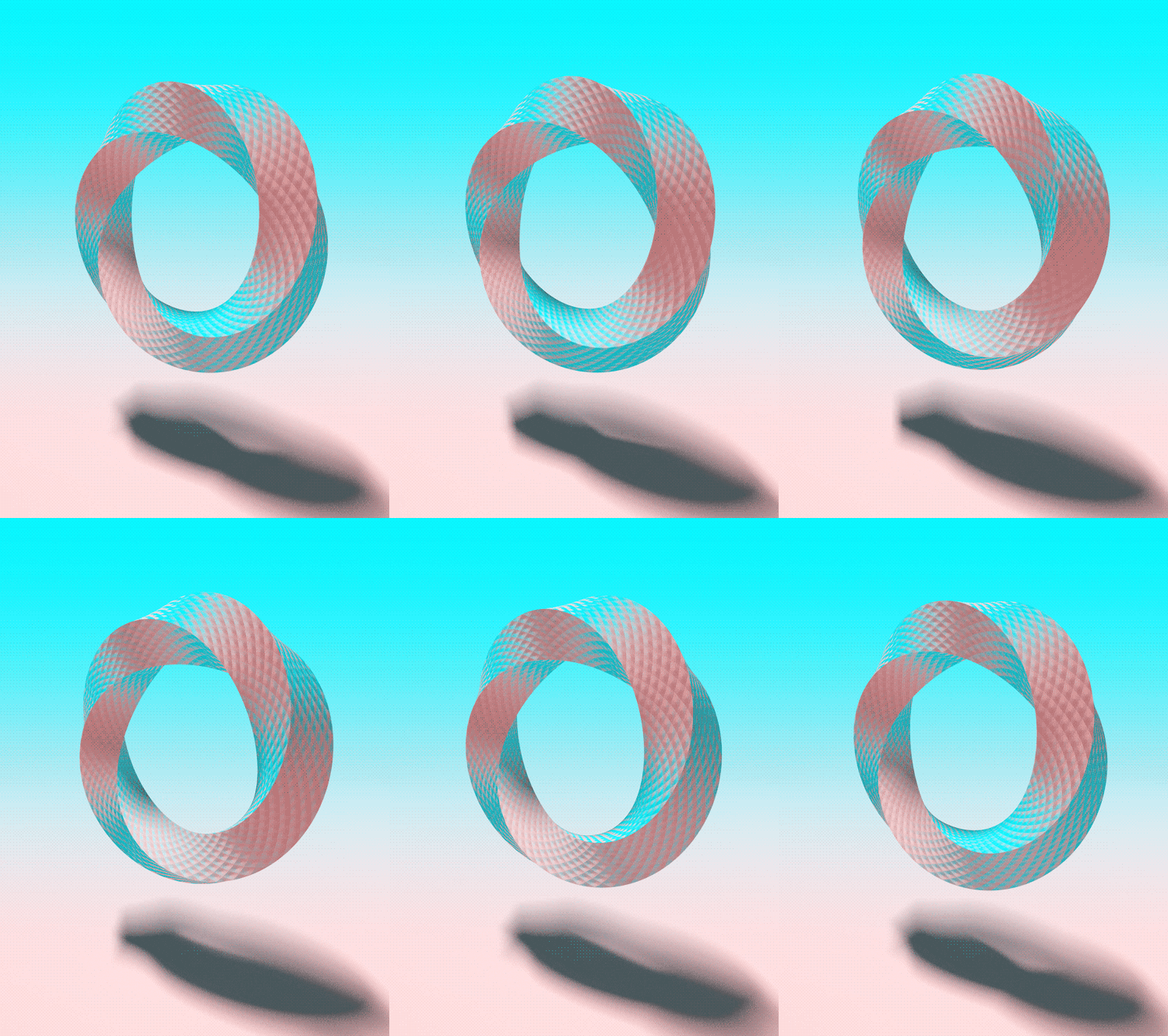
In the future evolution of geometric abstract art, artificial intelligence will increasingly become a “collaborator in system construction.” This means that important future development directions for geometric abstract art will no longer be about completing a single, independent image, but rather about establishing a visual system that can continuously derive, constantly expand, and internally self-grow. Traditional works often end with a fixed result: the artist refines lines, shapes, proportions, and colors, stabilizing all relationships in a completed state to form an image that can be viewed, preserved, and defined. However, with the involvement of artificial intelligence, geometric abstract art will increasingly shift from “single works” to “system works,” and from “result-oriented” to “generation-oriented.” The work will no longer just be a picture, but more like a continuously operating structural mechanism.
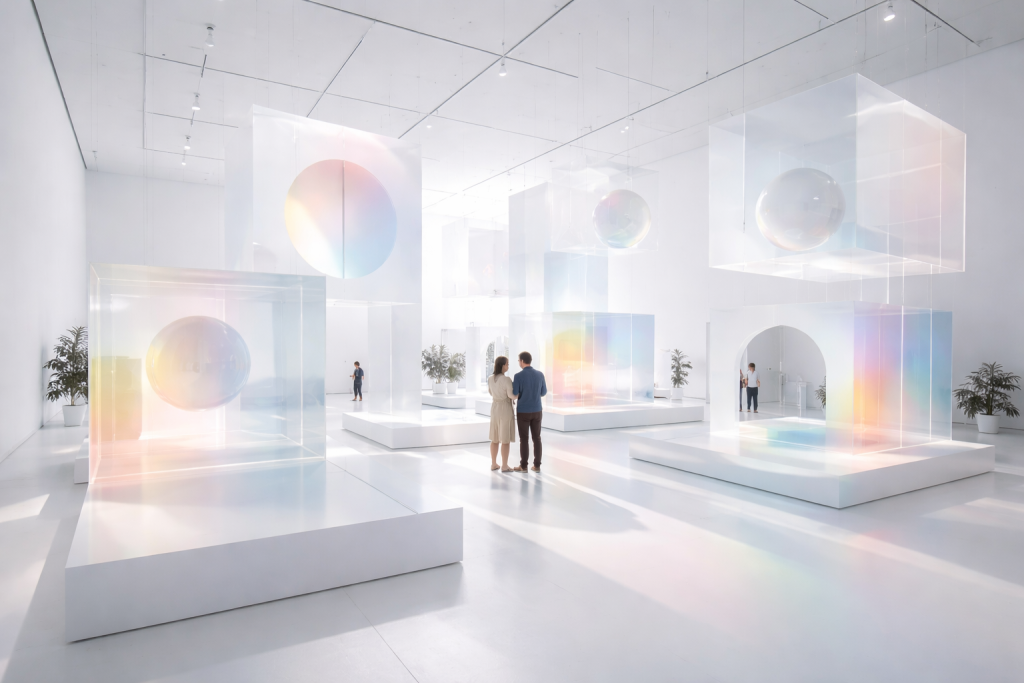
Geometric abstract art is well-suited to moving in this direction because of its inherent high degree of systematicity. Geometric abstraction has never been concerned with the reproduction of natural objects, nor with the unfolding of narrative plots. Instead, it focuses on structural relationships between proportion, repetition, rhythm, contrast, grids, order, and modules. This language naturally embodies a sense of rules. In other words, geometric abstract art has not been entirely dependent on accidental intuition; it is often built upon some visible or invisible organizational principle. It is precisely for this reason that artificial intelligence is very well-suited to enter this field. AI excels at handling relationships between parameters, rules, modules, and variations. It is adept at finding combinations within complex conditions and at allowing a basic system to continuously generate new structural states. Therefore, in future geometric abstract creations, AI will not merely help generate a few images but will truly participate in the process of constructing the system, becoming a collaborator with the artist.
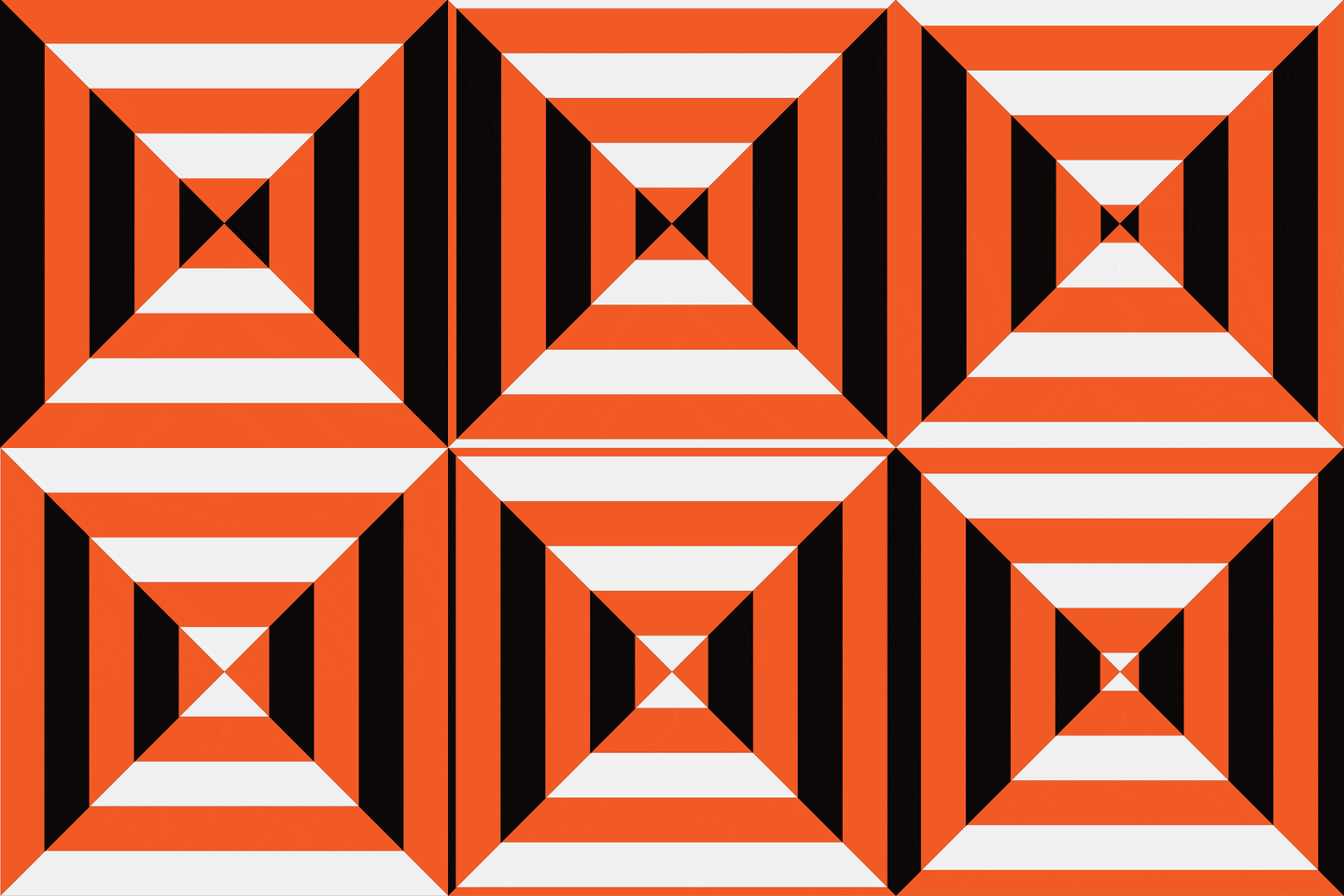
In this process, the artist's working method will change significantly. In the future, artists can first establish a clear structural framework, such as how grid logic is built, how modules are distributed, which areas allow for deformation, which parts must remain stable, how color proportions are controlled, whether repetition requires subtle variations, how modules expand, fold, and interpenetrate, under what conditions the system evolves, and within what boundaries overall stylistic consistency is maintained. These will no longer be just local decisions on the canvas but system-level constructions. AI will then continuously run within these rule frameworks, generating new structural outcomes. Under a unified logic, it can produce compositions of different densities, combinations with different rhythms, varied color distributions, and different spatial tendencies, allowing the same “parent system” to extend into a large number of visual states that are related yet not entirely repetitive.
Thus, the work is no longer a one-off result but rather an expandable family system. Here, “work” is not just a single image but an entire set of interconnected generative lineages. Just as a core grammar can generate countless sentences, a set of geometric structural rules can generate infinite variations. Each variation inherits the fundamental characteristics of the original system while forming new rhythms, new balances, and new tensions through local changes. This creative mode imbues geometric abstract art with an openness that past single works lacked. The artist is no longer just delivering a final answer but is establishing a mechanism for continuously producing answers. What the viewer confronts is not just a single outcome but a process of how a system continuously grows, transforms, and differentiates.
This also means that the artist's role will shift from being a direct depictor in the traditional sense to becoming a rule-maker, system designer, and outcome curator. In the past, artists were more concerned with handling a single image: what to draw, what to delete, where to make corrections, how to establish balance, and where to place colors. In the future, artists will need to consider higher-level questions: what grid relationships can be sustained long-term, what transformation mechanisms can allow for variation without losing control, what color parameters can maintain system unity while preventing outcomes from becoming monotonous, and what repetition logic can form a sense of series rather than mechanical replication. In other words, an artist's creativity will no longer be solely reflected in the arrangement of local forms, but increasingly in the construction of rule structures. What truly matters is not just the image itself, but whether the generative mechanism behind the image possesses depth.
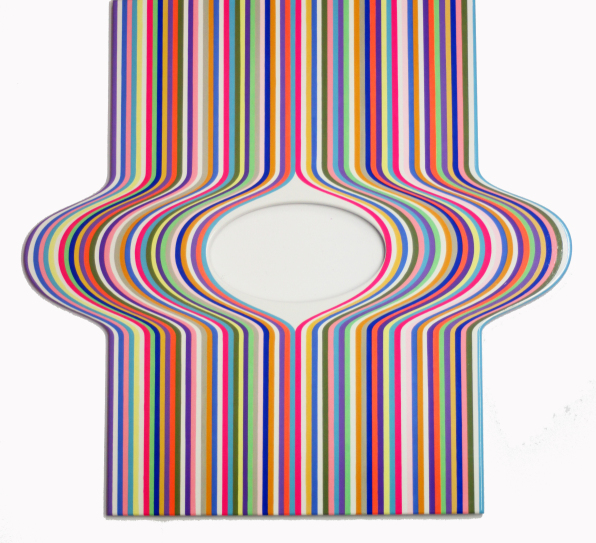
In this sense, AI does not replace an artist's creativity, but rather pushes it to a higher level. This is because artists no longer need to think only about “what to draw,” but rather about “what kind of structural mechanism can continuously generate valuable results.” This is a more complex and methodologically significant form of creativity. Artists are no longer just completing a single work, but designing a visual language that can work sustainably; they are no longer just arranging forms, but organizing how forms can self-generate. AI here acts as an efficient and sensitive system executor, capable of quickly unfolding rules, amplifying possibilities, and demonstrating system potential; however, what truly determines the value of this system still lies with the artist's judgment. Which variations are worth keeping, which results are novel but empty, and which structures are complex but lack tension—these all require human aesthetics and consciousness for the final judgment.
Therefore, in the future development of geometric abstract art, AI as a “collaborator in system construction” brings not only technological convenience but also an upgrade in creative concepts. It leads geometric abstract art from the completion of individual images to the establishment of systematic languages; from the refinement of local compositions to the design of generative mechanisms; and from one-time artwork results to visually evolving families that can be sustained. Truly powerful geometric abstract creations in the future may not be about how perfect a single image is, but rather how clear, open, and vital the underlying system is, capable of continuously generating new and valuable structural outcomes.
Lesson G3-3: The Role of AI Click to listen to the audio content
In the future evolution of geometric abstract art, AI will increasingly become a “collaborator in the construction of the system”. This means that the future direction of geometric abstract art is no longer just to complete a single image, but to build a set of visual systems that can continue to derive, expand, and internally self-grow. Traditionally, works often end with a fixed result: the artist stabilizes all the relationships in a certain state of completion through repeated refinement of lines, shapes, proportions, and colors, ultimately forming an image that can be viewed, preserved, and defined. But with the involvement of artificial intelligence, geometric abstract art will increasingly shift from “single work” to “systematic work”, from “result-oriented” to “generation-oriented”. from “result-oriented” to “generation-oriented”. The work is not just a picture, but more like a structural mechanism that can operate continuously. The reason why geometric abstract art is suitable for this direction is that it is highly systematic in itself. Geometric abstraction is never concerned with the reproduction of natural objects or the unfolding of a storyline, but with proportions, repetitions, rhythms, contrasts, grids, order, and structural relationships between modules. This language naturally contains a sense of rules. That is to say, geometric abstract art is not inherently dependent on chance intuition exclusively; it is often based on some kind of visible or invisible organizing principle. Because of this, artificial intelligence is ideally suited to enter this field; AI is good at dealing with the relationships between parameters, rules, modules and variants, at finding combinations in complex conditions, and at allowing a basic system to constantly derive new structural states. Therefore, in the future of geometric abstraction, AI will not just help generate a few diagrams, but will actually participate in the process of constructing the system and become the collaborator of the artist. In this process, the way the artist works will change significantly. In the future, the artist can first set up a set of clear structural frameworks, such as how the grid logic is established, how the modules are distributed, which areas are allowed to deform, which parts must remain stable, how the color ratio is controlled, whether the repetition needs to be micro-differentials, how the modules are expanded, collapsed, and interspersed with each other, and under what conditions the system evolves and within what boundaries to maintain the consistency of the overall style. These are no longer just local decisions on the screen, but system-level constructs. ai then operates continuously within the framework of these rules, generating new structural results. It can produce different densities of composition, different rhythmic combinations, different color distributions and different spatial tendencies under a unified logic, allowing the same “mother system” to extend a large number of visual states that are related to each other, but not completely repetitive. As a result, the work is no longer just a one-time result, but more like a family system that can be continuously expanded. The “work” here is not just a picture, but a whole set of interrelated generative genealogies. Just as a core grammar can generate countless sentences, a set of geometric rules can generate countless variants. Each variant inherits the basic characteristics of the original system, but in the local changes, new rhythms, new balances, new tensions are formed. Such a mode of creation enables geometric abstract art to acquire an openness that was not present in single works in the past. The artist is no longer just handing over a final answer, but is establishing a mechanism for continuous production of answers. What the viewer is confronted with is not just a single result, but the process of how a system grows, deforms, and differentiates itself. This also means that the role of the artist will shift from being a direct depictor in the traditional sense to being a rule maker, system designer and result sorter. In the past, the artist is more dealing with a picture: what to draw, what to delete, where to change, how to establish the balance, how to place the colors. In the future, artists need to think about higher-level issues: what kind of grid relationship can be established for a long time, what kind of deformation mechanism can change but not out of control, what kind of color parameters can keep the system unified, but also make the results not monotonous, and what kind of repetition logic can form a series of sense rather than mechanical reproduction. In other words, the artist's creativity is no longer reflected only in the local formal arrangements, but increasingly in the construction of regular structures. What really matters is not just the image itself, but whether the generating mechanism behind the image has depth. In this sense, AI does not replace the creativity of the artist, but pushes this creativity to a higher level. Because what the artist has to think about is not just “what to draw”, but "how to make the structural mechanism continue to generate valuable results". This is a more complex and methodological creation. The artist is no longer just completing a certain piece of work, but designing a visual language for sustainable work; he is no longer just arranging the form, but organizing how the form can derive itself; AI is like a highly efficient and sensitive system executor here, which can quickly unfold the rules, amplify the possibilities, and show the potential of the system; however, it is still the artist's judgment that determines whether or not the system is worthwhile. Which variants are worth keeping, which results are new but empty, which structures are complex but lose tension, all these require human aesthetics and consciousness to complete the final judgment. Therefore, in the future development of geometric abstract art, AI as a "collaborator of system construction" brings not only technical convenience, but also upgraded creative concepts. It allows geometric abstract art to move from the completion of a single image to the establishment of a systematic language, from the refinement of local composition to the design of generative mechanisms, and from the results of one-time works to the visual family of sustainable evolution. A truly powerful geometric abstract creation in the future may not just be how perfect a certain image is, but whether the system behind it is clear enough, open enough, and vital enough to continuously generate new and valuable structural results.
 简体中文
简体中文  English
  日本語
日本語  Español
  Français
  हिन्दी
  العربية
  বাংলা
বাংলা  Português do Brasil
  Русский
  اردو
اردو  Bahasa Indonesia
  Deutsch
  Kiswahili
  मराठी
मराठी  తెలుగు
  Tiếng Việt
  Türkçe
  Italiano
  தமிழ்
தமிழ்  한국어
한국어