
The development of geometric abstract art is not propelled solely by color, nor does it stand on its own through geometric forms alone. Instead, it is built upon a structural language that can be recognized, organized, and transformed. The so-called “typical structural modules” are not rigid formulas, but rather several stable compositional methods formed through the long-term practice of geometric abstract art. Like grammatical units, they determine how order, tension, direction, rhythm, and spatial sense are distributed in a composition. Understanding these modules helps to move beyond the surface of the form into the logic of its composition, and also aids creators in developing clearer visual judgment in their practice.
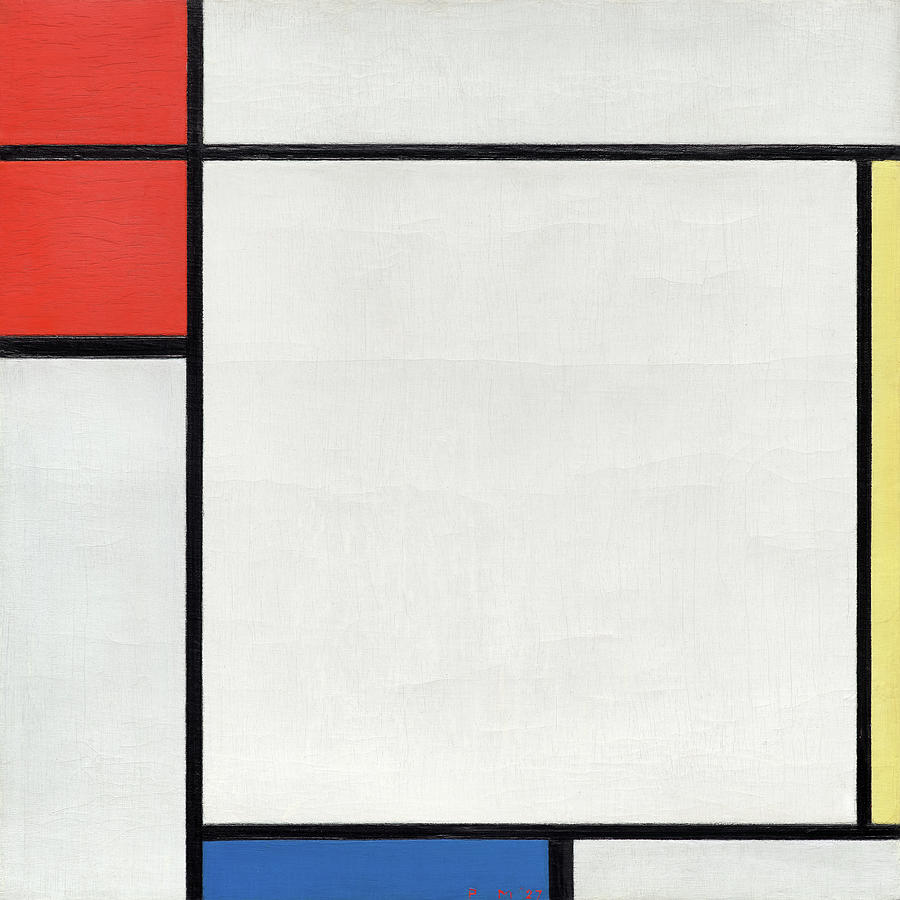
The basic grid module is one of the most core and fundamental forms of geometric abstraction. It establishes a stable skeleton through horizontal and vertical lines, dividing the picture plane into controllable unit areas. The significance of the grid lies not just in “neatness,” but in providing an extensible, repeatable, and adjustable system of order. Artists can introduce variations in size, color, and density within the grid, thereby creating subtle tension within the rational structure. It is the underlying logic of many geometric abstract works and the starting point for subsequent complex variations.
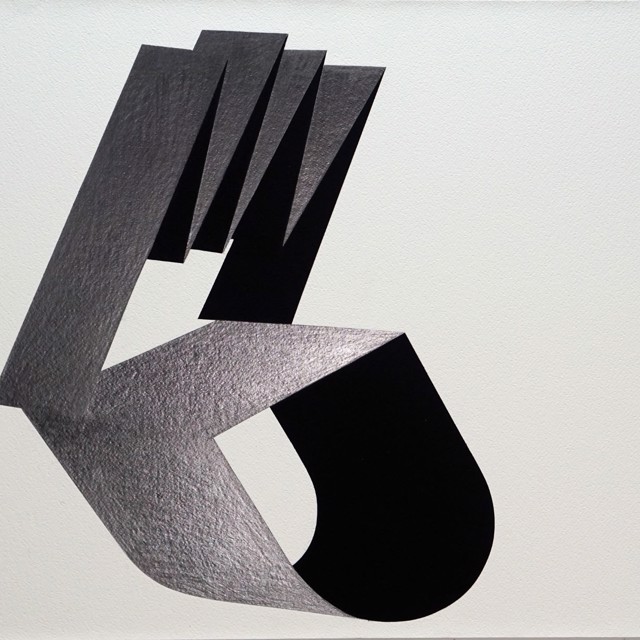
Strip segmentation module, emphasizing directionality and rhythm. It typically organizes the picture with vertical, horizontal, or diagonal strips, creating a clear flow path for viewing. Compared to basic grids, strip structures reduce the sense of stability from balanced areas, highlighting relationships of continuous progression, segmentation, and blockage. It can create a sense of speed, rhythm, pressure, or extension, and is especially suitable for expressing visual temporality, allowing geometric abstraction to transform from a static layout into a structurally organized form with a tendency towards movement.
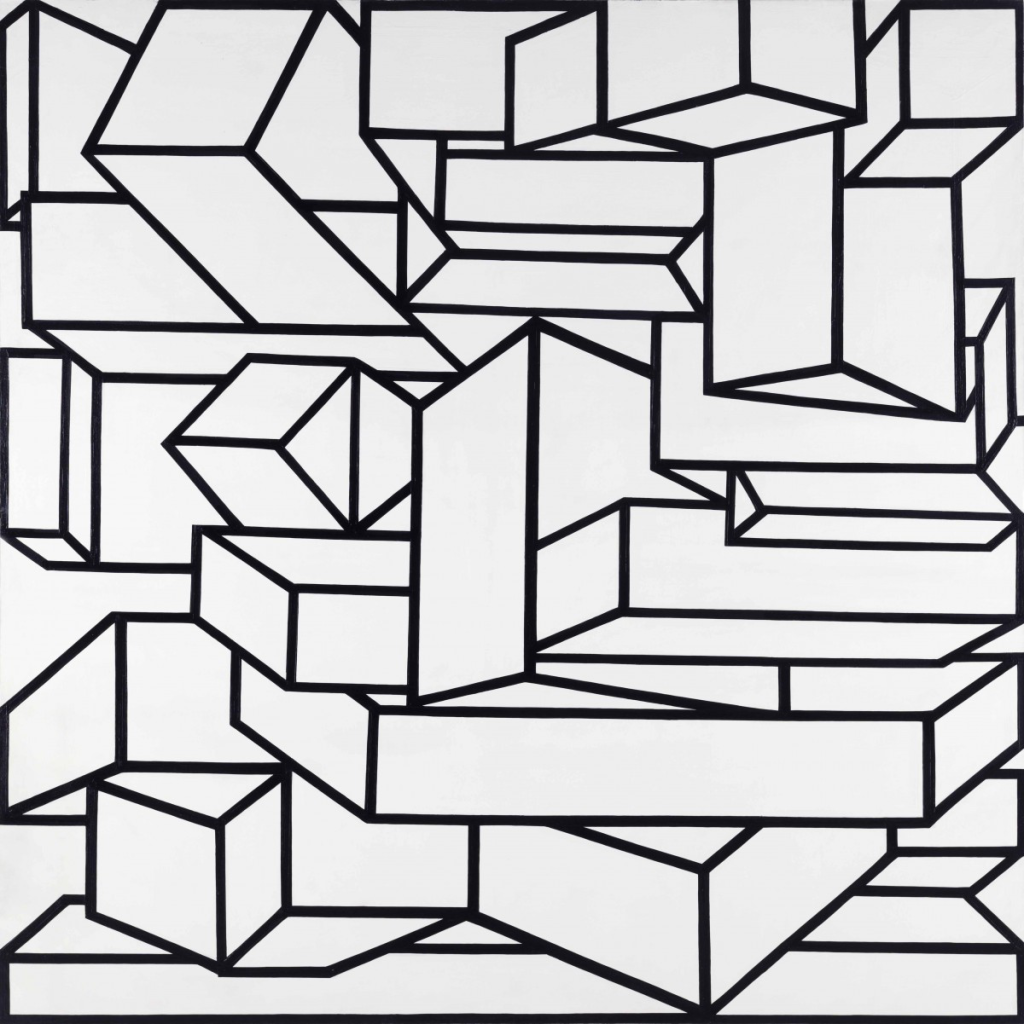
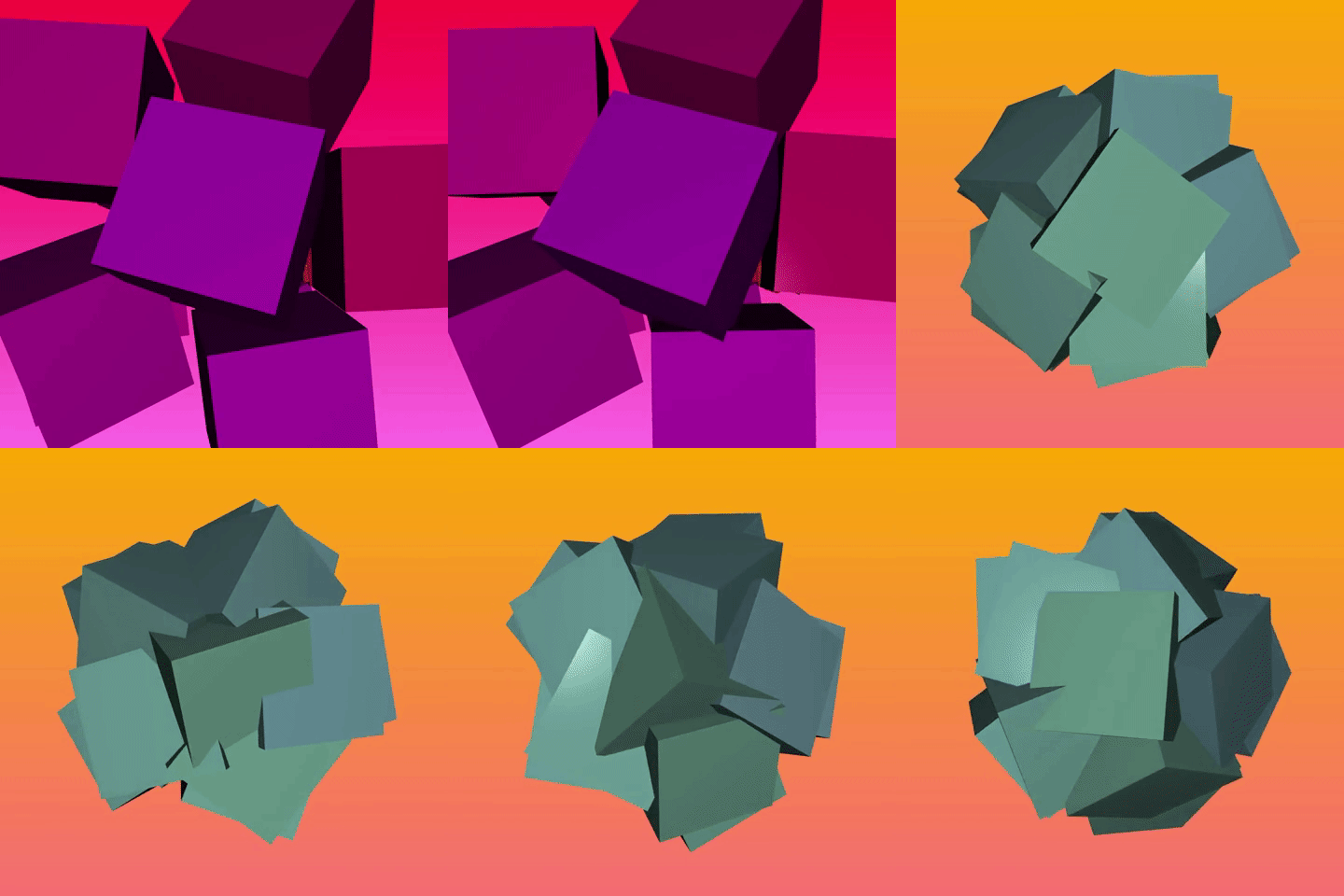
Spatial composition modules push planar geometry into spatial suggestion or even spatial entities. They often create effects resembling architecture, stacked modules, or spatial interpenetration through overlapping, interlacing, changes in thickness, diagonal extension, and surface-to-volume transitions. The importance of these modules lies in their ability to dispel the misconception that geometric abstraction is confined to flat decoration, bestowing a sense of volume, direction, and structural depth upon geometric relationships. They can exist within two-dimensional paintings and can also be further developed into installations, sculptures, and environmental compositions.
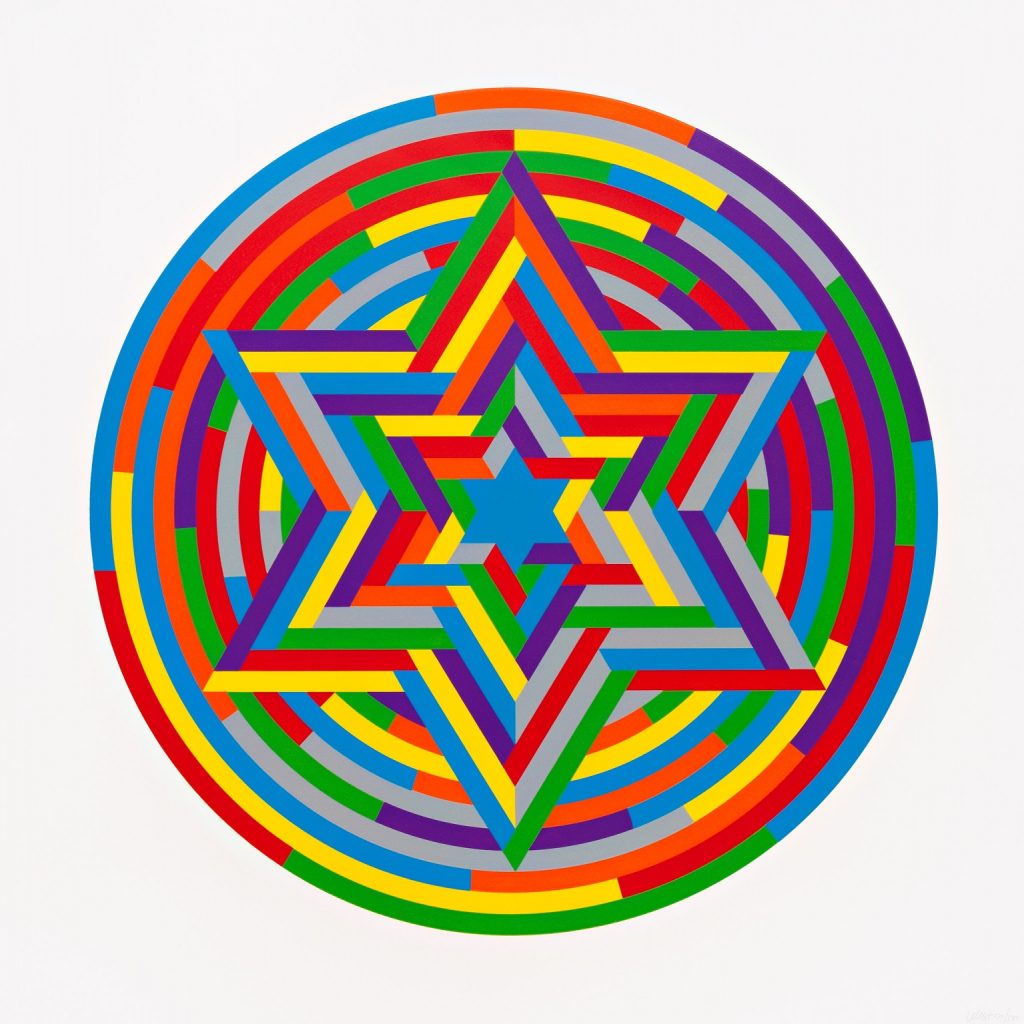
Concentric expansion modules expand layer by layer around a single center or multiple centers, through circular, square, polygonal, or ring-shaped structures, establishing a visual order where concentration and outward radiation coexist. They are characterized by a strong sense of energy and a relationship of convergence and divergence: the center acts as a visual generator, continuously expanding outward, creating rhythmic hierarchies and spatial pulses. They can appear rationally restrained, or, through their layered progression, carry strong psychological implications, allowing the image to generate attraction, vibration, and diffusion within its order.
Diagonal insertion is a crucial method for breaking the sense of frontal stability. Diagonals possess an inherent power to cut, penetrate, and shift. They disrupt the static order created by horizontal and vertical lines, imbuing the composition with a distinct directional tension. Diagonal insertions are frequently employed to generate imbalance, a sense of speed, conflict, and visual redirection. They prevent geometric compositions from being enclosed within stable frames, pushing them into a more dynamic and sharper structural state. It is often one of the most aggressive and atmosphere-altering elements in a composition.
Misaligned and layered modules create complex relationships between elements within a multi-layered structure through their offset, overlap, occlusion, and incomplete alignment. This approach preserves the clarity of individual geometric units while allowing them to deviate from a neat arrangement, entering a state of mutual friction and compression. Misalignment prevents repetition from becoming monotonous, and layering introduces depth to flat surfaces. When combined, geometric structures shift from static order to dynamic negotiation. This type of module is ideally suited for expressing the visual state in contemporary geometric abstraction where “order is interrupted but not collapsed.”
Block-face splicing modules emphasize the adjacency relationship between different color blocks and shape blocks. They do not necessarily rely on obvious line frameworks but rather on the boundaries of the blocks themselves to organize the structure. The key is not the act of “splicing” itself, but how the proportion, direction, color value, and edge relationships of different blocks form an overall balance. Block-face splicing can present clear and stable compositions, or it can create tension due to contrasts in size and boundary collisions. It shifts geometric abstraction from a linear framework to a planar composition, more directly discussing the visual negotiation between shapes.
Open modules, as opposed to closed, complete structures, represent a more generative form of organization. They tend to avoid a central focal point and do not emphasize closed boundaries, but rather allow structures to extend outwards, spill over edges, and even present an unfinished state that is open to further development. Open structures provide the image with a greater sense of breathing room and uncertainty, allowing geometric abstraction to depart from the traditional goal of “complete composition” and instead enter into the expression of process, fluidity, and systems. This is particularly suitable for the contemporary context, as it is closer to the visual concepts of open networks, multi-centric relationships, and continuous generation.
These eight modules are not isolated from each other. The basic grid can be combined with strip segmentation to form more complex rhythmic organizations; spatial composition can absorb displaced layering to enhance depth and structural friction; block splicing can utilize open layouts to break the sense of excessive completeness and enclosure. Truly mature geometric abstract creations are often not mechanical uses of single modules, but rather the establishment of transformation, reorganization, and regeneration relationships between different modules. It is precisely for this reason that geometric abstraction is not a cold, formulaic system, but a compositional language that can be continuously extended and transformed. Understanding these typical structural modules is essentially understanding how geometric abstraction continuously generates its formal life between order and change, stability and tension, and plane and space.
Lesson F1: The Eight Modals Listen to the audio
The development of geometric abstract art does not rely solely on the advancement of color, nor does it rely solely on the geometric form itself, but is built on a set of recognizable, organizable and deformable structural language. The so-called “Typical Structural Modules” are not rigid formulas, but rather a number of stable compositional patterns formed by geometric abstract art over a long period of practice. Like grammatical units, they determine how order, tension, direction, rhythm and space are distributed in a picture. Understanding these modules helps to move from the surface of form into the logic of composition, and also helps creators to establish clearer visual judgment in practice. The basic grid module, is one of the most central and fundamental forms of geometric abstraction. It establishes a stable skeleton through horizontal and vertical lines, dividing the image into manageable units. The meaning of the grid is not just “neat”, but it provides a system of order that is scalable, repeatable and adjustable. The artist can introduce size differences, color variations, and density offsets into the grid, thus creating subtle tensions in the rational structure. It is the underlying logic of many geometric abstractions and the starting point for subsequent complex changes. Strip Split Module, which emphasizes directionality and rhythm. It usually organizes the image in vertical, horizontal or diagonal strips, so that the viewing process carries a distinct flow path. Compared with the basic grid, the strip structure reduces the stability of balanced partitions and emphasizes the relationship between successive advances, cuts and blocks. It is capable of creating speed, rhythm, a sense of compression or extension, and is particularly suitable for expressing temporality in vision, making geometric abstraction not just a static layout but a structural organization with a tendency to movement. Spatial compositional modules, on the other hand, advance flat geometry into spatial suggestion or even spatial entities. It often gives the picture an almost architectural, modular stacking or spatial interlacing effect through overlapping, interlacing, thickness variations, diagonal extensions, and decent transitions. The importance of this module lies in the fact that it breaks the misunderstanding that geometric abstraction only stays in plane decoration, and makes the geometric relationship gain a sense of volume, direction and structural depth. It can exist both in two-dimensional paintings and can be further developed into installations, sculptures and environmental compositions. Concentric Expansion Module, which unfolds around a center or multiple centers, expands layer by layer through circular, square, folded line or ring structures, establishing a visual order in which concentration and spillover coexist. It is characterized by a clear sense of energy and the relationship between concentration and dispersion: the center acts like a visual generator, expanding outward to create rhythmic layers and spatial pulses. It can either appear rational and restrained, or carry a strong psychological implication due to the advancement of the layers, so that the image forms attraction, vibration and diffusion in the midst of the order. Diagonal cuts into the module are an important way to break the sense of frontal stability. Diagonal lines naturally have the power to cut, penetrate and deflect, which can disrupt the static order brought about by horizontal and vertical composition, creating a clear directional tension in the image. Diagonal cuts are often used to create imbalance, a sense of speed, conflict, and visual steering, moving geometric compositions away from being enclosed in a stable frame and into a more aggressive, pointed structure. It is often one of the most aggressive and atmosphere-changing elements in a picture. Misaligned Stacked Modules, on the other hand, creates a complex relationship of multi-layered structures through offsets, overlaps, occlusions and incomplete alignment between units. It preserves the clarity of the geometric units while allowing these units to move away from being neatly aligned with each other and into a state of friction and extrusion against each other. The misalignment makes repetition less monotonous, and the stacking creates depth in the plane; when the two are combined, the geometric structure will shift from static order to dynamic negotiation. This kind of module is very suitable to express the visual state of contemporary geometric abstraction that “order is interrupted but not collapsed”. Block Splice Module emphasizes the adjacency between different color and shape blocks. It does not necessarily rely on the obvious line skeleton, but relies more on the block boundary itself to organize the structure. The key is not in the action of “splicing” itself, but in the proportion, direction, color value and edge relationship of different blocks to form an overall balance. Block piecing can present a clear and calm composition, or it can create tension due to the contrast of size and collision of boundaries. It moves geometric abstraction away from linear frameworks to faceted compositions, and more directly discusses the visual negotiation between shapes. Open module, is a more generative way of organizing as opposed to a closed complete structure. It tends not to pursue central closure or emphasize boundary closure, but rather allows the structure to extend outward, leak out to the edges, and even present itself as unfinished and open to further development. The open structure gives the picture a greater sense of breathability and uncertainty, allowing geometric abstraction to escape from the traditional goal of “complete composition” and enter into process, fluidity and systematic expression. It is particularly suited to the contemporary context, as it is closer to the visual concepts of open networks, polycentric relationships and continuous generation. The eight modules are not isolated from each other. Basic grids can be combined with strip divisions to form a more complex rhythmic organization; spatial compositions can absorb dislocated overlays to enhance depth and structural friction; and block splicing can break the sense of over-complete closure with the help of open-ended layouts. A truly mature geometric abstract creation is often not the mechanical use of a single module, but the establishment of conversion, reorganization and regeneration relationships between different modules. It is precisely for this reason that geometric abstract art is not a cold formulaic system, but a compositional language that can be continuously extended and deformed. To understand these typical structural modules is actually to understand how geometric abstraction generates its formal life continuously between order and change, stability and tension, plane and space.
 简体中文
简体中文  English
  日本語
日本語  Español
  Français
  हिन्दी
  العربية
  বাংলা
বাংলা  Português do Brasil
  Русский
  اردو
اردو  Bahasa Indonesia
  Deutsch
  Kiswahili
  मराठी
मराठी  తెలుగు
  Tiếng Việt
  Türkçe
  Italiano
  தமிழ்
தமிழ்  한국어
한국어