
1. The meaning of color arises from relationships.
Josef Albers
In the development of modern color theory, Josef Albers proposed a crucial point: color itself has no fixed meaning; its visual effect and psychological significance depend entirely on its relationship with surrounding colors. Color is not an isolated object, but a visual phenomenon that constantly changes within its environment and structure.
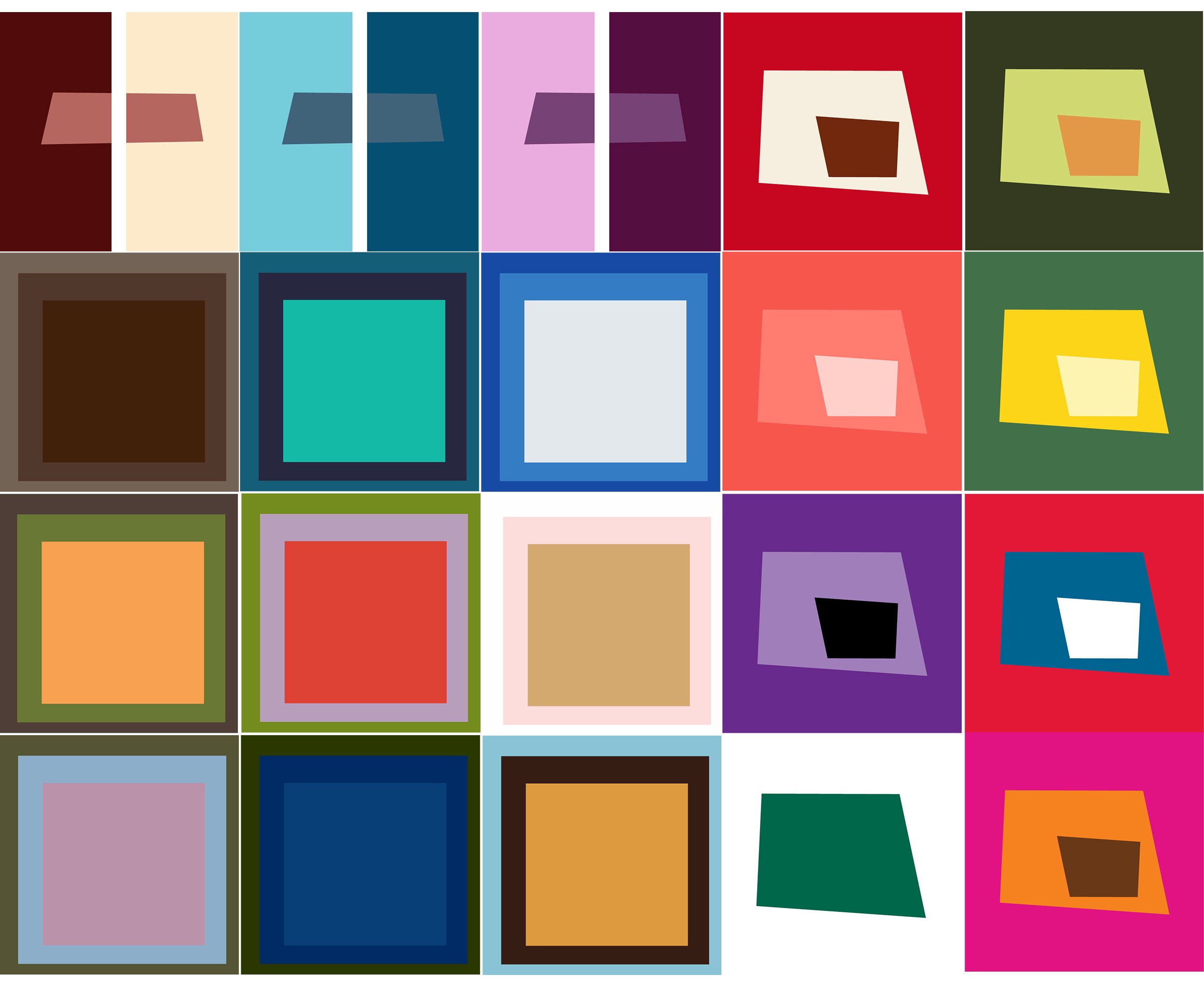
This idea is central to his classic work, *Interaction of Color*. Albers repeatedly emphasizes in the book that people's perception of color is not absolute, but rather a relative experience. The same color will present completely different visual effects against different backgrounds. For example, a gray color will appear brighter against a dark background, but darker against a light background. The brightness, saturation, and even the warmth or coolness of a color can change due to changes in the surrounding colors.
Therefore, in Albers's theoretical framework, color is not a stable physical property, but rather a relational structure. What truly determines the visual effect of color is not the pigment itself, but the interaction between colors. Colors can exhibit various relationships such as contrast, enhancement, weakening, or fusion; these relationships constitute the "behavior" of color. In this understanding, color is more like a dynamic system than a static element.

Josef Albers
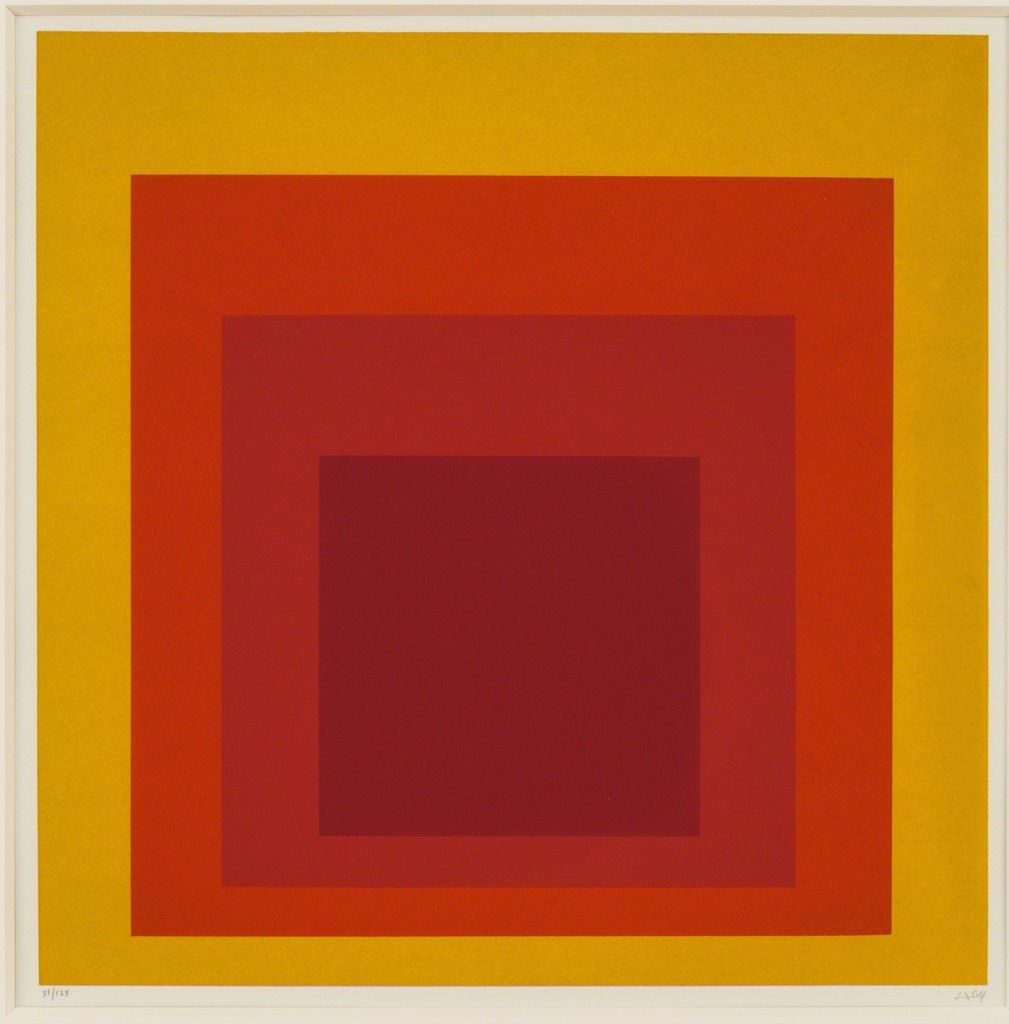
Albers revealed this relational nature through extensive experimentation. For example, in his famous "Homage to the Square" series, he repeatedly used nested square structures, employing combinations of different colors to create the illusion of spatial movement, with some colors appearing to emerge forward while others seem to recede into the plane. This spatial effect is not achieved through perspective or volumetric shaping, but entirely through the relationships between colors.
This approach revolutionized the traditional understanding of color in painting. Traditionally, color was often used to depict objects or express emotions; however, in Albers' system, color itself became a structural language. The artist's task was no longer to choose "beautiful colors," but to construct a system of relationships between colors. It is this system of relationships that allows simple geometric forms to acquire complex and rich visual variations.
Albers also points out that human vision is highly adaptable and prone to misjudgment. The eye automatically compares surrounding colors, resulting in visual biases. Therefore, in color learning, the most important thing is not memorizing theoretical rules, but observing the interaction of colors through continuous experimentation. In his teaching, he often requires students to conduct simple paper collage experiments, understanding through hands-on experience how colors change each other's visual properties.
Josef Albers
From this perspective, Albers' color theory is both a visual science and a form of cognitive training. He emphasizes "learning to see," that is, improving sensitivity to color relationships through systematic practice. Color is not a passive object of observation, but a phenomenon that requires active observation and comparison.
This idea has had a profound impact on modern design, architecture, visual arts, and geometric abstract art. Many artists have begun to use color as a structural tool in their work, constructing visual order through precise arrangement of relationships. Within this framework, color is no longer merely decoration, but becomes a vital force in organizing space, rhythm, and visual tension.
Therefore, Albers' core contribution lies in revealing a simple yet profound principle: color itself does not have a fixed meaning; what truly creates visual meaning is the relationship between colors. Only within this relationship does color truly begin to "speak."
Lesson C-1: The Meaning of Color Arises from Relationships (Click to view and listen to the reading)
In the development of modern color theory, Josef Albers proposed a core idea: color itself has no fixed meaning; its visual effect and psychological meaning depend entirely on its relationship with surrounding colors. Color is not an isolated object, but a visual phenomenon that constantly changes within its environment and structure. This idea is concentrated in his classic work, *Interaction of Color*. Albers repeatedly emphasizes in the book that people's perception of color is not absolute, but a relative experience. The same color will present completely different visual effects against different backgrounds. For example, a gray will appear brighter against a dark background and darker against a light background. The brightness, saturation, and even the warmth or coolness of a color can change due to changes in the surrounding colors. Therefore, in Albers' theoretical system, color is not a stable physical property, but a relational structure. What truly determines the visual effect of color is not the pigment itself, but the interaction between colors. Colors can exhibit various relationships such as contrast, enhancement, weakening, or fusion; these relationships constitute the "behavior" of color. In this understanding, color is more like a dynamic system than a static element. Albers revealed this relationality through numerous experiments. For example, in his famous "Homage to the Square" series, he repeatedly used nested square structures, creating the illusion of spatial movement through combinations of different colors. Some colors appear to emerge forward, while others seem to recede into the plane. This spatial effect is not achieved through perspective or volumetric modeling, but entirely through the relationships between colors. This method changed the traditional understanding of color in painting. In traditional concepts, color is often used to depict objects or express emotions, but in Albers' system, color itself becomes a structural language. The artist's task is no longer to choose "good-looking colors," but to construct a system of relationships between colors. It is this system of relationships that allows simple geometric forms to acquire complex and rich visual variations. Albers also pointed out that human vision has a strong adaptability and tendency to misjudge. The eye automatically compares surrounding colors, thus creating visual biases. Therefore, in learning color, the most important thing is not memorizing theoretical rules, but observing the interaction of colors through continuous experimentation. In his teaching, he often asked students to conduct collage experiments with simple paper pieces, understanding through hands-on experience how colors change each other's visual properties. From this perspective, Albers' color theory is both a visual science and a form of cognitive training. He emphasized "learning to see," that is, improving sensitivity to color relationships through systematic practice. Color is not a passive object to be viewed, but a phenomenon that requires active observation and comparison. This idea has had a profound impact on modern design, architecture, visual arts, and geometric abstract art. Many artists have begun to use color as a structural tool in their creations, constructing visual order through precise arrangement of relationships. Within this framework, color is no longer merely decoration, but becomes a vital force in organizing space, rhythm, and visual tension. Therefore, Albers' core contribution lies in revealing a simple yet profound principle: color itself does not have a fixed meaning; what truly creates visual meaning is the relationship between colors. Only within these relationships does color truly begin to "speak."
 简体中文
简体中文  English
  日本語
日本語  Español
  Français
  हिन्दी
  العربية
  বাংলা
বাংলা  Português do Brasil
  Русский
  اردو
اردو  Bahasa Indonesia
  Deutsch
  Kiswahili
  मराठी
मराठी  తెలుగు
  Tiếng Việt
  Türkçe
  Italiano
  தமிழ்
தமிழ்  한국어
한국어