5. Brushstrokes and texture
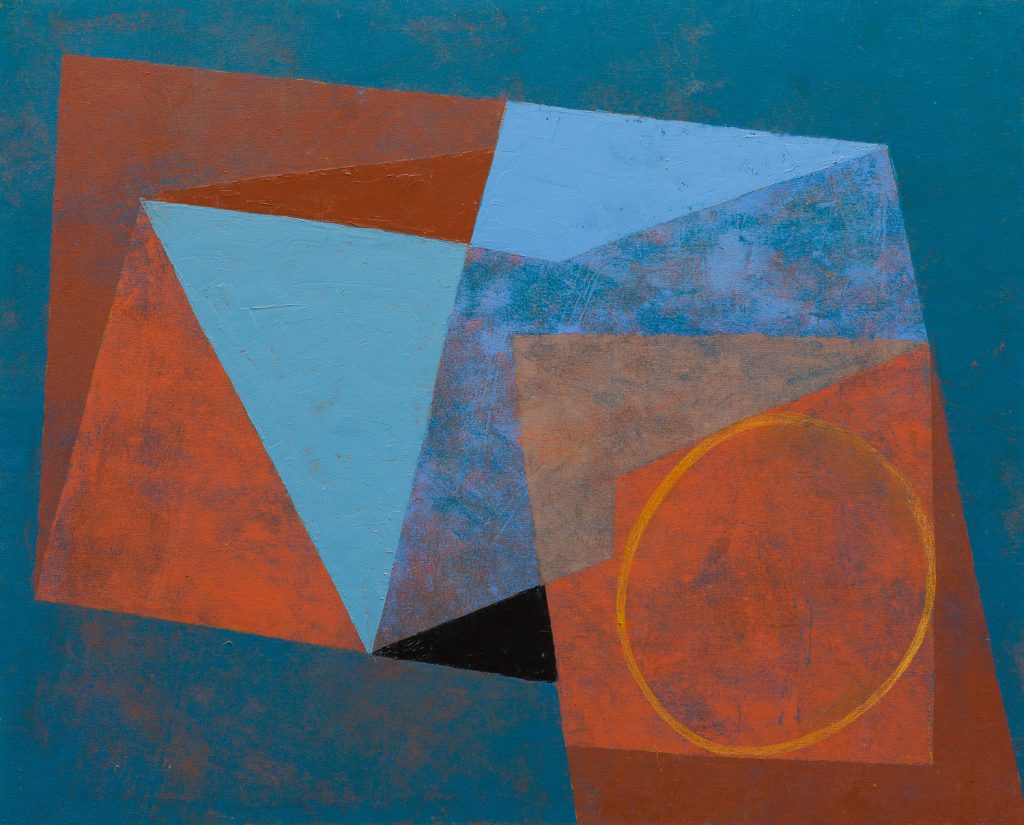
In geometric abstract art, the picture is usually composed of clear geometric forms and structural relationships, so the overall visual effect often presents characteristics of rationality, order, and simplicity. Within this structural system, brushstrokes and textures, while not as primary constituent elements as form and proportion, still play an important role in the composition. They can influence visual rhythm, spatial sense, and the experience of materials, imbuing strict geometric structures with richer visual layers.
First, brushstrokes can strengthen the visual structure of geometric forms. When artists draw straight lines, color blocks, or geometric areas, brushstrokes with different directions and pressures can alter the visual perception of form boundaries. For example, smooth and uniform brushstrokes can make geometric forms appear more stable and pure, while slightly varied brushstrokes introduce subtle rhythms into the structure, preventing the image from becoming overly mechanical. In this way, brushstrokes add visual vitality to the image while maintaining geometric order.
Secondly, texture can enrich the surface structure of an image. Geometric abstract art often emphasizes the relationship between form and color, while texture can create new layers between these elements. For example, adding subtle textural variations within large areas of color can create slight light and shadow changes on a flat surface, thereby enhancing visual depth. Textures formed by different materials or paint thicknesses also affect light reflection, making geometric structures appear more three-dimensional visually.
In addition, brushstrokes and textures can create a balance between rational structure and emotional expression. Geometric abstract art usually has a high degree of order, while moderate variations in brushstrokes can bring a handmade feel to the canvas, allowing the work to retain the artist's individual feelings while maintaining structural clarity. This relationship makes the picture both systematic and vibrant.
Therefore, in geometric abstract art, although brushstrokes and texture are not the primary constituent elements, they play an important role in visual hierarchy, rhythmic variation, and material expression. Through the control of brushstroke movement and surface texture, artists can introduce subtle changes within strict geometric structures, allowing the work to present a richer and more complete visual experience.
 简体中文
简体中文  English
  日本語
日本語  Español
  Français
  हिन्दी
  العربية
  বাংলা
বাংলা  Português do Brasil
  Русский
  اردو
اردو  Bahasa Indonesia
  Deutsch
  Kiswahili
  मराठी
मराठी  తెలుగు
  Tiếng Việt
  Türkçe
  Italiano
  தமிழ்
தமிழ்  한국어
한국어