
4. Prints
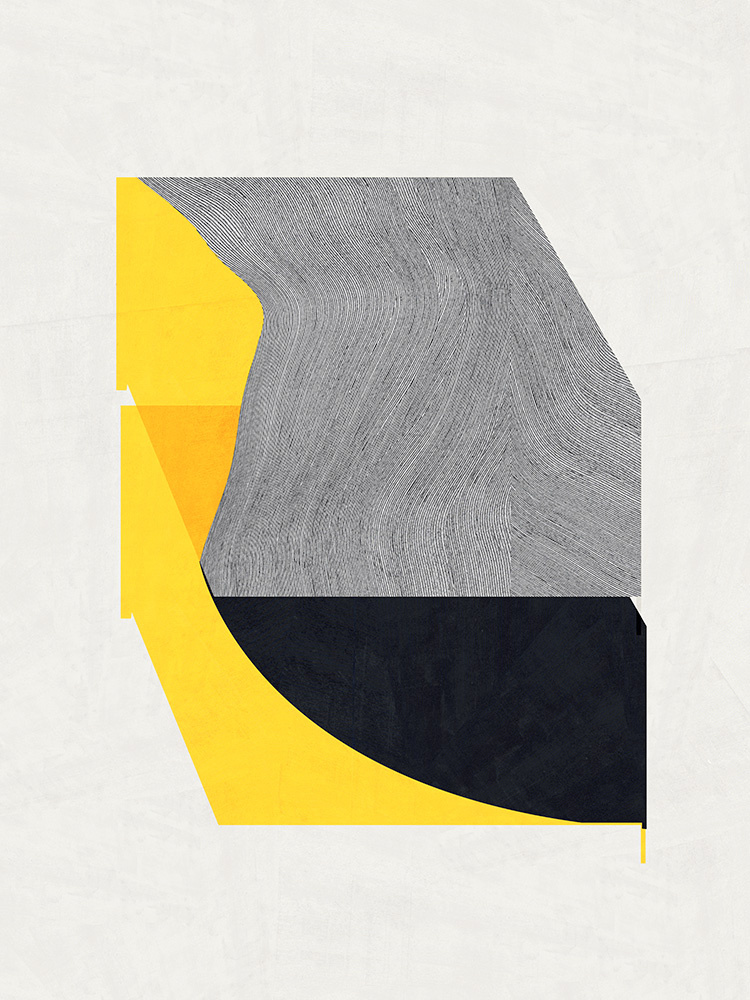
In the traditional art system, printmaking is a painting form with unique technical characteristics, and also an important compositional method. Unlike painting directly on canvas or paper, printmaking involves carving or processing materials such as wood panels, copper plates, or lithographs, and then transferring the image to paper through printing. This indirect creative process gives printmaking its unique characteristics in terms of composition and visual effects.
First, line composition is a fundamental element of printmaking. In woodcut or copperplate engraving, artists create linear structures on the printing plate using a carving knife. These lines are used not only to depict forms but also to organize the composition. Variations in the thickness, density, and direction of the lines affect the rhythm and depth of the image. For example, dense lines can create shadows, while sparse lines represent highlights, thus creating a contrast between light and shadow in the image.
Secondly, the relationship between black and white is a core characteristic of printmaking composition. Since many traditional prints rely heavily on black and white contrast to express the image, the proportional relationship between black and white is particularly important. Artists need to establish visual balance through the distribution of black and white areas. For example, large areas of black can create visual weight, while white areas provide space and a sense of breathing room. Through this black and white structure, the image can achieve a strong and clear visual effect.
Repetition and printing are also important characteristics of printmaking. A print can be printed multiple times on the same printing plate, producing multiple works. This technical characteristic makes the image reproducible and also allows for a simpler and clearer composition. When designing a print, artists usually emphasize the form, outline, and structural relationships to ensure that the printed image remains clear.
Furthermore, printmaking compositions often possess decorative and rhythmic qualities. Through repetition of shapes, symmetrical structures, or pattern arrangements, a stable visual order can be achieved within the print. This compositional approach not only enhances the expressiveness of the image but also gives the print a unique visual style.
Therefore, in traditional painting and composition techniques, printmaking is not only a form of printing art, but also a visual composition method centered on lines, black and white relationships, and structural organization. Through these techniques, printmaking can establish a strong yet orderly visual effect within a simple form.
 简体中文
简体中文  English
  日本語
日本語  Español
  Français
  हिन्दी
  العربية
  বাংলা
বাংলা  Português do Brasil
  Русский
  اردو
اردو  Bahasa Indonesia
  Deutsch
  Kiswahili
  मराठी
मराठी  తెలుగు
  Tiếng Việt
  Türkçe
  Italiano
  தமிழ்
தமிழ்  한국어
한국어