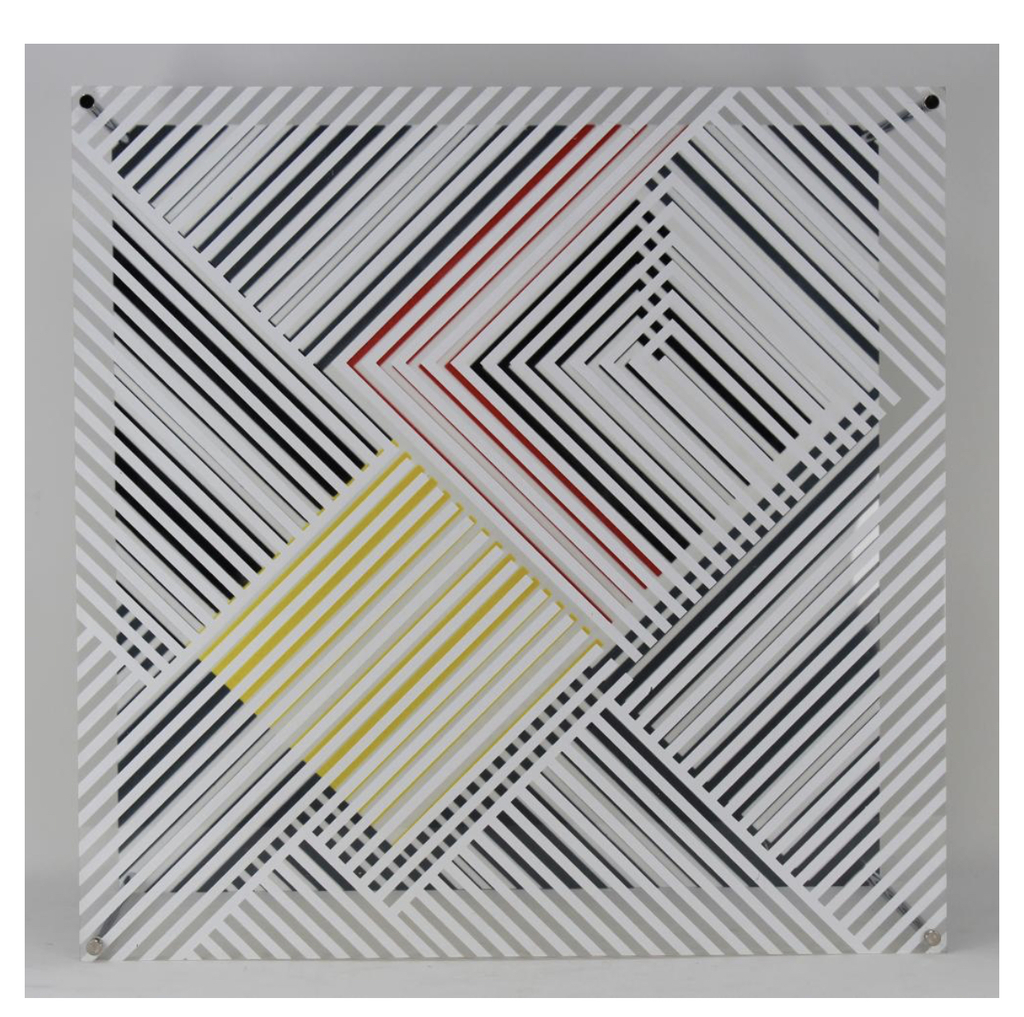
Jesús Rafael Soto's work breaks down the boundaries between matter and energy through the overlapping of geometric lines and the arrangement of suspended materials. His methods are similar to Arthur Dorval's transparent overlays in the "construction of depth illusion."
Creative methods: optical interference and the reconstruction of the logic of "vibration"
Soto's creative methods are essentially an artistic upgrade of the "Moiré effect," simulating energy fluctuations through precisely arranged physical layers.
- Optical interference and background superimposition: Soto's core technique involves suspending or fixing a group of geometric shapes or thin rods with similarly parallel lines in front of a backdrop with closely spaced parallel lines. This technique breaks the static feel of a flat surface. As the viewer moves in front of the artwork, the lines in the foreground and background create a phase difference, inducing a strong sense of "vibration" on the retina. This technique transforms visual depth into a temporal displacement, making colors and shapes appear to disintegrate in the air.
- “The construction of the "penetrable" space: Soto extended composition to three dimensions. He constructed a color cube that could be physically "penetrated" by suspending thousands of colored PVC or nylon tubes from the ceiling. This technique transformed the traditional "viewing" of painting into "immersion." In these works, geometric shapes are no longer boundaries defined by lines, but rather particle clouds composed of light, color, and air.
- Mathematical Rhythms and Serialization: His two-dimensional works are often based on rigorous mathematical sequences. The spacing and angle of the lines are precisely calculated to ensure that the frequency of optical vibrations reaches the limits of human visual perception. This approach breaks away from the randomness of abstract expressionism and instead pursues a kind of inevitability at the level of physics.
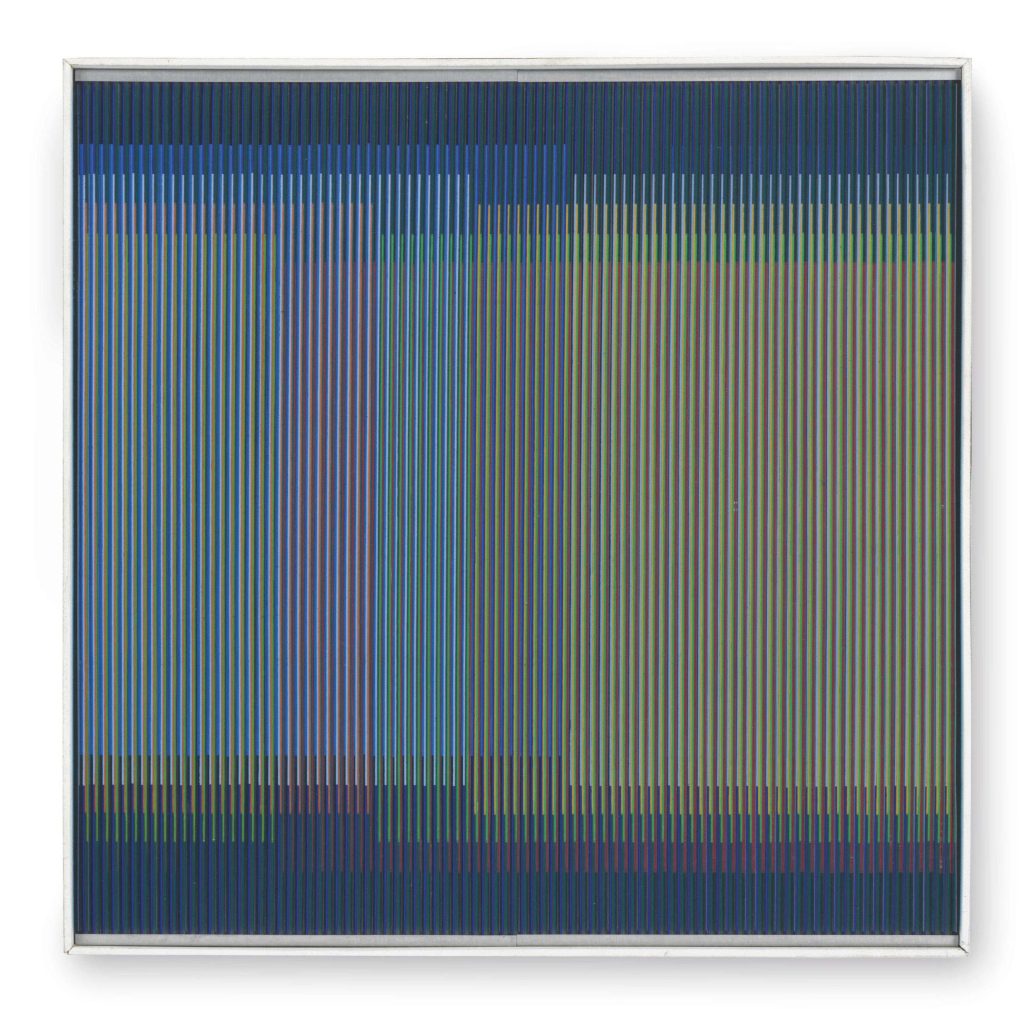
Stylistic characteristics: dematerialization, energy field, and active perception
Soto’s style presents a turbulent, ethereal, and highly aggressive visual energy, transforming solids into light.
- Dematerialization: The most striking feature of the Soto style is the visual "disappearance" of heavy metal or plastic materials. Due to high-frequency optical interference, the geometry of the solid appears to be trembling, dissolving, and transforming into pure energy fluctuations. This characteristic breaks down the materiality of the sculpture, giving the work a quality similar to particle fluctuations in quantum physics.
- The audience as a "driving force": Soto's style is incomplete unless there is audience participation. The dynamism of his works depends entirely on the physical displacement of the viewer. This stylistic feature establishes a new subject-object relationship: art is no longer an observed object, but a "perceptual laboratory" activated by the viewer's behavior.
- Dynamic geometric equilibrium: Although the compositional elements of his works are very simple (mostly parallel lines, squares, and strips), the overall style presents an extremely high degree of dynamic complexity. Colors create new visual layers through overlapping, a feature that is highly consistent with Arthur Dorval's logic of transparent incubation—both attempt to unleash infinite visual depth within a finite geometric framework.
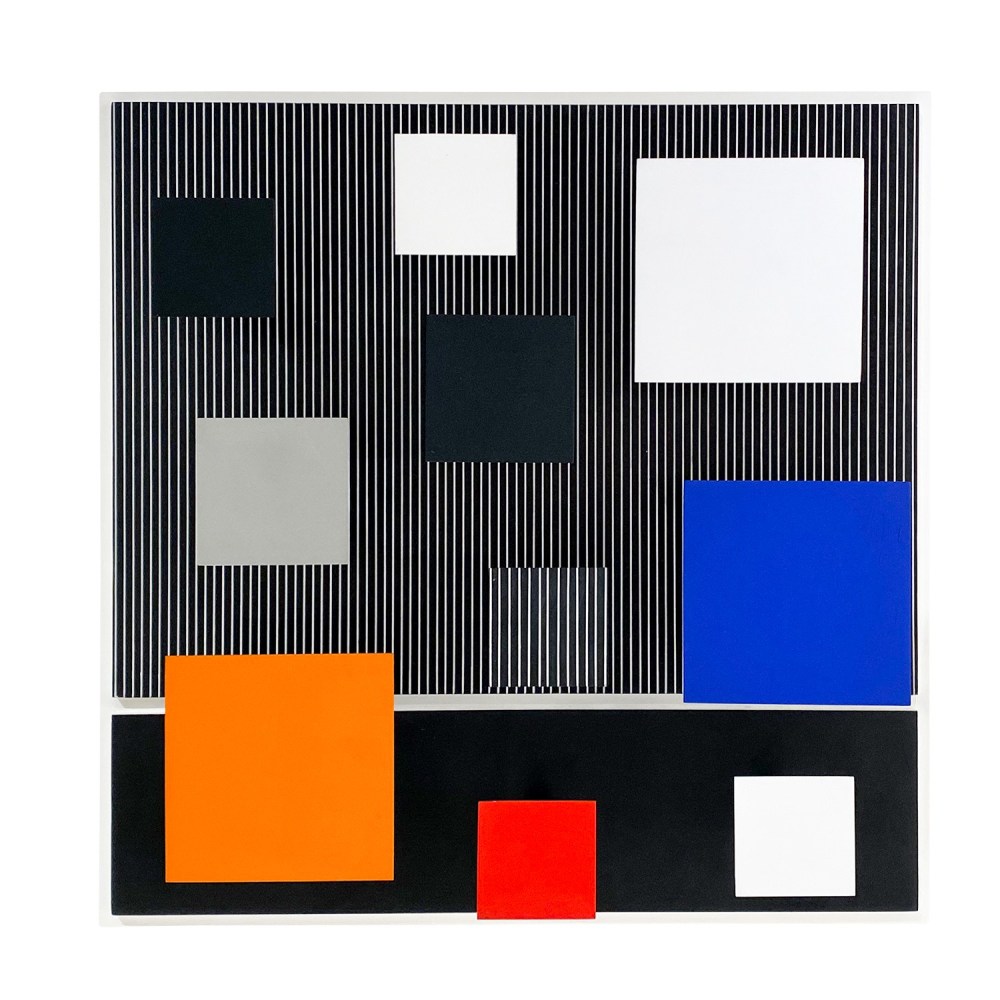
Material Application: Tension in Industrial Precast Components and Suspension Structures
Soto was highly forward-thinking in his choice of materials, using the precision of industrial materials to reproduce the natural properties of light.
- Industrial metal rods and plexiglass: He made extensive use of aluminum alloy rods, steel wire, and enamel-coated metal plates. These materials ensured the absolute straightness of the lines, thus producing precise optical interference. By spraying metallic paint onto the thin rods, he achieved the "levitation" of colors in space, making them appear as if they were captured spectra.
- Colored PVC pipes and nylon ropes: In his iconic Penetrable series, he made extensive use of industrial plastic tubing. These materials, with their translucent properties, produce a soft gamut expansion depending on the intensity of light. The lightness and strength of the nylon ropes allowed him to create large-scale suspensions, resulting in a material spectacle akin to a "rain of colors."
- A comparison between enamel and matte finishes: He used the high-gloss texture of enamel to contrast with the matte lines of the background. The use of this material enhanced the sense of separation between the foreground and background, making the optical vibrations appear more dazzling and aggressive under the reflection of light.
 简体中文
简体中文  English
  日本語
日本語  Español
  Français
  हिन्दी
  العربية
  বাংলা
বাংলা  Português do Brasil
  Русский
  اردو
اردو  Bahasa Indonesia
  Deutsch
  Kiswahili
  मराठी
मराठी  తెలుగు
  Tiếng Việt
  Türkçe
  Italiano
  தமிழ்
தமிழ்  한국어
한국어