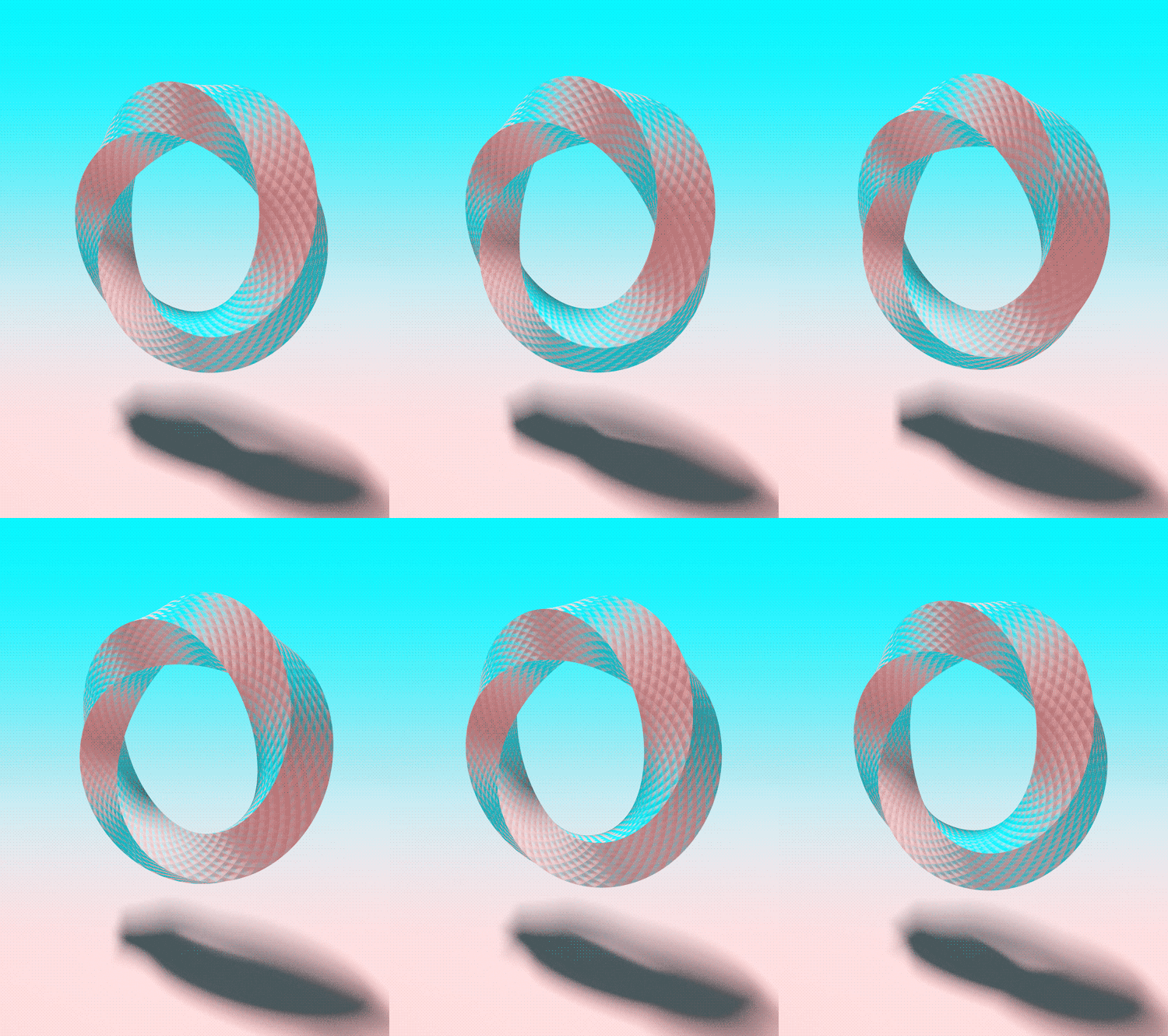
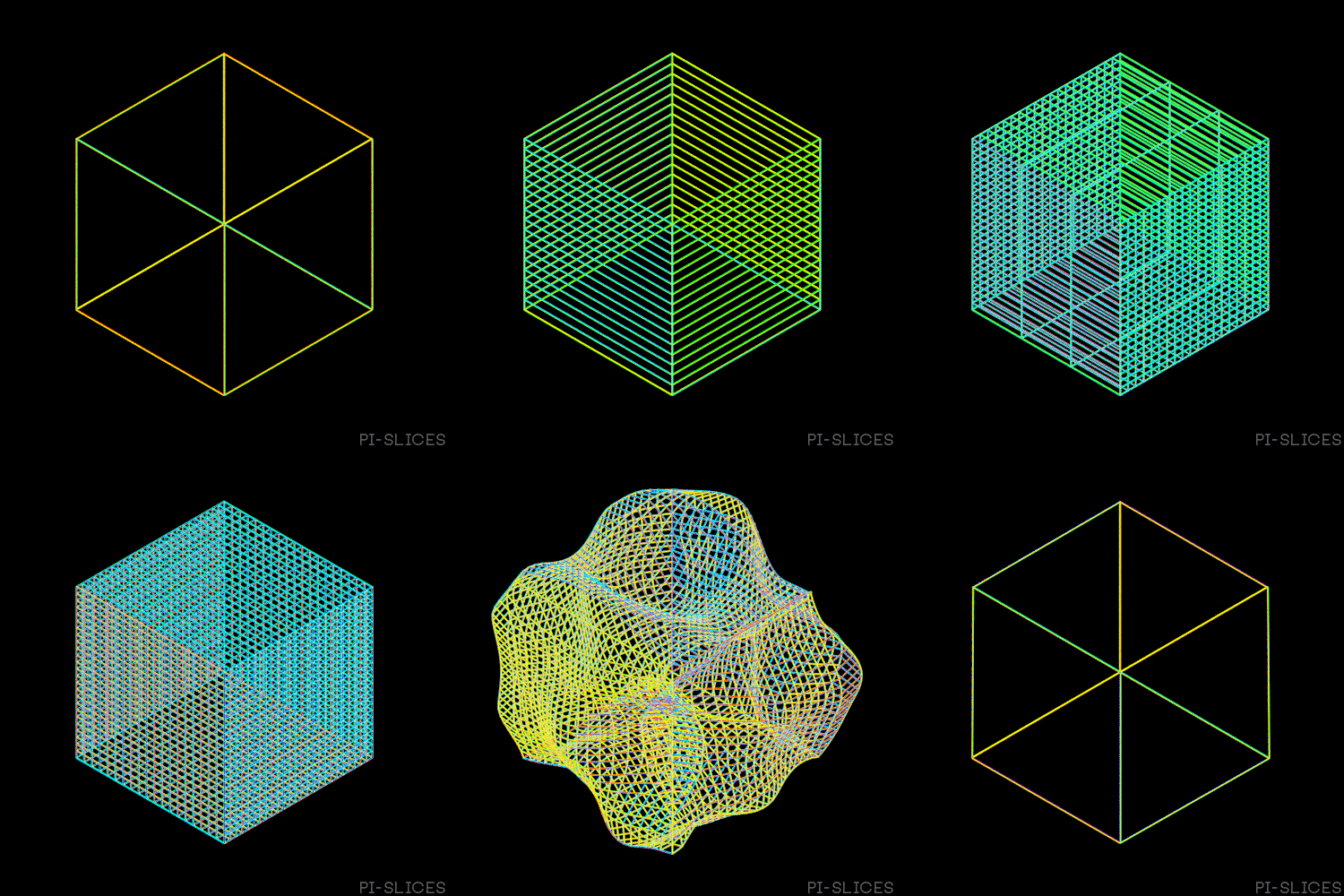
In the future evolution of geometric abstract art, the role of artificial intelligence is not to simply replace artists or to mechanistically hand over art creation to machines. More accurately, AI will act as a new partner, analytical tool, and generative engine, deeply involved in the formation process of geometric abstract art. What it changes is not whether art still needs humans, but how artists work, how they think about structure, how they organize form, and how they can mobilize image generation, relationship analysis, and system control capabilities on a larger scale.
First, AI is a powerful “form generator.” It can quickly generate a large number of geometric compositions, color schemes, and structural variations based on rules, boundaries, and aesthetic directions pre-set by artists. This helps artists break through the speed limitations of manual reasoning and see multiple possibilities that would be difficult to imagine simultaneously. In traditional creation, a compositional scheme often requires repeated sketching, modification, comparison, and reconstruction, with artists relying on experience and patience to progress little by little. AI, on the other hand, can provide hundreds or thousands of different results in a very short time, shifting creation from “single-path progression” to “multi-path parallel development.” This is not about making art easy or superficial, but rather enabling artists to more easily enter a “compare-filter-optimize” creative state, judging within a vast range of possibilities which structure is more powerful, which variation has more rhythm, and which order is closer to their true desired visual logic.
Secondly, AI also serves as an important “structural analyst.” Geometric abstract art, while appearing simple, actually contains extremely complex proportional relationships, balance configurations, rhythmic transitions, warm-cool color balances, and spatial progressions within. In the past, many excellent artists relied primarily on visual sensitivity developed through long-term training for their judgments. In the future, AI can further analyze these relationships that are inherently difficult to quantify. It can help artists observe whether color block distribution is unbalanced, if structural rhythms are too uniform, if visual weight is off-center, or if certain repetitions have become monotonous. In other words, AI will not only generate forms but also participate in examining them, allowing the “order” in geometric abstract art to be analyzed, corrected, and optimized with higher precision, rather than being maintained solely by intuition.
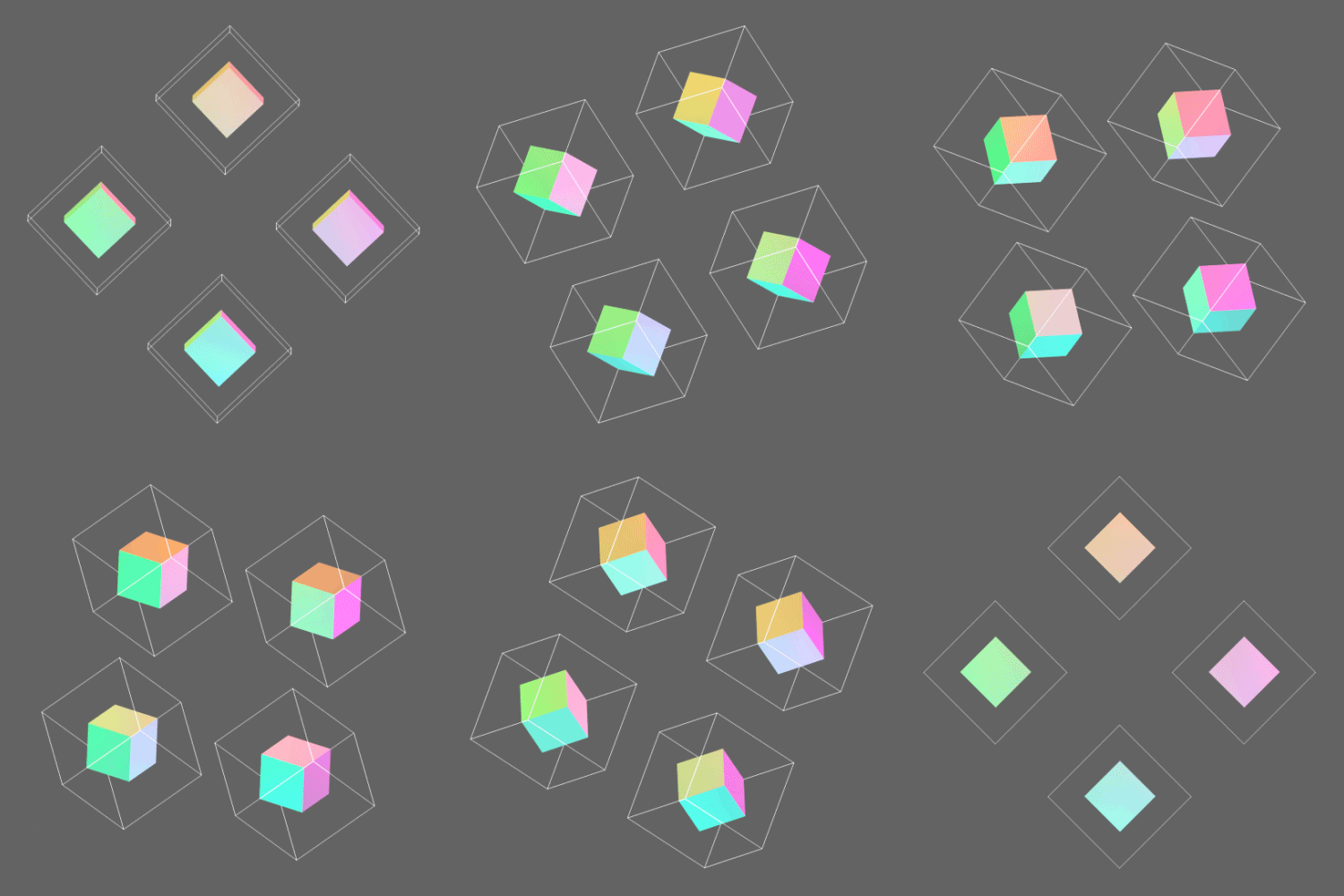
Again, AI will become a “collaborator in system construction.” The important future development direction of geometric abstract art will not be to just complete a single image, but to establish a visual system capable of continuous derivation. In this process, AI is very suitable for handling the relationships between parameters, rules, modules, and variations. Artists can set grid logic, deformation ranges, color proportions, module repetition methods, and evolutionary conditions, and then AI will continuously generate new structural states within these frameworks. Thus, artworks are no longer just one-time results, but more like a continuously expandable family system. The artist's role here shifts from the traditional direct depictor to a rule-setter, system designer, and outcome-selector. AI does not replace the artist's creativity but rather pushes it to a higher level, as the artist now needs to consider not just “what to paint,” but “what kind of structural mechanism can continuously generate valuable results.”
At the same time, AI will also push artists to re-understand the meaning of “experimentation.” Traditional experiments in geometric abstraction are often constrained by time, materials, and physical effort. It's impossible for one person to try all possible structures in a short period. AI, however, can compress, amplify, and parallelize a large number of experimental processes. Artists can test different color adjacency relationships, different grid rhythms, and different scales of module expansion, and quickly compare their visual differences. In this way, AI does not weaken exploration, but expands it, enabling geometric abstract art to enter a more complex, refined, and systematic state of research.
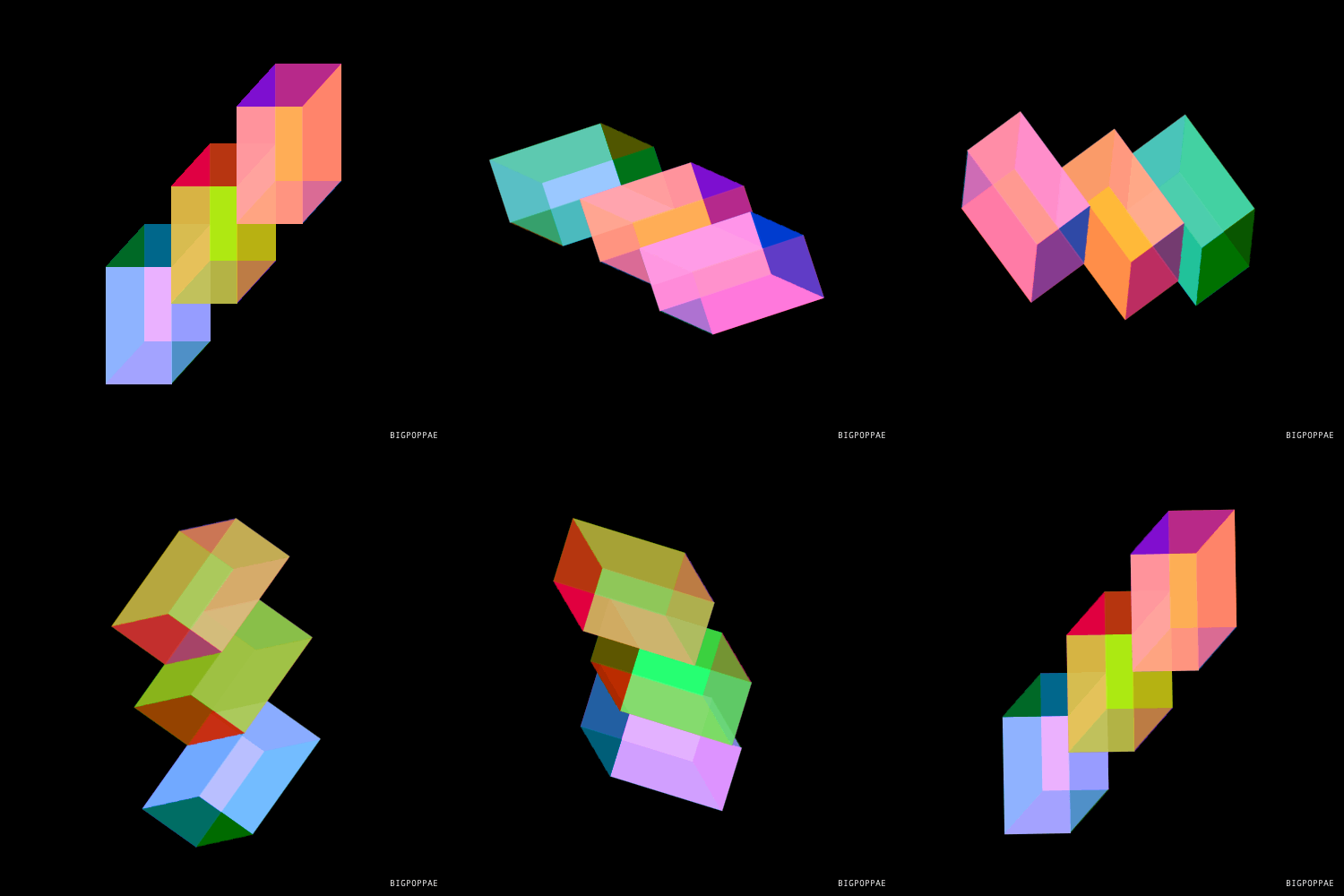
Certainly, no matter how advanced AI becomes, it does not equate to its ability to automatically make genuine artistic judgments. This is because geometric abstract art, in the end, is not purely a mathematical arrangement, but rather a visual construction imbued with aesthetic choices, spiritual inclinations, and cultural stances. AI can generate many results, but it doesn't know which one possesses the greatest intellectual depth or which one can truly stand as a work of art. What ultimately determines the direction of a piece remains the artist's judgment, experience, and aesthetic consciousness. Therefore, the most logical role for AI in the future is not to “replace the author,” but to “amplify the author.” It helps artists see more possibilities, analyze more relationships, and explore more variations, but the person who ultimately transforms these possibilities into a genuine work of art is still the artist.
Therefore, in the future evolution of geometric abstract art, AI is neither an ancillary tool nor the endpoint of creation, but rather a new mediating force. It is both a form generator and a structure analyzer; it is a system collaborator and an experiment accelerator. It allows geometric abstract art to move from a state that previously relied more on individual manual control to a more open, efficient, and systematic era of generation. But the core of it all remains unchanged: art is ultimately not defined in value by machines, but by humans who, through choice, judgment, and attribution, transform structure into art.
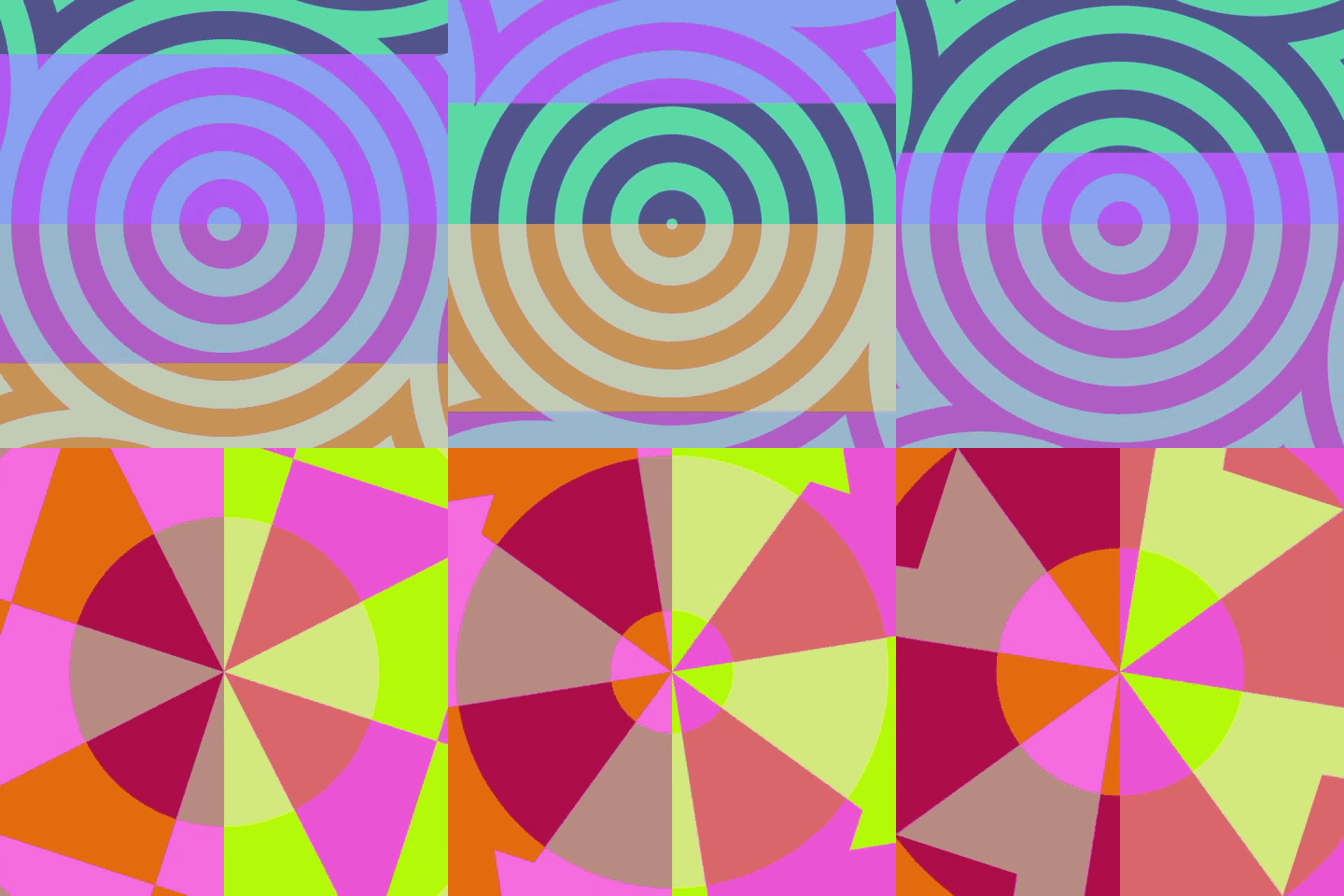
Lesson G3-2: The Role of AI Listen to the reading
In the future evolution of geometric abstract art, the role of AI is not to simply replace the artist, nor to mechanize the creation of art to machines to complete. More accurately, AI will be deeply involved in the formation process of geometric abstract art as a new partner, analytical tool and generative engine. What it changes is not whether art still needs people, but how artists work, how they think about structure, how they organize form, and how they mobilize the ability of image generation, relational analysis and system control on a larger scale. First of all, AI is a powerful “form generator”. It can quickly generate a large number of geometric compositions, color schemes and structural variants based on the rules, boundaries and aesthetic directions pre-set by the artist, helping the artist break through the speed limitations of manual deduction and see multiple possibilities that would otherwise be difficult to imagine at the same time. In traditional creation, a composition program often needs to be repeatedly drafted, modified, compared and reconstructed, and the artist has to rely on experience and patience to advance little by little. AI can give hundreds or thousands of different results in a very short period of time, shifting the creation from a “single path forward” to a “parallel development of multiple paths”. This is not to make art easy and superficial, but to make it easier for artists to enter the creation state of “comparing-sifting-optimizing”, and to judge which structure is more powerful, which change is more rhythmic, and which order is closer to the visual logic they really want in a large number of possibilities. The visual logic that you really want. Secondly, AI is also an important “structural analyzer”. Geometric abstract art seems to be simple, but in fact it contains extremely complex proportionality, center of gravity, rhythmic transition, balance of warmth and coolness, and spatial advancement. In the past, the judgment of many excellent artists mainly comes from the visual sensitivity formed by long-term training, and in the future, AI can further analyze these relationships that are originally difficult to fully quantify. It can help artists observe whether the distribution of color blocks is out of balance, whether the rhythm of structure is too even, whether the center of visual gravity has shifted, and whether a certain kind of repetition has created a sense of monotony. In other words, AI not only generates forms, but also participates in examining forms, so that the “order” in geometric abstract art is no longer just maintained by intuition, but can be analyzed, corrected, and optimized with a higher degree of precision. Again, AI will become a “collaborator of system construction”. The important development direction of future geometric abstract art is not just to complete a picture, but to establish a set of visual systems that can be continuously derived. In this process, AI is well suited to deal with the relationship between parameters, rules, modules and variants. The artist can set the grid logic, the range of deformation, the color scale, the modular repetition method and evolutionary conditions, and then the AI will continuously generate new structural states within these frameworks. As a result, the work is no longer just a one-time result, but more like a family system that can be continuously expanded. The role of the artist here is shifted from the direct depictor in the traditional sense to the rule maker, system designer and result screener, and AI does not replace the creativity of the artist, but instead pushes this creativity to a higher level, because what the artist wants to think about is not only “what to draw”, but also “What kind of structural mechanism should be used to generate valuable results. At the same time, AI will also push artists to re-understand the meaning of ”experiment“. Traditional geometric abstraction experiments are often limited by time, materials, and physical strength, and it is impossible for one person to try out all the structural possibilities in a short period of time. AI can compress, amplify, and parallelize a large number of experimental processes. Artists can test different color adjacencies, different densities of grid rhythms, and different scales of modular expansion, and quickly compare their visual differences. In this way, AI does not weaken exploration, but expands it, enabling geometric abstract art to enter a more complex, refined, and systematic state of study. Of course, the fact that AI is stronger is not the same as it being able to automate true artistic judgment. Because geometric abstract art is still not a pure mathematical arrangement, but a visual construction with aesthetic choice, spiritual tendency and cultural position, AI can generate many results, but it doesn't know which one has the most depth of thought, and which one can be established as a real work. What really determines the direction of the work is still the judgment, experience and aesthetic consciousness of the artist. Therefore, the most reasonable role of AI in the future is not to ”replace the author“, but to ”amplify the author“. It will help the artist to see more possibilities, analyze more relationships, and promote more variants, but in the end, the person who transforms these possibilities into real works is still the artist himself. Therefore, in the future evolution of geometric abstract art, AI is not an accessory tool or a creative endpoint, but a new intermediary force. It is both a form generator and a structural analyzer; a system collaborator and an experimental gas pedal. It allows geometric abstract art to enter a more open, efficient, and systematic generation era from the past state of relying more on individual manual control. But the core of all this remains unchanged: art is not ultimately defined by a machine in terms of value, but by a human being through choice, judgment and assignment of meaning, so that the structure is truly transformed into art.
 简体中文
简体中文  English
  日本語
日本語  Español
  Français
  हिन्दी
  العربية
  বাংলা
বাংলা  Português do Brasil
  Русский
  اردو
اردو  Bahasa Indonesia
  Deutsch
  Kiswahili
  मराठी
मराठी  తెలుగు
  Tiếng Việt
  Türkçe
  Italiano
  தமிழ்
தமிழ்  한국어
한국어