
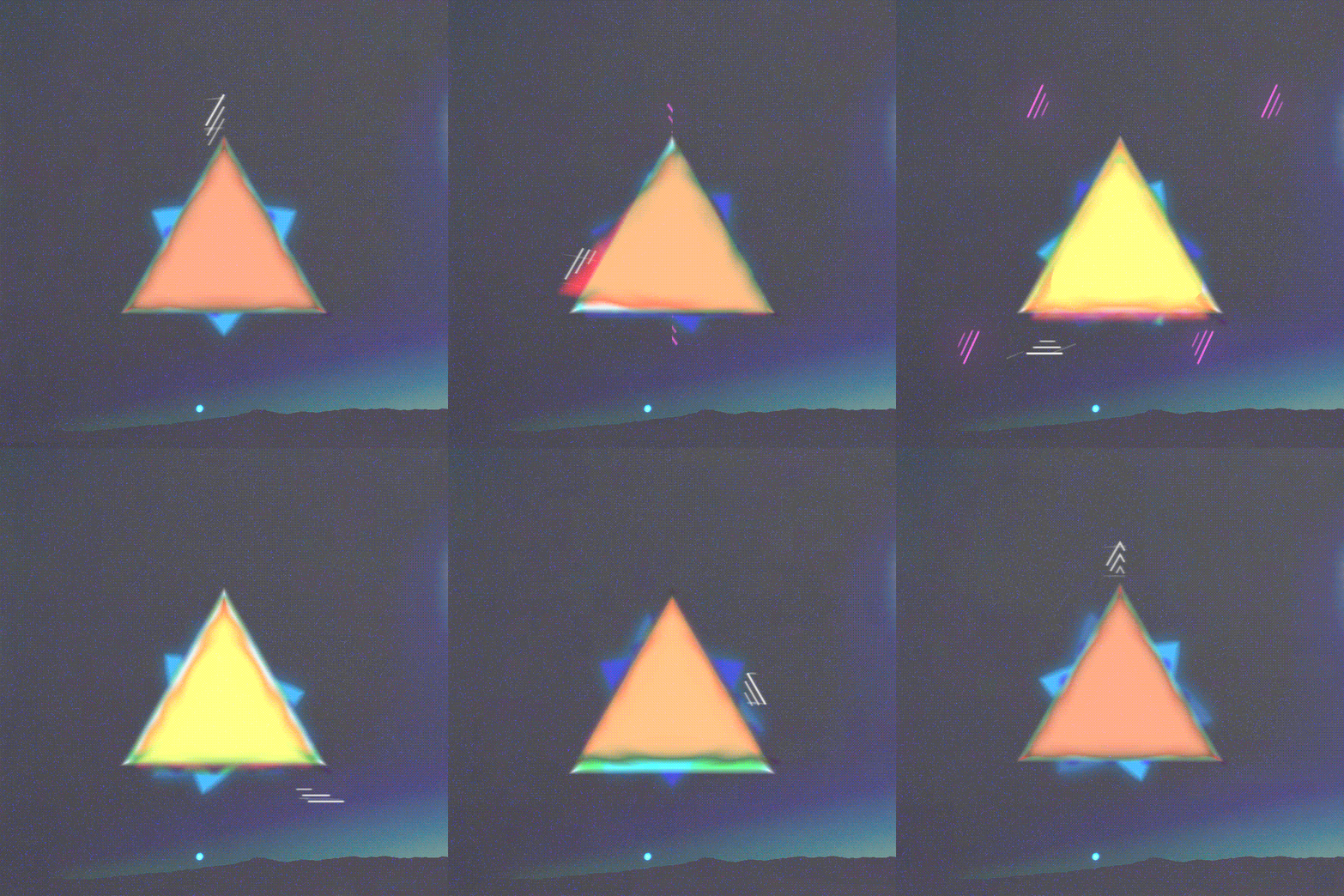
Secondly, in the future evolution of geometric abstract art, artificial intelligence will play an increasingly prominent role as a “structural analyst.” Its importance lies not only in its ability to generate images, provide variations, and accelerate creation, but more significantly in its capacity to delve into artworks, dissect, identify, and analyze the relationships within the composition. This is particularly crucial for geometric abstract art. The core of geometric abstraction has never been about narrative content, nor does it rely on figures, plots, or symbolic stories to support the artwork's meaning. Instead, it focuses on how lines are organized, how shapes echo each other, how blocks are distributed, how colors establish order, and how space is activated through proportion, rhythm, and contrast. In other words, geometric abstract art is fundamentally an artistic language built upon structural relationships, and AI is precisely well-suited for handling such relational issues.
In traditional geometric abstract art, artists can certainly judge a painting's stability, tension, balance, and rhythm based on experience, but this judgment is often highly intuitive. A mature artist can perceive with their eyes if a color block is too heavy, a line too dense, a blank space insufficient for breathing, or if a repeated pattern is becoming mechanically monotonous. However, these feelings are often difficult to fully articulate, and hard to systematically accumulate and impart. Because of this, geometric abstract art, though seemingly rational, clear, and analytical, still requires significant experience, repeated trial and error, and long-term training when it comes to actual creation. The involvement of artificial intelligence, however, will change this situation significantly. AI can not only 'see' the artwork, but it can also quantify and generalize structural elements within it, gradually transforming the sense of order that previously resided at the perceptual level into analytical results that can be described, compared, and learned.
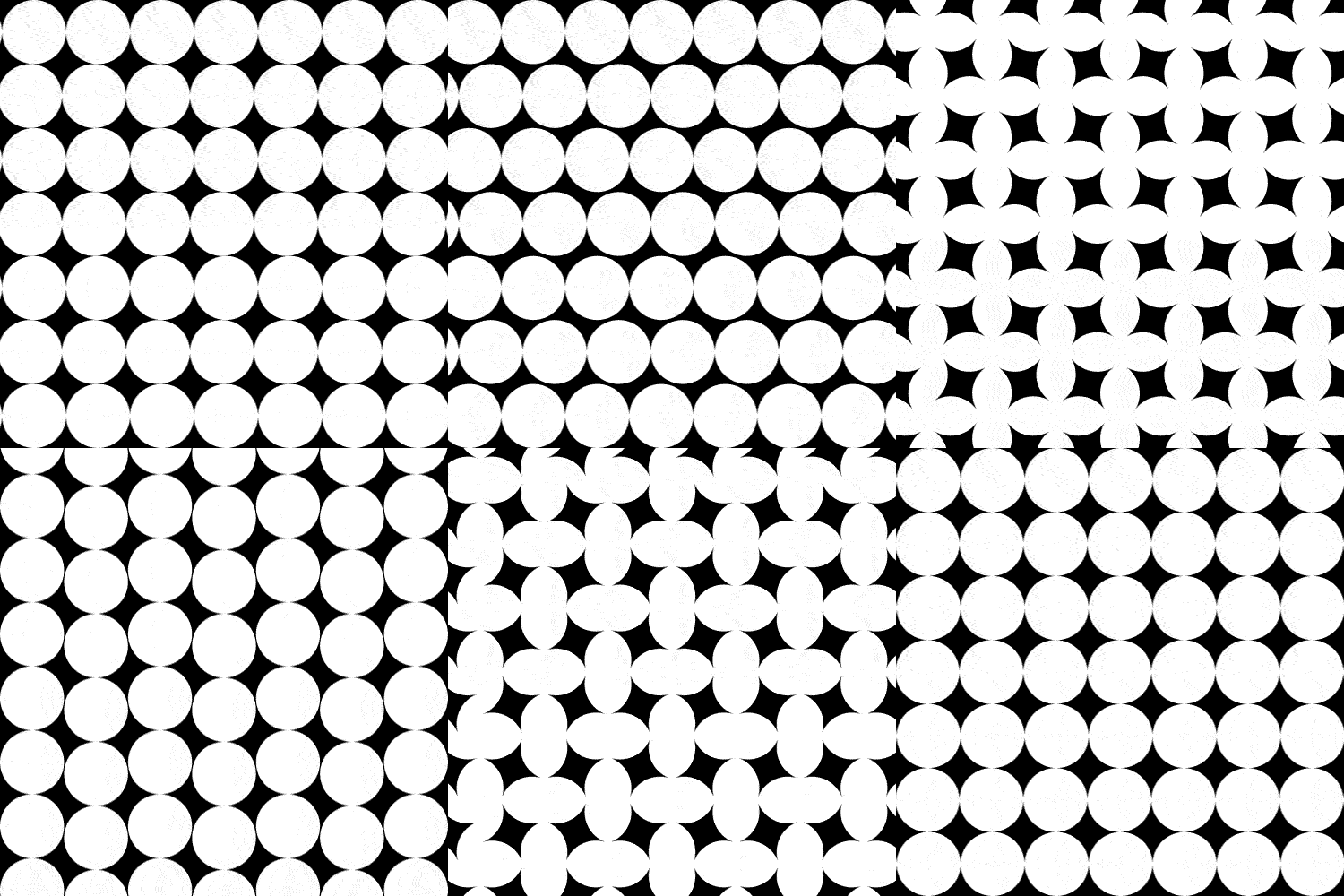
For example, AI can analyze line density in a work. Algorithms can identify which parts have lines that are too dense, creating excessive visual pressure; which parts have lines that are too sparse, resulting in a loose structure; and whether the distribution of lines in different directions forms effective rhythmic contrasts. It can also analyze shape proportions to determine if meaningful contrasts are formed between large and small, long and short, square and round, or closed and open forms, or if they merely repeat superficial forms lacking internal tension. AI also has strong analytical potential for negative space relationships. In geometric abstraction, empty space is not void but rather a structural area that actively participates in the composition. AI can help artists discern which empty spaces truly serve as buffers, breathing room, and points of contrast, and which are merely unorganized leftover areas.
In addition, AI will play a crucial role in analyzing the balance of the center of gravity and the direction of visual movement. Although abstract geometric art does not depict concrete movement, its compositions always possess a certain “visual flow.” How the viewer's gaze enters the artwork, how it moves between planes, and how it lingers, doubles back, jumps, or disperses, all fall within the dynamic logic of the internal structure. AI can track the paths of this visual movement, identifying whether a work tends to converge towards the center or expand towards the edges; whether it emphasizes vertical order or creates diagonal tension; and whether it maintains a stable balance or generates vitality within instability. Such analysis is not merely a mechanical deconstruction of the artwork but helps artists gain a clearer understanding of how their work “operates.”
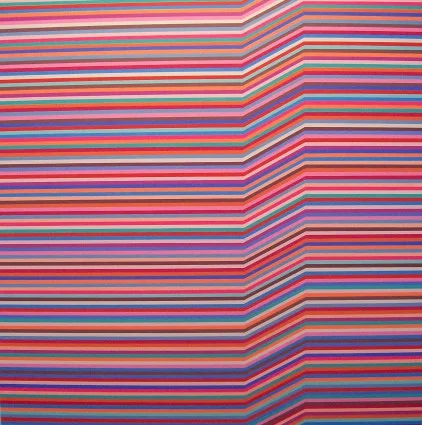
Color distribution logic is also an important area for AI as a structural analyst. In geometric abstraction, color is not just decoration; it performs important functions such as reinforcing order, creating tension, organizing rhythm, guiding focal points, and constructing a sense of space. AI can analyze the proportion of a certain color in an image, determine whether the distribution of warm and cool tones is balanced, whether changes in brightness form layers, whether high saturation areas are overly concentrated, and whether complementary colors serve their necessary buffering role. In the past, these issues were often addressed based on experience and intuition. In the future, they will increasingly be understood through analysis. In this way, color will no longer be just a matter of “whether it looks good,” but will become a structural mechanism that can be studied.
On a deeper level, the significance of AI as a structural analyzer lies not in its making judgments for artists, but in providing artists with a new way to reflect. It can reveal the formerly vague and implicit formal relationships within a work, allowing artists to understand their compositional habits, whether their balancing methods are too singular, if their color distribution forms a fixed pattern, and if their repeating structures vary in layers or have fallen into inertia. This transforms creation from purely emotional experiments reliant on inspiration into a knowledge process that can be reviewed, compared, corrected, and accumulated. Artists are not only “making works” but also continuously understanding their own structural language through analysis.
Therefore, in the future development of geometric abstract art, AI's role as a “structural analyst” will have profound significance. It enables artists to more clearly understand the internal logic of their work, transforming visual order, which was previously grasped only through experience, into knowledge that can be learned, discussed, and accumulated. Geometric abstract art will not lose its intuition and aesthetics because of this; on the contrary, it will become more self-aware, more profound, and possess a more sustainable methodological foundation due to this analytical capability. AI is not intended to turn art into formulas, but rather to help artists see structures and understand relationships, thus allowing geometric abstract art not only to be created in the future but also to be understood more deeply.
Lesson G3-2: The Role of AI Click to view Listen to the audio
Secondly, in the future evolution of geometric abstract art, artificial intelligence will also increasingly assume the role of “structural analyzer”. Its importance lies not only in its ability to generate images, provide variations, and speed up creation, but also in its ability to get inside the work and dismantle, identify, and analyze the relationships in the picture. This is especially crucial for geometric abstraction. Because the core of geometric abstraction is not in the narrative content, nor does it rely on characters, plots or symbolic stories to support the meaning of the work, it pays more attention to how the lines are organized, how the shapes echo each other, how the blocks are distributed, how the colors establish the order, and how the space is activated through the proportion, rhythm and contrast. In other words, geometric abstract art is fundamentally an artistic language built on structural relationships, and AI is very suitable for dealing with such relational issues. In traditional geometric abstraction, the artist can of course judge from experience whether a painting is stable, tense, balanced and rhythmic, but this judgment is often highly intuitive. A mature artist can feel that a certain color block is too heavy, a certain line is too dense, a certain piece of white space is not enough to breathe, or a certain set of repetitions has begun to look mechanical monotony, but these feelings are often difficult to be completely clarified, and it is also difficult to be systematically accumulated and taught. Because of this, although geometric abstract art seems rational, clear and analyzable, it still requires a lot of experience, repeated trial and error, and long-term training when it really enters the creative level. And the intervention of artificial intelligence will change this situation to a large extent. It can not only see the picture, but also quantify and summarize the structural elements in the picture, gradually transforming the sense of order that originally stayed at the level of perception into an analytical result that can be described, compared and learned. For example, AI can analyze the density of lines in a piece of work. Which part of the lines are too concentrated, resulting in excessive visual pressure; which part of the lines are too sparse, resulting in loose structure; whether the distribution of lines in different directions forms an effective rhythmic contrast, all of which can be recognized by the algorithm. It can also analyze shape proportions to determine whether meaningful contrasts are formed between large and small, long and short, square and round, and closed and open, or whether they are just a repetition of surface forms without internal tension. AI also has strong analytical potential for negative spatial relationships. White space in geometric abstraction is not a void, but a structured area that actively participates in the composition, and AI can help the artist see which blank spaces actually buffer, breathe, and contrast, and which ones are just residual zones that have not been sufficiently organized. In addition to this, AI will also play an important role in analyzing the balance between the center of gravity and the direction of visual movement. Although geometric abstract art does not depict figurative movement, there is always some kind of “visual flow” in its images: how the viewer's eye enters the image, how it moves between the blocks, how it stays, returns, jumps, and spreads out, all of these belong to the dynamic logic within the structure, and the AI can trace the path of this visual movement and identify whether the work is converging toward the center or toward the center. tends to converge towards the center, or expands towards the edge; emphasizes vertical order, or creates oblique tension; maintains stable balance, or creates vitality in instability. This kind of analysis is not just a mechanical disassembly of the work, but helps the artist to understand more clearly how the work “works”. The logic of color distribution is also an important area for AI as a structural analyst. In geometric abstraction, color is not just a decoration, but also serves the important functions of reinforcing order, creating tension, organizing rhythm, guiding the center of gravity, and constructing a sense of space; AI can analyze the proportion of a certain color in a picture, determine whether the distribution of warmth and coolness is well-balanced, whether changes in luminance form a hierarchy, whether the highly saturated areas are over-concentrated, and whether the composite color has assumed the necessary buffering role. In the past, these issues were often sensed by experience; in the future, they will increasingly be seen through analysis. In this way, color will no longer be just a question of “whether it looks good”, but will become a structural mechanism that can be studied. On a deeper level, the significance of AI as a structural analyzer does not lie in the fact that it makes judgments for the artist, but in the fact that it provides the artist with a new way of reflection. It can present those originally vague and implicit formal relationships within the work, letting the artist know what his or her compositional habits are, whether his or her balance is too homogeneous, whether his or her color distribution has formed a certain fixed pattern, whether his or her repetitive structure is hierarchically varied, or whether he or she has fallen into inertia. In this way, creation is no longer just a sensual experiment that relies on inspiration, but gradually becomes a process of knowledge that can be looked back on, compared, corrected and accumulated. The artist is not only “making works”, but also continuously recognizing his own structural language through analysis. Therefore, in the future development of geometric abstract art, the role of AI as a “structural analyzer” will have a very far-reaching significance. It enables artists to understand the internal logic of their works more clearly, and transforms the visual order, which can only be grasped by experience, into knowledge that can be learned, discussed and accumulated. Geometric abstract art will not lose its intuition and aesthetics, on the contrary, it will become more conscious and deeper because of this analyzing ability, and also have a more sustainable methodological basis. ai is not to turn art into formulas, but to help artists to see the structure and understand the relationship, so that geometric abstract art can be not only created in the future, but also be more deeply understood.
 简体中文
简体中文  English
  日本語
日本語  Español
  Français
  हिन्दी
  العربية
  বাংলা
বাংলা  Português do Brasil
  Русский
  اردو
اردو  Bahasa Indonesia
  Deutsch
  Kiswahili
  मराठी
मराठी  తెలుగు
  Tiếng Việt
  Türkçe
  Italiano
  தமிழ்
தமிழ்  한국어
한국어