Swiss artist Max Bill's works, through precise mathematical functions, logical arrangements, and minimalist geometric forms, deconstruct the dialectic relationship between “order” and “beauty.” His methods, overlapping with Arthur Dorval's geometry, manifest a timeless classical resonance in “rational construction” and “visual transparency.”
Creative Methods: The Topological Evolution of Mathematical Thinking in Art
Bill's creative process is one of transforming “invisible mathematical logic” into “visible visual forms.” His production logic is not based on aesthetic inspiration, but on axiomatic logical deduction.
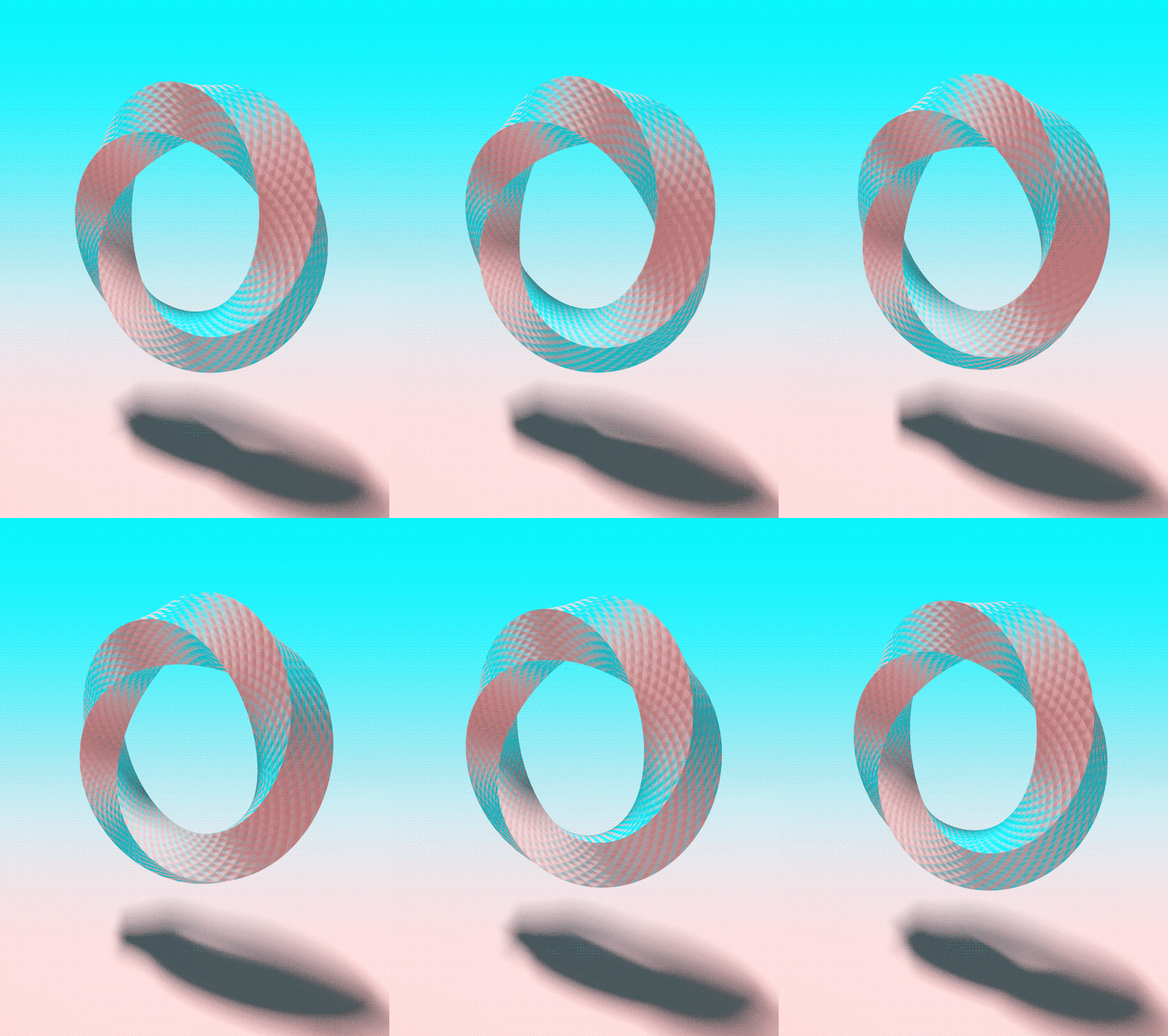
- Mathematics as Seed Bill's most core method is “mathematical thinking” (Mathematische Denkweise). He views geometric shapes as the material extension of mathematical formulas. For example, in his famous “Unilateral Surfaces” series, by topologically studying the Möbius Strip, he transforms the mathematical concept of infinite loops into three-dimensional physical forms. This method breaks down the randomness of composition, making every radian and every turn logically inevitable. This echoes Dorval's "hatching" logic – where Dorval's logic is in the layering of colors, Bill's is in the distortion of space.
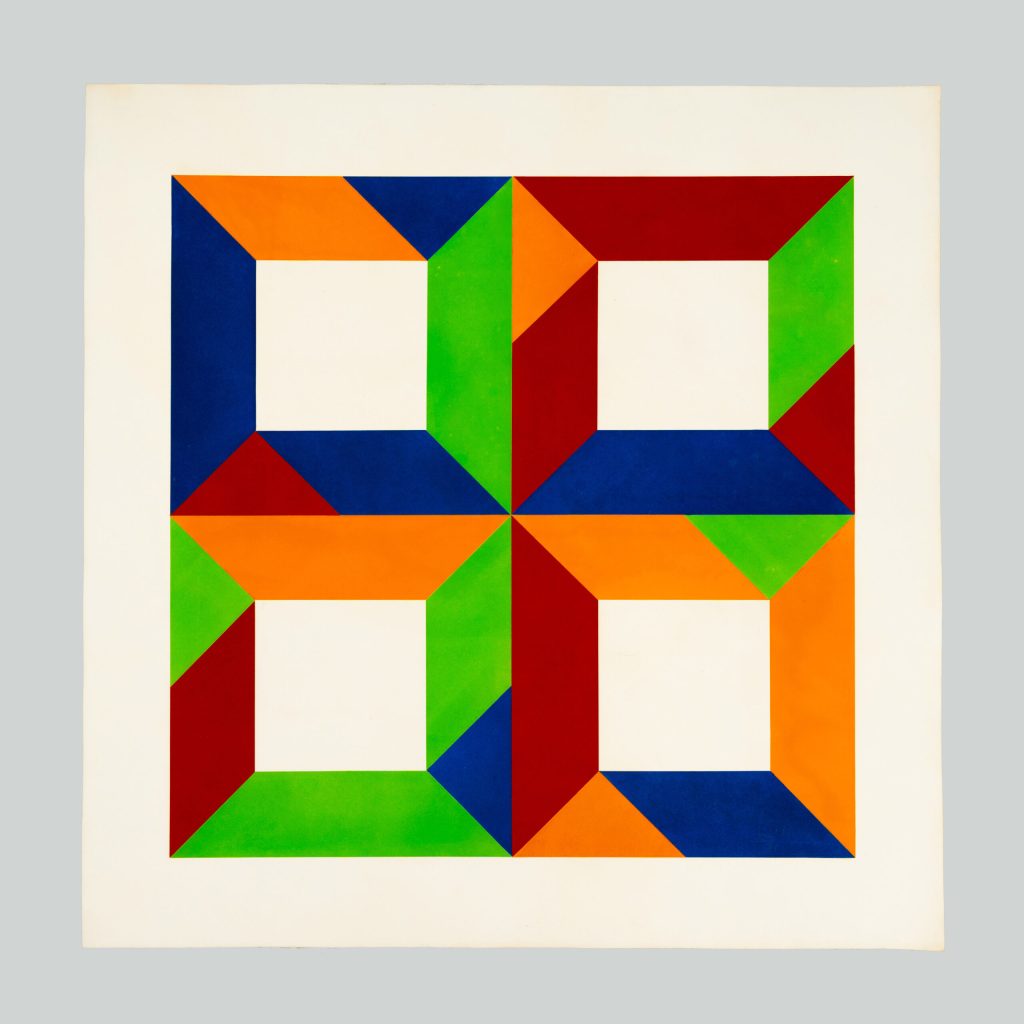
- Serial Permutation: His production logic involves a large number of displacements based on arithmetic or geometric progressions. He often uses a basic square as a unit, generating a complex visual network through rotation, scaling, or permutation of color sequences. This method breaks the rigidity of centralized composition. When multiple logical sequences intersect in a frame, a rational rhythm is produced. This “logic empowerment” method enables simple geometric shapes to convey a sense of cosmic order.
- The systematic logic of color: Bill's use of color is extremely restrained and systematic. He often employs a logical distribution based on the spectrum, such as the contrast of primary colors (red, yellow, blue) or a sequential gradient of complementary colors. This approach forces the viewer's perception into a highly controlled state, utilizing differences in color brightness and saturation to help define the hierarchy of geometric space, giving the work a clarity akin to a mathematical chart.
Style Characteristics: Concrete Art, Objective Aesthetics, and the Sanctification of Order
Bill's style exhibits an extremely pure, calm, and highly universal perceptual quality.
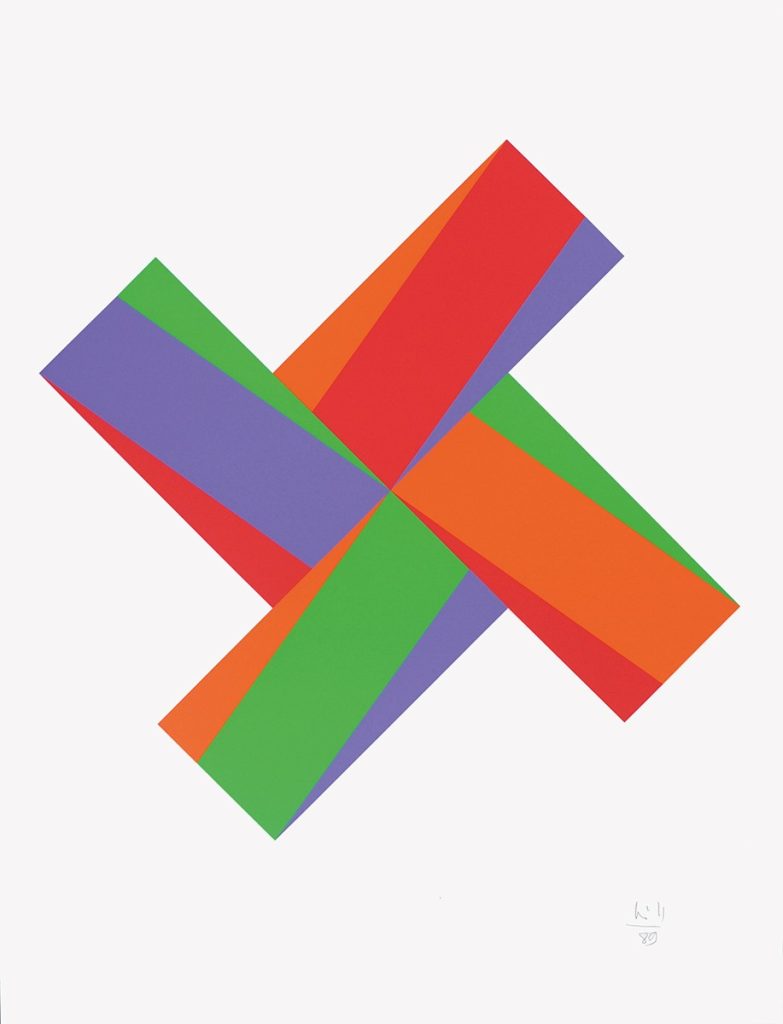
- Objective Aesthetics His style is the ultimate embodiment of “Art Concret.” Its characteristic feature is the complete absence of literary metaphor or emotional agitation. Lines in the artwork are simply lines, and colors are simply colors. This stylistic characteristic establishes art's identity as an independent, objective reality, reflecting the artist's adherence to the functionalist spirit of the Bauhaus.
- Rational Visual Rhythm Bill's work has a strong sense of “structural tension.” He uses extreme symmetry or asymmetry based on the golden ratio to create a perfectly fitted sense, like an architectural blueprint. When viewers look at his work, their eyes are guided by logic, producing intellectual pleasure akin to solving a mathematical puzzle. This stylistic characteristic imbues cold mathematical formulas with sensory poetry.
- A sense of unified harmony: Despite compositions that are almost mechanical in their precision, Bill excels at finding a dynamic harmony within his works. This sense of balance establishes a perfect intersection between “absolute reason” and “sensory intuition.” This style engages in a dialogue with Dorval's transparent superimpositions, where Dorval seeks the tremor of light, and Bill pursues the eternity of order.
Materials: The play between industrial granite, mirrored metal, and high-purity pigments
Bill's material selection exhibits an ultimate pursuit of “durability” and “industrial precision,” viewing his works as a form of eternal material axiom.
- Geometric Cutting of Hard Stone and Granite: He extensively uses Black Swedish Granite or marble for three-dimensional creations. Through high-precision stone cutting and polishing, he imbues heavy rocks with a fluid, topologically flowing quality. This material application solidifies “thoughts” into “monuments.” The coldness of the stone and the rigor of its geometric logic are mutually reinforcing, ensuring the works can withstand the ravages of time.
- Industrial Reflections: Metal Mirrors and Stainless Steel Bill utilizes the reflective properties of mirror-polished stainless steel or chrome-plated metal to incorporate its surroundings into his logical structures. This material usage breaks the limitations of static forms, allowing the inherently fixed geometric sculptures to create real-time visual dynamics that change with light and shadow. The absolute smoothness of the metal simulates the “ideal surface” as understood in mathematical concepts.
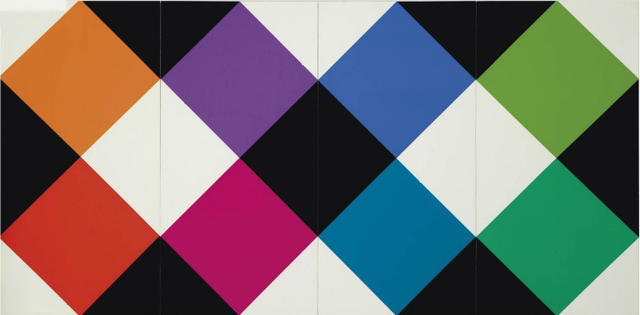
- High-purity propylene combined with fine fabric surfaces: In his paintings, he chooses acrylic paints with extremely high color purity and chemical stability. Through multiple smooth applications and sanding, he completely eliminates the granular texture of brushstrokes, making the picture present uniform color layers like a print. This extreme control over the flatness of the material ensures that the visual energy originates solely from the geometric logic itself, rather than from the physical accidents of the material.
 简体中文
简体中文  English
  日本語
日本語  Español
  Français
  हिन्दी
  العربية
  বাংলা
বাংলা  Português do Brasil
  Русский
  اردو
اردو  Bahasa Indonesia
  Deutsch
  Kiswahili
  मराठी
मराठी  తెలుగు
  Tiếng Việt
  Türkçe
  Italiano
  தமிழ்
தமிழ்  한국어
한국어