I. The Future Evolution of Geometric Abstract Art
In the context of artificial intelligence, the future evolution of geometric abstract art will not merely be an update of technical tools, but a comprehensive shift in creative logic, viewing methods, and the very concept of artistic structure. Past geometric abstract art emphasized order, proportion, rhythm, repetition, balance, and compositional relationships, with artists transcending natural representation through the precise organization of points, lines, planes, colors, and space, moving towards a highly rationalized visual language. Entering the era of artificial intelligence, this language will no longer be solely the product of human manual experience, sketch-based deduction, and intuitive correction, but will gradually develop into a “structure generation system involving human-machine co-creation.”
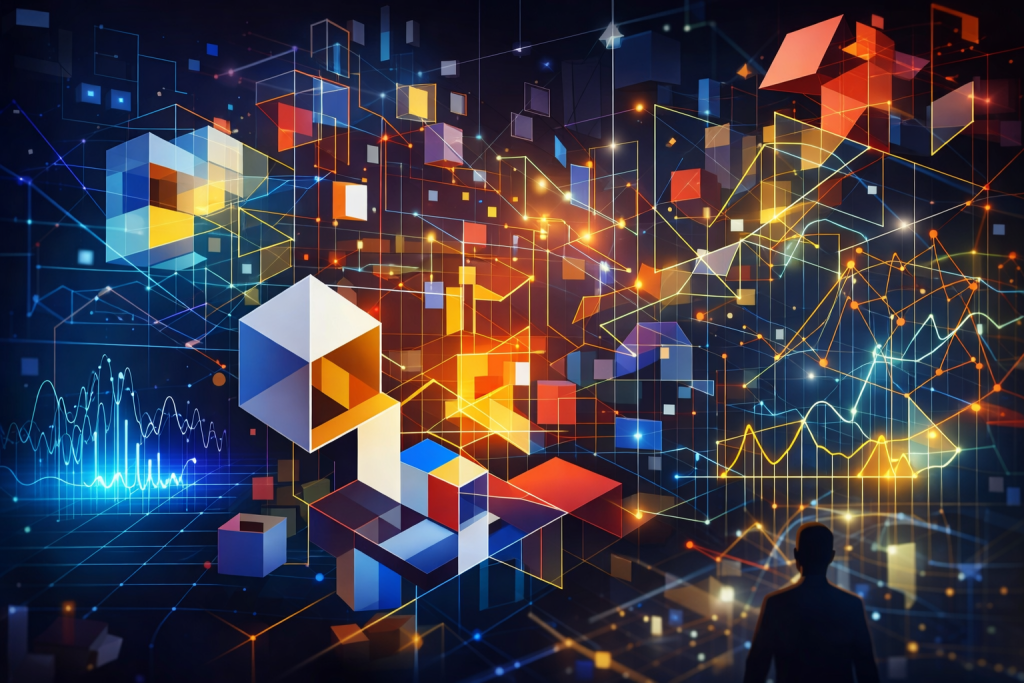
Future geometric abstract art will first move from “static composition” to “dynamic structure.” Traditional geometric abstraction often concludes with the finished artwork as the endpoint, where the image represents a fixed outcome of order. However, with the involvement of artificial intelligence, artworks will increasingly manifest as variable, evolving, and responsive systems. Geometric relationships will no longer be merely prearranged results but rather processes that can continuously change based on time, environment, data, sound, behavior, or even audience interaction. Consequently, geometric abstract art will transform from singular images into continuously generated visual mechanisms, with the core of the work being not just “what is painted,” but “how the structure operates.”
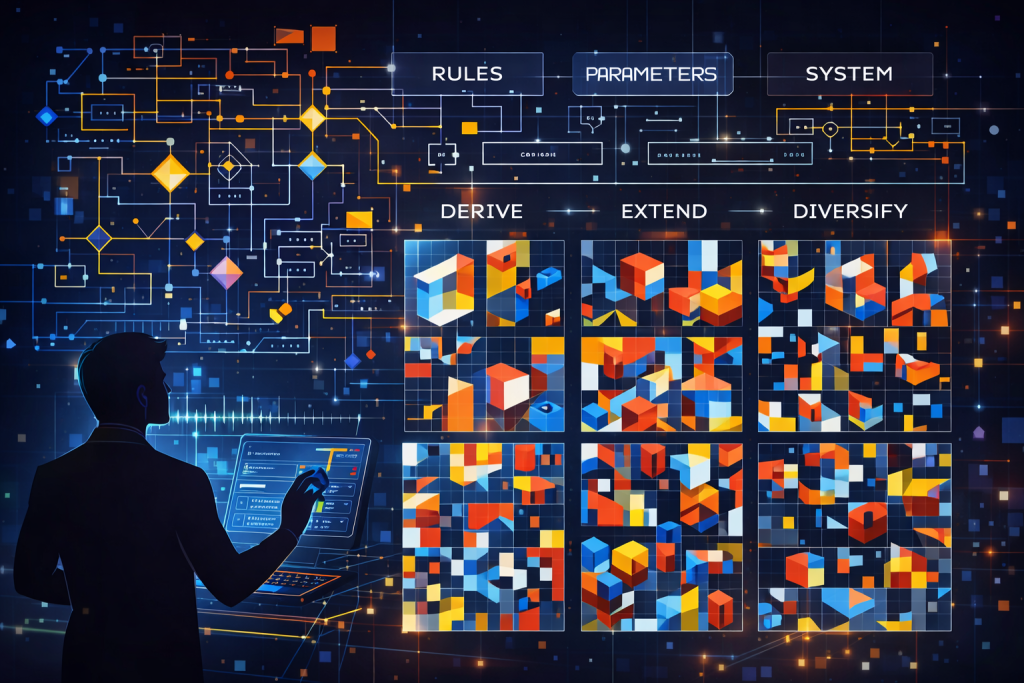
Second, geometric abstract art will move from “single author control” to “parametric and systematic creation.” In the future, artists will not necessarily decide the position of every line and color block themselves. Instead, they are more likely to establish a set of rules, boundaries, and aesthetic directions, and artificial intelligence will generate numerous variations within these conditions. The artist's role will shift from a direct depictor to a structure designer, rule maker, and result curator. The artwork will no longer be completed as a one-off piece but can continuously derive, expand, and differentiate around the same system. This development is actually highly consistent with the characteristics of geometric abstraction itself, which emphasizes order, logic, modules, and repetition, as artificial intelligence excels at processing rules, relationships, and extensive combinations, making it naturally suitable for entering the language of geometric abstraction.
Again, the view of color in future geometric abstract art will also change. The colors in traditional geometric abstraction are often highly restrained, used to strengthen structure, create balance, generate tension, or establish spatial hierarchy. After artificial intelligence intervenes, color will no longer be just intuitively configured but will become a computable, simulable, and predictable network of relationships. Future artists can more deeply study the distribution ratios of colors within geometric frameworks, adjacency relationships, warm-cool progressions, brightness rhythms, and visual weight. They can even use algorithms to simulate the effects of different color schemes on spatial perception, sense of movement, and emotional structure. This will further transform color from an “experiential aesthetic choice” into a “, verifiable, and generatable structural tool.”
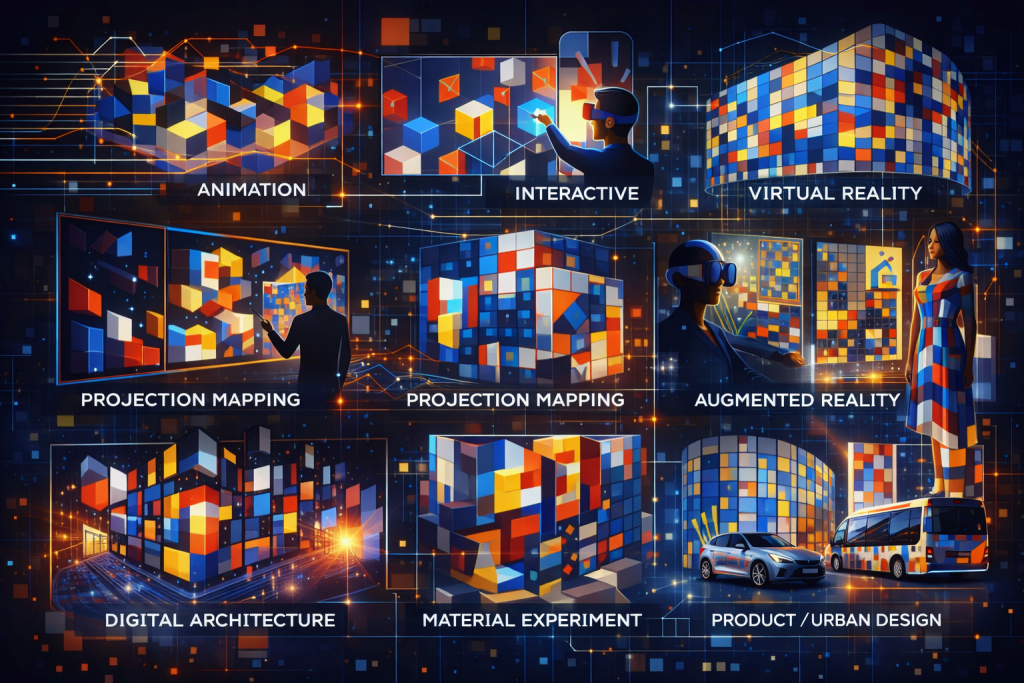
Furthermore, geometric abstract art will expand from two-dimensional planes to cross-media in the future. The development of artificial intelligence will drive geometric abstract art into fields such as animation, interactive installations, projection mapping, virtual reality, augmented reality, digital architectural skins, clothing patterns, material experiments, and spatial design. Geometric abstraction will no longer be confined to canvases but will become a visual system that can migrate across different media. Lines can become light trails, color blocks can become spatial interfaces, repetitive structures can become traversable environments, and modular relationships can even enter product design and urban visual systems. In other words, future geometric abstract art will be more like a “visual structural method” rather than just a painting style.
More importantly, AI will also drive geometric abstract art to re-examine “order” itself. Early geometric abstraction was often seen as a rational, pure, stable, and clear visual system, but in the future, this order may no longer be static and closed, but open, fluid, and multi-layered. AI can generate extremely complex arrangements, variations, and translations, allowing geometric order to evolve from simple grids to higher-dimensional network structures. Future geometric abstraction may still retain its rational characteristics, but this rationality will no longer be expressed solely through clear geometric boundaries, but rather through more complex, deeper, and more generative structural logic.
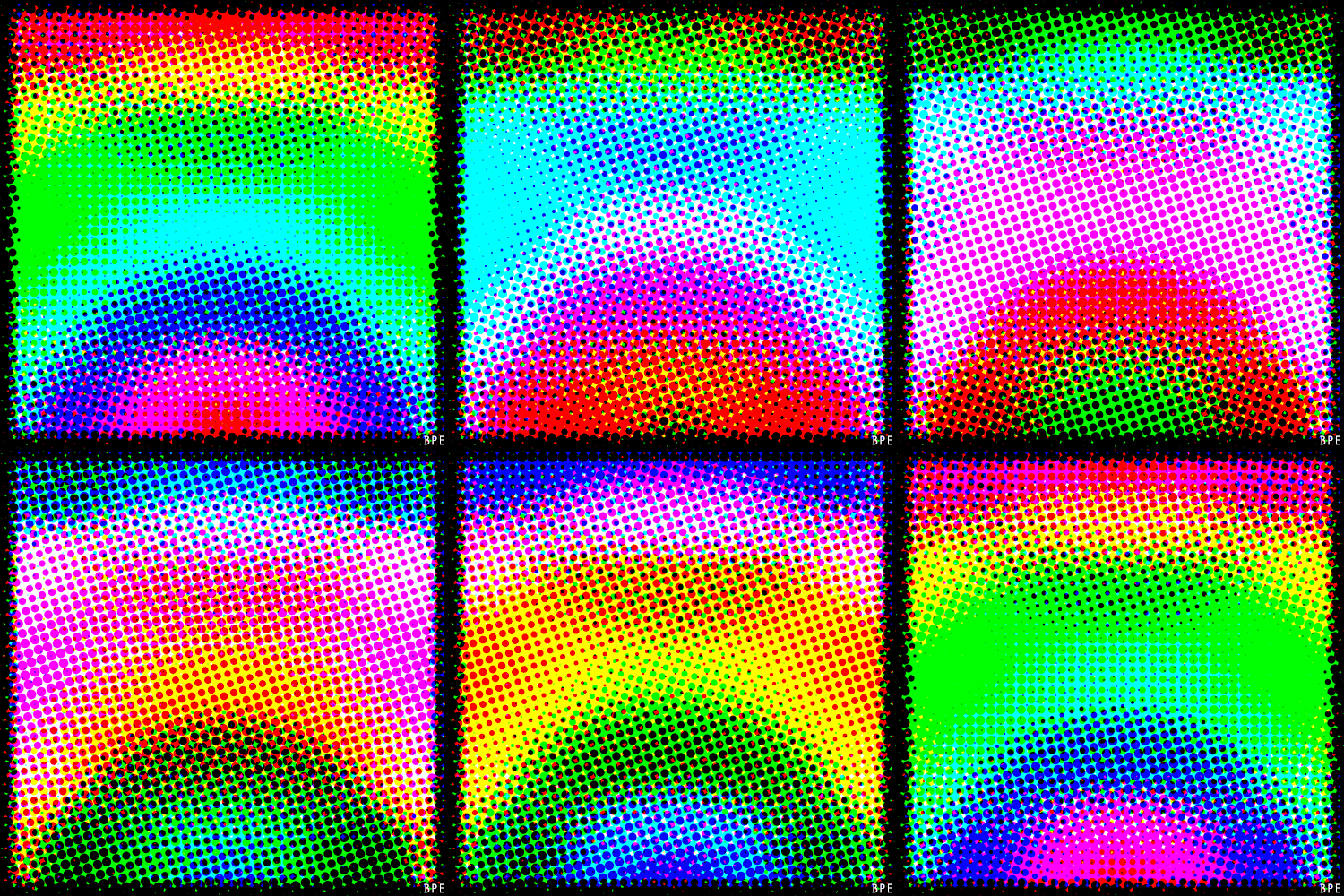
Lesson G1: The Future Evolution of Geometric Abstract Art Click to view Listen to reading
First, the future evolution of geometric abstract art, under the background of artificial intelligence, the future evolution of geometric abstract art will not just be an update of technical tools, but an overall shift in the logic of creation, the way of viewing and the concept of artistic structure. In the past, geometric abstract art emphasized order, proportion, rhythm, repetition, balance and compositional relationships, and artists through the precise organization of points, lines, surfaces, colors and space, so that the picture is detached from the natural reproduction, and turned to a highly rationalized visual language. After entering the age of artificial intelligence, this language will no longer be completed by human manual experience, sketch deduction and intuitive correction, but will gradually develop into a “structure generating system with the participation of man and machine”. The future of geometric abstraction will first move from “static composition” to “dynamic structure”. Traditional geometric abstraction mostly takes the finished picture as the end point, and the picture is the result of a fixed order; however, after the participation of artificial intelligence, the works will be more and more expressed as a changeable, evolvable and responsive system. Geometric relationships are no longer just arranged outcomes, but processes that can constantly change according to time, environment, data, sound, behavior, and even audience interaction. In this way, Geometric Abstract Art will be transformed from a single image to a continuously generated visual mechanism, where the core of the work is not just “what is painted” but “how the structure works”. Secondly, geometric abstract art will move from “single author control” to “parameterized and systematic creation”. In the future, the artist will not necessarily decide the position of each line and each color block, but will more likely establish a set of rules, boundaries, and aesthetic directions, and let artificial intelligence generate a large number of variants within these conditions. The role of the artist will shift from being a direct depictor to being a structural designer, rule maker, and results screener. The work is no longer just a one-time completion, but can be continuously derived, expanded and differentiated around the same system. Such a development is actually highly compatible with the characteristics of geometric abstraction itself, which emphasizes order, logic, modularity, and repetition, because AI is good at dealing with rules, relationships, and a large number of combinations, and it is naturally suited to enter the interior of the language of geometric abstraction. Again, the color view of future geometric abstract art will also change. Color in traditional geometric abstraction is often highly moderated and is used to reinforce structure, create balance, form tension or establish spatial hierarchy. With the intervention of artificial intelligence, color will no longer be just an intuitive configuration, but will become a network of relationships that can be calculated, simulated and predicted. Artists in the future will be able to study more deeply the distribution of color in a geometric framework, the relationship between neighbors, the advancement of warmth and coolness, the rhythm of lightness and the center of visual gravity, and even simulate the impact of different color schemes on the sense of space, movement and emotional structure through algorithms. This will make the color from “empirical aesthetic choice” further to “analyzable, verifiable, generative structural tools”. In addition, geometric abstraction will expand from flat to cross-media in the future. The development of Artificial Intelligence will push Geometric Abstraction into the fields of animation, interactive installations, projection mapping, virtual reality, augmented reality, digital architectural skins, clothing patterns, material experimentation and spatial design. Geometric abstraction will no longer be confined to the canvas, but will become a visual system that can migrate through different media. Lines can become light tracks, color blocks can become spatial interfaces, repetitive structures can become walkable environments, and modular relationships can even enter product design and urban visual systems. In other words, the future of geometric abstract art will be more like a “visual structural method” rather than just a painting style. More importantly, AI will also push geometric abstraction to rethink “order” itself. Early geometric abstraction was often seen as a rational, pure, stable, and clear visual system, but in the future, this order may no longer be static and closed, but open, fluid, and multi-layered. Artificial intelligence is capable of generating extremely complex permutations, mutations, and translations, allowing the geometric order to evolve from a succinct grid to a network of higher dimensional structures. Geometric abstraction in the future may still retain its rational character, but this rationality will no longer manifest itself only in clear geometric boundaries, but in more complex, deeper, and more generative structural logics.
 简体中文
简体中文  English
  日本語
日本語  Español
  Français
  हिन्दी
  العربية
  বাংলা
বাংলা  Português do Brasil
  Русский
  اردو
اردو  Bahasa Indonesia
  Deutsch
  Kiswahili
  मराठी
मराठी  తెలుగు
  Tiếng Việt
  Türkçe
  Italiano
  தமிழ்
தமிழ்  한국어
한국어