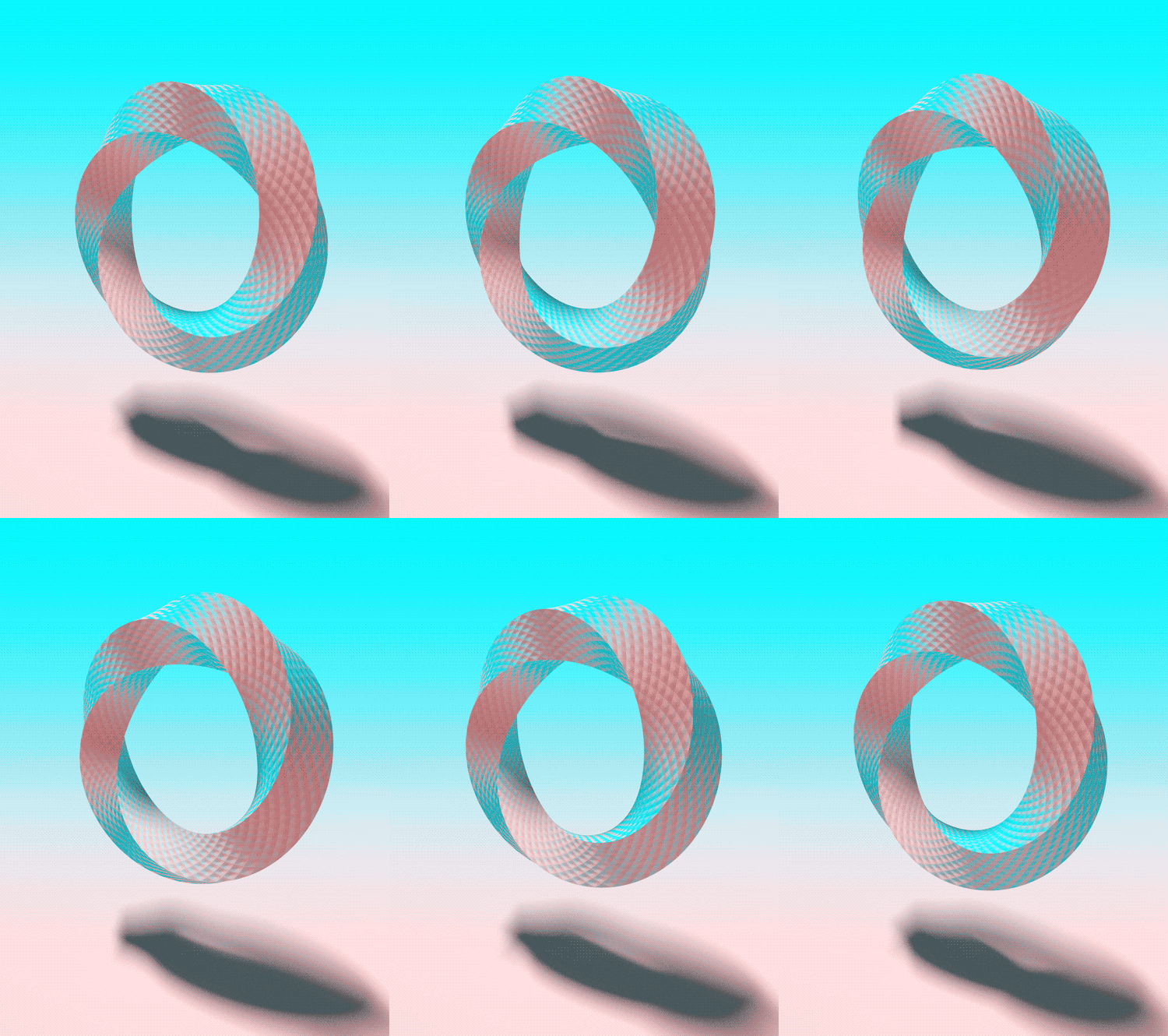
Furthermore, future geometric abstract art will expand beyond the two-dimensional plane to encompass cross-media. While traditional geometric abstraction has profoundly influenced painting, printmaking, murals, textiles, and design, its most typical mode of existence remains centered on the two-dimensional canvas: lines are arranged in two-dimensional space, color blocks are confined within the canvas boundaries, and the rhythm and order of the composition are primarily achieved through static visual perception. Whether it's the grid structure of Mondrian or the geometric order in Constructivism, Bauhaus, and hard-edge painting, they mostly rely on the "image" as their carrier, with the viewer's visual relationship to a fixed surface as their fundamental premise. In other words, although geometric abstraction has long emphasized structure, this structure has mostly remained within the two-dimensional plane, a formal organization compressed within a two-dimensional medium.
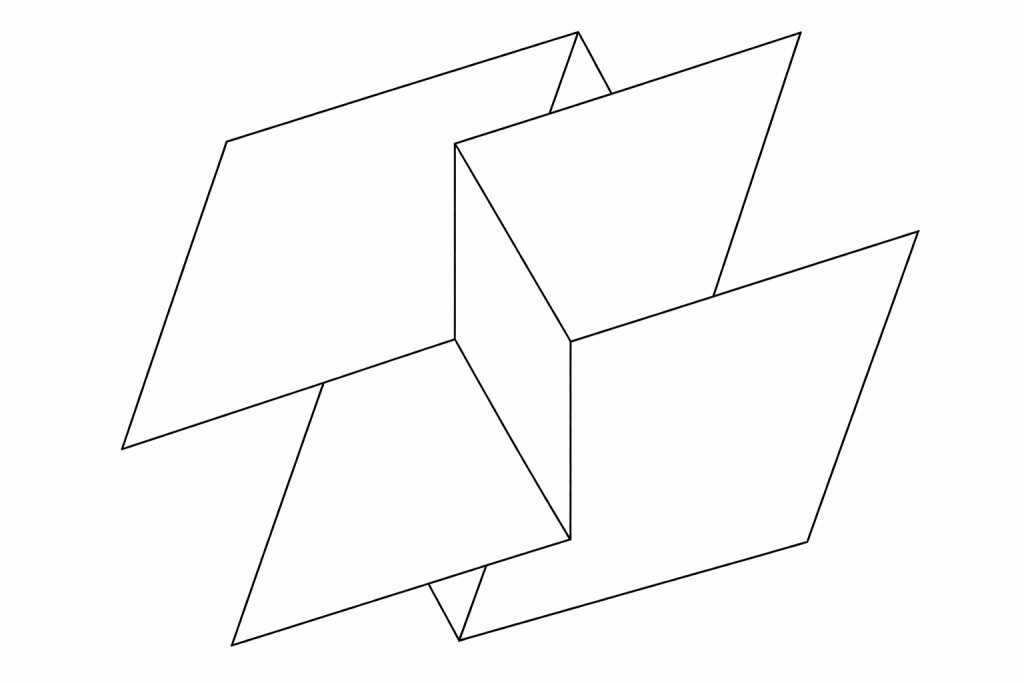
However, driven by the continuous development of artificial intelligence and digital technology, geometric abstract art will increasingly break through this boundary in the future, entering a wider range of media such as animation, interactive installations, projection mapping, virtual reality, augmented reality, digital building skins, clothing patterns, material experimentation, and spatial design. The most crucial change here is not merely an expansion of its application scope, but a transformation in the way geometric abstraction exists: it is no longer just an image on a canvas, but gradually becomes a visual system capable of migration, deformation, expansion, and responsiveness. In other words, the future importance of geometric abstraction lies not only in the patterns it presents, but also in its ability to serve as a structural method to enter different media and continuously generate new relationships in different environments.
First, animation and the medium of time imbue geometric abstraction with a true dynamic dimension. In the past, lines, planes, and repetitive relationships in a two-dimensional plane were static. In animation and generated images, however, lines can extend, rotate, fold, and split; color blocks can breathe, flow, advance, and recede; grids can continuously reorganize; and the proportional relationships between modules can transform with changing rhythm. Thus, geometric abstraction is no longer merely a "compositional result" but a "movement process." The role of artificial intelligence in this process is not just to assist in creating animation, but to help establish a set of rules that can continuously generate visual changes, ensuring that geometric relationships maintain order over time while constantly producing fresh formal states.
Secondly, interactive installations, projection mapping, and immersive spaces will shift geometric abstraction from a "viewed plane" to an "accessible environment." Future lines will not necessarily be merely drawn boundaries; they may become light trails in space. Future blocks of color will not be just rectangles covered in paint; they may become spatial interfaces that emit light, change, and respond to the viewer's movement. Repetitive structures will no longer be just rhythmic units on the canvas, but may become environmental systems that viewers can traverse, surround, and trigger changes in. Under these conditions, geometric abstraction will no longer be just the order seen by the eye, but also the order felt by the body. People will not only "see" geometric relationships, but "experience" them in space, which will greatly expand the perceptual scope of geometric abstract art.
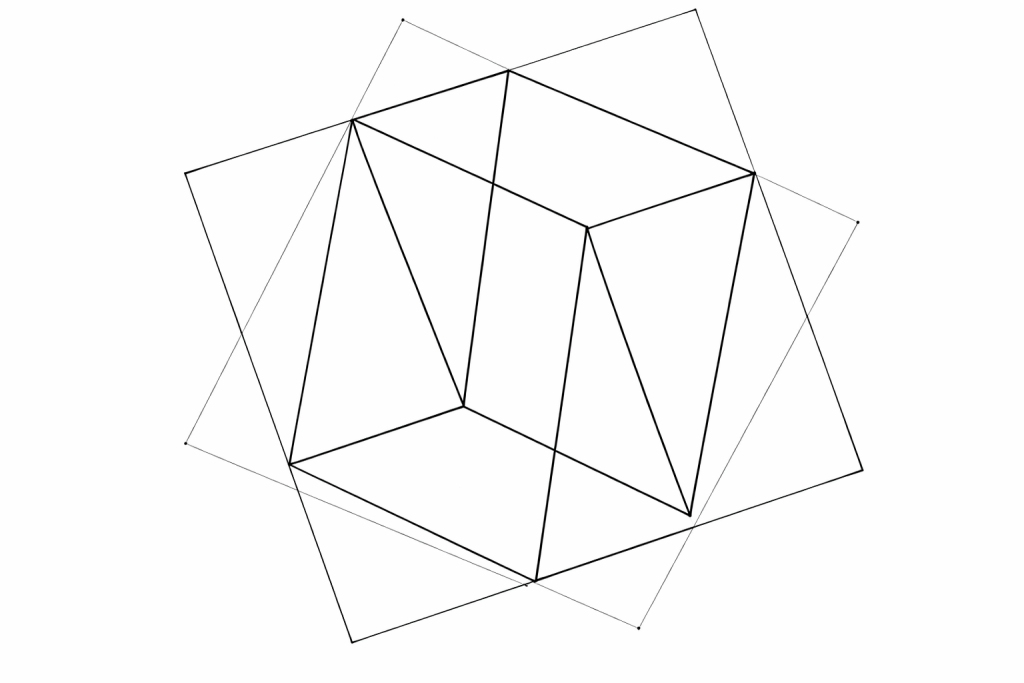
Furthermore, the development of virtual reality, augmented reality, and digital building skins will allow geometric abstraction to enter larger-scale spatial systems. In the past, the boundaries of a work of art mostly ended within the picture frame; in the future, geometric structures may cover entire building facades, enter urban nighttime lighting systems, or be superimposed on real spaces to form variable, enhanced visual layers. Building skins can generate different geometric patterns based on changes in sunlight, temperature, pedestrian flow, and data. Urban wayfinding systems can also absorb the modular logic of geometric abstraction, forming a public visual language with a sense of order and recognizability. In this way, geometric abstraction will no longer be just images in art galleries, but will enter real-life spaces and become part of the urban visual organization.
Meanwhile, geometric abstraction will penetrate deeper into clothing patterns, material experimentation, product design, and industrial interfaces. Because geometric abstraction emphasizes modularity, proportion, repetition, and relational transformation, these characteristics are naturally suited for transfer to fabrics, surfaces, structural components, and functional interfaces. Artificial intelligence can help designers quickly generate geometric variations of different scales, materials, and processes, allowing the same set of visual rules to achieve different expressions on media such as fabrics, plastics, metals, glass, wood, and optoelectronic materials. Thus, geometric abstraction will no longer just be "drawn," but will also be woven, cut, projected, printed, and assembled. It transforms from a pictorial language into a structural language that transcends materials, scales, and industries.
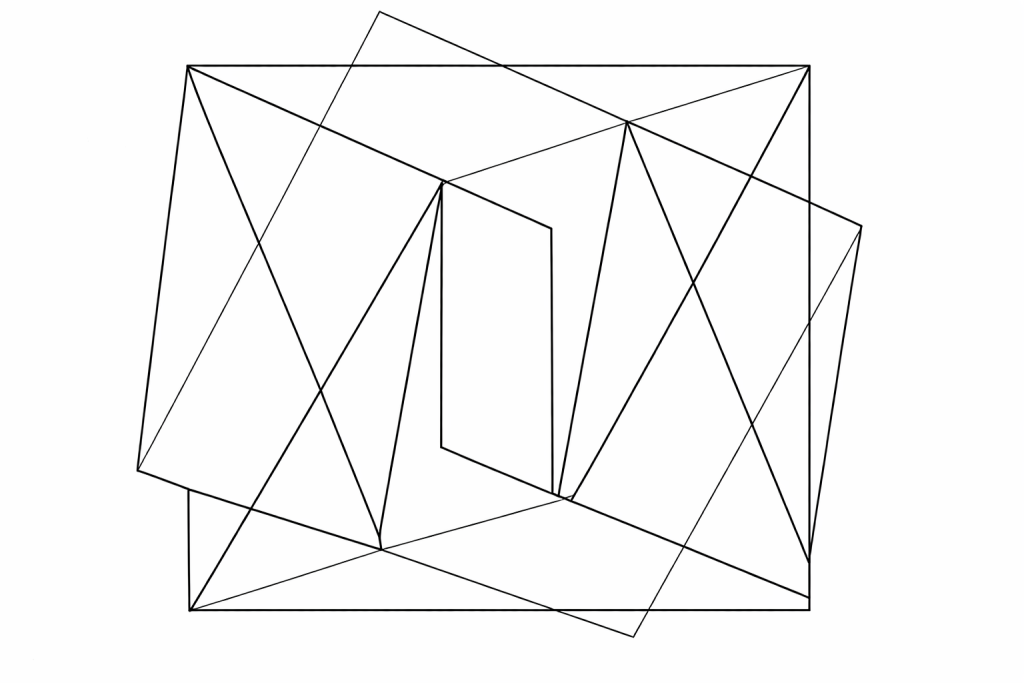
More importantly, this cross-media expansion will redefine the essence of geometric abstract art. Future geometric abstraction should no longer be understood merely as a painting style, but rather as a "visual structural approach." Its core is not just surface features like straight lines, squares, circles, or mixed color blocks, but rather how to establish a transferable system of relationships through proportion, rhythm, repetition, contrast, modularity, and order. Once this system of relationships is established, it can move from canvas to screen, from screen to space, from space to architecture, and from architecture to product and urban design. Artificial intelligence accelerates this transfer precisely because it can recalculate structures, adjust proportions, match materials, and simulate effects under different media conditions, allowing geometric abstraction to maintain its logical continuity during transformation.
Therefore, the future expansion of geometric abstract art from two-dimensional to cross-media is not simply a matter of "changing the medium," but rather the result of the full release of its inherent linguistic capabilities. Lines can become light, color blocks can become interfaces, repetition can become environments, and modules can become systems. Geometric abstraction is no longer confined to static compositions on a canvas, but will develop into a visual approach capable of continuous migration and generation in animation, installation, architecture, clothing, materials, and space. In the age of artificial intelligence, it will increasingly resemble a highly organized structural language, rather than merely a historical painting style.
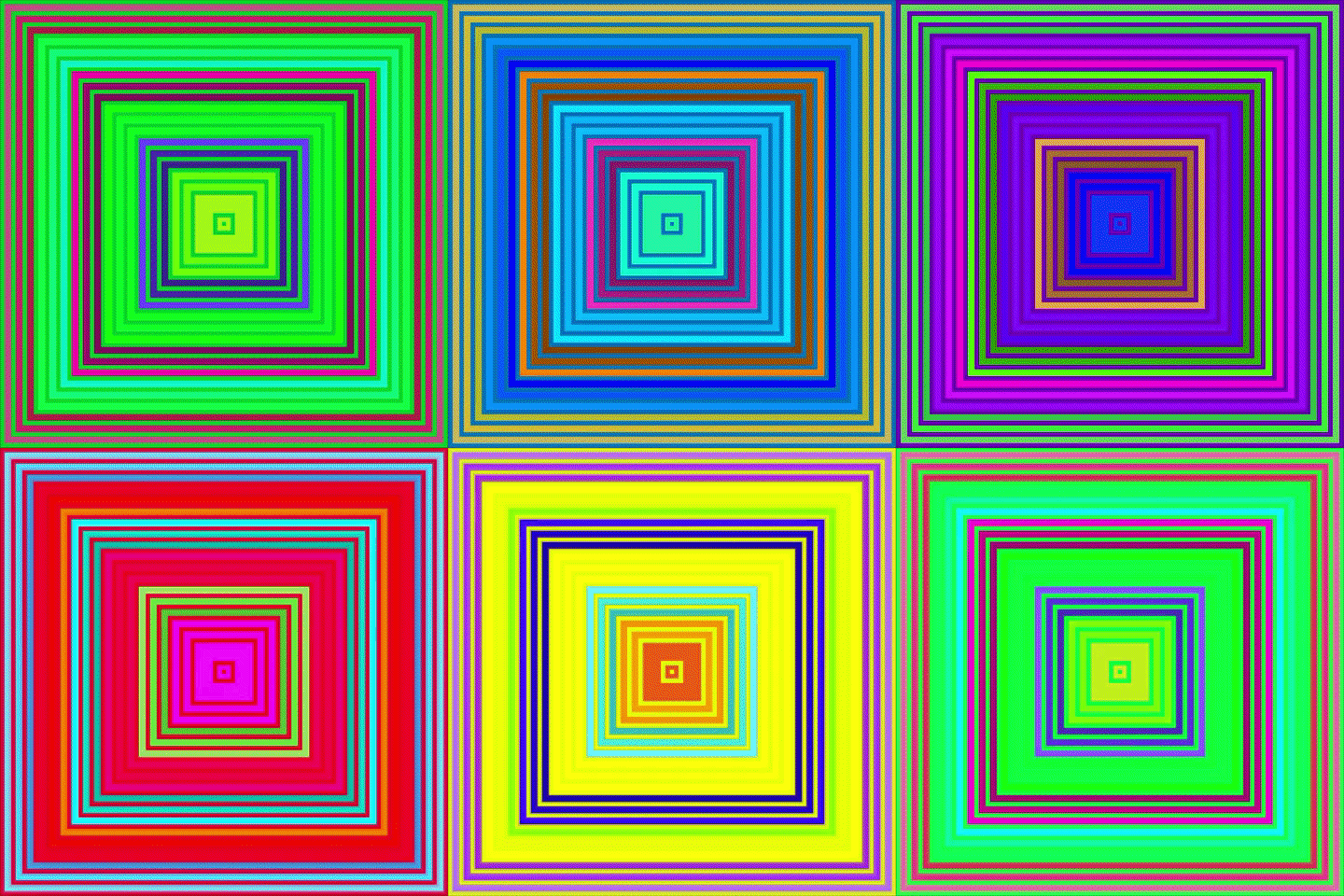
Lessons G2-4: Geometric Abstract Art: From Two-Dimensional to Cross-Media Expansion (Click to view and listen to the reading)
Furthermore, future geometric abstract art will expand beyond the two-dimensional plane to encompass cross-media. While traditional geometric abstraction has profoundly influenced painting, printmaking, murals, textiles, and design, its most typical form remains centered on the two-dimensional canvas: lines are arranged in two-dimensional space, color blocks are confined within the canvas boundaries, and the rhythm and order of the composition are primarily achieved through static visual perception. Whether it's the grid structure of Mondrian or the geometric order in Constructivism, Bauhaus, and hard-edge painting, they mostly rely on the "image" as their carrier, with the viewer's visual relationship to a fixed surface as their fundamental premise. In other words, although geometric abstraction has long emphasized structure, this structure has mostly remained within a two-dimensional plane, a formal organization compressed within a two-dimensional medium. However, driven by the continuous development of artificial intelligence and digital technology, geometric abstract art will increasingly break through this boundary in the future, entering a wider range of media such as animation, interactive installations, projection mapping, virtual reality, augmented reality, digital architectural skins, clothing patterns, material experimentation, and spatial design. The most crucial change here is not merely an expansion of its application scope, but a transformation in the very nature of geometric abstraction: it is no longer just an image on a canvas, but gradually becomes a visual system capable of migration, deformation, expansion, and responsiveness. In other words, the future importance of geometric abstraction lies not only in the patterns it presents, but also in its ability to serve as a structural approach that enters different media and continuously generates new relationships in different environments. First, animation and temporal media will give geometric abstraction a truly dynamic dimension. In the past, lines, blocks, and repetitive relationships in a two-dimensional plane were static, but in animation and generated images, lines can extend, rotate, fold, and split; color blocks can breathe, flow, advance, and recede; grids can be constantly reorganized; and the proportional relationships between modules can also transform with changes in rhythm. Thus, geometric abstraction is no longer just a "compositional result," but a "movement process." The role of artificial intelligence in this is not just to help create animations, but to help establish a set of rules that can continuously generate visual changes, allowing geometric relationships to maintain order in time while constantly generating fresh formal states. Second, interactive installations, projection mapping, and immersive spaces will shift geometric abstraction from a "viewed plane" to an "accessible environment." In the future, lines will not necessarily be merely drawn boundaries; they may become light trails in space. Color blocks will not be just rectangles covered in paint; they may become luminous, dynamic, and responsive spatial interfaces that react to the viewer's movement. Repetitive structures will no longer be just rhythmic units on the canvas, but may become environmental systems that viewers can traverse, surround, and trigger changes in. Under such conditions, geometric abstraction will no longer be just the order seen by the eye, but also the order felt by the body. People will not only "see" geometric relationships, but "experience" them in space, which will greatly expand the perceptual scope of geometric abstract art. Furthermore, the development of virtual reality, augmented reality, and digital building skins will allow geometric abstraction to enter larger-scale spatial systems. In the past, the boundaries of a work mostly ended within the picture frame; in the future, geometric structures may cover entire building facades, enter urban nighttime lighting systems, or be superimposed on real space to form variable, enhanced visual layers. Building skins can generate different geometric patterns based on changes in sunlight, temperature, pedestrian flow, and data; urban wayfinding systems can also absorb the modular logic of geometric abstraction to form a public visual language with a sense of order and recognizability. In this way, geometric abstraction will no longer be just images in art galleries, but will enter real-life spaces and become part of the urban visual organization. Simultaneously, geometric abstraction will also penetrate more deeply into clothing patterns, material experimentation, product design, and industrial interfaces. Because geometric abstraction emphasizes modularity, proportion, repetition, and relational transformation, these characteristics are naturally suited for transfer to fabrics, surfaces, structural components, and functional interfaces. Artificial intelligence can help designers quickly generate geometric variations of different scales, materials, and processes, allowing the same set of visual rules to achieve different expressions in media such as fabrics, plastics, metals, glass, wood, and optoelectronic materials. Thus, geometric abstraction will no longer just be "drawn," but will also be woven, cut, projected, printed, and assembled. It transforms from a painting language into a structural language that crosses materials, scales, and industries. More importantly, this cross-media expansion will redefine the essence of geometric abstract art. Future geometric abstraction should no longer be understood merely as a painting style, but rather as a "visual structural method." Its core lies not merely in surface features like straight lines, squares, circles, or composite color blocks, but in how to establish a transferable system of relationships through proportion, rhythm, repetition, contrast, modularity, and order. Once this system is established, it can move from canvas to screen, from screen to space, from space to architecture, and from architecture to product and urban design. Artificial intelligence accelerates this transfer because it can recalculate structures, adjust proportions, match materials, and simulate effects under different media conditions, allowing geometric abstraction to maintain its logical continuity during transformation. Therefore, the future expansion of geometric abstract art from two-dimensional to cross-media is not simply "changing the medium," but rather the result of its internal language capabilities being fully unleashed. Lines can become light, color blocks can become interfaces, repetition can become environments, and modules can become systems. Geometric abstraction is no longer confined to static compositions on canvas but will evolve into a visual method capable of continuous transfer and generation in animation, installation, architecture, clothing, materials, and space. In the age of artificial intelligence, it will increasingly resemble a highly organized structural language, rather than merely a historical painting style.
 简体中文
简体中文  English
  日本語
日本語  Español
  Français
  हिन्दी
  العربية
  বাংলা
বাংলা  Português do Brasil
  Русский
  اردو
اردو  Bahasa Indonesia
  Deutsch
  Kiswahili
  मराठी
मराठी  తెలుగు
  Tiếng Việt
  Türkçe
  Italiano
  தமிழ்
தமிழ்  한국어
한국어