6. Color completely conforms to geometric and system structure.
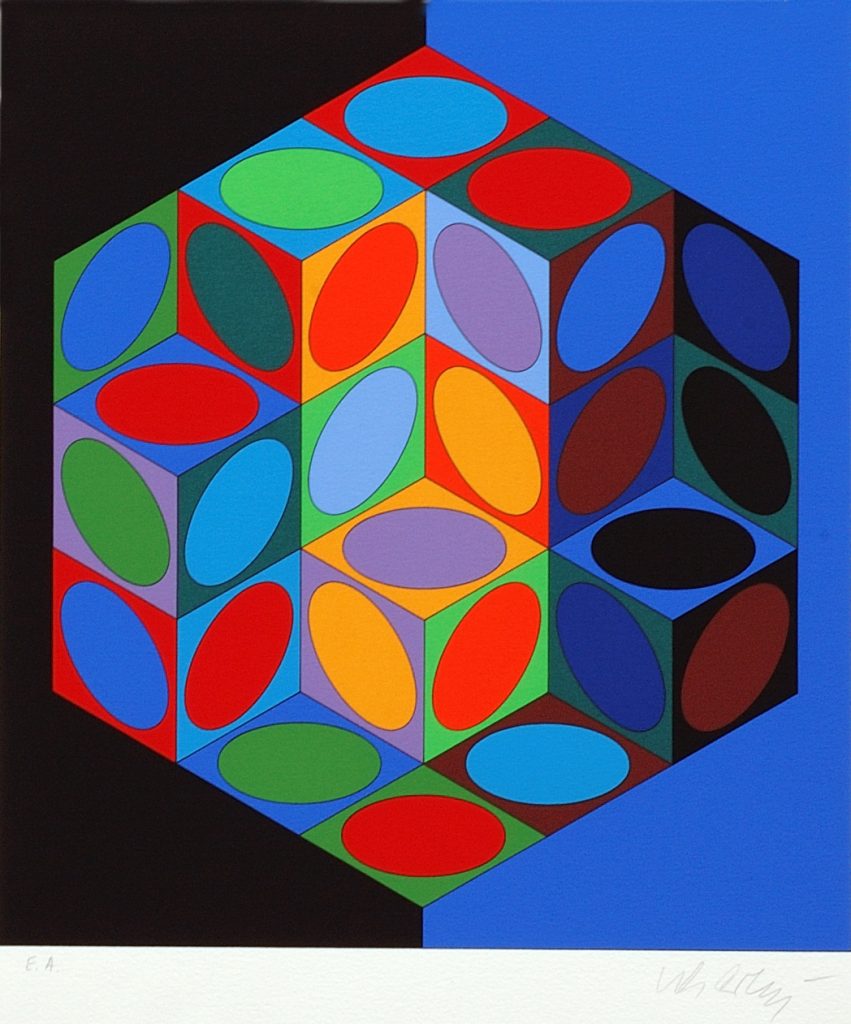
Victor Vasarely
In the development of 20th-century geometric abstract art, Victor Vasarely proposed a systematic concept of color. In his theoretical system, color was no longer regarded as a painting element that freely expresses emotions, but rather it must be subordinate to the geometric structure and the visual order of the overall system. In other words, color in a work does not exist independently, but participates in the operation of the visual system as part of the structure.
In traditional painting, artists often freely choose colors based on their personal feelings. Color is seen as an important medium for expressing emotions or personal style. However, Vasarely's creative philosophy attempts to break free from this subjectivity. He believes that modern visual art should be built on clear structural principles, and color must be consistent with geometric forms, proportional relationships, and the overall compositional system. Only when color is incorporated into a structural system can it play a true visual role.
Vasarely's work is typically based on strict geometric grids, such as repeating structures of squares, rhombuses, or rectangles. Within these grids, each color variation is not randomly arranged but precisely configured according to the overall system. The distribution of colors often follows certain rules, such as gradation, symmetry, or repetition. In this way, color becomes a structural element that can be organized and controlled.
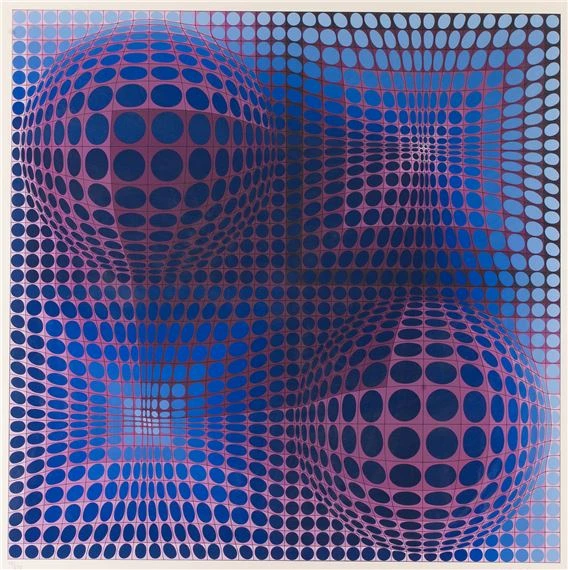
Victor Vasarely
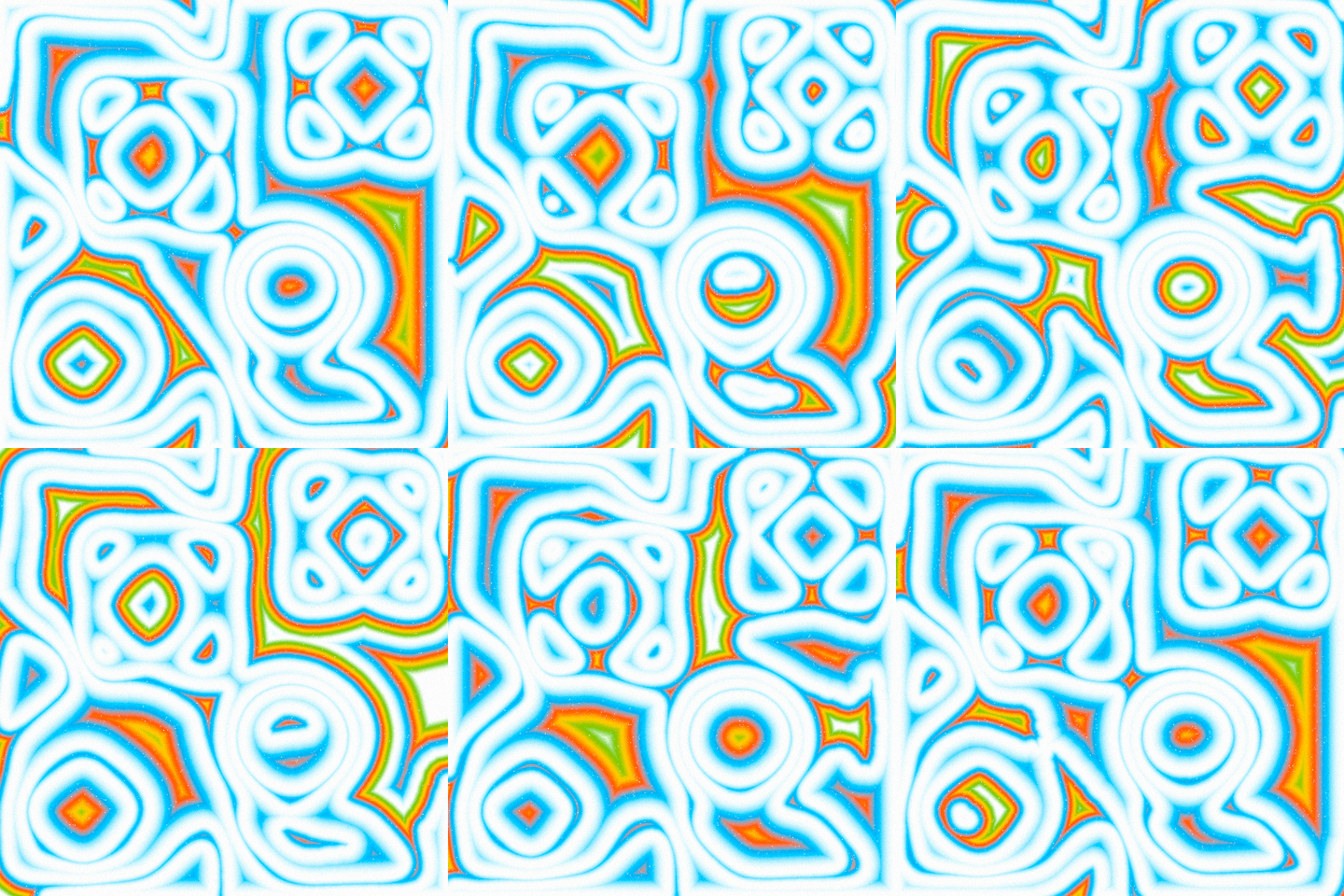
In this structural system, geometric shapes form the skeleton of visual order, while color becomes the force that activates this structure. When colors change according to certain rules within the grid, the image produces complex visual effects. For example, through gradual changes in color in the central area, the planar geometric structure appears to expand outward or contract inward. Although the image is actually completely flat, the relationship between color and structure creates the illusion of three-dimensional space for the viewer.
This effect illustrates that color, within Vasarely's system, does not exist independently but is determined by geometric structure. The position, contrast intensity, and manner of change of color must all conform to the logic of the overall system. Discussing color in isolation from structure makes it impossible to understand the visual mechanism of the work. Therefore, color here is a visual tool subordinate to structure.
Vasarely also proposed the idea of "programmable art." He believes that art can be organized through rules and structures, much like scientific systems. In this approach, geometric units and color modules can be combined like linguistic symbols. By changing their arrangement, a multitude of different visual effects can be generated. This systematic approach makes art less reliant on individual craftsmanship and more like a visual design structure.
In this system, color selection is often logical. For example, some areas use high-contrast colors to create visual tension, while other areas use similar colors to create continuous variation. All these arrangements must serve the overall geometric system, maintaining structural balance and visual order in the image. Color is no longer a free expression, but a result of structural logic.
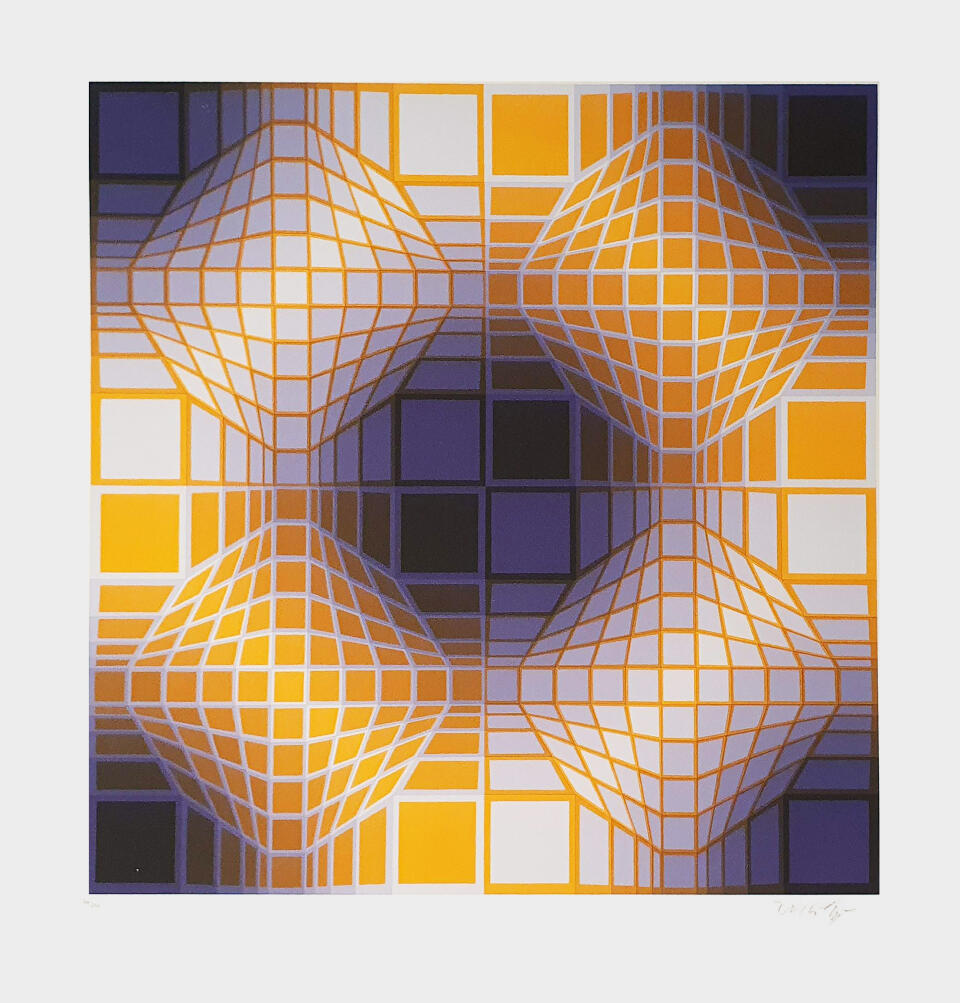
Victor Vasarely
This concept has had a profound influence on later visual arts and design. Many optical art works create dynamic visual effects by combining geometric structures with color systems. Viewers perceive the image as moving or distorting, and this sense of movement actually comes from the regular changes in color within the geometric structure.
On a deeper level, Vasarely's theory embodies a modernist visual philosophy: art can establish a universal language through systematic structure. In this language, geometric forms provide order, and color operates according to this order. Together, they constitute a complete visual system.
Therefore, in Victor Vasarely's color theory, color is not an independent tool of expression, but rather an element completely subordinate to geometric and systemic structures. It participates in the construction of visual order through structured distribution and regular variations, enabling simple geometric forms to produce rich and dynamic visual effects. It is within this structural logic that color acquires new meaning and becomes an important component of modern geometric abstract art.
Lesson C-6: Color Completely Subordinates to Geometry and System Structure (Click to view and listen to the reading)
In the development of 20th-century geometric abstract art, Victor Vasarely proposed a systematic concept of color. In his theory, color is no longer seen as a freely expressive element of painting, but must conform to the visual order of geometric structures and the overall system. In other words, color in a work does not exist independently, but participates in the operation of the visual system as part of the structure. In traditional painting, artists often freely choose colors based on personal feelings. Color is seen as an important medium for emotional expression or individual style. However, Vasarely's creative philosophy attempts to break free from this subjectivity. He believes that modern visual art should be built on clear structural principles, and color must be consistent with geometric forms, proportional relationships, and the overall compositional system. Only when color is incorporated into the structural system can it play a true visual role. Vasarely's works are usually based on strict geometric grids, such as repeating structures composed of squares, rhombuses, or rectangles. Within these grids, each color variation is not randomly arranged, but precisely configured according to the overall system. The distribution of colors often follows certain rules, such as gradation, symmetry, or repetition. Through this method, color becomes a structural element that can be organized and controlled. In this structural system, geometric shapes form the skeleton of visual order, while color becomes the force that activates this structure. When colors change according to certain rules within the grid, the image produces complex visual effects. For example, through gradual color changes in the central area, the planar geometric structure appears to expand outwards or contract inwards. Although the image is actually completely flat, the relationship between color and structure creates the illusion of three-dimensional space for the viewer. This effect illustrates that color in Vasarely's system is not independent but determined by the geometric structure. The position, contrast intensity, and mode of change of color must all conform to the logic of the overall system. Discussing color in isolation from structure makes it impossible to understand the visual mechanism of the work. Therefore, color here is a visual tool subordinate to structure. Vasarely also proposed the idea of "programmable art." He believed that art can be organized through rules and structures, like a scientific system. In this approach, geometric units and color modules can be combined like linguistic symbols. By changing the arrangement, a large number of different visual effects can be generated. This systematic approach makes art less reliant on individual craftsmanship and more like a visual design structure. In this system, color selection is often logical. For example, some areas use high-contrast colors to create visual tension, while other areas use similar colors to create continuous variations. All these arrangements must serve the overall geometric system, maintaining structural balance and visual order in the image. Color is no longer a free expression, but a result of structural logic. This concept has had a profound influence on later visual arts and design. Many optical art works produce dynamic visual effects through the combination of geometric structures and color systems. Viewers perceive the image as moving or distorting, and this sense of movement actually comes from the regular changes in color within the geometric structure. At a deeper level, Vasarely's theory embodies a modernist visual idea: art can establish a universal language through systemic structures. In this language, geometric forms provide order, and color operates according to this order. Together, they constitute a complete visual system. Therefore, in Victor Vasarely's color theory, color is not an independent tool of expression, but an element completely subordinate to geometry and systemic structure. It participates in the construction of visual order through structured distribution and regular changes, enabling simple geometric forms to produce rich and dynamic visual effects. It is within this structural logic that color acquires new meaning and becomes an important component of modern geometric abstract art.
 简体中文
简体中文  English
  日本語
日本語  Español
  Français
  हिन्दी
  العربية
  বাংলা
বাংলা  Português do Brasil
  Русский
  اردو
اردو  Bahasa Indonesia
  Deutsch
  Kiswahili
  मराठी
मराठी  తెలుగు
  Tiếng Việt
  Türkçe
  Italiano
  தமிழ்
தமிழ்  한국어
한국어