
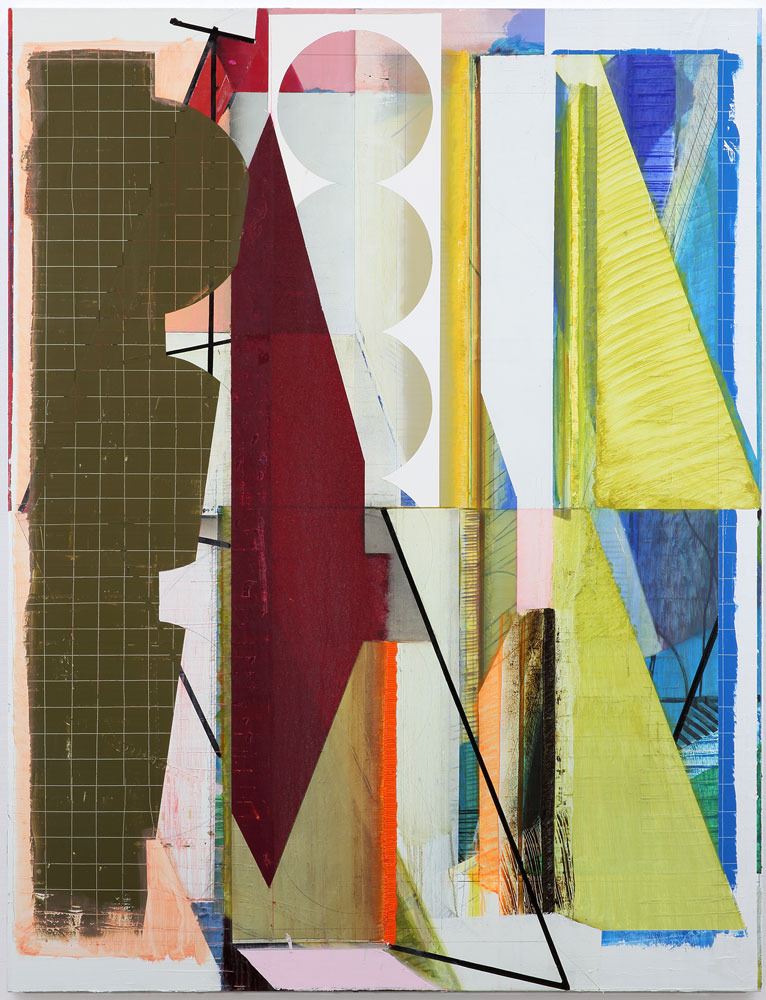
Similarities: The materialization of construction logic, and the deconstruction and reorganization of fictional architecture and space. Canadian artist Dil Hildebrand's work breaks down the balance between the painted surface and the illusion of three dimensions through the extraction of details from construction sites and the physical layering and polishing of multiple layers of oil paint. His methods are highly complementary to Arthur Dorval's geometric compositions in terms of "architectural space" and "depth of layers."
Creative methods: architectural construction-style drawing deduction and the logic of "windows"
Hildebrand's creative method is to simulate the act of painting as a construction process. The logic behind her work is not simply visual presentation, but a physical experiment in the ownership of space.
- “Topology experiment of "window" and frame: Hildebrand's core technique is using "windows" as the basic unit of composition. He simulates the window logic of architectural facades by setting up multiple overlapping rectangular frames within the image. This technique breaks down the single viewpoint of traditional landscape painting. Viewers are placed within a network of overlapping frames, unable to determine whether they are "looking outwards" or "looking at a hanging architectural blueprint." This method transforms flat geometry into physical barriers with "occlusion relationships," simulating the constantly fragmented and recombined perspectives of an urban environment.
- Physical sanding and erosion (Archaeological Sanding): His creative process involves extensive physical disruption of the paint layers. He first applies dozens of thick layers of paint, then uses sandpaper, scrapers, and other tools to locally refine the areas. This method breaks away from the additive nature of painting, instead pursuing a subtractive, archaeological depth. By revealing the underlying buried colors, he creates a texture similar to a weathered wall or a torn poster wall. This echoes Dorval's "incubation" logic—Dorval's approach is layering from the inside out, while Hildebrand's is excavation from the outside in.
- Fictional perspective and spatial collapse: Hildebrand uses contradictory perspective lines to construct an "impossible space." He places a completely flat color block next to a geometric block with a strong sense of depth. This technique forces a conflict into the brain's depth processing system. This manipulation of spatial parameters creates the dynamic illusion that the structure is collapsing or being built in an instant.
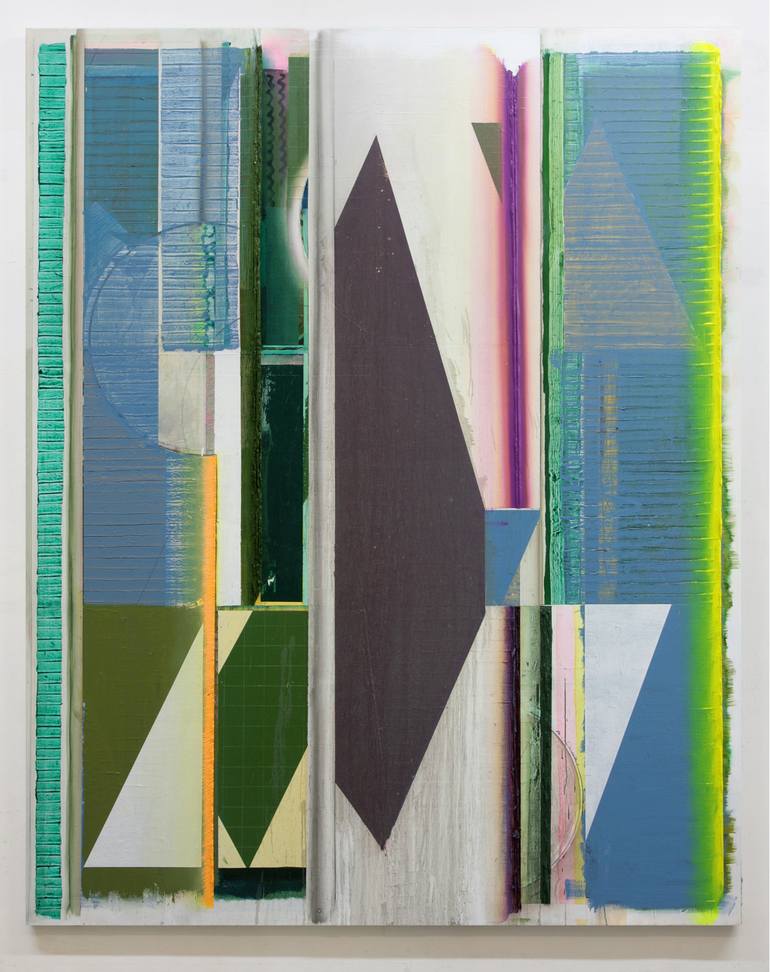
Stylistic characteristics: modernist ruins, theatricality, and tactile materials
Hildebrand's style presents a heavy, solemn visual quality with an industrial-age sense of mourning.
- Deconstruction of Modernism (Post-Modern Ruin): His style is a contemporary reflection on Le Corbusier's architectural aesthetics. A key stylistic feature is the "incompleteness" of his geometric structures. His paintings often depict what appear to be scaffolding, wooden supports, or unfinished walls. This stylistic characteristic establishes a critical point between "order" and "chaos" in his works. While possessing a mathematically rigorous composition, his paintings also exude an atmosphere of decay or demolition, reflecting the instability of human living space.
- Theatrical spatial depth: Hildebrand's work possesses a strong "set-like" quality. He utilizes strong contrasts of light and shadow (such as simulating powerful spotlight illumination) to define geometric edges. This stylistic feature imbues cold architectural components with dramatic tension. The viewer is no longer a bystander, but rather feels as if standing on the edge of a stage where "architectural history" is being rehearsed.
- Tactile balance of physical surfaces: Despite the extremely complex overall composition, Hildebrand excels at maintaining a balance between extreme flatness and rough impasto (thick paint). This sense of balance establishes the ambiguity between the work's identity as "image" and "object." This style contrasts with Dorval's lightness and transparency—Dorval pursues the flow of light, while Hildebrand pursues the density of rock-like matter.
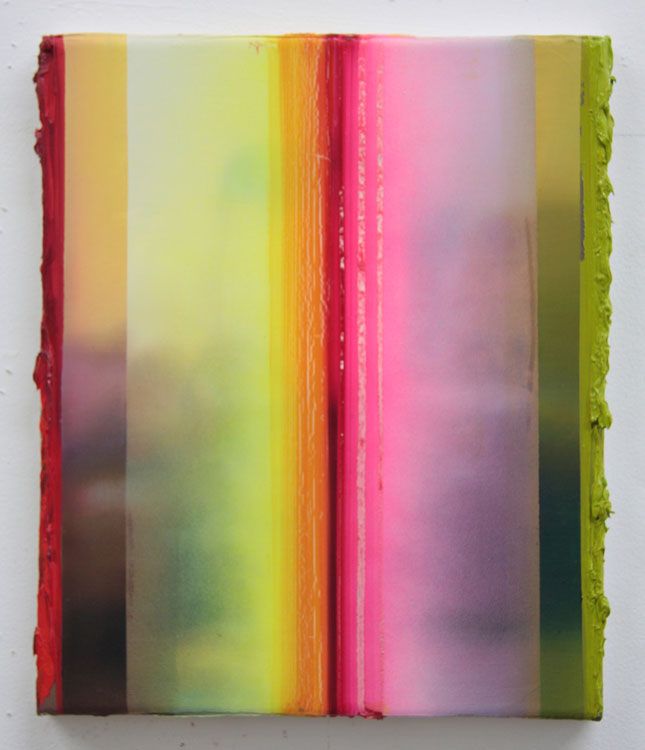
Material Application: The interplay between plaster textures, industrial paints, and organic solvents
Hildebrand demonstrates a keen sensitivity to the materials of a "construction site" in his choice of materials, viewing the canvas as a miniature geological fault.
- Layering of acrylic resin and gypsum (Gesso): He extensively uses high-density acrylic resin and traditional plaster base to achieve a physical texture similar to concrete or stucco walls. By pressing and scraping on the wet materials, he creates realistic physical undulations on the canvas surface. This method of material application transforms "painting" into "relief."
- Chemical abrasion of industrial solvents: Hildebrand often uses turpentine or other industrial solvents to locally dissolve dried paint layers. This technique breaks down the pigment's stability, creating a mottled effect similar to the shadows of a leaky building or the aftermath of a chemical reaction. This disruption of material stability ensures that the edges of each geometry bear the marks of time, rather than the coldness of a CNC machine.
- Combination of canvas and rigid back panel: To support the extremely heavy layers of paint and the pressures of construction (such as sanding), he typically chooses large canvases with extremely high strength and adds steel or heavy wooden frames. This reliance on a rigid substrate gives his works a wall-like physical weight in the exhibition space, forcing viewers to consider the irresistible materiality when perceiving the space.
 简体中文
简体中文  English
  日本語
日本語  Español
  Français
  हिन्दी
  العربية
  বাংলা
বাংলা  Português do Brasil
  Русский
  اردو
اردو  Bahasa Indonesia
  Deutsch
  Kiswahili
  मराठी
मराठी  తెలుగు
  Tiếng Việt
  Türkçe
  Italiano
  தமிழ்
தமிழ்  한국어
한국어