Definition of Geometric Abstract Art
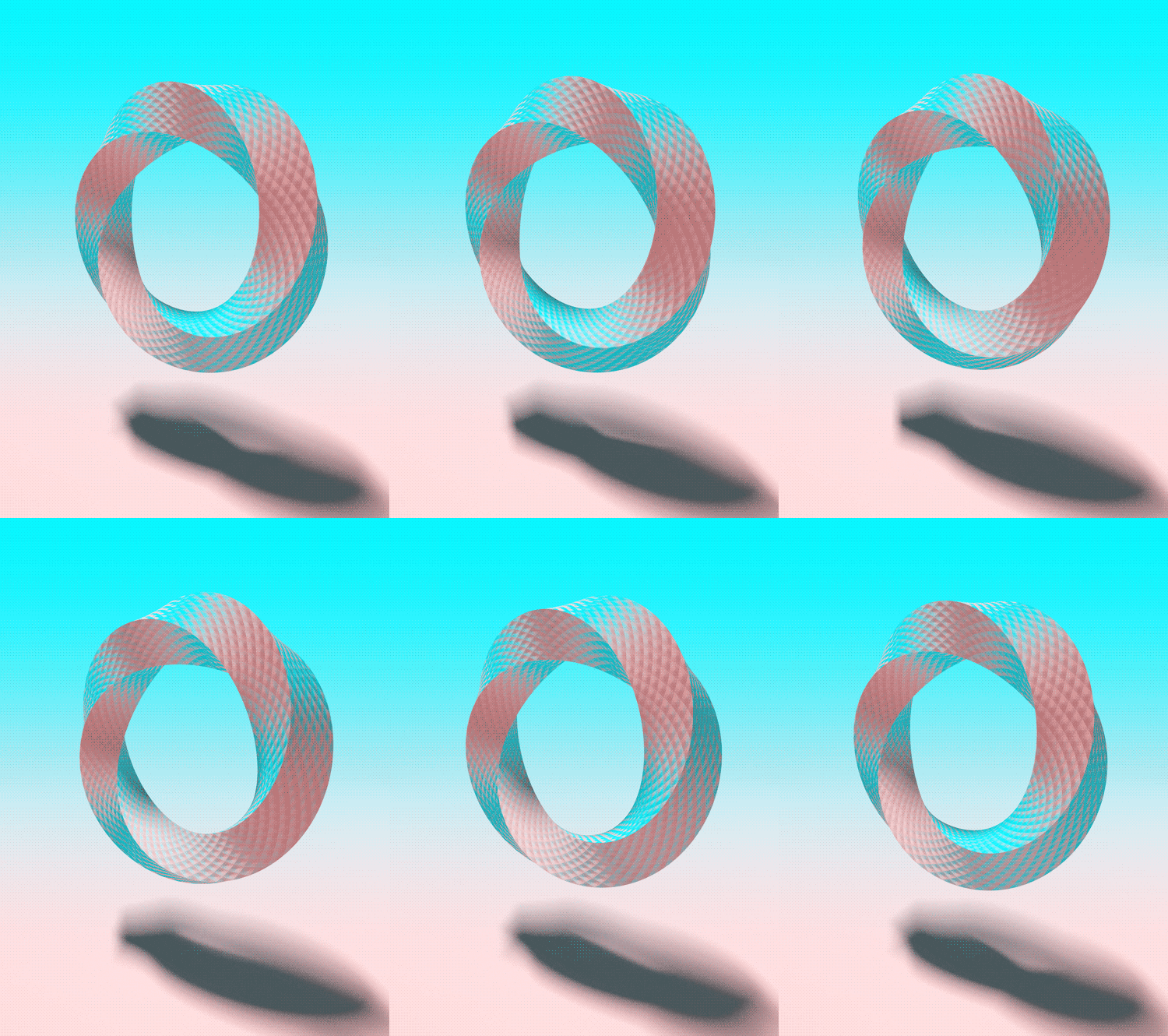
Geometric abstract art is a type of abstract art that uses geometric forms as its core expressive language. It does not aim to depict figures, landscapes, or specific objects from the natural world, but rather constructs visual meaning through points, lines, planes, proportions, rhythms, and spatial structures themselves. In this artistic system, shapes are no longer simplified symbols of real-world things but are considered independent visual units with their own order, tension, and logical relationships. Basic geometric forms such as circles, squares, triangles, and rectangles constitute the minimal elements of this language system. Through repetition, symmetry, superposition, displacement, and progression, they are organized into formal structures with intrinsic rhythms.
Josef Albers
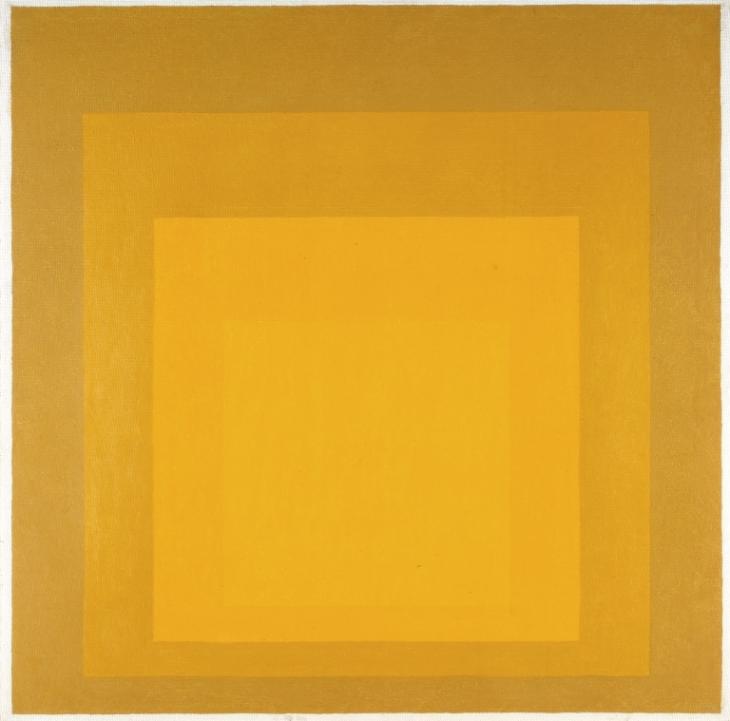
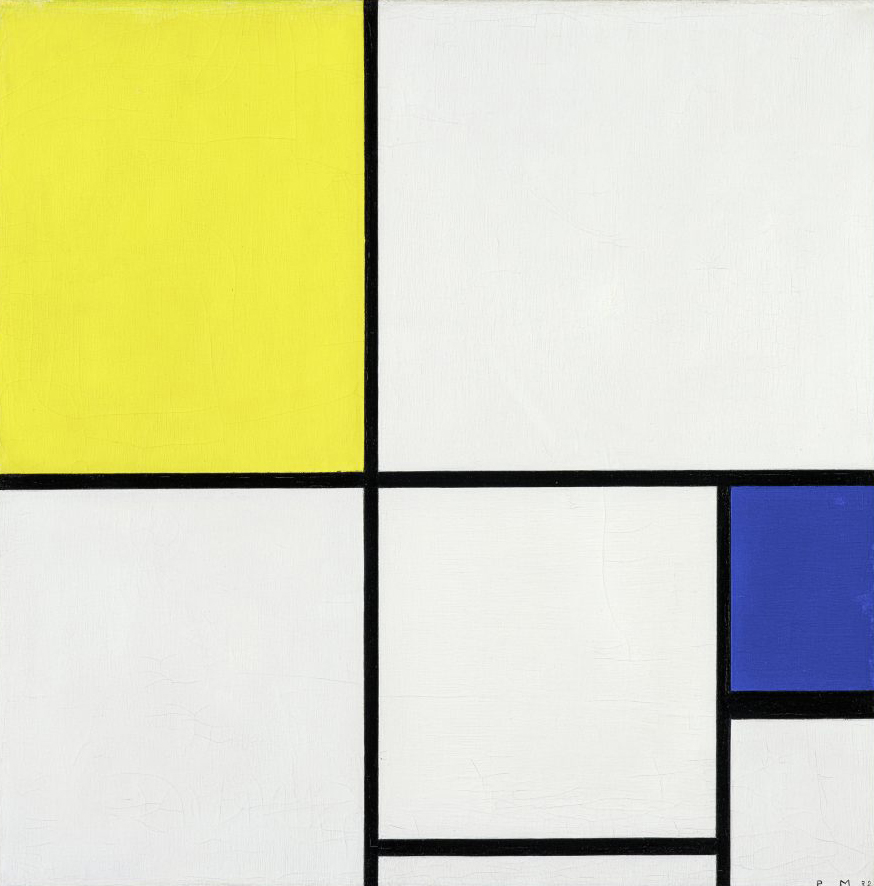
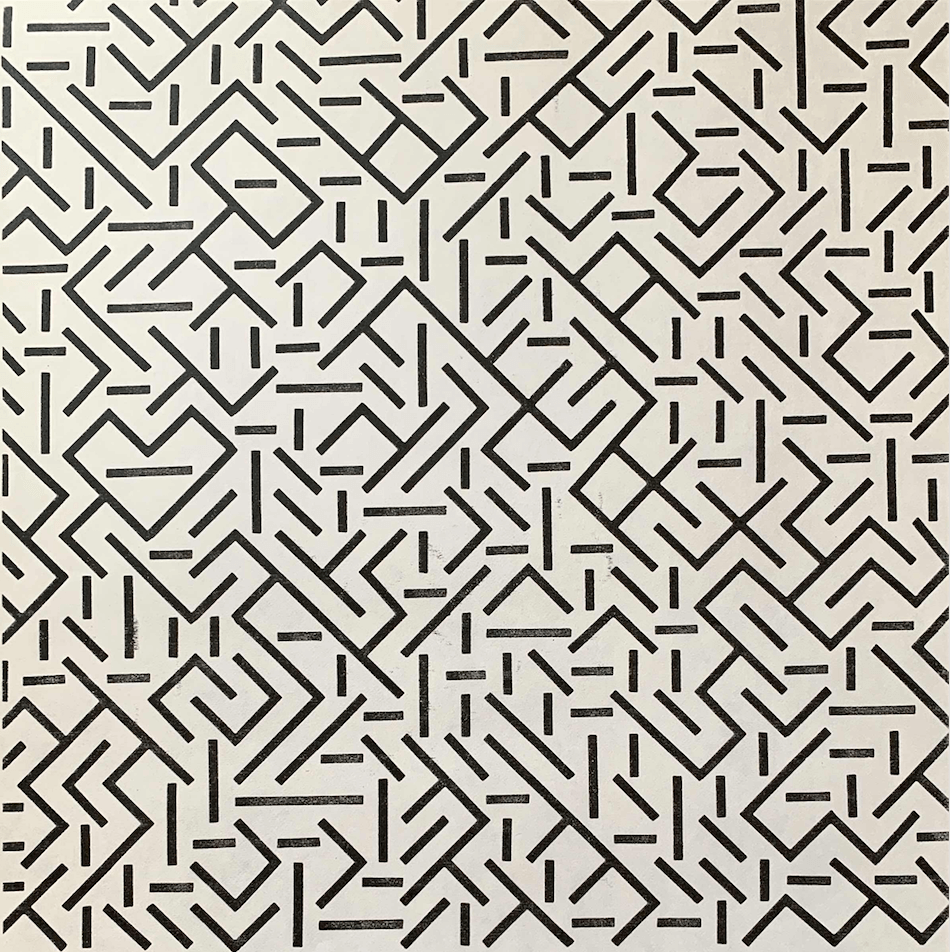
Unlike figurative painting, which relies on the external world as a reference, geometric abstract art's system of reference is internal. It is concerned not with what is depicted, but with how it is constructed. Lines in the composition no longer function to depict outlines; instead, they participate in the overall composition through their directional sense of speed and rhythm. Color no longer serves to represent light and shadow, but acts as a structural variable used to differentiate spatial levels, reinforce ordered relationships, or create visual tension. Texture, likewise, no longer imitates material touch, but is used to modulate the density and sense of rhythm in the artwork. Consequently, geometric abstract art forms a visual language system that departs from narrative logic, employing form itself as the carrier of meaning.
Mondrian
From a conceptual standpoint, geometric abstraction is not merely a decorative style but an artistic practice concerning order and rationality. It attempts to establish a perceivable structural order through minimal visual elements, allowing viewers to directly experience formal relationships constituted by balance, tension, and rhythm in a non-narrative context. This experience does not rely on specific subjects but on the perceptual system itself, thus possessing universal characteristics that transcend cultures and languages. It is in this sense that geometric abstraction is often considered a visual grammar rather than a painting genre of a specific subject matter.
Manfred Mohr
From a historical perspective, the rise of geometric abstract art is closely related to the context of modernity in the early 20th century. With the development of photographic technology, painting gradually lost its monopoly on representing reality, and artists began to rethink the intrinsic value of painting. Against this backdrop, geometric forms were elevated to an autonomous visual ontology, no longer subordinate to the simplification or decorative use of natural forms. Subsequently, geometric abstraction continuously evolved from individual spiritual exploration into systematized methodologies, and its influence has continued to expand in modern design, architecture, industrial aesthetics, and digital art.
In the contemporary context, geometric abstraction is no longer confined to static compositions but has gradually evolved into a computable, generatable, and mutable formal language. The introduction of algorithmic parametric design and artificial intelligence allows geometric forms to continuously change within rule-based systems, shifting the artist's role from form shaper to system designer. Consequently, geometric abstraction has transformed from a fixed style into an open visual mechanism, becoming an important bridge connecting art, science, and technology.
Lesson 2-1: Definition of Geometric Abstract Art (Click to view and listen to the reading)
Geometric abstract art is a type of abstract art that uses geometric forms as its core expressive language. It does not aim to depict figures, landscapes, or specific objects from the natural world, but rather constructs visual meaning through points, lines, planes, proportions, rhythms, and spatial structures themselves. In this artistic system, shapes are no longer simplified symbols of real-world objects but are considered independent visual units with their own order, tension, and logical relationships. Basic geometric forms such as circles, squares, triangles, and rectangles constitute the smallest elements of this language system. They are organized into formal structures with intrinsic rhythms through repetition, symmetry, superposition, displacement, and progression. Unlike representational painting, which relies on the external world as a reference, geometric abstract art's reference system is internal. It is concerned not with what is depicted, but with how it is constructed. Lines in the composition no longer serve the function of outlining; instead, they participate in the overall composition through their directionality, sense of speed, and rhythm. Colors no longer serve to represent light and shadow but act as structural variables, used to differentiate spatial levels, reinforce order, or create visual tension. Texture no longer imitates material touch but is used to modulate the density and sense of rhythm in the artwork. Thus, geometric abstract art forms a visual language system that departs from narrative logic, using form itself as the carrier of meaning. From a conceptual perspective, geometric abstraction is not merely a decorative style but an artistic practice concerned with order and reason. It attempts to establish a perceptible structural order through minimalist visual elements, allowing viewers to directly experience the formal relationships composed of proportion, balance, tension, and rhythm in a non-narrative context. This experience does not rely on specific themes but on the perceptual system itself, thus possessing universal, cross-cultural, and cross-linguistic characteristics. It is in this sense that geometric abstraction is often considered a visual grammar rather than a painting type of a specific subject matter. Historically, the rise of geometric abstract art is closely related to the context of modernity in the early 20th century. With the development of photography, painting gradually lost its monopoly on representing reality, and artists began to rethink the inherent value of painting. In this context, geometric forms were elevated to an autonomous visual ontology, no longer subordinate to the simplification or decorative use of natural forms. Subsequently, geometric abstraction evolved from individual spiritual exploration into systematized methodologies, and its influence has continued to expand in modern design, architecture, industrial aesthetics, and digital art. In contemporary contexts, geometric abstraction is no longer limited to static compositions but has gradually evolved into a computable, generatable, and evolvable formal language. The introduction of algorithmic parametric design and artificial intelligence allows geometric forms to continuously change within rule-based systems, and the artist's role shifts from form shaper to system designer. Thus, geometric abstraction has transformed from a fixed style into an open visual mechanism, becoming an important bridge connecting art, science, and technology.
 简体中文
简体中文  English
  日本語
日本語  Español
  Français
  हिन्दी
  العربية
  বাংলা
বাংলা  Português do Brasil
  Русский
  اردو
اردو  Bahasa Indonesia
  Deutsch
  Kiswahili
  मराठी
मराठी  తెలుగు
  Tiếng Việt
  Türkçe
  Italiano
  தமிழ்
தமிழ்  한국어
한국어