Introduction:
By Liu Yingzhao
I've been in the United States for over twenty years. When you're immersed in the vast ocean of contemporary art, no matter how passionate your preference for traditional art may be, you can't remain indifferent to contemporary art, especially to the artist's restless heart that constantly craves innovation. I have over twenty years of teaching experience in middle and high schools and universities in both China and the United States. Passing on the knowledge I possess has become an almost innate professional instinct.
Starting in 2015, I began systematically preparing teaching materials for contemporary geometric abstract art. Before doing anything, referring to the experiences of others is usually a rational and efficient starting point. In this era of information explosion, keywords such as “contemporary,” “geometric abstract art,” “curriculum,” “lesson plan,” “manual,” and “reference book” should, in theory, easily lead to mature results. However, when I entered these terms into search engines, the results were deeply disappointing – globally, I could find almost no truly practical, referential, or actionable teaching books or materials on geometric abstract art. Even today, after using the most advanced AI platforms for retrieval, the results remain the same. This is the primary reason I decided to publish "A Practical Manual for Contemporary Geometric Abstract Art Creation."
After preparing relevant teaching materials for more than two years, I officially launched the Contemporary Geometric Abstract Art course in 2017. Students came from all over the country, including many teachers and professors at Chinese universities. To my astonishment, the vast majority of them had hardly any knowledge of contemporary geometric abstract art, let alone understood that it is one of the most important categories in contemporary art. Some had even never heard the term “geometric abstract art.” This constitutes the second reason for my publishing this book.
From an art historical perspective, Picasso's Cubism emerged around 1907, foreshadowing the historical inevitability of geometric abstract art. Subsequently, Futurism and works by the Russian avant-garde showed increasingly apparent geometric tendencies. In the 1910s, Dutch artist Piet Mondrian, with his flattened, segmented geometric language, marked the official arrival of geometric abstract art on the historical stage. To this day, this art form has a development history of over a hundred years. After entering the digital age, with the advent of digital generative technologies, parametric design, and artificial intelligence, geometric abstract art is undergoing profound changes and is set to usher in a revolutionary structural reshaping.
However, contemporary art was introduced to China in the 1980s after the Reform and Opening Up. For Chinese artists today, forms such as lyrical abstraction, abstract expressionism, and political pop have long lost their initial sense of novelty and impact. On the contrary, geometric abstract art, as one of the important categories of contemporary art, has not yet entered the mainstream of Chinese art education and creation in a systematic and large-scale manner. This historical absence constitutes the third reason for publishing this book.
From 2026 to 2030, artificial intelligence will profoundly reshape how humans work, learn, and create. Art is also on the verge of continuous disruption and reconstruction. Future geometric abstract art will no longer be confined to static canvases and single compositions, but will evolve into generative, evolving, and real-time responsive dynamic forms. Geometry will cease to be merely the result of fixed proportions and compositional rules, transforming into a system of relationships describable by code. It will unfold across time through algorithms, parameters, and iterative mechanisms. The artist's role will shift from a direct shaper of form to a designer of rules and systems. They will set initial conditions, boundary constraints, and evolutionary logic, allowing the artwork to grow, deform, and differentiate on its own during its execution. This shift will not only alter how artworks are presented but also fundamentally change the ontology of creation itself, elevating geometric abstraction from static imagery to a continuously generative linguistic mechanism.
Today's world hardly has any true information barriers. Powerful artificial intelligence has made the acquisition of knowledge unprecedentedly rapid and equal. People can access almost everything they want to know in an instant. However, it is precisely in this era of “information overload” that what is truly scarce is no longer the information itself, but structured knowledge that is organized by systems, can be directly applied, and can be transformed into practical abilities. I believe that "A Practical Manual for Contemporary Geometric Abstract Art Creation" was born out of this context. It is not only a practical textbook for art but also the first guide to geometric abstract art practice that systematically utilizes artificial intelligence for collaborative creation.
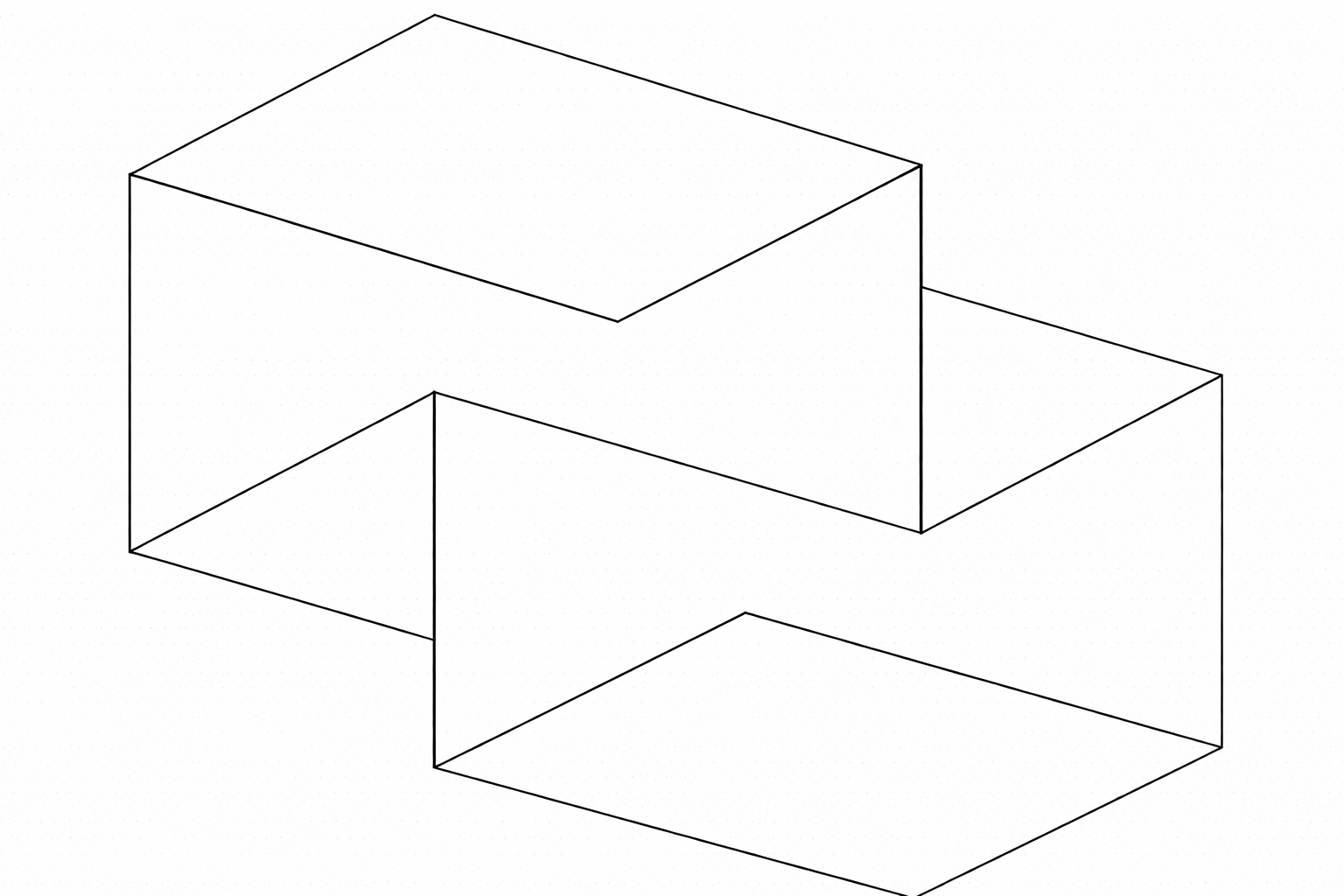
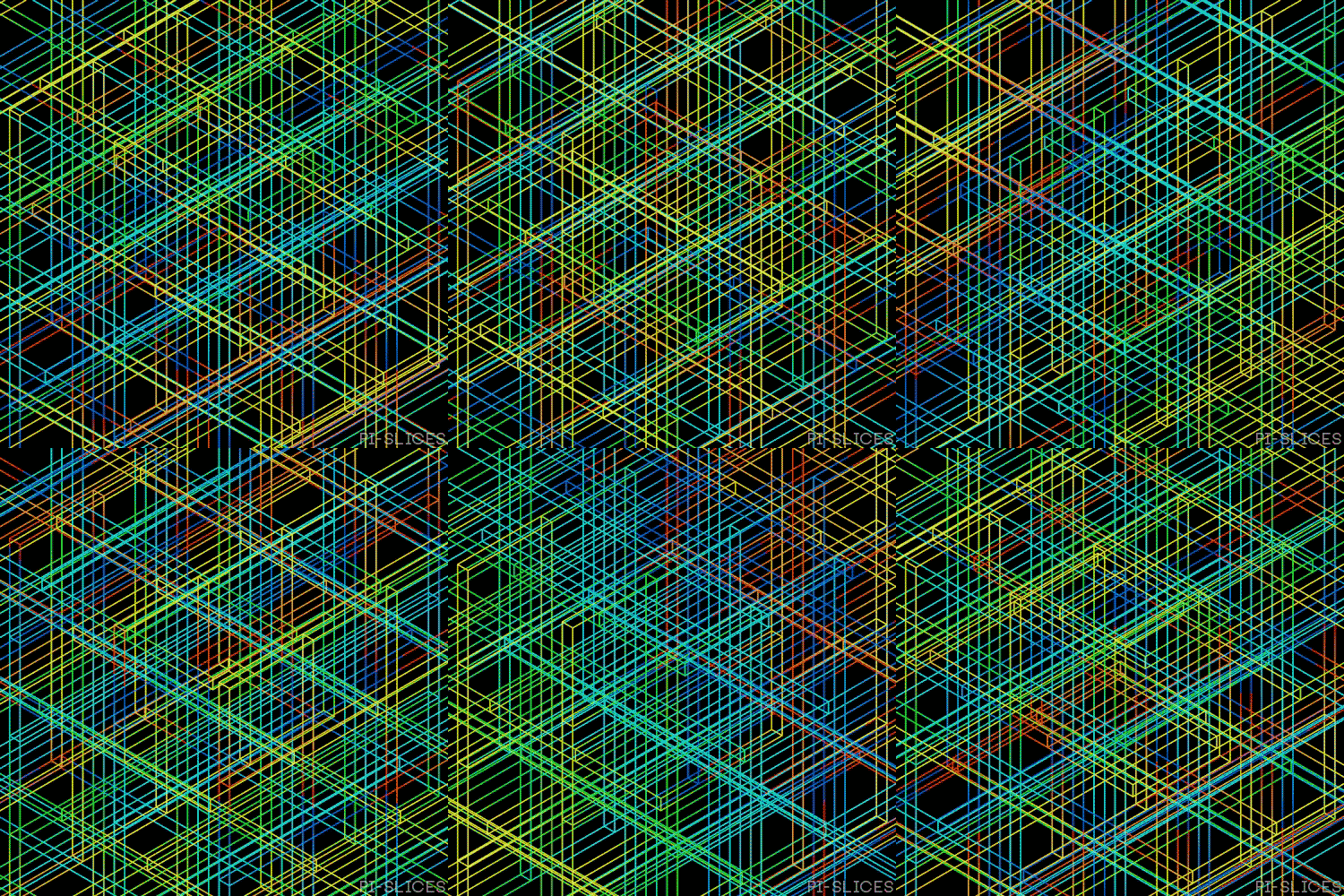
I hope it can guide Chinese artists to re-understand the meaning of “creation” under the condition of artificial intelligence—not to be replaced by technology, but to learn to work collaboratively with intelligent systems, stimulating an active desire for future creative methods. At the same time, I also hope it can mobilize the practical enthusiasm of creators worldwide who love geometric abstract art, allowing artists from different cultural backgrounds to enter a dialogue-able and expandable creative framework through the same set of methodologies. This AI geometric abstract art creation manual is not intended as a conceptual manifesto, but as a set of hands-on operational guides and technical pathways, providing clear and executable steps from parameter settings and rule construction to generation logic and aesthetic control. I hope it can provide truly affordable, practical, beneficial, and accessible creative resources for contemporary artists globally, helping more creators overcome technological and cognitive barriers and enter an art production system with generative systems at its core, oriented towards the future.
Introduction: Click to listen
It has been more than twenty years since I came to the United States. When you are in the midst of the sea of contemporary art, no matter how much you favor traditional art, you will never be indifferent to contemporary art, especially to the artist's heart that is always restless and eager for renewal. With more than twenty years of teaching experience in high schools and universities in China and the U.S., it has become almost an intrinsic professional instinct for me to pass on the knowledge I have acquired to others. Since 2015, I have been systematically preparing lesson plans for teaching contemporary geometric abstract art. Referring to others“ experiences before doing anything is usually a rational and efficient starting point. In this age of information explosion, ”contemporary“, ”geometric abstract art“, ”teaching materials“, ”lesson plans“, ”manuals“, ”handbooks“, ”manuals“, and so on. ”manuals,“ ”tools,“ and so on, it should be extremely easy to retrieve proven results. However, when I typed these words into a search engine, I was dismayed by the results that came up - I could hardly find a single book or textbook on geometric abstract art that was truly practical, referential, and actionable on a global scale. Even today, when I search again with the help of a state-of-the-art artificial intelligence platform, the results remain the same. This is precisely the first reason why I decided to publish A Practical Handbook for Creating Contemporary Geometric Abstract Art. After preparing relevant teaching materials for more than two years, I officially opened the Contemporary Geometric Abstract Art course in 2017. Participants came from all over China, including many teachers and professors teaching in Chinese universities. I was shocked to learn that the vast majority of them had little or no knowledge of contemporary geometric abstract art, let alone that it is one of the most important disciplines in contemporary art, and some had never even heard of the concept of ”geometric abstract art“. This is the second reason why I published this book. From the perspective of art history, Picasso's Cubism, which appeared around 1907, signaled the historical inevitability of the emergence of geometric abstract art. Subsequently, the works of Futurism and Russian avant-garde successively showed obvious geometric tendencies, and in the 1910s, the Dutch artist Pierre Mondrian marked the formal appearance of geometric abstract art on the stage of history with his planarized and segmented geometric language. To date, this art form has had a development history of more than one hundred years. After entering the digital era, with the emergence of digital generation technology, parametric design and artificial intelligence, geometric abstract art is undergoing profound changes and will accelerate to usher in a revolutionary structural remodeling. However, contemporary art was introduced to China in the 1980s after the reform and opening up, and forms such as Lyrical Abstraction, Abstract Expressionism, and Political Pop have long since lost their initial strangeness and impact on today's Chinese artists. On the contrary, geometric abstract art, as one of the important categories of contemporary art, has not yet entered the mainstream of Chinese art education and creation in a systematic and large-scale way. This historical absence constitutes the third reason for the publication of my book. From 2026 to 2030, artificial intelligence will profoundly reshape the way humans work, learn and create, and art is at the tipping point of being continuously subverted and reconstructed. The geometric abstract art of the future will no longer be confined to static canvases and single compositions, but will shift to dynamic forms that can be generated, evolved and responded to in real time. Geometry will no longer be the result of fixed proportions and compositional rules, but will become a system of relationships that can be described by code, unfolding over time through algorithms, parameters and iterative mechanisms. The role of the artist will also change from a ”direct shaper of forms" to a "designer of rules and systems", setting initial conditions, boundary constraints, and evolutionary logic to allow the work to grow, deform, and differentiate on its own. This shift not only changes the presentation of the works, but also changes the ontological structure of the creation itself, making geometric abstraction leap from a static image to a continuously generated language mechanism. In today's world, there is almost no longer any real information barrier, and the powerful artificial intelligence makes the access to knowledge unprecedentedly fast and equal. People have instant access to almost everything they want to know. But it is in this era of "information overload" that the real scarcity is no longer in the material itself, but in the structured knowledge that is systematically organized, can be directly applied, and can be transformed into practical ability. In my opinion, "A Practical Handbook of Contemporary Geometric Abstract Art Creation" was born in this context. It is not only a practical art textbook, but also the first practical guide to geometric abstract art created systematically and collaboratively with the help of artificial intelligence. I hope that it can guide Chinese artists to re-understand the meaning of "creation" under the condition of AI - not to be replaced by technology, but to learn to work with intelligent systems, and to stimulate the active desire for future creation. At the same time, I also hope that it will mobilize the practice of geometric abstract art creators all over the world, so that artists from different cultures can enter into a dialogical and scalable creative framework through the same methodology. This AI Geometric Abstract Art Creation Manual is not a conceptual manifesto, but a set of direct-to-hand operating guidelines and technical paths, providing clear and executable steps from parameter setting, rule construction to generative logic and aesthetic control. I hope it can provide contemporary artists around the world with truly affordable, practical, useful and accessible creative resources, and help more creators cross the technical and cognitive thresholds to enter a future-oriented art production system centered on the generation system.
 简体中文
简体中文  English
  日本語
日本語  Español
  Français
  हिन्दी
  العربية
  বাংলা
বাংলা  Português do Brasil
  Русский
  اردو
اردو  Bahasa Indonesia
  Deutsch
  Kiswahili
  मराठी
मराठी  తెలుగు
  Tiếng Việt
  Türkçe
  Italiano
  தமிழ்
தமிழ்  한국어
한국어