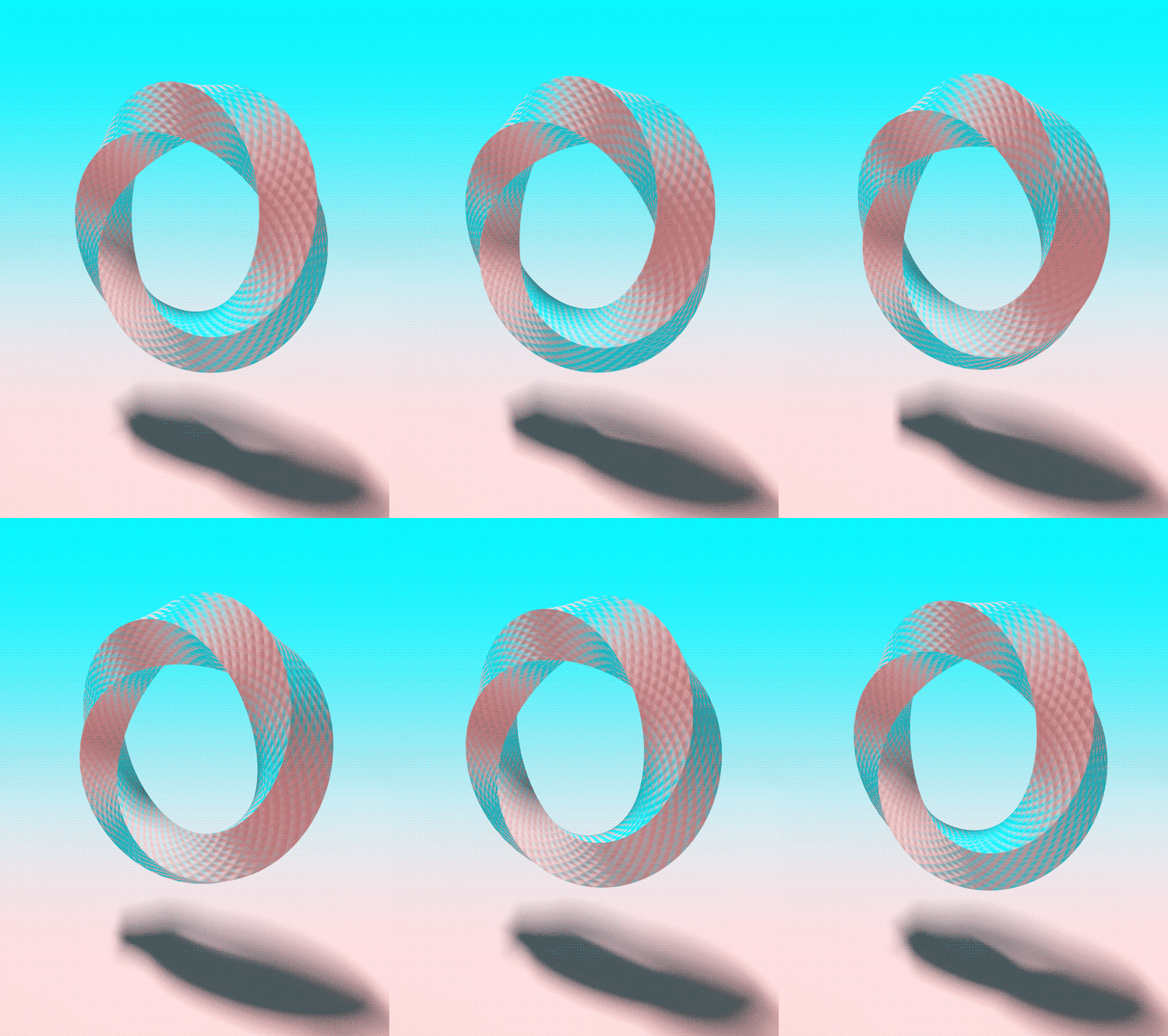
E1. Core Purpose
Nuclear will expand geometric abstract art from a single “picture object” into a comprehensive practice form within a deployable material system, process flow, and production system. This shift means that geometric abstraction will no longer exist solely on screens or canvases, but can enter the real-world manufacturing chain, transforming into real product forms that can be replicated, customized, scaled, and commercialized, such as installation art, architectural facades, textile patterns, digital prints, spatial furnishings, and interactive media interfaces.
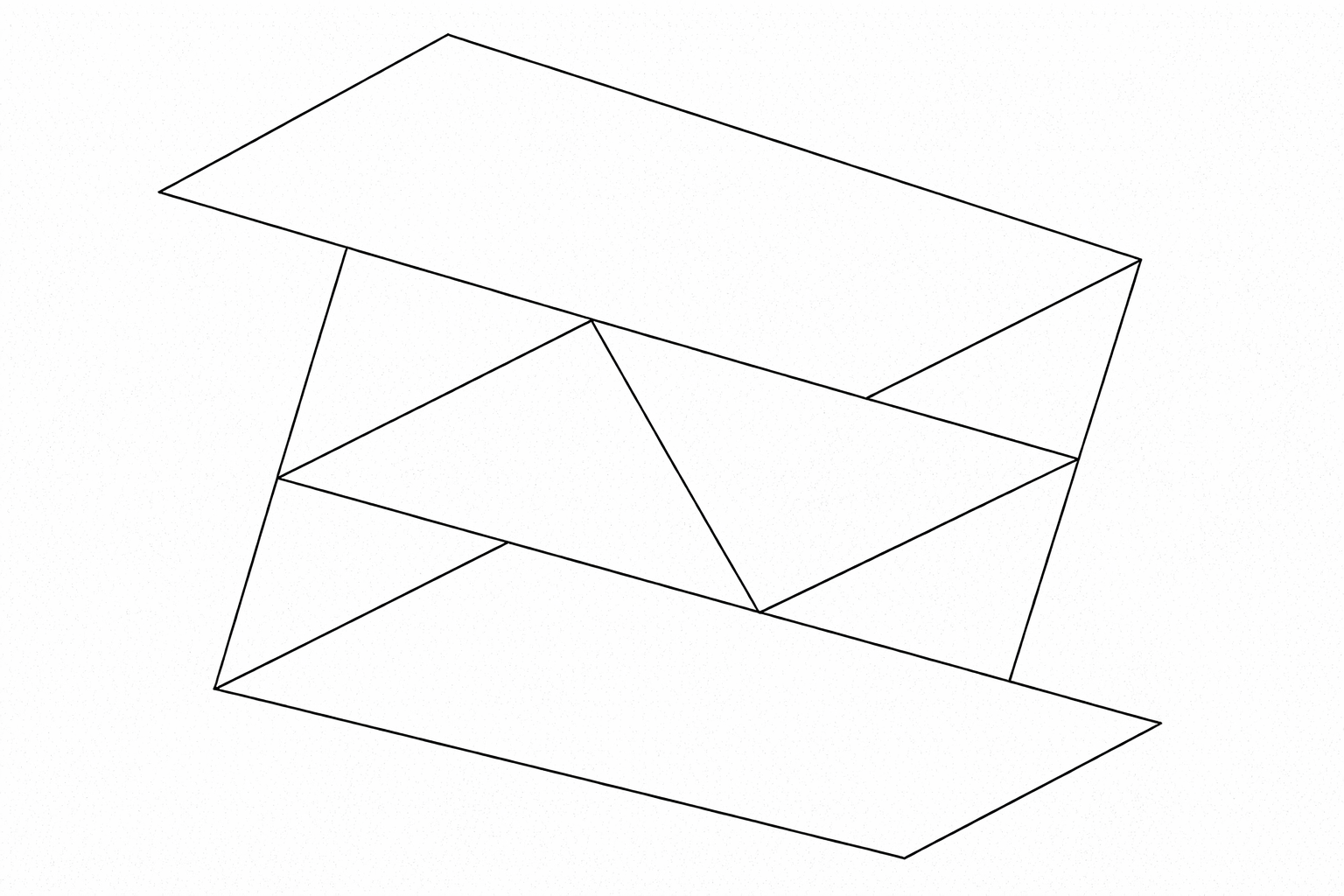
E2. Materials, Processes, and Integrated Methods
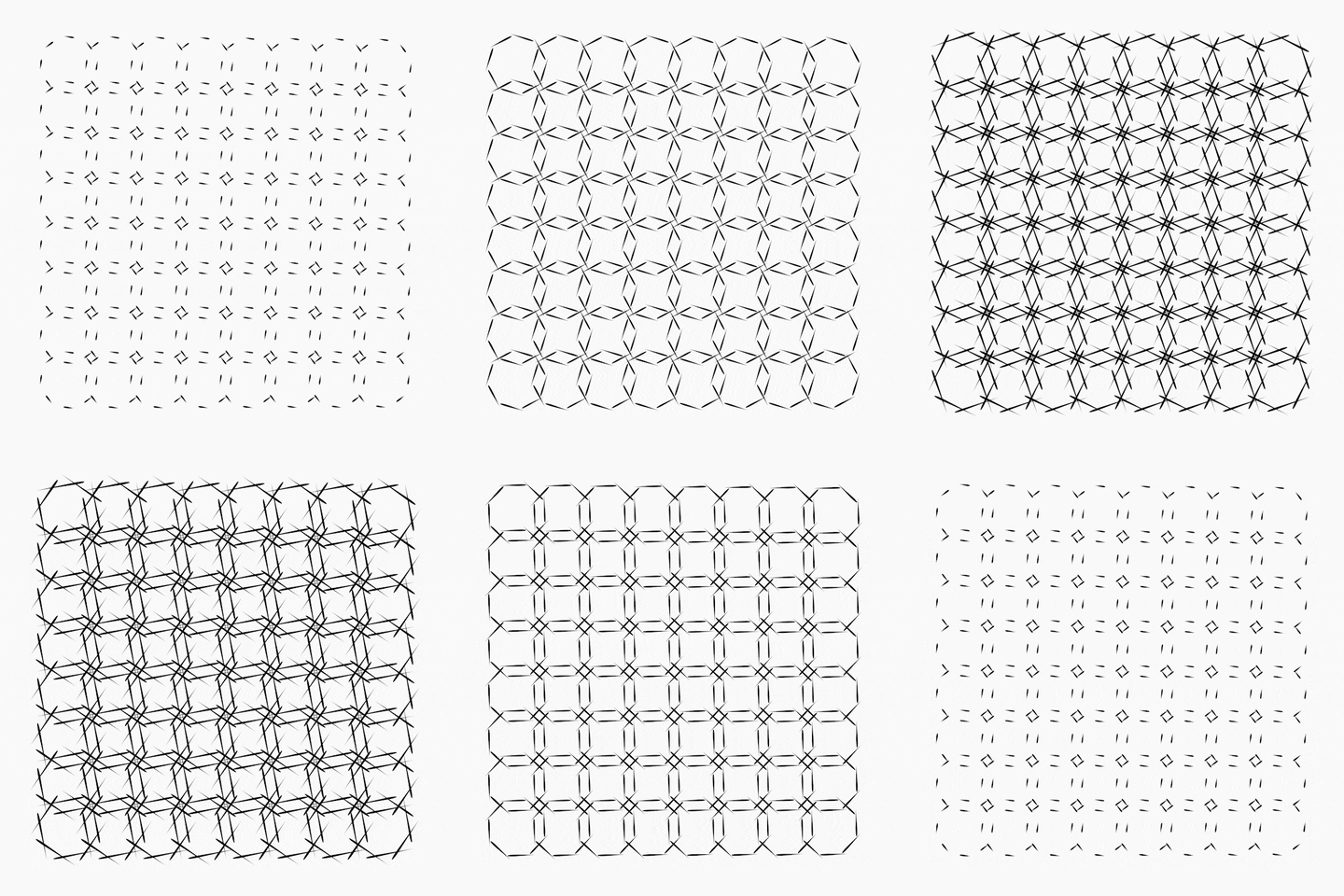
E2-1. Artist who uses transparent colors
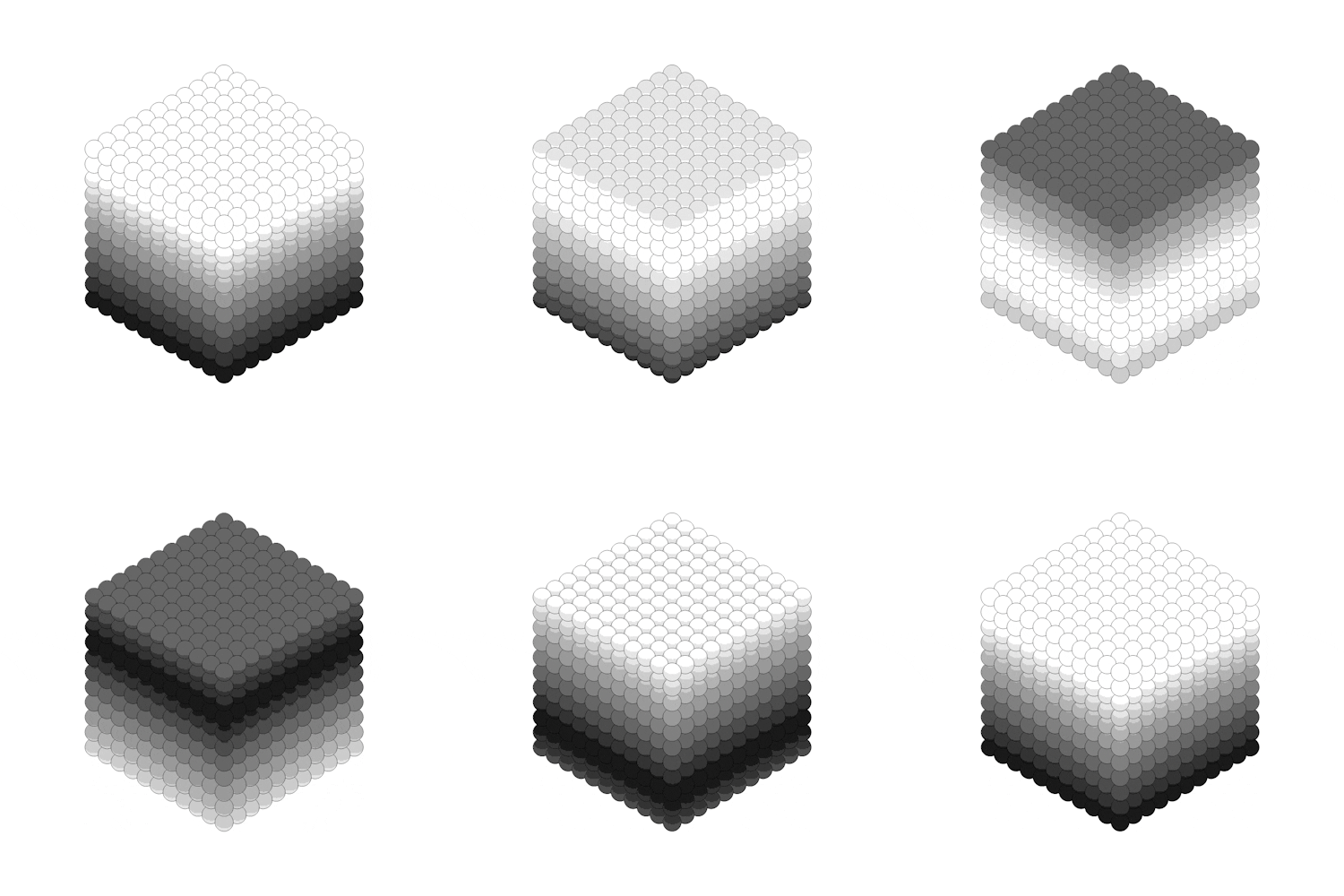
E2-3.Traditional. Contemporary Materials. Craftsmanship List
E4-1. Traditional Material Classification Table
E4-2. Classification Table of Contemporary Materials
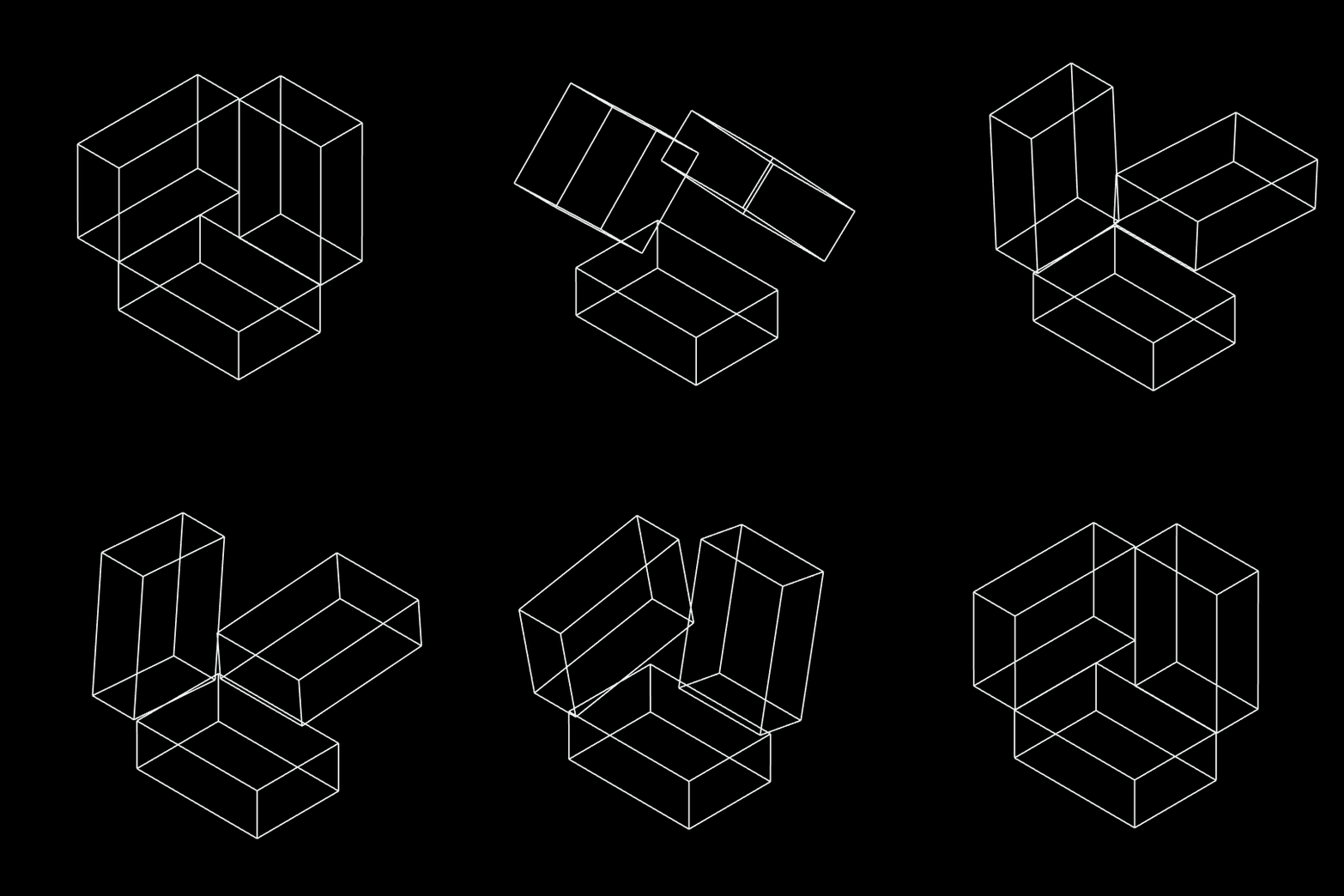
E2-2.Contemporary artists using modern materials
E2-4.Artist who uses a comprehensive approach
E3-1. Materials, Processes, and Integrated Methods Course Test
Please submit your design once. Think carefully before clicking submit. Repeated submissions will result in deduction of points affecting the award!
E3.AI Materials, Processes, and Integrated Method Application System
- The AJAX permission and quota check will only be performed after clicking the material dropdown box, v1-v5, or “Back to Benchmark.”
- Cutting/Laser Cutting
- Clear boundaries, thin and light surface
- Thin bridges are prone to breakage; the edges of holes are prone to fraying.
- Suitable for planar geometry
- Avoid dense holes; widen key areas.
- Indentation + folding
- Shadows are generated on the plane transition surface
- Fibers are prone to cracking at fold lines
- Suitable for folded structures
- Avoid the dense area of holes with zigzag lines
- Multi-layer stacking
- Layering and thickness enhancement
- Alignment errors accumulate
- Suitable for relief structures
- First, position the holes, then overlap the adhesive.
- Hollow Cut
- Pore forming structural pattern
- Too many holes will cause tearing.
- Suitable for grid structures
- Rounding the edges of holes
- Embossing texture
- Enhanced light and shadow levels
- Going too deep will tear the paper.
- Suitable for background texture structure
- Avoid the narrow bridge area
- Spraying/Dyeing
- Color uniformity
- Coating affects pore size
- Suitable for color block training
- Apply thin coats multiple times
- Straight cut/laser cutting (standard thickness)
- Stable shape, strong surface texture, slightly rough edges
- Fine pores are prone to burrs; long, thin cantilever arms are prone to breakage.
- Suitable for large geometric surfaces, mosaic base plates, and structural bases.
- Leave sufficient bridge width around the hole; prioritize rounded holes to reduce tearing.
- Grooving + Insert (no glue required)
- The connection nodes are clearly defined, and the modular design is strong.
- The slot width and material thickness must match; repeated insertion and removal will cause it to loosen.
- Suitable for grid frames, repeating units, and assembly structures
- Groove width = thickness ± 0.2mm; double grooves added in the direction of force.
- Multiple layers of overlapping (misaligned or aligned)
- Enhanced thickness and shadows create a more architectural feel.
- Lamination misalignment errors accumulate; glue causes warping.
- Suitable for relief geometry, stepped layers, and boundary reinforcement
- Partial dispensing and weighting; first locate the holes, then stack the substrate.
- Edge wrapping paper/cloth tape/thin leather covering
- More refined edges, improved overall texture
- Edge binding incurs tolerances; covering the hole opening will reduce the hole diameter.
- Suitable for display pieces and geometric works requiring clean edges.
- Chamfer the edges first, then wrap the edges; leave the hole area unwrapped or leave a margin.
- Indentation + bending forming (multi-faceted)
- Transforming a flat surface into a three-dimensional shape creates stronger shadows.
- Fiber breakage at the fold line; thick plates show significant springback.
- Suitable for strips, boxes, folds, and frames.
- V-groove/thinning before folding; fold line avoids densely pore area.
- Primer + Matte/Gloss Top Coat
- The texture is more uniform and the color blocks are cleaner.
- Increasing coating thickness affects tolerances
- Suitable for color block training and structural partitioning
- Seal the edges first, then apply the topcoat; apply thin coats multiple times to avoid bubbling.
- Laser/Sawing
- Surface flat
- Thin ribs are easily broken
- Suitable for base plate structure
- Increased hole spacing
- CNC engraving
- Enhanced hierarchy
- Tool diameter limitation
- Suitable for hierarchical structures
- inner corner fillet
- Laser focal edge
- Boundary reinforcement
- Burnt edges and powder falling off
- Suitable for contour structures
- Edge banding
- Segmentation
- Clearly modular
- Tolerance
- Suitable for modular structure
- positioning holes
- chamfering
- Soft edges
- Size change
- Suitable for displaying structures
- Fine grinding
- primer + topcoat
- Color uniformity
- plugging hole
- Suitable for color block structure
- Thin coating
- sawing
- Clear layering
- Edge breakage
- Suitable framework
- Rounded corner holes
- Slotted assembly
- Clear structure
- slot width error
- Suitable for grids
- Groove fillet
- Forward and reverse pattern arrangement
- Rhythm changes
- Easy to break
- Suitable for strips
- Thickened
- Polishing
- Enhanced texture
- Aperture variation
- Suitable for display
- Fine grinding
- Hollowed-out back panel
- Enhanced hierarchy
- Intensity decrease
- Suitable for window panes
- Reinforcement
- Wood wax oil
- Texture highlighting
- Color difference
- Suitable for material expression
- Thin coating
- sawing
- High quality
- crack
- Suitable for solid structures
- Along the texture
- Mortise and tenon joint
- Nodes are obvious
- High precision
- Suitable modules
- Leave a business trip
- Step structure
- The shadow is obvious
- Warp
- Suitable for level
- Positioning pin
- Burnt texture
- Contrast enhancement
- Carbon layer powdering
- Suitable for coarse structures
- Sealed carbon layer
- wood dye
- Color block partitioning
- Uneven color absorption
- Suitable colors
- cover
- Wood wax oil
- Gloss stability
- Oil accumulation
- Suitable for display
- Thin coating
- Laser cutting
- Clear boundaries
- Easily cracked
- Suitable geometry
- Rounded corners
- Transparent stack
- Deep Enhancement
- Hole Alignment
- Suitable for repetitive structures
- positioning holes
- Sandblasting
- Soft light
- Easily soiled
- Suitable level
- Unified direction
- Hot bending
- Folded surface
- Albinism
- Suitable for strips
- mold
- Edge polishing
- Illuminated edge
- Size change
- Suitable for contours
- First chamfer
- LED backlight
- Enhanced lighting
- Heat dissipation
- Suitable for display
- Reserved lines
- Laser cutting
- Metallic feeling
- bending
- Suitable framework
- Rounded corner holes
- Anodizing
- Color stability
- scratch
- Suitable for color blocks
- Oxidation after processing
- Wire drawing process
- Directional texture
- Texture disorder
- Suitable for strips
- Unified direction
- Bending
- 3D
- crack
- Suitable for folding
- Leave radius
- Punch array
- Rhythm Pattern
- Intensity decrease
- Suitable for arrays
- Uniform hole spacing
- Screw connection
- Module structure
- Hole position error
- Suitable modules
- Standard hole spacing
- Laser cutting
- tough
- Deformation
- Suitable for coarse structures
- Thickened
- welding
- Nodes are obvious
- accuracy
- Suitable framework
- clamps
- Rust
- Texture
- Inequality
- Suitable for material expression
- Control humidity
- Bending
- shadow
- stress
- Suitable for folding
- Reserved radius
- Hollow out
- Light and shadow
- Deformation
- Suitable for arrays
- Hole spacing
- Powder coating
- color surface
- thickness
- Suitable for color blocks
- Thin coating
- Water jet
- transparent
- Easily cracked
- Suitable geometry
- Rounded corners
- Sandblasting
- Soft light
- fingerprint
- Suitable level
- Unified processing
- Lamination
- level
- weight
- Suitable for layering
- Controlling thickness
- Colored interlayer
- Colored light
- Color difference
- Suitable colors
- unified color scheme
- Etching
- pattern
- Depth is difficult to control
- Suitable for details
- Control Time
- led
- Light and shadow
- Heat dissipation
- Suitable for display
- Reserved lines
- Cutting
- soft
- Scattered edges
- Suitable for soft structures
- Overlock
- stretching
- smooth
- tension
- Suitable for flat surfaces
- Uniform stretching
- Folded surface
- shadow
- creases
- Suitable for folding
- Pre-fold line
- splicing
- Color blocks
- thickness
- Suitable colors
- Uniform thickness
- embroidery
- line
- time consuming
- Suitable for linear
- Controlled density
- coating
- Texture
- harden
- Suitable for mixing
- Local coating
- Cutting
- smooth
- Melting edge
- Suitable for sheet metal
- Trial cut
- Hot bending
- Folded surface
- foaming
- Suitable for strips
- mold
- Buckle connection
- tidy
- fatigue
- Suitable modules
- Leave a business trip
- Coating
- Material changes
- curled edges
- Suitable for surfaces
- Defatting
- Pores
- Rhythm
- strength
- Suitable for arrays
- Reinforcement
- Spray paint
- color surface
- Paint accumulation
- Suitable for color blocks
- Thin spray
- knife cut
- 轻
- Frayed edges
- Suitable Model
- Widening
- Overlay
- level
- Warp
- Suitable for relief carving
- counterweight
- Pressing
- shadow
- fracture
- Suitable for folding
- shallow pressure
- Back ribs
- Stable
- thickness
- Suitable span
- Along the force
- slotted embedding
- Compare
- Tear
- Suitable for partitioning
- Rounded corner groove
- Sealing
- unified
- corrosion
- Suitable for display
- Water-based
- Cutting
- Texture
- Tear
- Suitable for strips
- Rounded corners
- Embossing
- Texture
- broken skin
- Suitable for background patterns
- Pressure test
- stitching
- line
- Tear
- Suitable for grids
- Stitch
- Hollowed-out backing
- Color blocks
- fracture
- Suitable for window panes
- Bold
- Rivet connection
- node
- error
- Suitable modules
- gasket
- dyeing
- Color blocks
- Inequality
- Suitable colors
- cover
- Cutting
- soft
- Deformation
- Suitable for soft structures
- Extended range
- Zhang La
- direction
- Tear
- Suitable for dynamic
- Reinforcement
- punching
- Rhythm
- fracture
- Suitable for arrays
- Hole spacing
- Misaligned stacking
- depth
- Slip
- Suitable for double images
- Location
- Buckle
- assembly
- fatigue
- Suitable modules
- Rounded corners
- Embossing
- level
- strength
- Suitable for surfaces
- shallow lines
- Pouring
- Heavy
- cracking
- Suitable for physical objects
- Reinforcing steel
- mold casting
- accurate shape
- bubble
- Suitable modules
- Vibration exhaust
- polishing
- luster
- time consuming
- Suitable for display
- Fine grinding
- Exposed material
- Particles
- Inequality
- Suitable for material expression
- Control ratio
- Embedded metal
- Compare
- Shedding
- Suitable for mixing
- Pre-embedded
- Concrete staining
- tone
- Color difference
- Suitable for color blocks
- Even coating
- Firing
- hard
- fragile
- Suitable for physical objects
- thickness
- Glazing
- luster
- Glaze
- Suitable for surfaces
- Thin glaze
- Engraving
- Texture
- crack
- Suitable for details
- shallow engraving
- Colored glaze
- Color
- Color difference
- Suitable for color blocks
- uniform
- Hollow out
- Light and shadow
- rupture
- Suitable for window panes
- Thick edge
- splicing
- Structure
- error
- Suitable modules
- Location
- Cutting
- Heavy
- Shatter
- Suitable for physical objects
- Thickened
- engraving
- Texture
- time consuming
- Suitable for relief carving
- shallow carving
- polishing
- luster
- Smooth surface
- Suitable for display
- Fine grinding
- Fire-roasted noodles
- rough
- Shatter
- Suitable for material expression
- Controlling temperature
- splicing
- Structure
- error
- Suitable modules
- Location
- Stone dyeing
- tone
- Inequality
- Suitable for color blocks
- uniform
- Cutting
- smooth
- Melting edge
- Suitable for sheet metal
- Trial cut
- Hot bending
- Folded surface
- Albinism
- Suitable for strips
- mold
- punching
- Rhythm
- Deformation
- Suitable for arrays
- Hole spacing
- Stacked
- depth
- Slip
- Suitable for double images
- Location
- Embossing
- level
- strength
- Suitable for surfaces
- shallow lines
- Spraying
- color surface
- Paint accumulation
- Suitable for color blocks
- Thin spray
- Pouring
- transparent
- bubble
- Suitable for physical objects
- exhaust
- Resin staining
- Color
- Inequality
- Suitable for color blocks
- mix
- Embedded
- level
- Shedding
- Suitable for mixing
- fixed
- polishing
- luster
- time consuming
- Suitable for display
- Fine grinding
- Polishing
- Soft light
- scratches
- Suitable level
- fine sand
- led
- Light and shadow
- Heat dissipation
- Suitable for display
- Reserved
- Pouring
- Matte
- 脆
- Suitable Model
- Thickened
- mold casting
- Form
- bubble
- Suitable modules
- shock
- engraving
- detail
- Shatter
- Suitable for relief carving
- shallow engraving
- dyeing
- tone
- Inequality
- Suitable for color blocks
- Thin coating
- Polishing
- smooth
- dust
- Suitable for display
- Fine grinding
- Sealing
- Protect
- thickness
- Suitable for display
- Thin coating
- CNC cutting/waterjet cutting
- High strength and distinct texture
- Edge burrs
- Suitable for frame structure
- Edge banding
- Woven carbon fiber laminate
- Directional texture
- interlayer peeling
- Suitable for strip structures
- Controlling fiber orientation
- Multilayer composite
- Thickness Enhancement
- bubble
- Suitable structural modules
- Vacuum pressing
- Polishing
- High gloss
- Obvious scratches
- Suitable for display pieces
- Fine grinding
- Drilling array
- Rhythm Structure
- Fiber breakage
- Suitable for array structures
- Increased hole spacing
- Transparent protective coating
- Texture enhancement
- Thickness variation
- Suitable for surface structures
- Thin coating
- Mold forming
- Lightweight and high strength
- Surface rough
- Suitable for curved surface structures
- Polishing
- Fiberglass cloth laminate
- Hierarchical enhancement
- Resin bubbles
- Suitable for composite structures
- suppress
- transparent resin layer
- semi-transparent effect
- Yellowing
- Suitable for light and shadow structure
- UV stabilizer
- Spray painting
- Color uniformity
- Peeling
- Suitable for color block structure
- primer
- aperture array
- Light and shadow changes
- Edge burrs
- Suitable for array structures
- Edge sealing
- polishing
- luster
- time consuming
- Suitable for display
- Fine grinding
- Mold growth
- Natural texture
- Limited strength
- Suitable ecological structure
- Thickened
- Hot pressing
- Density Enhancement
- Deformation
- Suitable for boards
- Uniform pressure
- Natural dyes
- Natural tones
- fade
- Suitable for color structure
- Fixative
- Opening structure
- Lightweight
- Brittle
- Suitable for grids
- Hole spacing
- Module splicing
- The structure is obvious
- error
- Suitable modules
- Location
- Natural sealing
- durable
- thickness
- Suitable for display
- Thin coating
- Block cutting
- Ultra-light transparent
- Extremely brittle
- Suitable experimental structure
- protective layer
- Sandwich structure
- Heat insulation
- rupture
- Suitable for composite structures
- Cover
- Lighting effects
- Scattered light
- fragile
- Suitable for light and shadow
- Transparent shell
- Staining treatment
- Soft tones
- Inequality
- Suitable for color experiments
- Uniform processing
- Embedded in transparent resin
- stable structure
- bubble
- Suitable for display
- Slow curing
- Hermetically sealed
- Protect
- thickness
- Suitable for display
- Transparent shell
- Thin film composite
- High conductivity
- Difficult to process
- Suitable experimental structure
- Composite substrate
- Multilayer composite
- Strength Enhancement
- peeling
- Suitable for composite boards
- suppress
- Conductive path
- Functional structure
- Short circuit
- Suitable for interactive installations
- Insulation layer
- transparent film
- Optical effects
- damage
- Suitable for optical structures
- Protective film
- Resin composite
- Structural reinforcement
- bubble
- Suitable for boards
- vacuum
- conductive coating
- Surface Function
- Wear
- Suitable interface structure
- Multi-story
- Mold casting
- Soft and transparent
- Stretch deformation
- Suitable for soft structures
- thickness
- Color glue
- Soft colors
- Inequality
- Suitable for color structure
- Mix evenly
- Embedded structure
- Composite effect
- Shedding
- Suitable for hybrid structures
- Pre-fixation
- Tensioned structure
- Dynamic form
- fatigue
- Suitable for dynamic structures
- reinforce edges
- bubble structure
- Transparent texture
- rupture
- Suitable experimental structure
- Controlling bubbles
- Matte finish
- Soft luster
- Dust
- Suitable for display
- Sealing
- Cutting
- Natural texture
- Fiber crack
- Suitable for boards
- Edge sealing
- laminate
- strength
- Warp
- Suitable structure
- suppress
- Hollow out
- Light and shadow
- crack
- Suitable for grids
- Rounded corners
- Bamboo dyeing
- Color
- Color difference
- Suitable for color blocks
- uniform
- splicing
- Module
- error
- Suitable modules
- Location
- polishing
- luster
- time consuming
- Suitable for display
- Fine grinding
- Hot-pressed sheet
- Grain texture
- Inequality
- Suitable for boards
- Uniform pressing
- Particle assembly
- Color particles
- Weak structure
- Suitable for visual structure
- compaction
- dyeing
- Color blocks
- Inequality
- Suitable colors
- mix
- punching
- Rhythm
- Deformation
- Suitable for arrays
- Hole spacing
- Stacked
- depth
- Slip
- Suitable structure
- Location
- polishing
- luster
- scratches
- Suitable for display
- Fine grinding
- Thermoforming
- translucent
- Heat distortion
- Suitable for boards
- Temperature control
- Natural dyes
- Soft colors
- fade
- Suitable for color blocks
- Fixative
- punching
- Rhythm
- crack
- Suitable for arrays
- Hole spacing
- Stacked
- depth
- Slip
- Suitable structure
- Location
- Embossing
- Texture
- Deformation
- Suitable for surfaces
- shallow pressure
- Sealing
- Protect
- thickness
- Suitable for display
- Thin coating
- Plain board
- Uniform light emission
- Heat dissipation
- Suitable for light and shadow structure
- heat sink
- LED array
- Rhythm Light Spot
- Complex lines
- Suitable for interactive structures
- wiring
- Diffuser plate
- Soft light
- Brightness reduced
- Suitable for display
- Thickness control
- Perforated panel
- Light and shadow
- bright spots
- Suitable patterns
- diffusion membrane
- RGB light
- Color changes
- Control complexity
- Suitable for interaction
- controller
- Multi-layer light plate
- depth
- Heat dissipation
- Suitable device
- ventilation
- Tensioning frame + hot-welded edge sealing
- Thin and semi-transparent with strong light reflection
- Easily scratched; localized stress tearing
- Suitable for large geometric shapes and light and shadow partitioning
- Widen the welded edges; make the corners rounded.
- Double-layer film inflatable pillow
- Volume and Shadow Enhancement
- Air leakage at the weld; deformation of the pillow body
- Suitable for modular repeating units
- Independent gas lines for each zone; inspection ports provided at weld seams.
- Screen printing/UV printing zones
- Clear contrast between light transmission and light blocking
- Boundary paste; differences in weather resistance
- Suitable for partition geometry and marking
- Increase line width; select weather-resistant ink
- Laser micropore/pore density gradient
- Density formation direction and rhythm
- Too many holes can cause cracking; the tear will spread.
- Suitable for pore gradient systems
- Increase hole edge distance; reduce hole size in critical stress areas
- Insert mesh/line array
- Structural lines are readable in thin films
- Layer wrinkling; positioning difficulties
- Suitable for linear grid training
- First, locate the spot, then weld the whole thing; maintain consistent tension.
- Reinforcing strip/edge binding strip
- More stable under stress, cleaner boundaries
- Reinforcement exceeds tolerance; edge thickening
- Suitable for large-span frames
- The reinforcing strip avoids corners and bends; pre-drilled holes are provided.
- Heat sealing/high frequency welding molding
- Flexible and semi-transparent with good elasticity
- Stretch deformation; edge retraction
- Suitable for soft structures and dynamic geometry
- Make wide weld edges; avoid sharp corners
- Tensioning and fixing on frame
- Geometric stretching produces directionality
- Stress Concentration Tear
- Suitable for directional training
- Large rounded corners; thickened patch in stress area
- Hot press mold embossing
- Differences in gloss create layers within the same color
- Weak overpressure; springback
- Suitable for large-area background patterns
- Apply shallow pressure multiple times; avoid stress points in the texture.
- Two layers of staggered stacking
- Ghosting and Depth Enhancement
- Interlayer slip; bubbles
- Suitable for misaligned rhythms
- Use positioning holes; press to vent.
- Window opening + backing color film
- Strong contrast in pore color-changing patches
- Window edge stretching deformation
- Suitable for window lattice systems
- Rounded window corners; reinforced window edges
- Flexible ink printing structure lines
- More readable structure
- Ink cracking; poor adhesion
- Suitable for teaching marking
- Choose an elastic ink; perform an adhesion test first.
- bonding substrate + driver board
- Low power consumption, variable graphics
- Bending limitations; complex drive mechanism
- Suitable for displaying variable partition structures
- Prioritize planar layout; reserve trenches for wiring.
- Zoned electrode control
- Geometric partitions can be changed independently.
- Electrode interference; boundary crosstalk
- Suitable for modular mesh
- Increase electrode spacing; add isolation lines to partitions.
- Stacked with diffusion film
- The layers are softer
- Contrast decrease
- Suitable for softening geometric boundaries
- Thin diffusion layer; avoid excessively thick multilayer stacking.
- Masking plate/masking frame
- Forming a contrast between fixed and variable
- Boundary light leakage/display leakage
- Suitable for regular composition training
- Make the shielding boundary a hard straight line; press tightly to prevent leakage.
- Multiple pieces are pieced together to form a large image.
- Scalable size
- The seams are obvious; alignment is difficult.
- Suitable for large grids
- Design the seam as a structural line; control the error of the positioning hole.
- Transparent protective plate encapsulation
- Improved wear resistance
- Increased reflectivity
- Suitable for exhibition
- Use anti-glare coating/matte cover plate
- Cutting + Laying flat and fixing
- Soft and conductive, with textures contributing to the design.
- Loose wires; unstable resistance
- Suitable for interactive grid structures
- First, lock the edges; reserve width for the conductive path.
- Conductive lines run along the boundary
- Lines are both structures and circuits.
- Too many pinholes cause tearing
- Suitable for strip/grid direction training
- Stitch spacing is stable; corner rounding reduces stress.
- Conductive layer + insulating layer stack
- Can be used for zoned touch control
- Interlayer slip
- Suitable for partitioned interaction
- Partial dispensing; widened insulation boundary
- Window opening + backing film
- The pore boundaries are clearer
- Open the window and let the silk fall
- Suitable for window lattice systems
- Heat seal/apply adhesive before opening the window.
- Tensioning on frame
- Geometric stretching generates tension rhythm
- resistance change
- Suitable for dynamic directional training
- Consistent tension; compensation using calibration procedures.
- Transparent elastic top coat
- More wear-resistant and stable
- Decreased conductivity
- Suitable for exhibition
- Only seal the non-contact area; leave a window at the contact point.
- Encapsulation capsules/sandwich panels
- Temperature triggers changes in texture
- Leakage risk; high packaging requirements
- Suitable for time-dependent geometric devices
- It must be sealed; a retaining ring must be added to the edge.
- Partitioned filling with PCM of different melting points
- Partitions change asynchronously
- thermal crosstalk
- Suitable for partition comparison training
- Zoned heat insulation lines; leave thermal buffer gaps
- sandwiched between transparent plates
- The changes are more visible
- Uneven atomization
- Suitable for light and shadow layering
- Consistent interlayer thickness; air bubble removal
- Thermally conductive texture/metal mesh guidance
- More directional
- Local overheating
- Suitable direction and rhythm
- Consistent heat conduction wire width; avoid sharp corner concentration
- Drawer-type housing with replaceable PCM module
- Maintainable and iterable
- The seams are obvious.
- Suitable for modular systems
- Design the seam as a structural line; positioning and limiting.
- Thermochromic coating superimposed structure line
- Changes make it easier to read
- Coating aging
- Suitable for teaching demonstrations
- Apply thin coats multiple times; perform durability tests.
- Sandwich dimming film lamination
- Transparent/Fog Switch
- Edge routing is difficult; electrodes are visible.
- Suitable for partitioned variable structure
- Pre-installed wiring; edge sealing for moisture protection
- Zoned electrode control
- Geometric zones can be atomized independently.
- Crosstalk boundary hair
- Suitable for grid/modular systems
- Wider partition isolation lines; electrode alignment
- Backlight + Diffuser
- More uniform atomization
- Bright spots are difficult to control
- Suitable for light and shadow training
- Use side lighting and diffused lighting; avoid direct spotlighting.
- Screen printing/UV printing structural lines
- Enhanced structural readability
- Reflective superposition
- Suitable for partition marking
- Matte inks preferred; line width increased.
- Double-layer dimming misaligned stacking
- Enhanced Ghosting Depth
- Heavy; difficult to align
- Suitable hierarchical system
- Positioning hole control error; reducing the number of layers
- Edge banding strip/frame
- More durable and safer
- Dimensional tolerance
- Suitable for exhibition
- Uniform frame width; rounded corners
- knife cutting/CNC
- Matte finish, gentle, sound-absorbing
- Thin bridges are prone to collapse; grains fall off the edges.
- Suitable for large geometric partitions
- Edge sealing; avoid sharp corners in dense pores
- Multi-layer stacking
- Thickness and Shadow Enhancement
- Accumulated alignment error
- Suitable for tiered levels
- First, make the positioning holes, then overlap the substrate; apply pressure to cure.
- Hot-pressed textured board
- Texture rhythm enhancement
- Overpressure makes it brittle
- Suitable for background pattern training
- Multiple shallow presses; uniform texture direction
- Grooved Embedded Thin Plate/Membrane
- Clear material contrast
- chipped groove edge
- Suitable for nested partitions
- Rounded corners; chamfered edges on inserts.
- Primer + Matte Top Coat
- Cleaner color blocks
- Eat the texture
- Suitable for color block training
- Apply thin coats multiple times; seal the edges first, then apply the topcoat.
- Segmentation and splicing
- Seams become structural lines
- The gap is conspicuous
- Suitable for modular systems
- Design the seams in a rhythmic pattern; positioning clamps
- Cast into blocks using molds
- Lightweight and porous with strong texture
- Unsharp edges
- Suitable for block partitioning
- Boundary mold hard edge strip
- Layered casting forms a hierarchy
- The hierarchy is more readable
- Delamination cracks
- Suitable for stepped structures
- Pour again after the mixture has partially set; vibrate to remove bubbles.
- Embedded mesh/steel wire skeleton
- Thin-walled is more reliable
- Exposed Arrancar
- Suitable for window panes and long bridges
- A protective layer is left between the skeleton and the surface.
- Polishing/brushing the surface
- The particles are more visible
- Falling off
- Suitable for texture contrast
- The area must be sealed and stabilized after grinding.
- Color paste/surface dyeing zone
- Color and texture layering
- Uneven blooming
- Suitable for zone training
- Make a small sample first; control the boundaries by zoning and masking.
- Mineral sealant
- Improved wear resistance
- Gloss Change
- Suitable for exhibition
- Apply thin coats multiple times; avoid clogging pores.
- Fabric layering + resin curing
- High strength and heat resistance
- Edge burrs
- Suitable for frames and panels
- Edge sealing; stress is applied along the fiber direction
- Vacuum bag compression
- The layers are more compact
- High equipment requirements
- Suitable for fine structures
- Control the amount of resin; ensure adequate venting.
- Change fiber orientation combination
- Increased directional rhythm
- Interlayer misalignment
- Suitable for strip/grid direction training
- Angular planning for each layer; reinforcement layers added to key areas.
- Drilling/Hole Cutting Array
- Strong pore rhythm
- Fiber breakage and propagation
- Suitable for array structures
- Round the corners of the holes; increase the spacing between holes.
- Primer + Matte Spray
- Cleaner color blocks
- Eat fine textures
- Suitable for color training
- Thin spraying multiple times; holes should be cleared first.
- Polishing + Clear Top Coat
- The texture is clearer
- Obvious scratches
- Suitable for display pieces
- Grind to a high mesh count; then seal with a top coat.
- CNC cutting + edge banding
- Light yet strong, with a smooth surface
- Poor edge sealing and dust ingress
- Suitable for large geometric base plates
- Edge sealing is required; holes should avoid the edges of honeycomb cavities.
- Opening the window reveals the honeycomb core
- Strong pore rhythm
- Edge burrs
- Suitable for window pane structure
- Rounded corners for windows; edge trim added.
- Folding/binding to form a frame
- Overall more upright
- The folded edge takes up space
- Suitable for frame structure
- Uniform fold radius; fold lines avoid window openings.
- Lamination/Paper
- Unified texture
- Edge curling
- Suitable for color block partitioning
- First, degrease; then press the edges firmly and trim them.
- Powder coating
- Clean and durable color blocks
- The edge of the hole is prone to clogging.
- Suitable for partitioned display
- Thin spraying in the perforated area; seal the edges first, then apply color.
- Assembly by sections and connectors
- Large structures can be made
- The seams are obvious.
- Suitable for modular systems
- Design the seam as a structural line; control the error of the positioning hole.
- CNC cutting
- Stable color and wear-resistant
- The inner corners are prone to collapse
- Suitable for color block partition boards
- Rounded inner corners; chamfered edges on holes to prevent chipping.
- Aluminum/wood reinforcement
- Flatter and more stable
- Increased thickness
- Suitable for large panels
- Partial dispensing; pressure curing
- Slotted strips/wires
- Structural lines are more readable
- chipped groove edge
- Suitable for grid training
- Rounded corners; allowance for insert strips
- Opening/Elongated Hole Array
- Strong rhythm
- Cracks at the edge of the hole
- Suitable for array structures
- Round the corners of the holes; increase the spacing between holes.
- Edge banding
- Cleaner borders
- Tolerance
- Suitable for display pieces
- Chamfer the corners first, then seal the edges; ensure consistent corner angles.
- Matte film/fine polishing
- Softer reflection
- Scratch risk
- Suitable for low-reflection displays
- Unify process direction; conduct small-scale testing first.
- Cutting/Punching
- Lightweight, tough, and waterproof with fine texture
- The creases turned white
- Suitable for lightweight structures and pore arrays
- Leave a bridge width around the hole; avoid sharp-cornered holes.
- Indentation + folding
- Volume and Shadow Enhancement
- Linear whitening
- Suitable for folded surface construction
- First crease, then fold; avoid creases in areas with dense pores.
- Heat sealing/tape splicing
- Seams become structural lines
- Excessive deformation during heat sealing
- Suitable for modular splicing
- Temperature test strips first; joint width should be uniform.
- Water-based dyeing/spray painting
- Soft color blocks
- uneven osmosis
- Suitable for color block training
- Apply thin washes multiple times; first fix the four edges.
- Micropores/Graduated Pore Density
- Density formation direction
- Too many holes make it easy to tear.
- Suitable for array training
- Hole spacing >= hole diameter; reduce holes in critical areas
- Backlight + Diffuse Layer
- Fiber texture is enhanced by light
- Yellowing of heat source
- Suitable for light and shadow composition
- Cold light LED; diffuser plate added to prevent bright spots
- Compression molding
- Natural texture, matte finish
- Unsharp edges
- Suitable for block partitioning
- Mold hard edge reinforcement boundary
- Layered slurry spreading
- The hierarchy is more readable
- Delamination cracking
- Suitable for stepped structures
- Layered compaction; semi-dry then layered
- Textured mold embossing
- Increased rhythm
- Fine textures are prone to blurring
- Suitable for background pattern training
- Texture magnification; uniform pressing
- Window opening + embedded film
- Strong material contrast
- Window edges are prone to collapse
- Suitable for window lattice systems
- Rounded window corners; thickened window rims
- Pulp coloring zone
- Color blocks and textures superimposed
- Color difference
- Suitable for color training
- First, create a small sample; then control the boundaries by using partitioned masking.
- Varnish/wax sealant
- Durability Improvement
- Gloss Change
- Suitable for exhibition
- Apply thin coats multiple times; avoid clogging and liquid accumulation.
- Coating + UV curing
- High surface hardness and clear boundaries
- Shrinkage stress
- Suitable for surface structure strengthening
- Apply thin coats multiple times; avoid thick coats which may cause cracking.
- Masking zone solidification
- Cleaner partition boundaries
- Light leaks and rough edges
- Suitable for zone training
- Masking, bonding, and pressing; line width enlargement
- Thick/thin coating in sections
- Layering and gloss difference
- Thick cracks
- Suitable for hierarchical structures
- Thick layers are cured in stages; rounded corners at the edges.
- Texture sheet is cured after imprinting
- Sharp details
- Demolding difficulties
- Suitable for background rhythm
- Use a release agent; avoid sharp corners in the texture.
- Transparent layer overlaid with color filter
- Deeper
- bubble
- Suitable for light and shadow layering
- Slow-speed scraping; de-bubbling and then curing
- Spot polishing/matte finish comparison
- Clear layering under the same color
- Scratch risk
- Suitable for comparative training
- Unify direction; first fine grinding, then polishing.
- Heated vacuum forming
- Slim and three-dimensional with clear contours
- Thin edges are prone to cracking
- Suitable for folded/bulk geometry
- Widen the edges; avoid sharp corners and small radii
- Texture molding
- Changes in texture and gloss
- Demolding marks
- Suitable for background pattern training
- Texture direction is uniform; mold corners are rounded.
- Window opening + backing color swatch
- Pore color-changing blocks
- Cracks by the window
- Suitable for window pane structure
- Rounded window corners; reinforced window edges
- Localized thermal bending line
- Stronger fold
- Whitening Deformation
- Suitable for strip folding
- Test the temperature first; avoid the dense area with open windows by using a zigzag pattern.
- Multi-layer misalignment
- Ghosting and Depth
- Alignment is difficult
- Suitable for repetitive systems
- Positioning holes/pillars; allow for edge tolerances
- Primer + Matte Spray
- Softer reflections and cleaner color blocks
- Paint film reveals details
- Suitable for color training
- Thin spraying multiple times; anti-clogging holes in the cavity area
- SLS printing (default parameters)
- It has good toughness and can be used to create complex pores.
- Rough surface texture
- Suitable for window panes and narrow bridge structures
- Reserve a powder cleaning channel; the aperture should not be too small.
- Nylon dyeing zones
- Color blocks are controllable
- Uneven staining
- Suitable for color training
- First seal, then dye; partitioned masking
- Tumbling/Polishing
- A smoother surface
- Eat the details
- Suitable for display-grade structures
- Reduce polishing in the fine bridge area; separate component processing
- Impregnation resin sealing
- Improved strength and appearance
- Risk of clogging
- Suitable for porous structures
- First open the hole, then seal it; apply a thin immersion multiple times.
- Modular clips/screws
- The disassembly and assembly logic is clear.
- High tolerance requirements
- Suitable for modular systems
- Allow for a tolerance of 0.2~0.4mm; rounded corners.
- Primer + Matte Spray
- Color uniformity
- The edge of the hole is prone to clogging.
- Suitable for color block partitioning
- Thin spraying multiple times; holes should be cleared first.
- Cutting + Deburring
- Strong porous texture, lightweight
- Frizz at the edges; dust
- Suitable for pore structure representation
- Seal the edges; wear protective gear
- Adding a backing panel creates a contrast.
- Pores are more readable
- High alignment requirements
- Suitable for window lattice systems
- First, drill the positioning holes, then fix them; contrast the colors of the backing.
- Partitioned resin sealing
- Comparison of different openwork designs using the same material
- Uneven sealing
- Suitable for zone training
- Thin coats applied multiple times; boundary masking control lines
- Partial grinding and polishing
- Difference in gloss and layering
- Eat up the pores
- Suitable for comparative training
- Only polish the high points; lightly grind the pore areas.
- CNC grooving creates rib lines.
- Stronger structural lines
- Edge cracking
- Suitable for outlines and grids
- Slot corner fillet; depth machining in stages
- Transparent/Colored Sealing Coating
- Color and porosity superimposed
- plugging hole
- Suitable for color structure
- Apply thin coats multiple times; seal after opening the holes.
- Casting/Lamination Curing
- Transparent or semi-transparent, color adjustable
- Bubbles; yellowing
- Suitable for light and shadow and layering
- Stir slowly to remove bubbles; avoid strong light.
- Insert fiber/paper/mesh
- Structural lines are visible in the material
- Interlayer bubbling
- Suitable for grid and linear structures
- First, apply a thin base layer; then add the inlays.
- Zoned dyeing casting
- Color block boundaries are controllable
- Boundary infiltration
- Suitable for color training
- Pour again after semi-setting; use isolation strips to control the boundaries.
- Polishing/Atomization Treatment
- Softer reflection
- scratches
- Suitable for low-reflection displays
- Unify the direction of the grit number; grind step by step.
- Post-processing hole opening
- Strong pore rhythm
- Crack risk
- Suitable for window lattice systems
- Rounded corners; drilling in stages and cooling.
- UV protective top coat
- Durability Improvement
- Enhance gloss
- Suitable for exhibition
- Select a matte top coat; apply thin coats multiple times.
- Board cutting + edge banding
- Semi-transparent, with visible texture
- Brittle; hygroscopic
- Suitable for light and shadow geometric partitioning
- Edge packaging; avoids fine bridges and dense vias
- Multi-layered staggered stack
- Enhanced Ghosting Depth
- Alignment error amplification
- Suitable for repetitive systems
- Positioning hole control error; reducing the number of layers
- Backlight + Diffuser
- The structure was light-enhanced
- bright spots
- Suitable for pore gradient
- Side lighting + diffused lighting; avoid direct spotlighting.
- Transparent staining/masking zones
- Color and texture overlay
- Uneven color absorption
- Suitable for color block training
- First seal the end face; then shield to ensure the boundary is clean.
- Window opening + backing color swatch
- Porous color blocks
- Cracks on the window
- Suitable for window pane structure
- Rounded window corners; widened window rim
- Matte Top Coating
- Softer reflection
- Reduced light transmission
- Suitable for stable display
- Apply thin coats multiple times; create translucent comparison samples.
- Flexible circuit board + paper substrate
- Slim and interactive
- Susceptible to moisture; broken wiring
- Suitable for geometric partitioning interaction
- Add a moisture-proof seal; avoid fold lines and areas with dense holes when routing cables.
- Zoned electrodes/touch pads
- Clear partition response
- Accidental touch; crosstalk
- Suitable for grid training
- Increase the spacing between zones; add isolation lines.
- Foldable geometry
- Overlay of structure and interaction
- Broken line
- Suitable for folded surface construction
- Avoid routing with zigzag lines; use serpentine routing for buffering.
- Sandwich EL/LED backlight
- Photoreinforced structure
- Power consumption and heat dissipation
- Suitable for light and shadow partitioning
- Low power consumption solution; diffusion layer to prevent bright spots
- Modular circuit splicing
- Scalable size
- poor seam and contact
- Suitable for modular systems
- Unify interface standards; design seams as structural lines.
- Transparent film encapsulation
- Durability Improvement
- Increased reflectivity
- Suitable for exhibition
- Use an anti-glare film; press the sealing edges tightly to prevent dust from entering.
Exploring the realization of geometric forms in various materials such as paper, wood, metal, glass, textiles, and ceramics, suitable for geometric abstract art. This involves comparing the texture, processing methods, and visual effects of different materials.
Arttao CMT 21L Static UniqueBuilt-in multilingual rule engine
After a language change, the UI and dynamic buttons reload in that language.
The report is generated directly in the current language. No second-pass translation scan.
The cross-media translation engine is used to study the translation rules of geometric abstract structures across different media. The system translates the expression form of the same geometric composition from one medium to another through methods such as structure preservation, proportion transformation, and material adaptation.
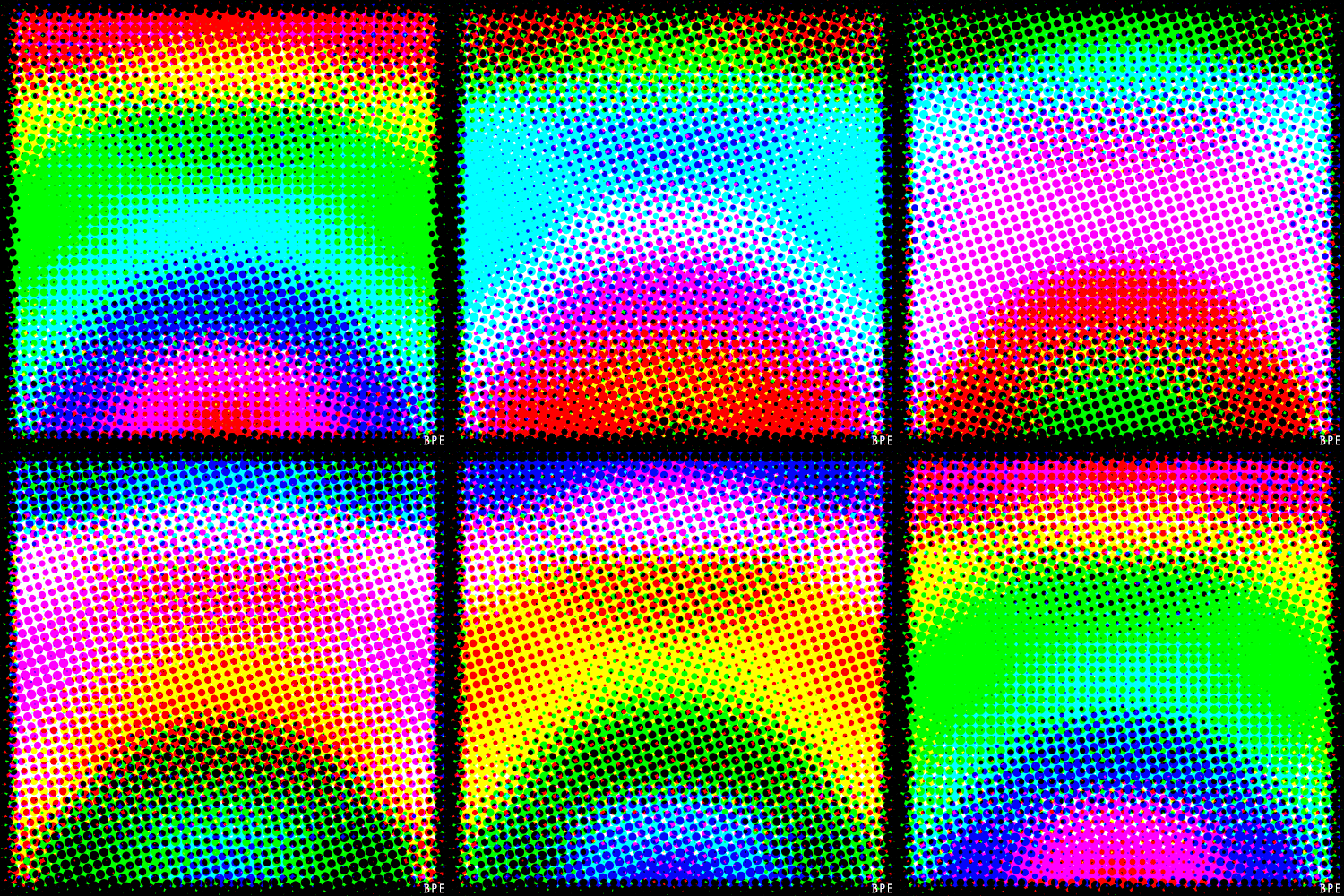
Returning to the pure essence of design, we delve deep into the relationship between tonal gradations and the conversion of graphic form and void. Supports high-definition bitmap export, ensuring that black and white compositions remain sharp and clear at any scale, making it suitable for structured thinking training.
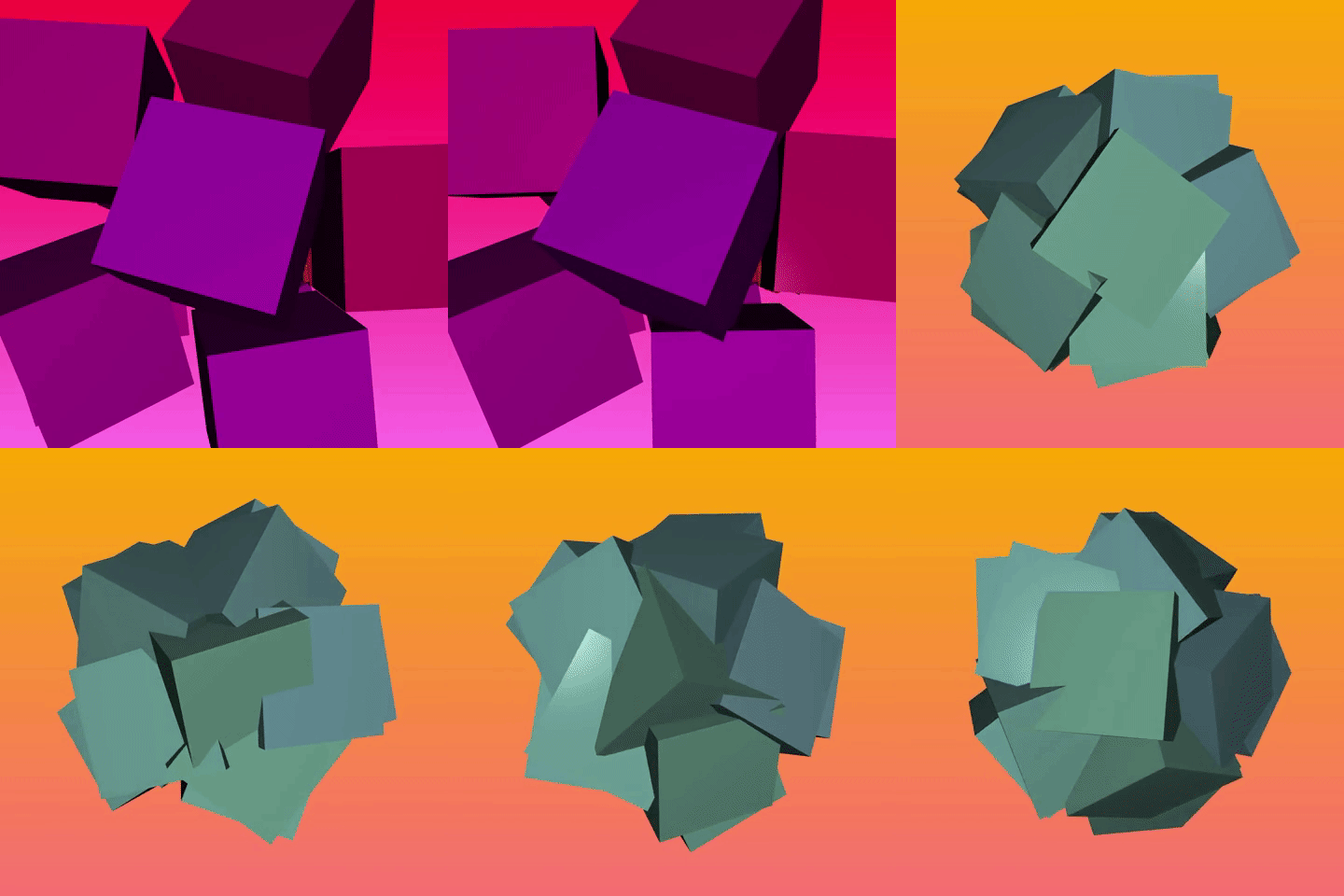
AI Process Path Generator Generate a production path based on structure, materials, budget, and difficulty.
The AI process path generator is based on relationships between materials, steps, methods, and structures to help learners understand the complete process from conception to creation. Through path breakdown, hierarchical analysis, and logical combination, learners can gradually understand the conversion methods, implementation order, and expressive effects between different processes, thereby establishing a clear and systematic understanding of craftsmanship.
 简体中文
简体中文  English
  日本語
日本語  Español
  Français
  हिन्दी
  العربية
  বাংলা
বাংলা  Português do Brasil
  Русский
  اردو
اردو  Bahasa Indonesia
  Deutsch
  Kiswahili
  मराठी
मराठी  తెలుగు
  Tiếng Việt
  Türkçe
  Italiano
  தமிழ்
தமிழ்  한국어
한국어