G1. The Future Evolution of Geometric Abstract Art
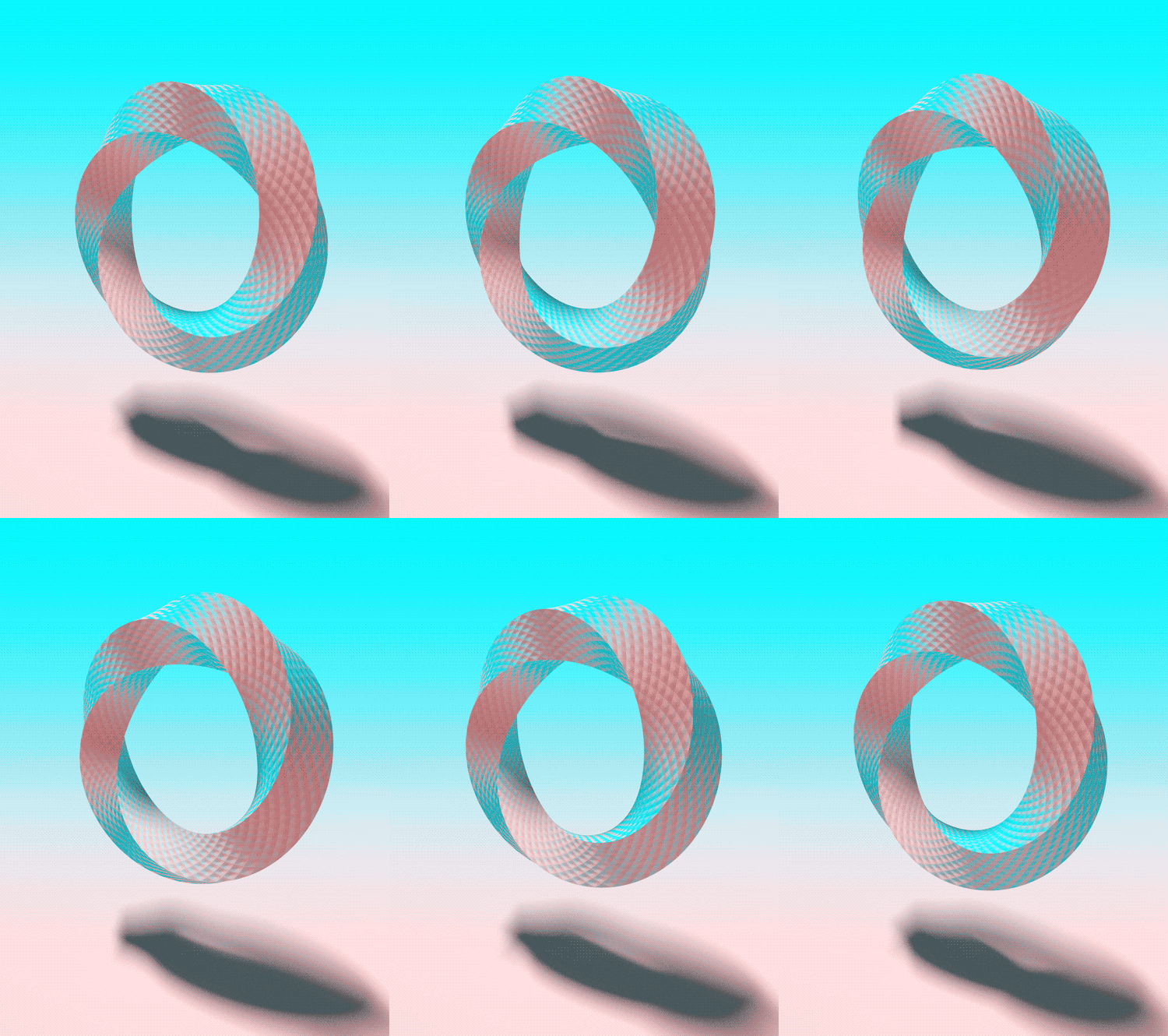
In the context of artificial intelligence, the future evolution of geometric abstract art will not merely be an update of technical tools, but a comprehensive shift in creative logic, viewing methods, and the very concept of artistic structure. Past geometric abstract art emphasized order, proportion, rhythm, repetition, balance, and compositional relationships, with artists transcending natural representation through the precise organization of points, lines, planes, colors, and space, moving towards a highly rationalized visual language. Entering the era of artificial intelligence, this language will no longer be solely the product of human manual experience, sketch-based deduction, and intuitive correction, but will gradually develop into a “structure generation system involving human-machine co-creation.”
The future evolution of G2. Geometric abstract art
G2-1. From “static composition” to “dynamic structure”
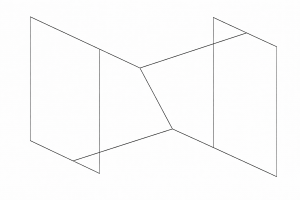
Future geometric abstract art will first move from “static composition” to “dynamic structure.” Traditional geometric abstract art typically views a work as a finished result: lines, planes, proportions, and color relationships are fixed within a stable image. The viewer is presented with an order that has been precisely arranged, a solidified visual balance.
G2-2. Gradually moving from “single author control” to “parameterized and systematic creation”
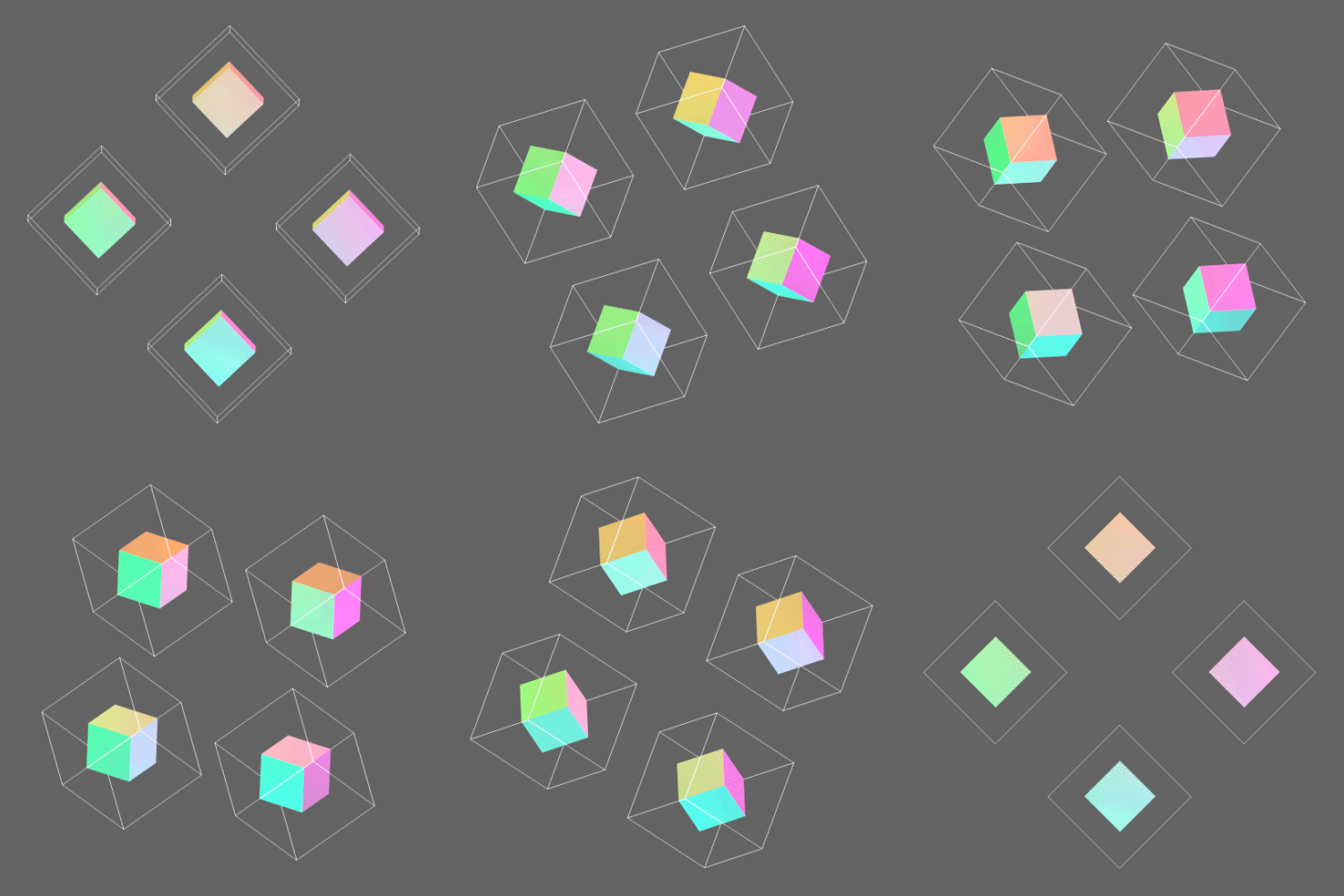
Secondly, future geometric abstract art will gradually move from “single author control” towards “parameterized and systematic creation.” In traditional artistic concepts, artworks are usually understood as the direct embodiment of the artist's individual will: the length of each line, the position of each shape, the proportion of each color area, and the arrangement of each rhythm are all specific decisions made by the author after repeated thought.
G2-3. Color in Future Geometric Abstract Art
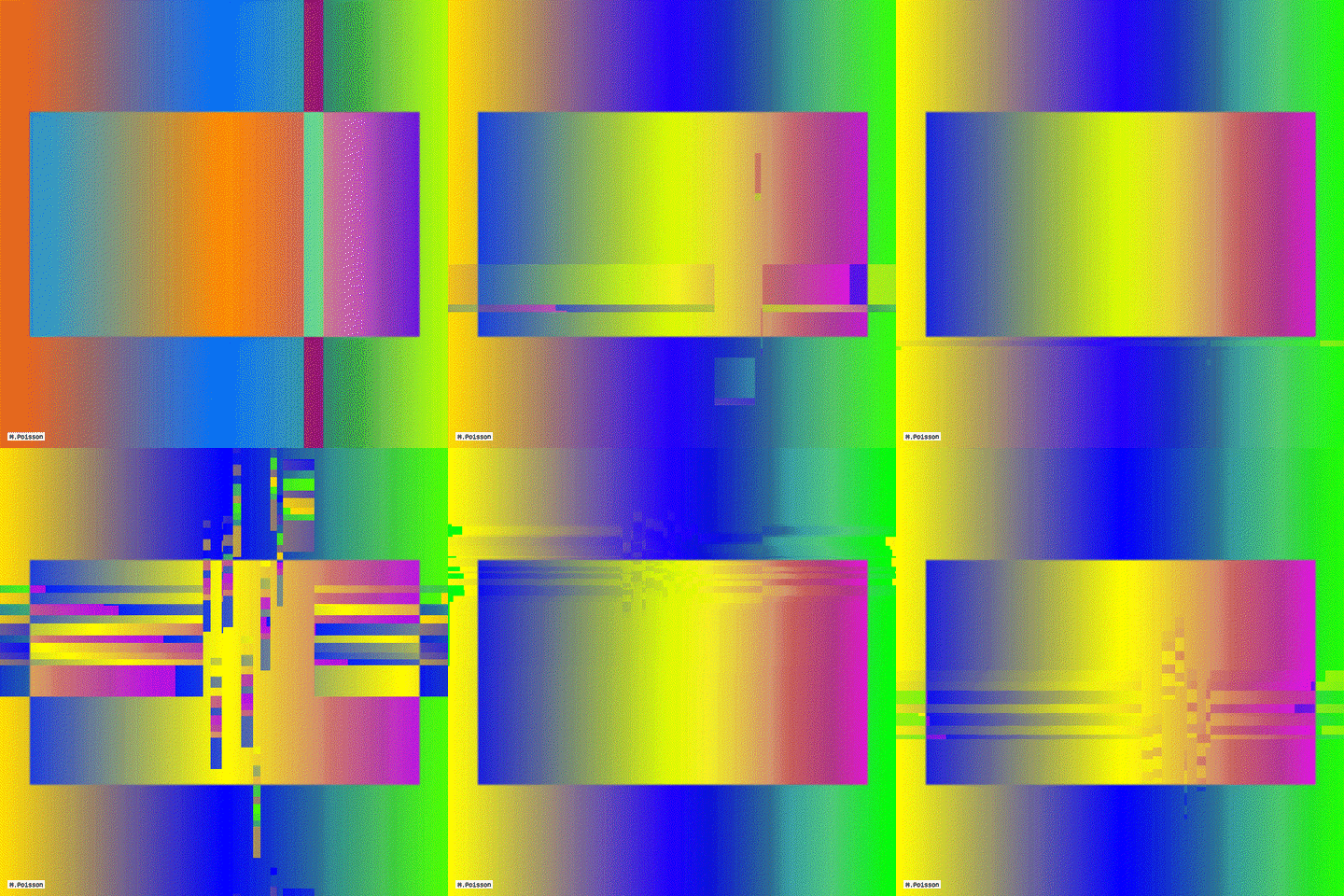
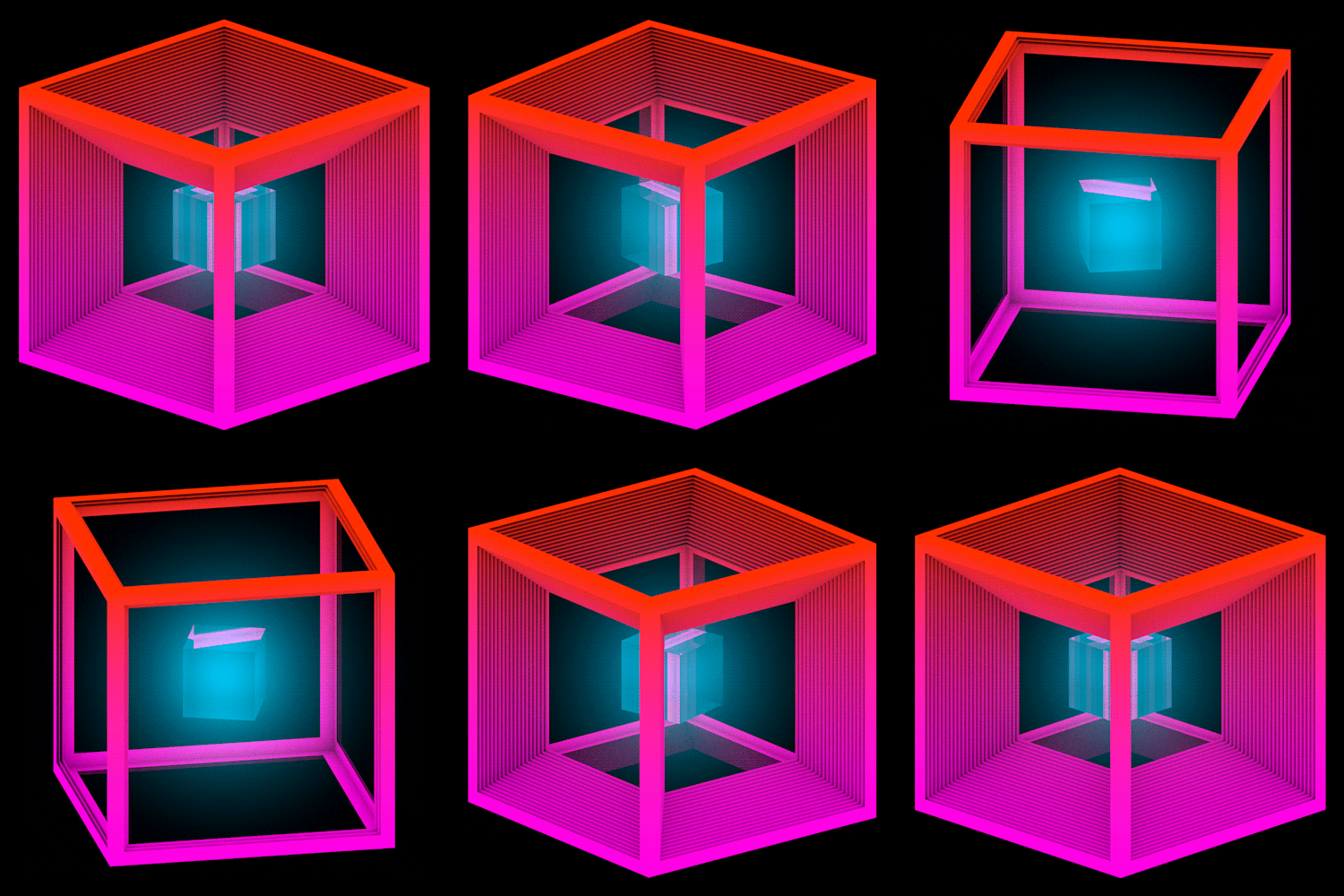
Again, the color concepts of future geometric abstract art will also undergo profound changes. The colors in traditional geometric abstract art were often not for reproducing natural objects, nor for expressing narrative plots, but existed as a highly controlled visual element. Artists usually consciously limit color types, compress synthetic color fields, emphasize primary colors, contrasting colors, warm-cool relationships, or brightness order, so that colors in the picture undertake functions such as strengthening structure, creating balance, generating tension, organizing rhythm, and establishing spatial hierarchy.
G2-4. Future geometric abstract art will expand from two-dimensional planes to cross-media.
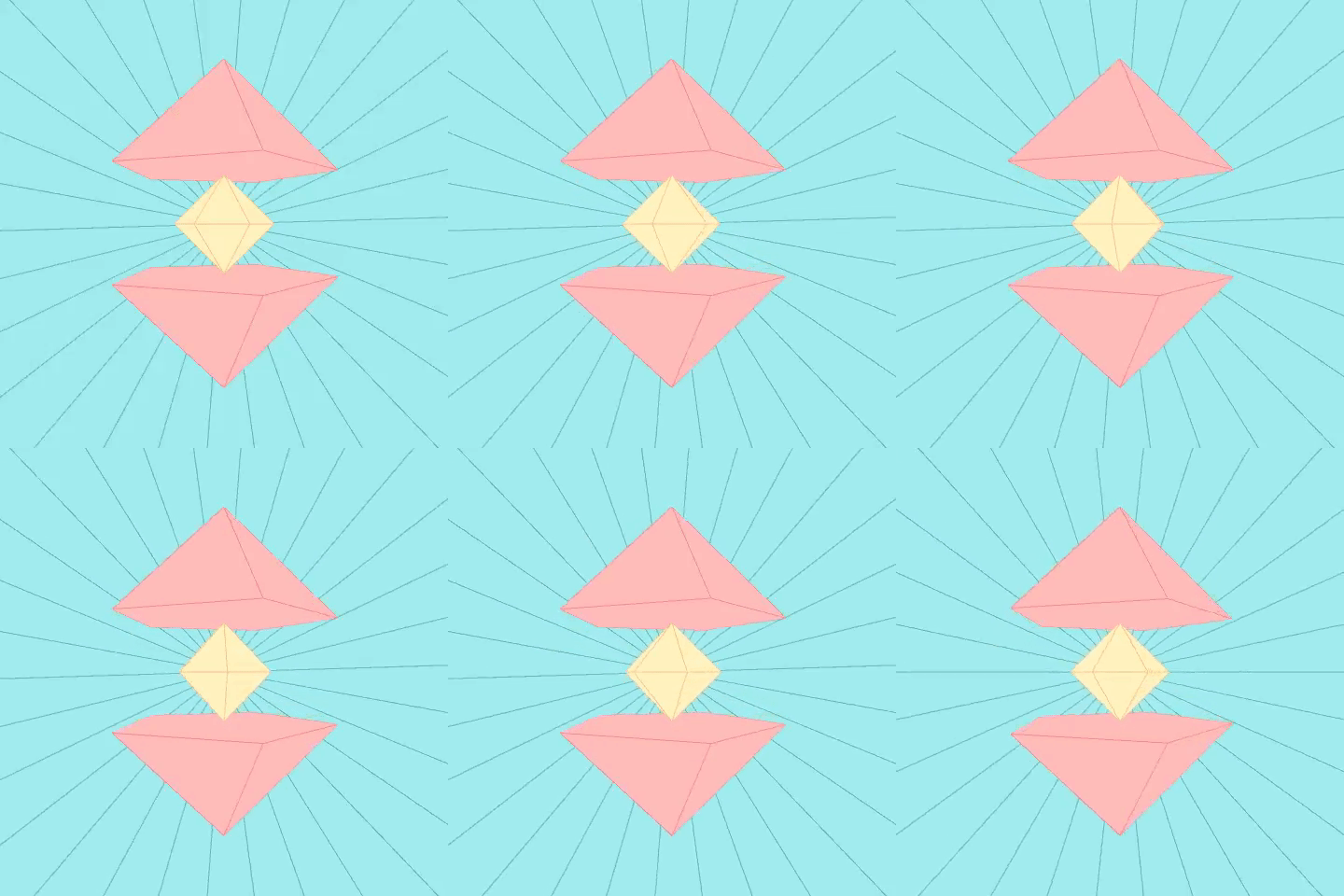
Furthermore, future geometric abstract art will also expand from two-dimensional to inter-media. Although traditional geometric abstraction has already had a profound impact on painting, printmaking, murals, textiles, and design, its most typical form of existence still centers on two-dimensional planes: lines are arranged in two-dimensional space, color blocks are confined within the boundaries of the canvas, and the rhythm and order of composition are primarily achieved through static visuals.
The Role of AI in the Future Evolution of Geometric Abstract Art
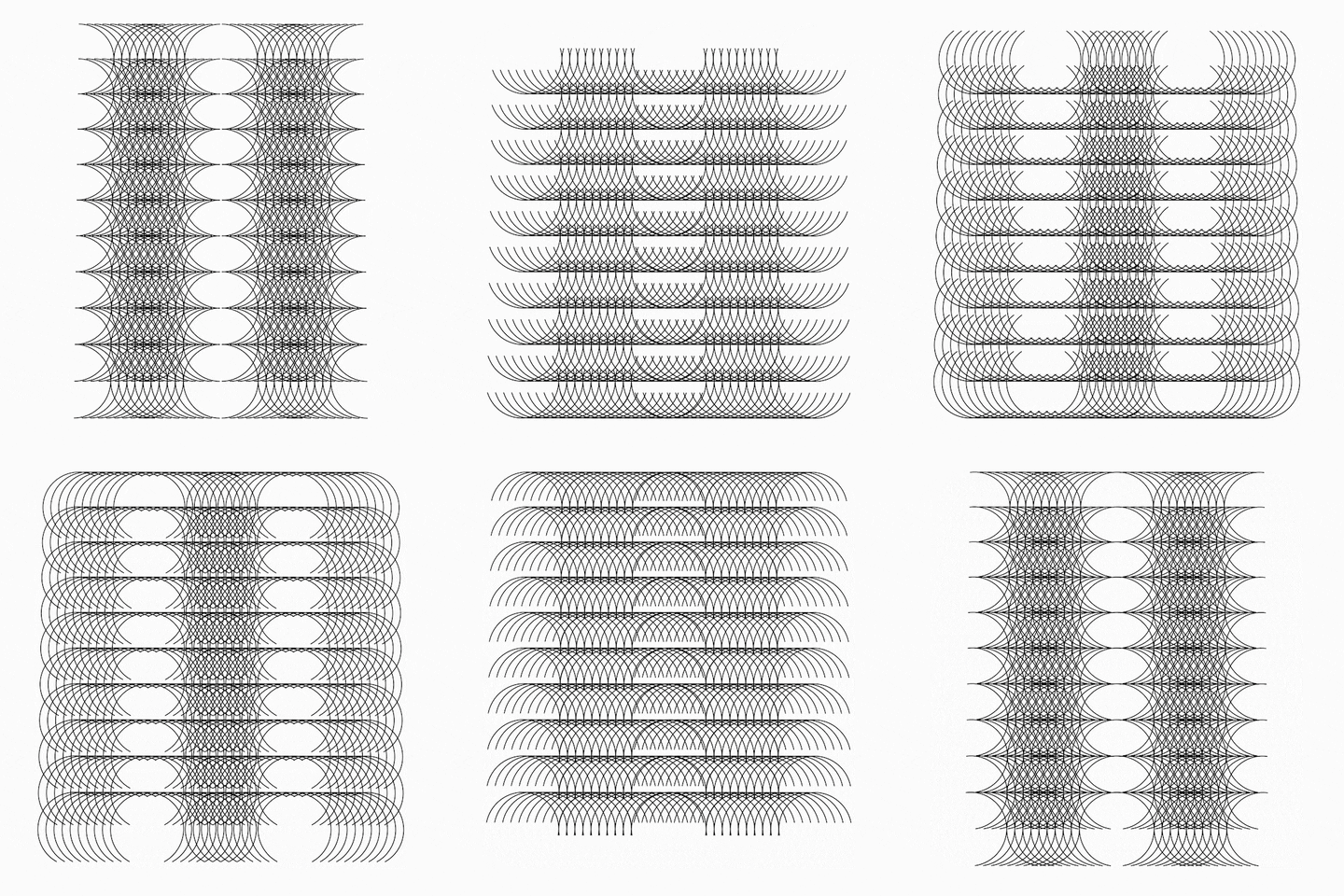
In this evolutionary process, AI's role is not to simply replace artists, but to participate in creation as a new structural partner, analytical tool, and generative engine. Firstly, AI is a powerful “form generator.” It can quickly generate a large number of geometric compositions, color schemes, and structural variations based on set rules, helping artists overcome the speed limitations of manual deduction and see multiple possibilities that would be difficult to imagine simultaneously. In traditional creation, a compositional scheme often requires repeated sketching, modification, and comparison, whereas AI can provide hundreds or thousands of structural results in a very short period. This makes it easier for artists to enter a creative state of “comparison—selection—optimization.”
The role of AI
In the future evolution of geometric abstract art, the role of artificial intelligence will not be to simply replace artists or to mechanically hand over art creation to machines. More accurately, AI will act as a new structural partner, analytical tool, and generative engine, deeply participating in the formation process of geometric abstract art.
G3-2.AI“A “collaborative decision-maker"”
Second, in the future evolution of geometric abstract art, artificial intelligence will increasingly play the role of “structural analyst.” Its importance is not only reflected in its ability to generate images, provide variations, and accelerate the creation process, but more importantly, in its ability to penetrate the artwork, deconstruct, identify, and analyze the relationships within the composition. This is particularly crucial for geometric abstract art.
G3-3.AI“Undertake the role of “Structural Analyst”
AI is a “collaborative decision-maker,” but not the ultimate aesthetic subject. It can provide solutions, identify relationships, and simulate results, but it cannot replace the artist in making true value judgments. This is because art creation is not just about structural reasonableness, but also involves directional choices, spiritual stance, aesthetic orientation, and cultural expression.
AI is still an “educational and research tool.” It can help learners quickly understand the compositional rules of classic abstract geometric works, making abstract concepts such as color, proportion, negative space, focal point, and direction of movement more visible and analyzable.
G3-5.AI“Amplifier and co-builder”
AI's most valuable role is not as a replacement, but as an amplifier, analyzer, and co-creator. It amplifies an artist's observational abilities, expands the scope of compositional experiments, deepens the understanding of color and structural relationships, and drives geometric abstraction from individual works towards systematic creation.
G4. AI Geometric Abstract Art Future Evolution Simulation System
AI Masterpiece Deconstruction System Stable decomposition results based on works, patterns, hierarchies, and uses
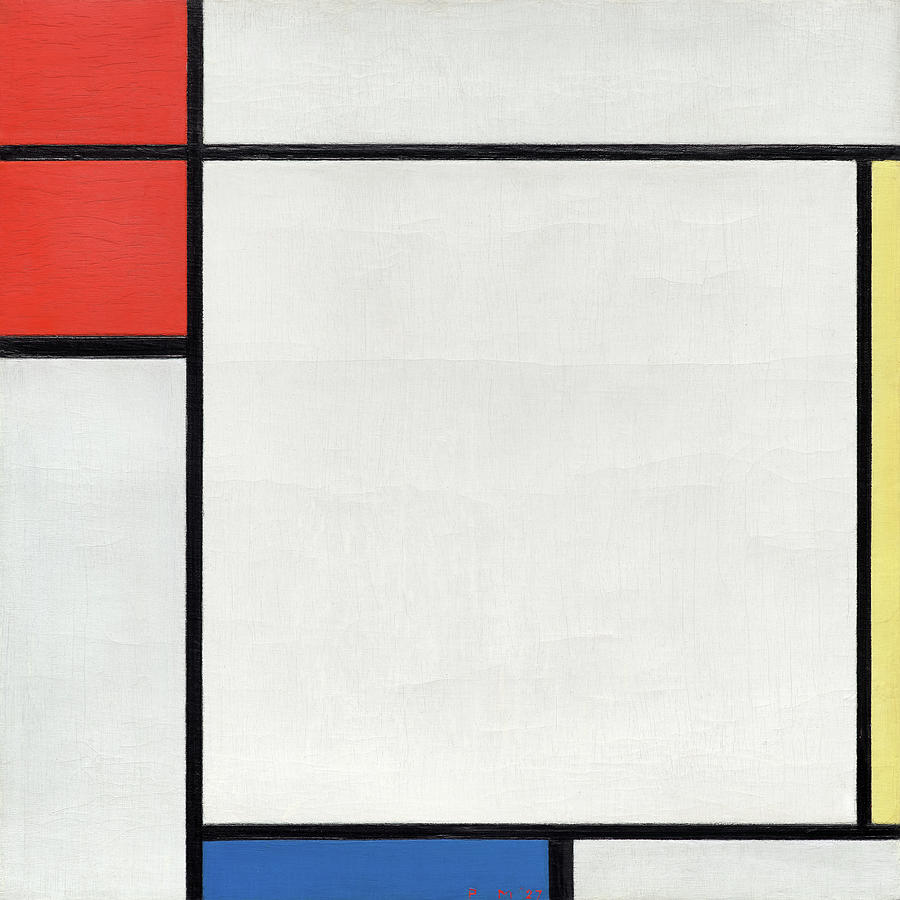
- Using black vertical and horizontal lines, the image is divided into unequal rectangles, and order, tension, and balance are established with primary colors red, yellow, and blue, and whitespace.
- The subtraction principle is evident, removing unnecessary curves and narrative.
- Establish maximum order with minimum elements.
- Using vertical and horizontal lines to form a framework, without relying on perspective.
- Rectangles of varying sizes create asymmetrical balance.
- Both the edges and the center participate in the construction of order, it is not a unipolar composition.
- The subtraction principle is evident, removing unnecessary curves and narrative.
- Establish maximum order with minimum elements.
- Primary colors are used with restraint, they are not large in area but have a strong effect.
- The black lines define the structural boundaries, while the large areas of white space maintain a sense of openness.
- Color is not decoration, but structural weight.
- The screen lacks traditional depth of field, but creates a sense of depth through differences in size and the use of negative space.
- Different color block areas create visual promotion and pause.
- Variations in line density create rhythm.
- The rectangular scale changes make the viewer's eye jump around the frame.
- Suitable for transferring to cardstock, wood, acrylic, and metal frames.
- The core requirements are clean boundaries and accurate proportions.
- First, determine the aspect ratio of the outer frame.
- Reconfirm the spindle axis position.
- The final arrangement is of the color block area and the black line width.
- Learn how to establish equilibrium with finite elements.
- Learn the weight control between thick lines, white space, and color blocks.
- Can be translated into wooden bar frames, colored acrylic modules, and wall color block zoning.
- Also suitable for creating interactive color block training works.
- Which main thread is the core that truly controls the overall order?
- How will the image balance change if one color block is removed?
The AI Artwork Deconstruction System focuses on structure, color, form, rhythm, and visual relationships, guiding learners to analyze the compositional logic of artworks from a holistic to a detailed perspective. Through layered decomposition, key point extraction, and relational comparison, learners will gradually understand the internal organization, expressive language, and aesthetic characteristics of artworks, thereby enhancing their observation, judgment, and creative transformation abilities.
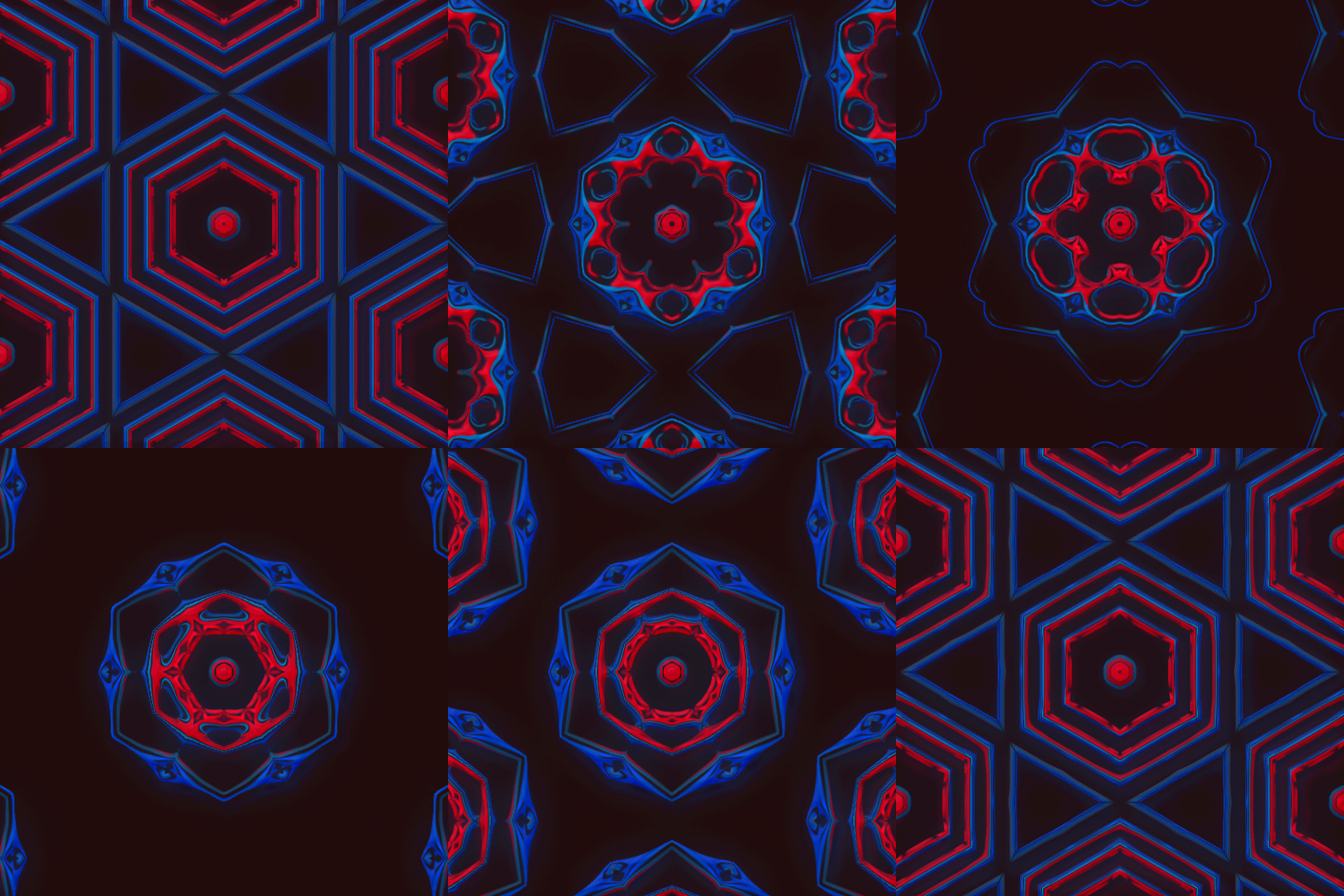
Scenario and Parameters
Boundary Results
Phase Negotiation Diagram
Draft human-machine protocol
The human-machine boundary negotiator explores humanity's irreplaceable role in generative systems through scenario-based simulations of control and decision-making power, shifting creation from tool usage to a process of negotiating rule sovereignty.
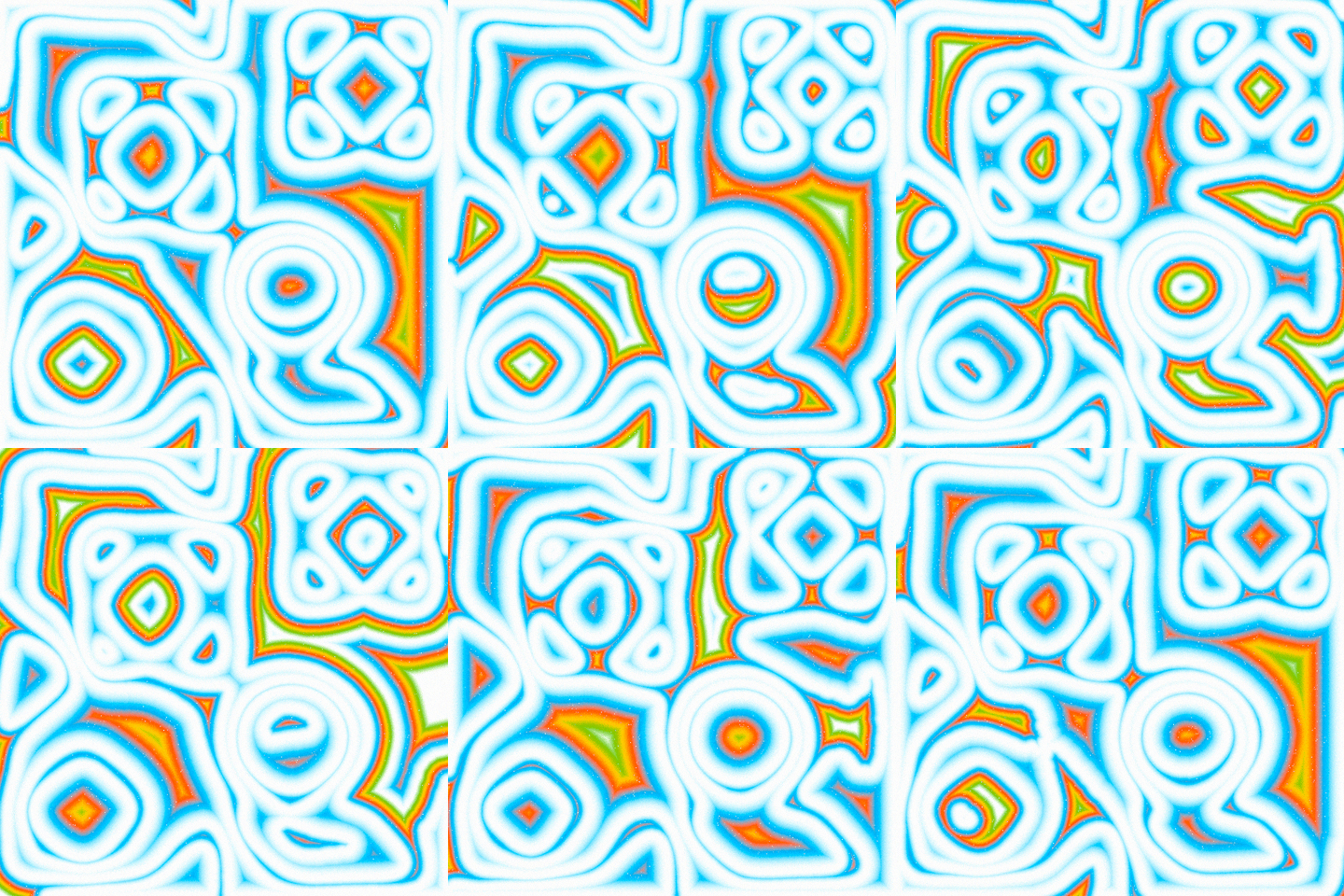
The AI explores a work deconstruction system, using structure, color, rhythm, materials, and spatial relationships as entry points to aid understanding of a work's compositional logic, visual order, and formal language. It helps creators establish a clearer methodological path from observation and analysis to reorganization, and in the deconstruction process, uncover the visual mechanisms and creative thinking behind the work.
G4-1. Future Evolution of Geometric Abstract Art: Course Test
Please submit your design once. Think carefully before clicking submit. Repeated submissions will result in deduction of points affecting the award!
 简体中文
简体中文  English
  日本語
日本語  Español
  Français
  हिन्दी
  العربية
  বাংলা
বাংলা  Português do Brasil
  Русский
  اردو
اردو  Bahasa Indonesia
  Deutsch
  Kiswahili
  मराठी
मराठी  తెలుగు
  Tiếng Việt
  Türkçe
  Italiano
  தமிழ்
தமிழ்  한국어
한국어