
F1, core purpose
Geometric abstract art is not merely composed of lines, color blocks, and forms on a canvas. More importantly, it establishes order, rhythm, tension, and spatial relationships through different structural approaches. Basic grids, stripe divisions, spatial compositions, concentric expansions, diagonal insertions, staggered layering, block splicing, and open modules constitute the eight most representative typical structural forms in geometric abstraction. They are not only methods of visual organization but also crucial pathways for artists to conduct formal experiments, express concepts, and drive the renewal of artistic language. Understanding these modules helps in more deeply grasping the compositional logic and developmental direction of geometric abstract art.
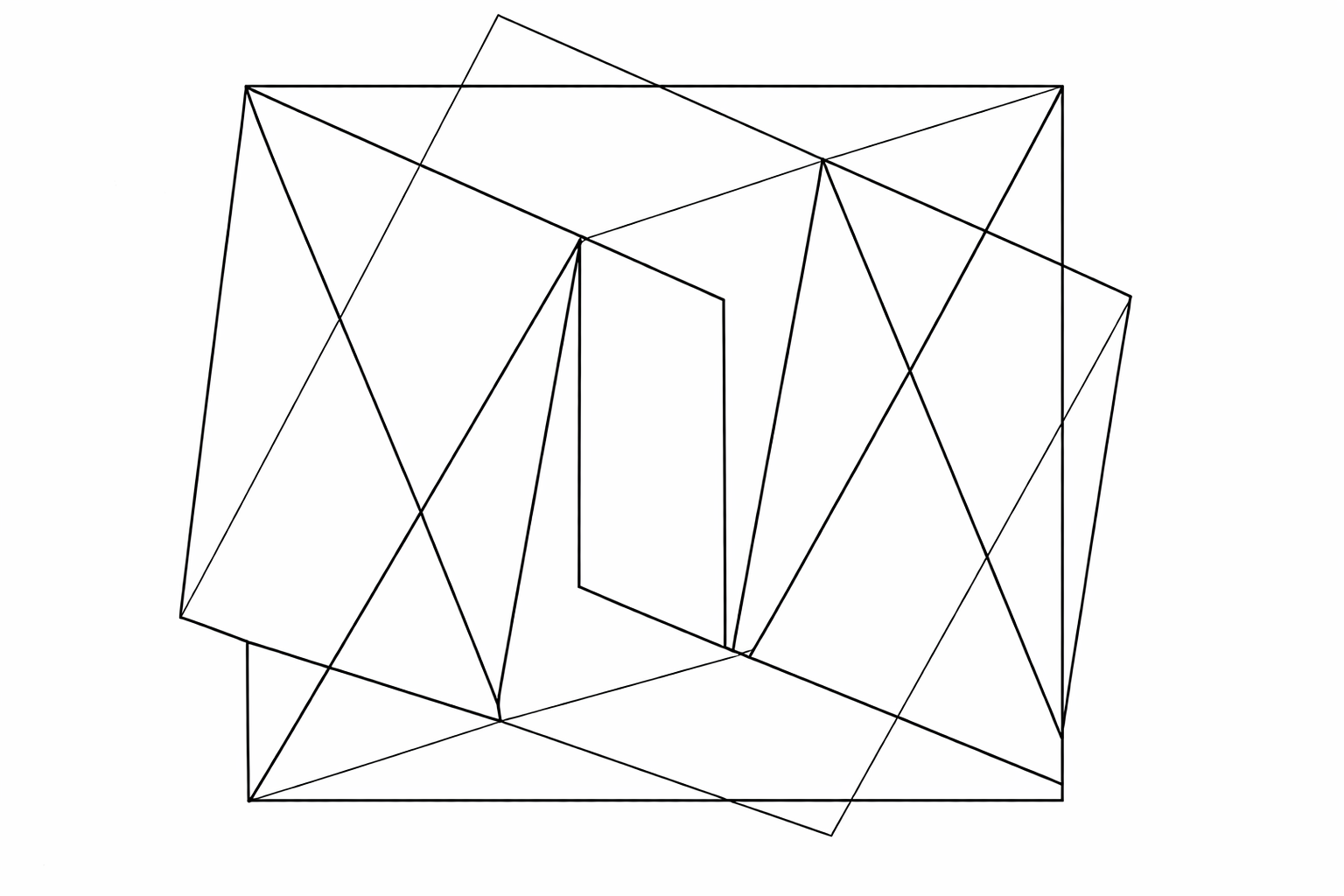
F2. 8 Typical Structural Forms of Geometric Abstract Art
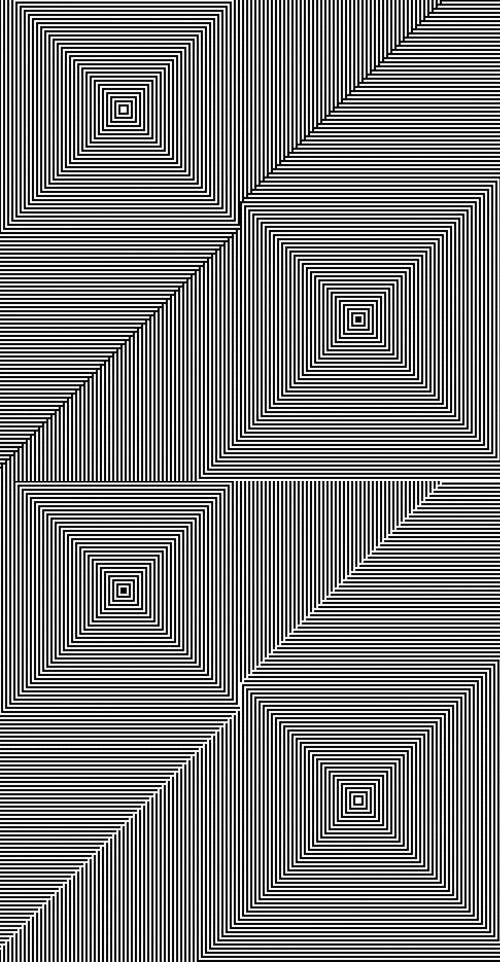
1. Basic Grid Module
F2-1. Analysis of Piet Mondrian's "Composition No. II, with Red and Blue"
F2-2. Analysis of Anni Albers' Works
F2-3. Agnes Martin's "Tremolo" Analysis
F2-4. Analysis of Josef Albers' "Two Whites Between Two Yellows"
2. Strip partitioning module
F2-5. Analysis of Cristina Ghetti's Work
F2-6. Bridget Riley's "Fall" - Artwork Analysis
F2-7. Analysis of Frank Stella's "The Marriage of Reason and Squalor, II"
F2-8. Gene Davis's "Satan's Flag" Artwork Analysis

3. Spatial Composition Module
F2-9. Analysis of Al Held's Work
F2-10. Analysis of Frank Stella's Work
4. Concentric expansion module
F2-13. Analysis of František Kupka's Works
F2-14. Analysis of Josef Albers' Works
F2-15. Analysis of Vasily Kandinsky's Artwork
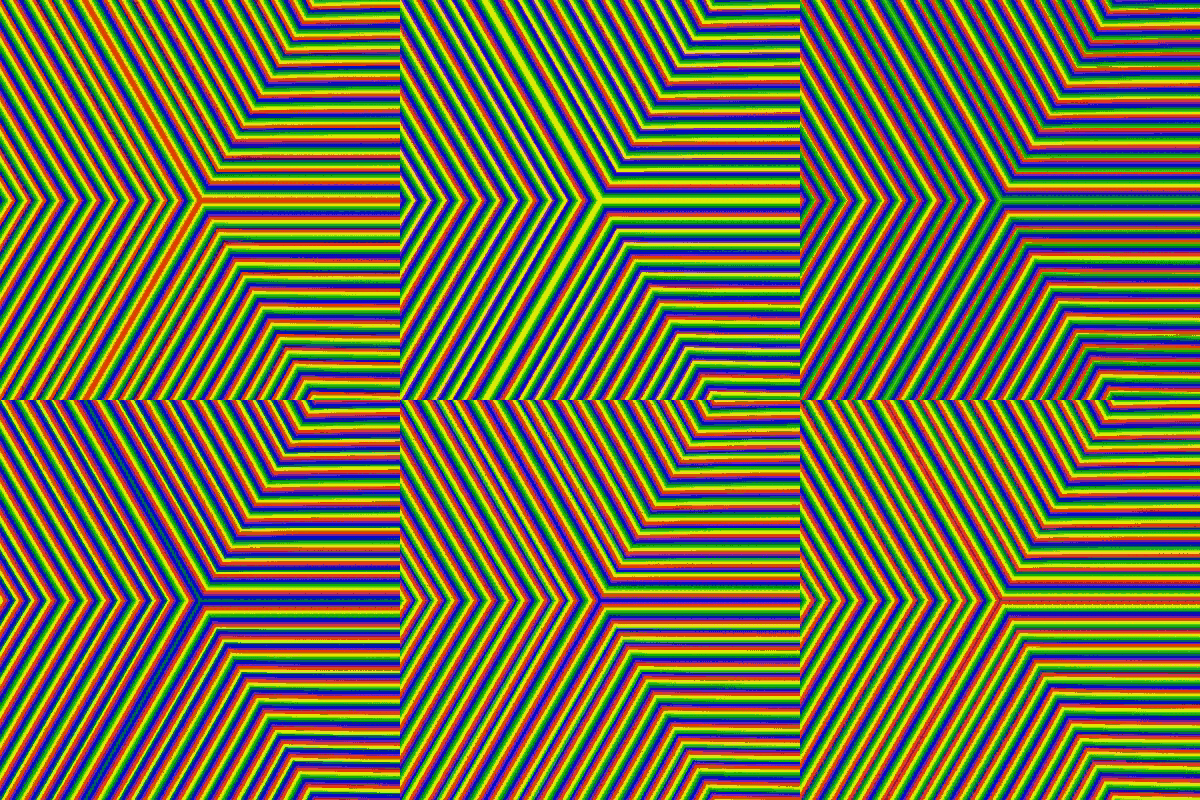
5. Diagonal insertion module
F2-16. Analysis of Piet Mondrian's Work
F2-17. Work Analysis of Rachel Hellmann
F2-18. Carmen Herrera Artwork Analysis
6. Offset stacking module
Analysis of F2-19. Tricia Strickfaden's Work
F2-20. Analysis of Sonia Delaunay's Works
F2-21. Analysis of Georgia O'Keeffe's work

7. Block face splicing module
F2-22. Analysis of Theo van Doesburg's Artwork
F2-23. Analysis of Carmen Herrera's Work
F2-24. Analysis of Max Bill's Works
8. Open module
F2-25. Analysis of Donald Judd's Work
F3-1, Inner Constituent Elements Analysis Course Test
Please submit your design once. Think carefully before clicking submit. Repeated submissions will result in deduction of points affecting the award!
E3. AI Internal Composition Simulation System
AI Three-Dimensional Composition Engine
Start spatial practiceThis engine is designed for spatial dimension practice, employing precise axonometric projection algorithms and geometric structure evolution logic. It supports U-level multi-template switching, features deep spatial rendering, real-time local undo, and 1200px HD view export, making it an ideal tool for exploring the composition of three-dimensional forms.
AI Hybrid Composition Engine
Click to start practicingIntegrating planar, color, and stereoscopic multi-dimensional logic, breaking through the limitations of single exercises. The engine supports complex path data synchronization, activated with a single click through an intelligent UI cover. It offers full-spectrum color selection and overflow fill technology, assisting designers in finding the balance point of aesthetic form in mixed media.
AI system creation engine
Start a creative exerciseThe AI system's creative engine, centered on structure, order, combination, and generative logic, aids learners in developing holistic creative thinking across diverse element relationships. Through iterative combination, adjustment, comparison, and advancement, users gradually understand how visual systems are formed, their internal rules, and pathways for evolution, thereby enhancing their abilities in comprehensive composition, visual coordination, and continuous generation.
 简体中文
简体中文  English
  日本語
日本語  Español
  Français
  हिन्दी
  العربية
  বাংলা
বাংলা  Português do Brasil
  Русский
  اردو
اردو  Bahasa Indonesia
  Deutsch
  Kiswahili
  मराठी
मराठी  తెలుగు
  Tiếng Việt
  Türkçe
  Italiano
  தமிழ்
தமிழ்  한국어
한국어